The Personality Atlas
THE CELEBRITY PERSONALITY ARCHIVE / FILM & TELEVISION

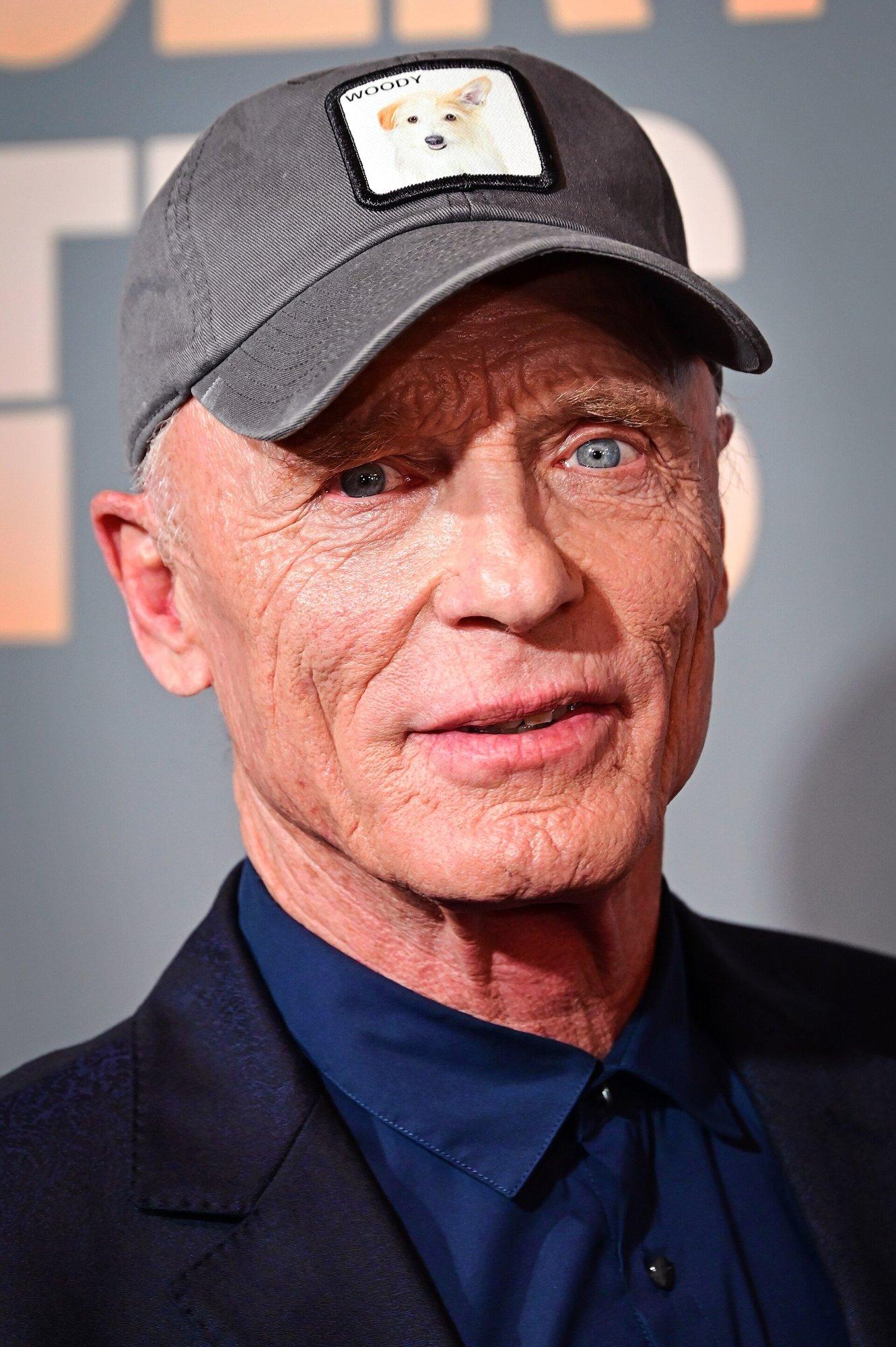
Ed Harris.

Actor · Director · Filmmaker

Ed Harris built a career out of flinty authority without becoming repetitive: astronaut, mission chief, western lawman, abstract-expressionist icon, ruthless TV antagonist. The same actor who can dominate a frame in Apollo 13, The Truman Show, Westworld or Top Gun: Maverick also spent Pollock preparation building a studio and copying Jackson Pollock’s technique by hand—less effortless legend than disciplined command.

OBJECTIVE PERSONALITY CLASSIFICATIONFM-Te/Si-BS/C(P)What does this mean?
PERSONALITY SYSTEMObjective Personality
LEAD FUNCTIONTe · Extroverted Thinking
SECOND SAVIOR FUNCTIONSi · Introverted Sensing
MBTI EQUIVALENTESTJ
01 / BEHIND THE CLASSIFICATION

The personality behind the fame.

How does a recorded OPS classification like FM-Te/Si-BS/C(P) break down? Walk through nine coins and watch the proposed type take shape. These are deductions from the archived code, not independent evidence of typing accuracy.

Scroll below to see Ed Harris take shape.

STARTING POINT512 possible OPS typesEach type combines core functions, an animal order, and sexual modalities.
THE FINISH LINEFM-Te/Si-BS/C(P)One recorded classification, decoded from its components.
Ed Harris’ HUMAN NEEDS 01—03
01
DECIDER OR OBSERVER?

Decider over Observer

Deciders have more balanced Observer poles in the middle: Control (Oi) and Chaos (Oe). Organizing what's known and handling what's new tend to feel more manageable. People are the harder territory. Self (Di) and Tribe (De) sit at the extremes, so judgment, rejection, approval, and conflict can trigger the strongest reactions.

Ed Harris’s public record shows friction with people and standards more than chaos in the environment. At the 1999 Oscars, he and Amy Madigan stayed seated during Elia Kazan’s honorary tribute; in 2012, he opposed the SAG-AFTRA merger and joined the unsuccessful lawsuit challenging it. Those are classic Decider flashpoints: loyalty, judgment, visible alignment. The strength is resolve under social pressure. The blind spot is escalation. Once the question becomes who is principled, compromised or wrong, relationships can harden before practical options have much chance to breathe.
D
02
SELF OR TRIBE?

De · Tribe over Di · Self

Tribe (De) is the stronger deciding pole. They check decisions against people, shared standards, and what works for the group: what do we need, what will others think? The strength is coordination and responsiveness; the recurring friction is the Self (Di)—knowing and defending their own position. As the portrait unfolds, notice how Tribe takes the lead.

Harris’s career reads clearly Tribe over Self. He has spent decades being the actor productions trust to carry the shared mission—Gene Kranz in Apollo 13, Christof in The Truman Show, William in Westworld, Rear Admiral Cain in Top Gun: Maverick. Even his public union fight was about the institution’s direction, not a private comfort issue. De brings usefulness and accountability to the group objective. The cost is that outside standards can become so compelling that personal preference, softer sentiment or a quieter inner yes gets less airtime than what the job or the system seems to require.

De
03
GATHER OR ORGANIZE?

Oi · Organize over Oe · Gather

Organize (Oi) leads with refining, preserving, and structuring what is already known. Its strength is preparation and clear direction; the recurring friction is unexpected change that disrupts the plan. Another layer of the personality portrait comes into focus.

When Harris wanted to play Jackson Pollock, he did not rely on vague artistic myth. He built a small studio, studied the painter’s method, and practiced the physical technique himself before directing and starring in Pollock. That is Organize over Gather: narrow the variables, trust the method, make the material hold. The strength is consistency across stage, film and television over decades. The blind spot is selectivity. A settled process protects quality, but it can also make newer possibilities work harder to earn entry when they do not already fit the established frame.

Oi
FIRST THREE COINSD + De + Oi

These establish the preferred human needs in the OPS framework.

Ed Harris’ FUNCTIONS 04—05
04
FEELING OR THINKING?

Thinking · T over Feeling · F

Thinking (T) evaluates decisions through reasons, logic, and what works—not a lack of emotion. Its strength is analytical consistency; Feeling (F) provides balance through values, meaning, and the human consequences of a decision. Combined with Tribe (De), this forms the recorded Savior Te.

Thinking is the harder edge of Harris’s public style. Pollock and Appaloosa were not vanity detours; he directed, co-wrote or shaped them into clear deliverables other people had to execute. His opposition to the SAG-AFTRA merger also moved from opinion to formal action through a lawsuit. Te’s strength is turning judgment into something usable: a standard, a plan, a finished product. The growth cost is relational temperature. Clear decisions can keep work moving while leaving less space for people who need patience, cushioning or a more explicitly personal rationale.

T → Te
05
SENSING OR INTUITION?

Sensing · S over Intuition · N

Sensing (S) focuses on concrete details, observable reality, and lived experience. Intuition (N) balances it by looking for broader patterns, concepts, and implications. Combined with Organize (Oi), this gives the recorded Savior Si.

Harris’s Sensing side is unusually visible because so much of his acclaim rests on concrete embodiment. John Glenn, Gene Kranz, Jackson Pollock, Beethoven, John McCain—again and again he grounds a role in specific era, craft and physical detail. Even his Pollock preparation was tactile: materials, studio space, repeated practice. Si gives him credibility that feels earned rather than merely announced. The blind spot is conservatism of reference. When the known standard becomes the benchmark for everything, a looser abstraction or untested angle may have to prove itself twice before it is trusted.

S → Si
THE TWO SAVIOR FUNCTIONSTe / Si

Opposing functions: Fi and Ne.

Ed Harris’ ANIMAL STACK 06—07
06
CONSUME OR BLAST?

Blast over Consume

Consume gathers information for internal processing; Blast organizes and communicates information. The recorded order is Blast → Sleep → Consume → Play. This comparison follows their positions in that stack.

Blast over Consume fits the point where Harris stops collecting impressions and starts delivering a conclusion. Pollock and Appaloosa were not shelves of research; they became finished statements he directed, starred in and put in front of an audience. That first-animal push gives him authority: he can take experience and turn it into a clear message or standard. The blind spot is premature closure. Once the direction feels solid, more input can start to look unnecessary, even when another perspective or added research might have sharpened the final result.

B > C
07
PLAY OR SLEEP?

Sleep over Play

Play emphasizes external real-time engagement; Sleep emphasizes internal processing. The recorded stack places Sleep earlier.

Sleep over Play adds the contained, flinty quality people often read in Harris on screen. He tends to arrive as if the material has already been worked through internally rather than discovered out loud in the room. That private consolidation suits a career of measured, durable choices, from Pollock to Empire Falls to Westworld. The advantage is density: performances feel weighted, not flimsy. The cost is spontaneity. When Sleep outruns Play, live back-and-forth can have less power to reshape the answer once he has already settled on what the answer is.

S > P
Ed Harris’ ANIMAL ORIENTATION 08—09
08
INFO OR ENERGY DOMINANT?

Info over Energy

Info dominant means Consume and Blast are both in the top three: gathering and communicating information are more balanced. Play last leaves the energy side uneven—Sleep can conserve energy without enough spontaneous outward engagement.

Harris’s profile lands on Info over Energy, which fits a career built on absorbing a role’s demands and then delivering them with force. The balance is practical: he can study a figure, internalize the material and make it legible to an audience, whether in Apollo 13, Pollock or Game Change. The missing piece is still Play at the bottom. That creates the growth cost of lower-priority improvisational exchange. Preparation stays strong; what gets squeezed is the messy, real-time adjustment that only happens when another person or the room itself interrupts the plan.

Info
09
INTROVERSION OR EXTROVERSION?

Introversion over Extroversion

The last animal, Play, determines this OPS coin: Play or Blast last means Introversion; Consume or Sleep last means Extroversion. This describes animal orientation, not sociability or shyness.

Harris’s commanding screen presence should not be confused with OPS Extroversion. This coin is Introversion because Play is last, not because he lacks public force. In fact, his performances often become memorable precisely because they feel so settled and directed once he enters the frame. The harder move is opening the process sooner, before the position is fully formed. With Play fourth in Blast, Sleep, Consume, Play, the balancing act is simple and difficult: keep the authority, but leave a little more room for unscripted exchange before locking the verdict.

I
Sexual Modalities

The four sexual modalities.

OPS uses masculine/feminine sensory and extroverted-deciding distinctions as framework-specific terms, not gender categories. The four modalities are already included in the original 512 types. The recorded modality is FM · Visual.

MM KinestheticMasculine Sensory · Masculine De
MF AudioMasculine Sensory · Feminine De
FF TesterFeminine Sensory · Feminine De
FM RECORDED MODALITYVisualFeminine Sensory · Masculine De
COMPLETE RECORDED OPS TYPE · MODALITY INCLUDEDFM-Te/Si-BS/C(P)

Te leads, Si supports, and the animal stack is Blast → Sleep → Consume → Play.

THE FINISHED PORTRAIT · ALL NINE COINS REVEALED

Ed Harris's complete function and animal stack

BlastSleepConsumePlaymTefSimNefFi
FM-Te/Si-BS/C(P)DOUBLE ACTIVATED · SLEEPExplore the Interactive Coin Builder →
THE ED HARRIS LENS

Command without looseness

Ed Harris often arrives onscreen like a final ruling—Gene Kranz in Apollo 13, Christof in The Truman Show, the Man in Black in Westworld. But the public record behind that authority is more craftsman than myth. For Pollock, he built a studio and practiced Jackson Pollock’s technique himself, which tells you the steel is prepared, not merely projected.

Te and Si are a formidable working pair for historical roles, directing and any project that needs standards to become real. He excels at turning admiration into method and method into execution. The limit is that this same pairing can overtrust the proven route, making flexibility or softer emotional calibration feel secondary to getting the job right.

As a Decider and Double Observer, Harris is equipped to handle facts, logistics and changing conditions more easily than the human strain of judgment, loyalty and visible disagreement. That is why public moments around Kazan or SAG-AFTRA matter here. The imbalance leans toward solving the task, while neglected Fi—the function opposite his lead Te—can leave personal values less plainly voiced.

Blast → Sleep → Consume → Play gives him a strong delivery engine backed by private consolidation, with spontaneous interaction last. That last-animal imbalance can make him clearest after he has already formed the answer. The useful correction is not becoming softer or less exact; it is asking one more unscripted question in rehearsal, directing or interview before the frame fully locks.

Want to understand the Savior and Demon states behind these nine coins? Explore the complete explanation, visual examples, and typing principles on our Methodology page →

02 / KEEP EXPLORING

Different faces. Familiar patterns.

Explore other celebrities with related recorded OPS classifications. Related functions are not necessarily exact type matches.

Discover Type Twins
YOUR TURN

Curious about your own type?

Discover how your own personality might be classified through Objective Personality.

Get objectively typed
Ed Harris's Personality Type & OPS Profile | The Personality Atlas