The Personality Atlas
THE CELEBRITY PERSONALITY ARCHIVE / PUBLISHING

Anna Wintour.

Magazine Editor · Media Executive

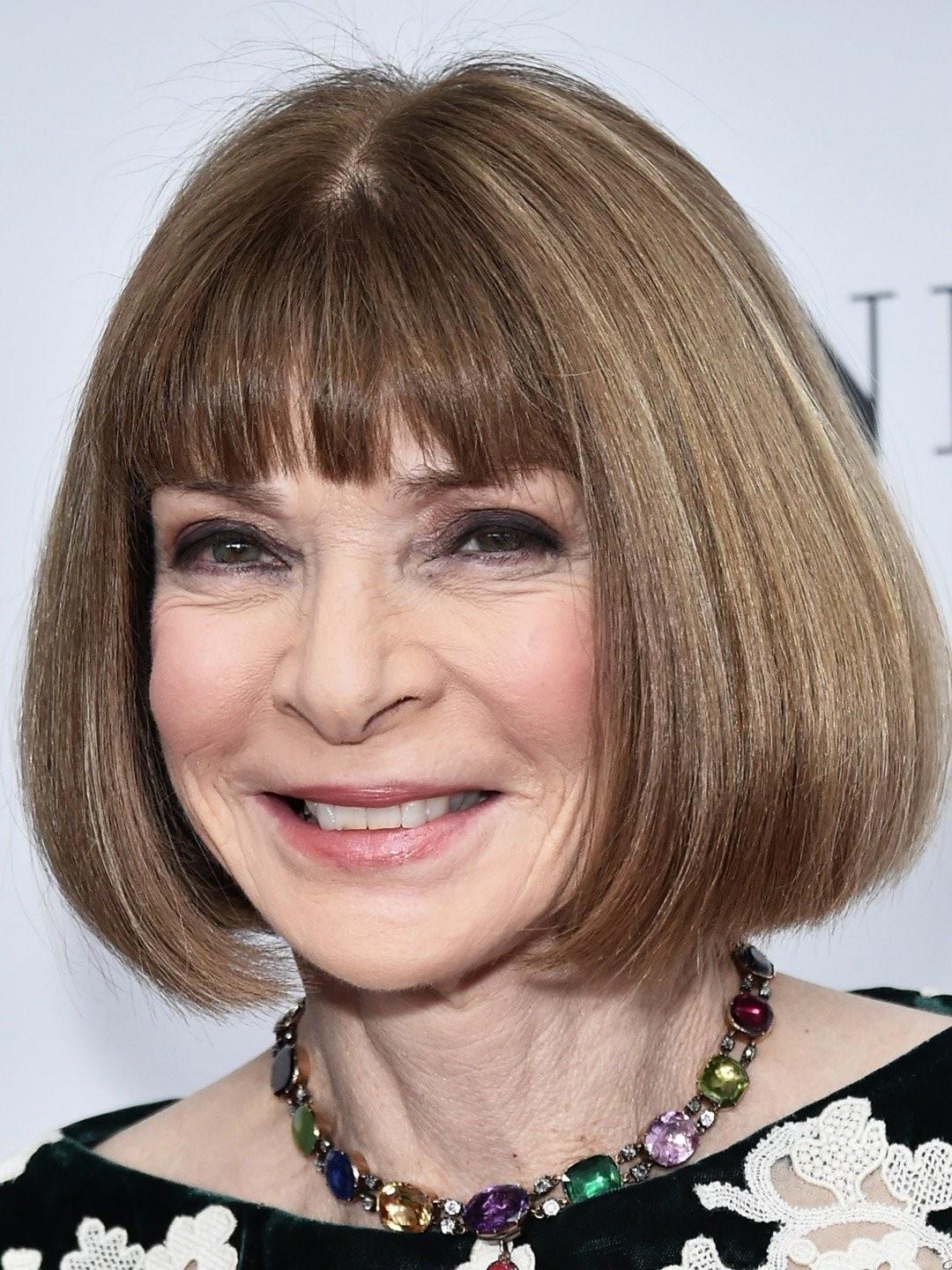
For decades, Anna Wintour turned Vogue covers, Met Gala guest lists, and Condé Nast titles into instruments of editorial power. The bob and sunglasses became the myth; the more revealing pattern is the executive who kept reorganizing magazines, staff, and institutional taste until entire corners of fashion had to respond to her decisions.

OBJECTIVE PERSONALITY CLASSIFICATIONFM-Te/Si-BS/C(P) #1What does this mean?
PERSONALITY SYSTEMObjective Personality
LEAD FUNCTIONTe · Extroverted Thinking
SECOND SAVIOR FUNCTIONSi · Introverted Sensing
MBTI EQUIVALENTESTJ
01 / BEHIND THE CLASSIFICATION

The personality behind the fame.

How does a recorded OPS classification like FM-Te/Si-BS/C(P) #1 break down? Walk through nine coins and watch the proposed type take shape. These are deductions from the archived code, not independent evidence of typing accuracy.

Scroll below to see Anna Wintour take shape.

STARTING POINT512 possible OPS typesEach type combines core functions, an animal order, and sexual modalities.
THE FINISH LINEFM-Te/Si-BS/C(P) #1One recorded classification, decoded from its components.
Anna Wintour’s HUMAN NEEDS 01—03
01
DECIDER OR OBSERVER?

Decider over Observer

Deciders have more balanced Observer poles in the middle: Control (Oi) and Chaos (Oe). Organizing what's known and handling what's new tend to feel more manageable. People are the harder territory. Self (Di) and Tribe (De) sit at the extremes, so judgment, rejection, approval, and conflict can trigger the strongest reactions.

Anna Wintour’s public legend is icy authority, but the recurring pressure in her career is less “Will the market behave?” than “Who will accept the call?” At British Vogue, House & Garden, and then American Vogue, her biggest moves involved replacing staff, redefining hierarchies, and absorbing backlash from those decisions. That points to a Decider problem: people, standards, and social consequences. The strength is unusual willingness to make the hard call anyway. The blind spot is treating damaged trust as an acceptable fee for getting the structure she wants.
D
02
SELF OR TRIBE?

De · Tribe over Di · Self

Tribe (De) is the stronger deciding pole. They check decisions against people, shared standards, and what works for the group: what do we need, what will others think? The strength is coordination and responsiveness; the recurring friction is the Self (Di)—knowing and defending their own position. As the portrait unfolds, notice how Tribe takes the lead.

Her influence was never just private taste. Wintour built power by steering collective standards—offering youth-market ideas to her father at the Evening Standard, pushing celebrity covers that sold copies, shaping the Met Gala, and later broadening Condé Nast’s editorial direction. Tribe-first is useful in worlds where status depends on reading what institutions, advertisers, designers, and audiences will respond to next. She can sense the room and then move it. The cost is obvious: when the outside standard becomes the main scoreboard, other people can experience that calibration as pressure, distance, or a demand to conform.

De
03
GATHER OR ORGANIZE?

Oi · Organize over Oe · Gather

Organize (Oi) leads with refining, preserving, and structuring what is already known. Its strength is preparation and clear direction; the recurring friction is unexpected change that disrupts the plan. Another layer of the personality portrait comes into focus.

Wintour’s career is full of editing as reordering. She arrived at British Vogue and replaced staff. She took over U.S. Vogue and imposed a sharper visual direction. Even her daily habits—5:30 a.m. wake-up, tennis, early arrival, notes before shows—read like someone who wants the machinery set before the day starts. Organize-first excels at turning a sprawling field into a repeatable system. The downside is rigidity. House & Garden showed the risk: a bold rebrand can become over-managed fast, especially when the audience expected continuity rather than a total reset.

Oi
FIRST THREE COINSD + De + Oi

These establish the preferred human needs in the OPS framework.

Anna Wintour’s FUNCTIONS 04—05
04
FEELING OR THINKING?

Thinking · T over Feeling · F

Thinking (T) evaluates decisions through reasons, logic, and what works—not a lack of emotion. Its strength is analytical consistency; Feeling (F) provides balance through values, meaning, and the human consequences of a decision. Combined with Tribe (De), this forms the recorded Savior Te.

When Wintour changed Vogue covers, doubled down on celebrity, or cancelled expensive House & Garden spreads in her first week, the common thread was not softness but measurable direction. Thinking here works through external criteria: what sells, what leads, what keeps the institution from drifting. That decisiveness helped revive a magazine many saw as stagnant and later supported company-wide leadership at Condé Nast. The blind spot is that efficient judgment can sound brutally impersonal. A decision may be strategically clean and still leave collaborators feeling reduced to obstacles, budgets, or pieces on the board.

T → Te
05
SENSING OR INTUITION?

Sensing · S over Intuition · N

Sensing (S) focuses on concrete details, observable reality, and lived experience. Intuition (N) balances it by looking for broader patterns, concepts, and implications. Combined with Organize (Oi), this gives the recorded Savior Si.

Wintour’s reputation for spotting change sits on top of a very concrete memory for what fashion institutions actually are: covers, silhouettes, photographers, advertisers, schedules, and traditions. Her famous 1988 Vogue cover broke with the studio head-shot formula, but it did so from a precise read of the magazine’s existing visual rules. Sensing gives her leverage with the known world, not just abstract trend talk. The weakness is that trusted patterns can harden. By 2008, critics calling Vogue “stale and predictable” were attacking the downside of relying on a proven formula for too long.

S → Si
THE TWO SAVIOR FUNCTIONSTe / Si

Opposing functions: Fi and Ne.

Anna Wintour’s ANIMAL STACK 06—07
06
CONSUME OR BLAST?

Blast over Consume

Consume gathers information for internal processing; Blast organizes and communicates information. The recorded order is Blast → Sleep → Consume → Play. This comparison follows their positions in that stack.

Blast comes earlier than Consume in Wintour’s recorded animal order, and her career reads that way. She did not spend years quietly stockpiling ideas before revealing herself; she kept arriving in institutions and declaring a new direction. British Vogue was overhauled. U.S. Vogue got a radically different cover language. As artistic director, her role broadened again. The strength of Blast over Consume is clarity: people know where the magazine is being pushed. The cost is velocity. Broadcasting a vision can outrun how much fresh input has actually been absorbed from the room.

B > C
07
PLAY OR SLEEP?

Sleep over Play

Play emphasizes external real-time engagement; Sleep emphasizes internal processing. The recorded stack places Sleep earlier.

With Blast already ahead of Consume, the next useful comparison is Play versus Sleep—and Sleep comes earlier. Wintour’s authority often looks social because the stage is so public, yet her style is heavily pre-processed: rigid schedule, brief party appearances, notes made before shows begin, a tightly controlled presentation. Sleep over Play can build a formidable inner standard before entering the crowd. The blind spot is that spontaneous back-and-forth may feel wasteful, leaving collaborators to meet a finished judgment rather than shape an idea while it is still unfinished.

S > P
Anna Wintour’s ANIMAL ORIENTATION 08—09
08
INFO OR ENERGY DOMINANT?

Info over Energy

Info dominant means Consume and Blast are both in the top three: gathering and communicating information are more balanced. Play last leaves the energy side uneven—Sleep can conserve energy without enough spontaneous outward engagement.

Wintour lands on the Info side because Blast and Consume both sit in her top three. That combination suits a career built on taking in fashion signals and then turning them into covers, hires, events, and institutional marching orders. She is not just conserving energy or mood; she is moving information through a system. The missing balance comes from Play sitting last. So the likely void is not another brainstorm or another decree, but more real-time give-and-take while decisions are still forming. Her strength is editorial clarity; the growth cost is tolerating messier collaboration before the verdict is final.

Info
09
INTROVERSION OR EXTROVERSION?

Introversion over Extroversion

The last animal, Play, determines this OPS coin: Play or Blast last means Introversion; Consume or Sleep last means Extroversion. This describes animal orientation, not sociability or shyness.

Her OPS Introversion result does not conflict with decades spent at galas, fashion shows, and political fundraisers. The coin is about animal order, not whether a person can dominate a room. With Play last, Wintour appears more naturally geared toward controlled delivery and private consolidation than toward open-ended interaction for its own sake. Even her public habits fit that pattern: arrive early, make notes, leave parties quickly, keep the presentation sealed. The advantage is composure and direction under scrutiny. The blind spot is mistaking reduced spontaneity for efficiency when some relationships require unscripted engagement to stay alive.

I
Sexual Modalities

The four sexual modalities.

OPS uses masculine/feminine sensory and extroverted-deciding distinctions as framework-specific terms, not gender categories. The four modalities are already included in the original 512 types. The recorded modality is FM · Visual.

MM KinestheticMasculine Sensory · Masculine De
MF AudioMasculine Sensory · Feminine De
FF TesterFeminine Sensory · Feminine De
FM RECORDED MODALITYVisualFeminine Sensory · Masculine De
ADDITIONAL LAYER · SOCIAL TYPE

The four social types.

Social types are an additional layer on top of the original Objective Personality classification, introduced later in OPS research. They describe two proposed social preference coins: Flex vs. Friends and Generalize vs. Specialize. The combination and priority of these preferences produce four social types. Anna Wintour's recorded social type is #1.

SOCIAL #1 RECORDED SOCIAL TYPE#1Flex · Generalize
SOCIAL #2 #2Generalize · Friends
SOCIAL #3 #3Specialize · Flex
SOCIAL #4 #4Friends · Specialize
COMPLETE RECORDED OPS TYPE · MODALITY INCLUDED + SOCIAL TYPEFM-Te/Si-BS/C(P) #1

Te leads, Si supports, and the animal stack is Blast → Sleep → Consume → Play.

THE FINISHED PORTRAIT · ALL NINE COINS REVEALED

Anna Wintour's complete function and animal stack

BlastSleepConsumePlaymTefSimNefFi
FM-Te/Si-BS/C(P) #1DOUBLE ACTIVATED · SLEEPExplore the Interactive Coin Builder →
THE ANNA WINTOUR LENS

The editor behind the armor

The sunglasses, the bob, the Met Gala staircase: Anna Wintour’s public image is engineered severity. But the 1988 Vogue cover with jeans and a Christian Lacroix top shows the operator behind the icon—someone willing to disrupt a tired formula with one sharply chosen image, then make the entire industry answer to it.

Her savior Te/Si pairing is excellent at institutional control. Te makes the external call; Si stabilizes it with memory, standards, and repeatable structure. That combination can revive a brand, hold a schedule, and keep an empire coherent. Its limit is just as visible: the same force that clarifies direction can harden into a system that feels chilly, closed, or over-managed.

Wintour is a Decider and a Double Observer. That means the deeper human-needs imbalance is not mainly about chaos versus control in the environment; it is about self versus tribe. She can handle a great deal of shifting information, but people standards, expectations, and institutional demands get first priority. Neglected Fi, opposite her lead Te, can be buried under effectiveness and consensus, leaving her own personal values less explicitly defended than the brand’s needs.

Blast → Sleep → Consume → Play puts directive communication first and spontaneous exchange last. The strength is obvious: she can set tone for a magazine, a gala, or a company fast, and then hold that direction with discipline. The imbalance is treating live back-and-forth as expendable. Better balance would mean inviting more unfinished conversation before the decision, without sacrificing the editorial nerve that made her influential.

Want to understand the Savior and Demon states behind these nine coins? Explore the complete explanation, visual examples, and typing principles on our Methodology page →

02 / KEEP EXPLORING

Different faces. Familiar patterns.

Explore other celebrities with related recorded OPS classifications. Related functions are not necessarily exact type matches.

Discover Type Twins
YOUR TURN

Curious about your own type?

Discover how your own personality might be classified through Objective Personality.

Get objectively typed
Anna Wintour's Personality Type & OPS Profile | The Personality Atlas