THE PERSONALITYATLAS
THE CELEBRITY PERSONALITY ARCHIVE / SPORTS & ADVENTURE

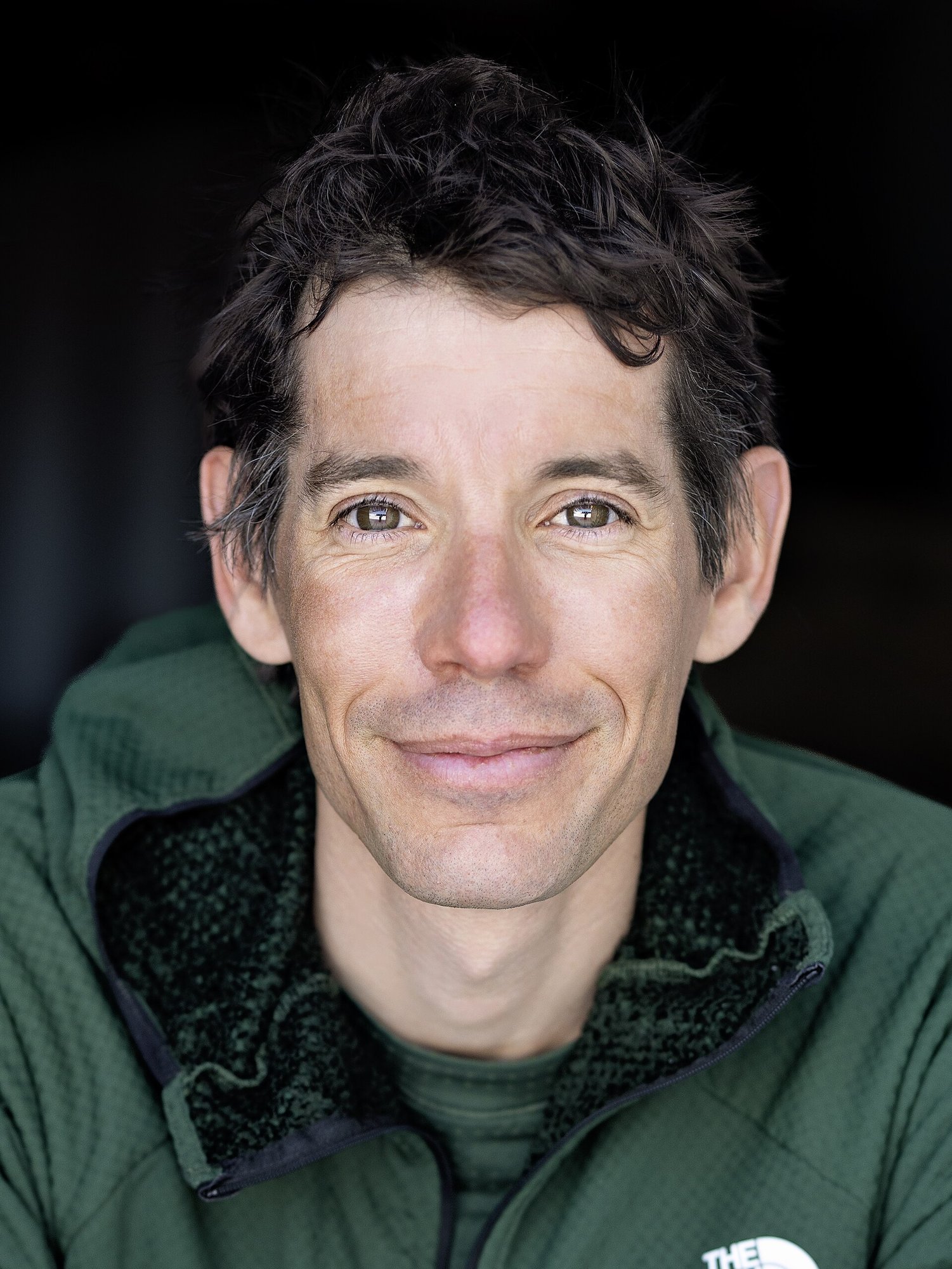
Alex Honnold.

Rock climber · Free-solo pioneer · Environmental advocate

Alex Honnold's ropeless ascent of El Capitan made him the face of Free Solo. His public life also includes marriage, fatherhood and the Honnold Foundation's solar-energy work, making questions of risk, responsibility and personal standards more complicated than a single climb.

OBJECTIVE PERSONALITY CLASSIFICATIONFF-Ti/Se-CS/P(B)What does this mean?
PERSONALITY SYSTEMObjective Personality
LEAD FUNCTIONTi · Introverted Thinking
SECOND SAVIOR FUNCTIONSe · Extroverted Sensing
MBTI EQUIVALENTISTP
01 / BEHIND THE CLASSIFICATION

The personality behind the fame.

How does a recorded OPS classification like FF-Ti/Se-CS/P(B) break down? Walk through nine coins and watch the proposed type take shape. These are deductions from the archived code, not independent evidence of typing accuracy.

Scroll below to see Alex Honnold take shape.

STARTING POINT512 possible OPS typesNine binary choices narrow the possibilities in the original OPS model.
THE FINISH LINEFF-Ti/Se-CS/P(B)One recorded classification, decoded from its components.
Alex Honnold’s HUMAN NEEDS 01—03
01
DECIDER OR OBSERVER?

Decider over Observer

Deciders have more balanced Observer poles in the middle: Control (Oi) and Chaos (Oe). Organizing what's known and handling what's new tend to feel more manageable. People are the harder territory. Self (Di) and Tribe (De) sit at the extremes, so judgment, rejection, approval, and conflict can trigger the strongest reactions.

Free Solo showed more than the technical challenge of El Capitan. It also showed Honnold's relationship with Sanni McCandless, who had to live with the consequences of risks only he could choose to take. That is the Decider territory: two people whose judgments and priorities matter to each other, even when they disagree. The strength is maintaining conviction in difficult conversations. The blind spot is overlooking how profoundly a decision affects the people closest to you.
D
02
SELF OR TRIBE?

Di · Self over De · Tribe

Self (Di) is the stronger deciding pole. They check decisions against their own values or reasons first: what makes sense to me, what feels right to me? The strength is independent conviction; the recurring friction is the Tribe (De)—other people's standards, feedback, and expectations. As the portrait unfolds, notice how Self takes the lead.

Free Solo showed Honnold making choices about risk while Sanni McCandless had to consider what those choices meant for their relationship. Self-first can maintain a carefully reasoned personal standard under emotional pressure. The void is assuming that because the decision belongs to him, another person's concerns are merely noise rather than part of a shared life.

Di
03
GATHER OR ORGANIZE?

Oe · Gather over Oi · Organize

Gather (Oe) leads with new information, experiences, and possibilities. Its strength is curiosity and adaptability; the recurring friction is narrowing the options and settling into what is already known. Another layer of the personality portrait comes into focus.

A difficult climb requires responding to the rock as it is, hold by hold, rather than insisting it match a preferred plan. Gather-first makes adaptation a strength when conditions shift. The danger is being so drawn toward the next immediate challenge that the longer-term organization of relationships and commitments receives less attention.

Oe
FIRST THREE COINSD + Di + Oe

These establish the preferred human needs in the OPS framework.

Alex Honnold’s FUNCTIONS 04—05
04
FEELING OR THINKING?

Thinking · T over Feeling · F

Thinking (T) evaluates decisions through reasons, logic, and what works—not a lack of emotion. Its strength is analytical consistency; Feeling (F) provides balance through values, meaning, and the human consequences of a decision. Combined with Self (Di), this forms the recorded Savior Ti.

His climbing decisions are publicly associated with careful preparation and calculated risk. Ti's Thinking side can scrutinize whether a move makes practical sense while the human cost remains a separate Feeling question. Rational calculation and emotional significance can both matter; neither automatically cancels the other on a sheer wall. He can explain why a move is technically possible, but that Thinking argument doesn't answer what the risk means to family. Emotional consequences don't vanish because the calculation is sound.

T → Ti
05
SENSING OR INTUITION?

Sensing · S over Intuition · N

Sensing (S) focuses on concrete details, observable reality, and lived experience. Intuition (N) balances it by looking for broader patterns, concepts, and implications. Combined with Gather (Oe), this gives the recorded Savior Se.

Honnold's achievement depends on physical detail at a scale most viewers cannot imagine: tiny holds, body position, friction and the conditions on the rock. Se's Sensing coin is direct contact with reality, not a philosophical metaphor. The abstract counterweight asks what those details mean beyond the next movement. On a ropeless ascent, fingertip friction matters more than a beautiful theory. Se's precision can be life-preserving; the broader question is what the whole undertaking is for.

S → Se
THE TWO SAVIOR FUNCTIONSTi / Se

Opposing functions: Fe and Ni.

Alex Honnold’s ANIMAL STACK 06—07
06
CONSUME OR BLAST?

Consume over Blast

Consume gathers information for internal processing; Blast organizes and communicates information. The recorded order is Consume → Sleep → Play → Blast. This comparison follows their positions in that stack.

Consume leads, and Honnold's preparation for historic climbs offers an obvious public illustration of absorbing route information before action. Yet consuming another beta video is not the same as climbing; the model asks when gathered knowledge is ready to become an actual commitment. He rehearsed moves and studied routes until much of the unknown became familiar. Consume builds knowledge; its trap is imagining preparation eliminates every uncertainty.

C > B
07
PLAY OR SLEEP?

Sleep over Play

Play emphasizes external real-time engagement; Sleep emphasizes internal processing. The recorded stack places Sleep earlier.

Sleep follows Consume in his recorded stack. Planning alone for a consequential free solo looks outwardly solitary, but solitude does not prove an OPS animal. The useful question is how private integration and an independent plan interact with the real people who will face the consequences. Free Solo juxtaposed solitary preparation with a partner asking hard questions. Sleep provides internal clarity; the growth edge is bringing it into a genuine two-person conversation.

S > P
Alex Honnold’s ANIMAL ORIENTATION 08—09
08
INFO OR ENERGY DOMINANT?

Energy over Info

Energy dominant means Play and Sleep are both in the top three: there is access to expending energy through engagement and conserving it through internal processing. Blast last leaves the information side uneven—Consume may gather far more than gets communicated.

Honnold is Energy-dominant because both Sleep and Play are in his top three animals. That means the model has room for conserving energy through private preparation and expending it through real-world engagement. His climbing life makes both sides visible: long periods studying and rehearsing routes, followed by action and interaction. But Blast is last while Consume leads. He can gather an extraordinary amount of route information; the potential void is communicating a settled plan and its human consequences as thoroughly as he has worked them out internally.

Energy
09
INTROVERSION OR EXTROVERSION?

Introversion over Extroversion

The last animal, Blast, determines this OPS coin: Play or Blast last means Introversion; Consume or Sleep last means Extroversion. This describes animal orientation, not sociability or shyness.

Blast comes last in the recorded animal sequence. Honnold can explain routes and environmental projects publicly, so 'last Blast' cannot mean inability to speak. The potential growth edge is communicating a settled plan in a way that includes others' concerns rather than expecting a perfectly reasoned calculation to end the discussion. He can explain the mechanics of a route; Blast last asks whether communicating the human stakes is as straightforward. A perfect climb and a shared agreement are different achievements.

I
ADDITIONAL LAYER · SEXUAL MODALITIES

The four sexual modalities.

OPS uses masculine/feminine sensory and extroverted-deciding distinctions as framework-specific terms, not gender categories. The recorded modality is FF · Tester.

MM KinestheticMasculine Sensory · Masculine De
MF AudioMasculine Sensory · Feminine De
FF RECORDED MODALITYTesterFeminine Sensory · Feminine De
FM VisualFeminine Sensory · Masculine De
COMPLETE RECORDED OPS TYPE · NINE COINS + SEXUAL MODALITIESFF-Ti/Se-CS/P(B)

Ti leads, Se supports, and the animal stack is Consume → Sleep → Play → Blast.

THE FINISHED PORTRAIT · ALL NINE COINS REVEALED

Alex Honnold's complete function and animal stack

ConsumeSleepPlayBlastmTifSemNifFe
FF-Ti/Se-CS/P(B)DOUBLE ACTIVATED · CONSUMEExplore the Interactive Coin Builder →
THE ALEX HONNOLD LENS

A perfect calculation still has people in it.

Honnold's 2017 free solo of El Capitan was a feat of precision, preparation and nerve, documented for a global audience in Free Solo. But the story becomes more interesting when the climbing footage shares space with his relationship with Sanni McCandless. The person taking the risk is not the only person who has to live with its consequences.

His official Ti/Se classification is Decider-first and Di-oriented. Ti protects a personal reasoning standard; Se responds to the tangible situation. That can look like extreme competence. The difficult pole is the tribe: how much weight should another person's fear have when the climber's private calculation says the move is possible? The question is an OPS lens, not an accusation about Honnold's empathy.

Consume and Sleep lead his recorded animal sequence, suggesting an information-first approach that can appear paradoxical beside an exposed rock face. Public descriptions of his preparation make the analogy useful, but climbing alone cannot establish the mental ordering. Later Play and Blast represent testing the internal position through interaction and clear communication.

The sharp growth edge is that 'I understand the risk' and 'we have agreed how to live with this risk' are different achievements. His foundation work, marriage and family make that distinction worth exploring beyond a single climb. A person can be right about the next handhold and still need a broader conversation about what matters.

These coins explain how to read the archived classification; they are not an independent typing assessment. OPS is not an independently scientifically validated personality assessment. Learn about the method →

Want to understand the Savior and Demon states behind these nine coins? Explore the complete explanation, visual examples, and typing principles on our Methodology page →

02 / KEEP EXPLORING

Different faces. Familiar patterns.

Explore other celebrities with related recorded OPS classifications. Related functions are not necessarily exact type matches.

Discover Type Twins
YOUR TURN

Curious about your own type?

Discover how your own personality might be classified through Objective Personality.

Get objectively typed