The Personality Atlas
THE CELEBRITY PERSONALITY ARCHIVE / FILM & TELEVISION

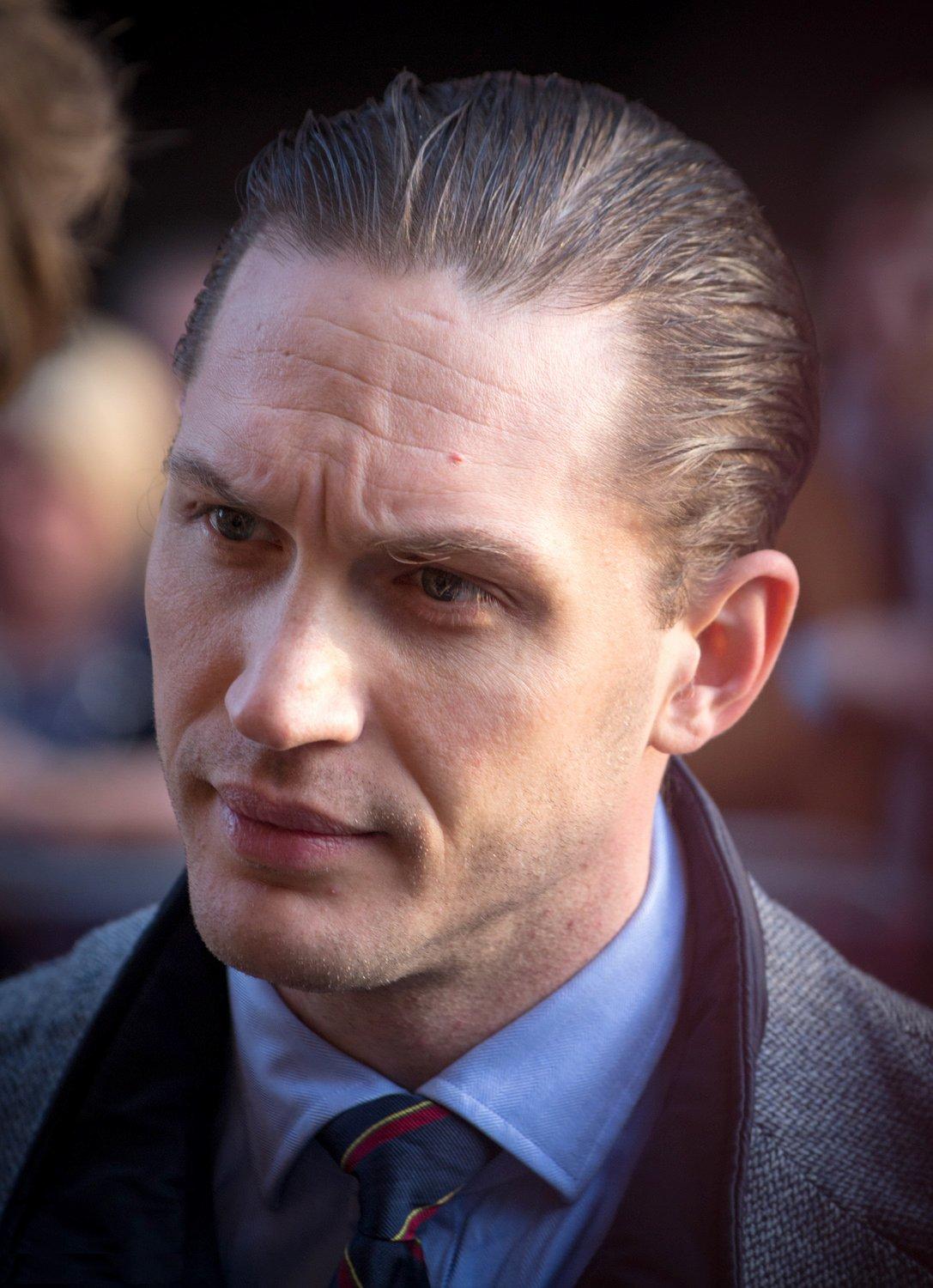
Tom Hardy.

Actor · Producer · Rapper

Tom Hardy made volatility bankable without making it tidy: from Bronson and Locke to Mad Max, Peaky Blinders and Venom, he keeps choosing work that demands physical commitment, weird specificity and a private internal logic sturdy enough to survive both arthouse minimalism and blockbuster noise.

OBJECTIVE PERSONALITY CLASSIFICATIONFM-Ti/Se-CS/P(B)What does this mean?
PERSONALITY SYSTEMObjective Personality
LEAD FUNCTIONTi · Introverted Thinking
SECOND SAVIOR FUNCTIONSe · Extroverted Sensing
MBTI EQUIVALENTISTP
01 / BEHIND THE CLASSIFICATION

The personality behind the fame.

How does a recorded OPS classification like FM-Ti/Se-CS/P(B) break down? Walk through nine coins and watch the proposed type take shape. These are deductions from the archived code, not independent evidence of typing accuracy.

Scroll below to see Tom Hardy take shape.

STARTING POINT512 possible OPS typesEach type combines core functions, an animal order, and sexual modalities.
THE FINISH LINEFM-Ti/Se-CS/P(B)One recorded classification, decoded from its components.
Tom Hardy’s HUMAN NEEDS 01—03
01
DECIDER OR OBSERVER?

Decider over Observer

Deciders have more balanced Observer poles in the middle: Control (Oi) and Chaos (Oe). Organizing what's known and handling what's new tend to feel more manageable. People are the harder territory. Self (Di) and Tribe (De) sit at the extremes, so judgment, rejection, approval, and conflict can trigger the strongest reactions.

Hardy’s career has rarely looked orderly. He jumped from Black Hawk Down and Star Trek: Nemesis into the brutal transformation of Bronson, then from the contained pressure of Locke to the desert machinery of Mad Max: Fury Road. In his recorded Decider and Double Observer pattern, that range reflects adaptability under changing conditions, not a primary fixation on circumstances. The strength is flexibility with body, accent, scale and genre. The less automatic balance is people-related: whose standard counts, how his private judgment lands with others, and how to turn an internal read into shared understanding.
D
02
SELF OR TRIBE?

Di · Self over De · Tribe

Self (Di) is the stronger deciding pole. They check decisions against their own values or reasons first: what makes sense to me, what feels right to me? The strength is independent conviction; the recurring friction is the Tribe (De)—other people's standards, feedback, and expectations. As the portrait unfolds, notice how Self takes the lead.

Self over Tribe shows in how often Hardy backs his own taste instead of waiting for the safest consensus. He did not build his reputation on polite leading-man choices; he chose Bronson, the one-man gamble of Locke, and later helped create and co-produce Taboo with his father. That independent standard gives his work a signature edge. The cost is that a private yes can arrive faster than shared buy-in. When the internal read is strong, collaborators and audiences may receive the result before they receive the map.

Di
03
GATHER OR ORGANIZE?

Oe · Gather over Oi · Organize

Gather (Oe) leads with new information, experiences, and possibilities. Its strength is curiosity and adaptability; the recurring friction is narrowing the options and settling into what is already known. Another layer of the personality portrait comes into focus.

Gather over Organize is visible in the sheer range of lanes Hardy keeps opening. He moves from war films to period drama, from superhero spectacle to Peaky Blinders, from stage work to a hip-hop alias and Czarface collaboration. Fresh material seems to pull him forward more than staying inside one settled brand. That flexibility is a career advantage; he can pivot before the market gets bored. The tradeoff is selectivity. A person can chase many live options and still need some discipline to close doors.

Oe
FIRST THREE COINSD + Di + Oe

These establish the preferred human needs in the OPS framework.

Tom Hardy’s FUNCTIONS 04—05
04
FEELING OR THINKING?

Thinking · T over Feeling · F

Thinking (T) evaluates decisions through reasons, logic, and what works—not a lack of emotion. Its strength is analytical consistency; Feeling (F) provides balance through values, meaning, and the human consequences of a decision. Combined with Self (Di), this forms the recorded Savior Ti.

Thinking comes through in Hardy’s almost engineered approach to performance. At drama school he mirrored Gary Oldman scenes; for Bronson he gained three stone, studied the real Charles Bronson and worked to match voice and manner. That is not just intensity for its own sake. It suggests an internal standard for whether the construction works. The strength is precision: a character feels built from the inside instead of borrowed from cliché. The blind spot is communication. When the inner logic is obvious to him, he can under-explain the reasoning to people who only see the finished ferocity.

T → Ti
05
SENSING OR INTUITION?

Sensing · S over Intuition · N

Sensing (S) focuses on concrete details, observable reality, and lived experience. Intuition (N) balances it by looking for broader patterns, concepts, and implications. Combined with Gather (Oe), this gives the recorded Savior Se.

Sensing fits the way Hardy makes roles feel physical before they feel theoretical. Bane’s masked presence, Max Rockatansky’s battered silence, Alfie Solomons’ embodied unpredictability, and Hardy’s real-life Brazilian jiu-jitsu competition wins all point to direct engagement with the tangible world. The advantage is immediacy: audiences do not have to be told the stakes when the body, voice and space already carry them. The cost is that the concrete challenge can become the focus. Mastering what is right in front of him does not automatically supply the long-range summary of what it all adds up to.

S → Se
THE TWO SAVIOR FUNCTIONSTi / Se

Opposing functions: Fe and Ni.

Tom Hardy’s ANIMAL STACK 06—07
06
CONSUME OR BLAST?

Consume over Blast

Consume gathers information for internal processing; Blast organizes and communicates information. The recorded order is Consume → Sleep → Play → Blast. This comparison follows their positions in that stack.

Consume shows up in how much Hardy appears to absorb before he tries to define anything neatly. Years of training at the Drama Centre London, mimicking admired actors in school, meeting Charles Bronson repeatedly before portraying him, and later stepping into music projects under Frankie Pulitzer all suggest a man collecting texture, voice and reference material. The strength is depth: he rarely looks underfed by experience. The downside of Consume against Blast is obvious too. More input can keep enriching the work while postponing the moment of stating, simply and publicly, what the project is.

C > B
07
PLAY OR SLEEP?

Sleep over Play

Play emphasizes external real-time engagement; Sleep emphasizes internal processing. The recorded stack places Sleep earlier.

After that intake, Sleep landing before Play suggests Hardy wants material to compact into something privately solid before it gets fully social. Locke is a good public example: the performance is not flashy improvisation but sustained internal control under pressure. Taboo also carries that sealed, self-contained quality even while being outwardly confrontational television. The strength is density; the work arrives with a center. The cost is timing. If private consolidation runs too far ahead of interaction, other people meet the finished intensity before they get to participate in shaping it.

S > P
Tom Hardy’s ANIMAL ORIENTATION 08—09
08
INFO OR ENERGY DOMINANT?

Energy over Info

Energy dominant means Play and Sleep are both in the top three: there is access to expending energy through engagement and conserving it through internal processing. Blast last leaves the information side uneven—Consume may gather far more than gets communicated.

His recorded stack makes Hardy Energy-dominant: private processing and real-world engagement both sit in the top three, while the missing balance comes from Blast last. That combination helps explain how he can disappear into preparation, then hit a set or stage with force. There is plenty of motion, but it is not just restless busyness; it runs on alternating immersion and output. The void is clearer in interviews and career pivots than in the performances themselves. He can keep gathering and refining power long after collaborators would benefit from a cleaner, earlier explanation of the point.

Energy
09
INTROVERSION OR EXTROVERSION?

Introversion over Extroversion

The last animal, Blast, determines this OPS coin: Play or Blast last means Introversion; Consume or Sleep last means Extroversion. This describes animal orientation, not sociability or shyness.

Hardy’s OPS Introversion does not mean timid, antisocial or unable to dominate a screen. Few actors feel less socially faded than Bane, Alfie Solomons or Venom. Here it means Blast sits fourth: public explanation and settled, shareable conclusions come later than taking in material, processing it, and jumping into the immediate exchange. That can make him magnetic without making him especially linear. The strength is mystery with substance behind it. The growth cost is having to spell out direction sooner—on a set, in development, or in public work—rather than trusting the force of the performance to do all the explaining.

I
Sexual Modalities

The four sexual modalities.

OPS uses masculine/feminine sensory and extroverted-deciding distinctions as framework-specific terms, not gender categories. The four modalities are already included in the original 512 types. The recorded modality is FM · Visual.

MM KinestheticMasculine Sensory · Masculine De
MF AudioMasculine Sensory · Feminine De
FF TesterFeminine Sensory · Feminine De
FM RECORDED MODALITYVisualFeminine Sensory · Masculine De
COMPLETE RECORDED OPS TYPE · MODALITY INCLUDEDFM-Ti/Se-CS/P(B)

Ti leads, Se supports, and the animal stack is Consume → Sleep → Play → Blast.

THE FINISHED PORTRAIT · ALL NINE COINS REVEALED

Tom Hardy's complete function and animal stack

ConsumeSleepPlayBlastfTifSemNimFe
FM-Ti/Se-CS/P(B)DOUBLE ACTIVATED · CONSUMEExplore the Interactive Coin Builder →
THE TOM HARDY LENS

The force is real; the explanation comes later.

In public, Hardy often arrives as brute force: Bane behind a mask, Max barely speaking, Alfie Solomons hijacking scenes sideways. But the career behind that impression is more exacting than chaotic. From drama-school mimicry to Bronson’s studied physical overhaul, the menace is usually built, not merely unleashed.

Ti with Se is a formidable actor’s pairing for this kind of work. Ti wants the character to make inward sense; Se makes that sense tangible through body, timing, voice and immediate presence. The strength is uncanny embodiment. The limit is that what feels internally precise and physically obvious to Hardy may still remain under-explained to everyone else.

As a Decider and Double Observer, Hardy is typed as someone with enough range for chaos and changing conditions, but less automatic ease with the human question of who matters, whose standard counts, and how to translate a private read into shared understanding. The neglected function is Fe, opposite his lead Ti, so tribe-facing calibration becomes the uncomfortable growth edge.

Consume → Sleep → Play → Blast shows the final pressure point. Hardy can absorb, compact and then engage before landing on a clean public statement, which is why the performance may clarify faster than the explanation. Blast last makes that imbalance predictable. Keep the immersion and specificity, but name the thesis earlier in rehearsal rooms, story meetings and interviews.

Want to understand the Savior and Demon states behind these nine coins? Explore the complete explanation, visual examples, and typing principles on our Methodology page →

02 / KEEP EXPLORING

Different faces. Familiar patterns.

Explore other celebrities with related recorded OPS classifications. Related functions are not necessarily exact type matches.

Discover Type Twins
YOUR TURN

Curious about your own type?

Discover how your own personality might be classified through Objective Personality.

Get objectively typed
Tom Hardy's Personality Type & OPS Profile | The Personality Atlas