The Personality Atlas
THE CELEBRITY PERSONALITY ARCHIVE / FILM & PUBLIC LIFE

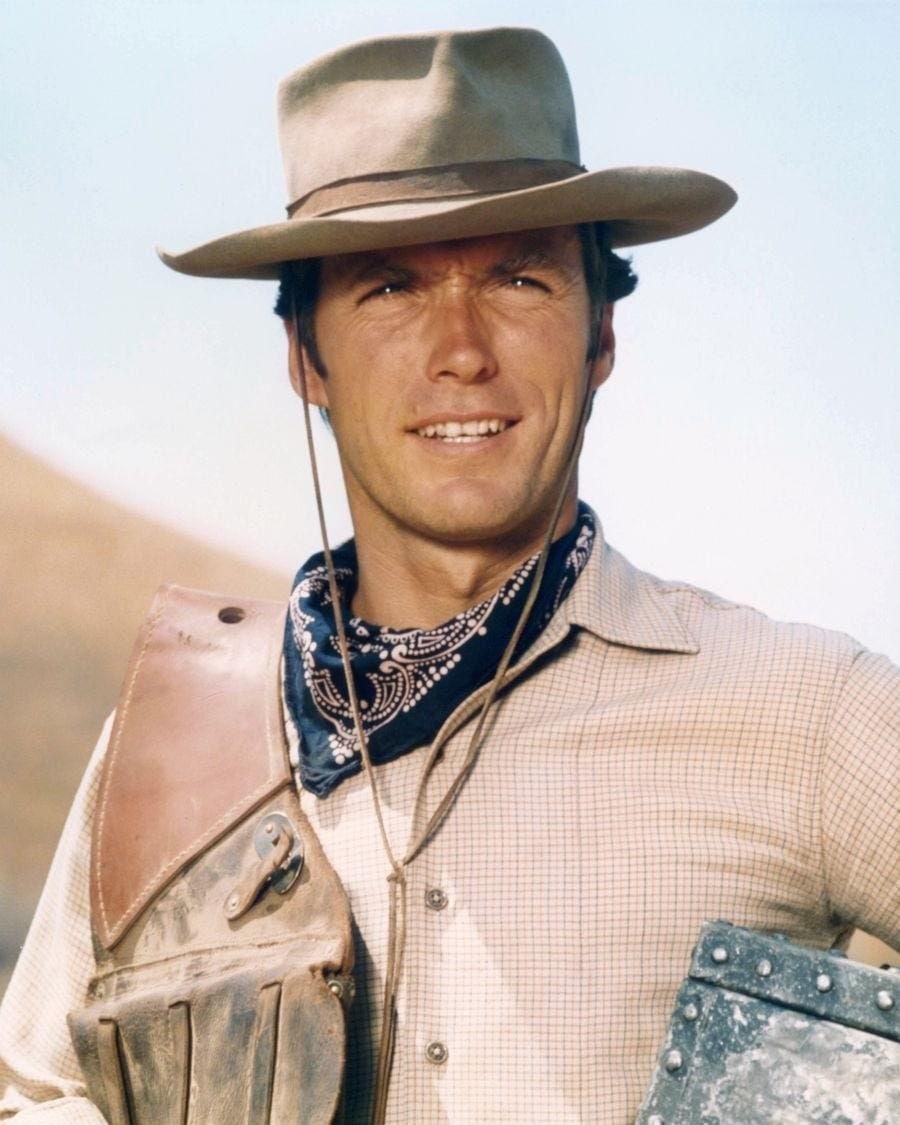
Clint Eastwood.

Actor · Director · Former Mayor

From Rawhide and Sergio Leone’s Dollars trilogy to Dirty Harry, Unforgiven, Million Dollar Baby and a two-year term as mayor of Carmel-by-the-Sea, Clint Eastwood built a public image of hard-edged authority while quietly assembling one of the longest, most self-directed careers in American film.

OBJECTIVE PERSONALITY CLASSIFICATIONFM-Ti/Se-CS/P(B)What does this mean?
PERSONALITY SYSTEMObjective Personality
LEAD FUNCTIONTi · Introverted Thinking
SECOND SAVIOR FUNCTIONSe · Extroverted Sensing
MBTI EQUIVALENTISTP
01 / BEHIND THE CLASSIFICATION

The personality behind the fame.

How does a recorded OPS classification like FM-Ti/Se-CS/P(B) break down? Walk through nine coins and watch the proposed type take shape. These are deductions from the archived code, not independent evidence of typing accuracy.

Scroll below to see Clint Eastwood take shape.

STARTING POINT512 possible OPS typesEach type combines core functions, an animal order, and sexual modalities.
THE FINISH LINEFM-Ti/Se-CS/P(B)One recorded classification, decoded from its components.
Clint Eastwood’s HUMAN NEEDS 01—03
01
DECIDER OR OBSERVER?

Decider over Observer

Deciders have more balanced Observer poles in the middle: Control (Oi) and Chaos (Oe). Organizing what's known and handling what's new tend to feel more manageable. People are the harder territory. Self (Di) and Tribe (De) sit at the extremes, so judgment, rejection, approval, and conflict can trigger the strongest reactions.

Eastwood’s career is full of public judgment fights. The Dollars trilogy made him a star, but American critics called those films “cheapjack,” “dopey,” and worse before the box office forced respect. That pattern fits a Decider tension: the pressure is less about unstable circumstances than about what people think a man, a hero, or a serious actor should be. His strength is unusual steadiness under praise or contempt. The blind spot is that when the friction lives in judgment, it becomes easy to treat another person’s objection as noise instead of information that needs translating.
D
02
SELF OR TRIBE?

Di · Self over De · Tribe

Self (Di) is the stronger deciding pole. They check decisions against their own values or reasons first: what makes sense to me, what feels right to me? The strength is independent conviction; the recurring friction is the Tribe (De)—other people's standards, feedback, and expectations. As the portrait unfolds, notice how Self takes the lead.

His refusal of James Bond is the cleanest Self-first tell in the biography. Eastwood did not pass because the role lacked prestige; he passed because it violated his own standard: “That was someone else’s gig.” The same independent streak shows up in building Malpaso Productions and steering his career toward roles he could stand behind. The advantage is a career with authorship instead of constant approval-seeking. The cost is that a private verdict can feel complete too early, leaving less room for other people’s reasons, traditions, or hopes for what he ought to do next.

Di
03
GATHER OR ORGANIZE?

Oe · Gather over Oi · Organize

Gather (Oe) leads with new information, experiences, and possibilities. Its strength is curiosity and adaptability; the recurring friction is narrowing the options and settling into what is already known. Another layer of the personality portrait comes into focus.

From Rawhide to Italian westerns, war films, a musical, police thrillers, directing, and even a term as mayor of Carmel-by-the-Sea, Eastwood kept moving toward the next opening rather than protecting one settled identity. That is Gather over Organize in public form: another role, another format, another route to test. The strength is range without paralysis when a new door appears. The growth cost is selectivity. A career cannot become every interesting possibility at once, and chasing the next workable opening can postpone the harder task of defining which lane deserves long-term commitment.

Oe
FIRST THREE COINSD + Di + Oe

These establish the preferred human needs in the OPS framework.

Clint Eastwood’s FUNCTIONS 04—05
04
FEELING OR THINKING?

Thinking · T over Feeling · F

Thinking (T) evaluates decisions through reasons, logic, and what works—not a lack of emotion. Its strength is analytical consistency; Feeling (F) provides balance through values, meaning, and the human consequences of a decision. Combined with Self (Di), this forms the recorded Savior Ti.

Eastwood’s Ti shows in how deliberately he stripped performance down. Speaking about the Man with No Name, he said he wanted “an economy of words” and to create the character through attitude and movement. That is not just coolness; it is an internal standard for what fits and what does not. The strength is precision. He can remove sentimental clutter until a role reads clean and forceful. The blind spot is that a privately coherent choice can be under-explained to everyone else, inviting charges of stiffness, coldness, or simplicity where he sees exactness.

T → Ti
05
SENSING OR INTUITION?

Sensing · S over Intuition · N

Sensing (S) focuses on concrete details, observable reality, and lived experience. Intuition (N) balances it by looking for broader patterns, concepts, and implications. Combined with Gather (Oe), this gives the recorded Savior Se.

Se is all over the public facts of Eastwood’s rise: the hat, cigar and poncho of Leone’s antihero, the practical warning that pushed Eli Wallach away from explosives moments before a dangerous premature blast, the way his screen image lands through physical presence before explanation. Sensing gives him a talent for what is concrete, visible, and immediately workable. The strength is decisive contact with reality as it stands. The cost is that the immediate scene can dominate attention, while broader interpretation or future framing gets delegated to later—sometimes to critics, collaborators, or the audience.

S → Se
THE TWO SAVIOR FUNCTIONSTi / Se

Opposing functions: Fe and Ni.

Clint Eastwood’s ANIMAL STACK 06—07
06
CONSUME OR BLAST?

Consume over Blast

Consume gathers information for internal processing; Blast organizes and communicates information. The recorded order is Consume → Sleep → Play → Blast. This comparison follows their positions in that stack.

Eastwood’s first animal comparison lands on Consume over Blast. Before the iconography looked effortless, he spent years in small parts, grueling Rawhide schedules, and careful observation of what did and did not work on camera. Consume gives him material to draw from: craft, timing, genre vocabulary, the confidence to revise an old western hero into something leaner. The weakness sits against Blast. Gathering can keep feeling productive long after the core point is ready. More intake sharpens the blade, but it can also delay the plain public statement of what the work is trying to say.

C > B
07
PLAY OR SLEEP?

Sleep over Play

Play emphasizes external real-time engagement; Sleep emphasizes internal processing. The recorded stack places Sleep earlier.

Sleep comes earlier than Play here, and that ordering matters. Eastwood did not merely react to the Rawhide machine; he privately consolidated what he wanted next, then used that inner edit to pivot into Leone’s antihero and later to direct Play Misty for Me for the artistic control he wanted. Sleep gives a strong internal center before public engagement accelerates. The tradeoff is that real-time exchange can arrive after the decision has already hardened. Other people may meet a conclusion that feels fully processed to him but only partially explained to them.

S > P
Clint Eastwood’s ANIMAL ORIENTATION 08—09
08
INFO OR ENERGY DOMINANT?

Energy over Info

Energy dominant means Play and Sleep are both in the top three: there is access to expending energy through engagement and conserving it through internal processing. Blast last leaves the information side uneven—Consume may gather far more than gets communicated.

Eastwood’s stack lands on Energy over Info because Sleep and Play both arrive before Blast. That fits the public rhythm of a career spent acting, directing, producing, and sustaining physically demanding work across decades: there is a live balance between conserving his own center and getting into motion with crews, casts, and sets. The void is Blast last. He can keep absorbing, refining, and doing without always packaging the larger message for others quickly. The strength is durable output without theatrical over-explaining. The cost is that collaborators and critics may have to infer the thesis from the work instead of hearing it stated plainly.

Energy
09
INTROVERSION OR EXTROVERSION?

Introversion over Extroversion

The last animal, Blast, determines this OPS coin: Play or Blast last means Introversion; Consume or Sleep last means Extroversion. This describes animal orientation, not sociability or shyness.

Blast sits last, which makes this an OPS Introversion result even though Eastwood became a movie star, director, and elected mayor. The issue is not sociability. It is whether broadcasting a settled conclusion comes as naturally as learning, processing, and then acting. Eastwood’s public legend has always leaned on reserve: the less-said antihero, the flinty inspector, the filmmaker who often lets the finished movie do more talking than his explanation does. The advantage is compression and authority. The growth edge is making the point explicit soon enough that other people can work with it, challenge it, and improve it.

I
Sexual Modalities

The four sexual modalities.

OPS uses masculine/feminine sensory and extroverted-deciding distinctions as framework-specific terms, not gender categories. The four modalities are already included in the original 512 types. The recorded modality is FM · Visual.

MM KinestheticMasculine Sensory · Masculine De
MF AudioMasculine Sensory · Feminine De
FF TesterFeminine Sensory · Feminine De
FM RECORDED MODALITYVisualFeminine Sensory · Masculine De
COMPLETE RECORDED OPS TYPE · MODALITY INCLUDEDFM-Ti/Se-CS/P(B)

Ti leads, Se supports, and the animal stack is Consume → Sleep → Play → Blast.

THE FINISHED PORTRAIT · ALL NINE COINS REVEALED

Clint Eastwood's complete function and animal stack

ConsumeSleepPlayBlastfTifSemNimFe
FM-Ti/Se-CS/P(B)DOUBLE ACTIVATED · CONSUMEExplore the Interactive Coin Builder →
THE CLINT EASTWOOD LENS

The quiet author behind the legend

The public image is almost too efficient: the poncho, the squint, Dirty Harry’s dare. But the man behind it kept building leverage patiently. Rawhide gave Eastwood the grind, Sergio Leone gave him a sharper mask, and Malpaso Productions gave him control. That combination explains why the legend feels so self-authored: not accidental toughness, but a career repeatedly bent toward terms he could live with.

His Ti/Se pairing is a concrete strength. Ti strips a role to what fits; Se makes that choice visible in props, posture, danger and timing. You can see it in the Man with No Name’s economy of words and physical presence. The limit is just as clear: what feels exact and efficient to Eastwood can read distant, under-explained or emotionally spare to people who need more explicit framing.

As a Decider and Double Observer, Eastwood’s core pressure centers on people, judgment and significance more than on changing circumstances. That Double Observer balance can make him steady while critics and roles shift around him. The imbalance shows up in overtrusting his own verdict about impact. The neglected function opposite lead Ti is Fe: the harder work of openly accounting for other people’s values, morale and shared meaning.

Consume → Sleep → Play → Blast puts explanation last. Eastwood first gathers, then solidifies, then engages, while Blast fourth makes broadcasting the thesis the stretch point. That is OPS Introversion here, not a comment on poise. The balancing move is simple and costly: keep the spare authority, but tell actors, collaborators and audiences the point earlier so the work does not have to carry every explanation alone.

Want to understand the Savior and Demon states behind these nine coins? Explore the complete explanation, visual examples, and typing principles on our Methodology page →

02 / KEEP EXPLORING

Different faces. Familiar patterns.

Explore other celebrities with related recorded OPS classifications. Related functions are not necessarily exact type matches.

Discover Type Twins
YOUR TURN

Curious about your own type?

Discover how your own personality might be classified through Objective Personality.

Get objectively typed
Clint Eastwood's Personality Type & OPS Profile | The Personality Atlas