The Personality Atlas
THE CELEBRITY PERSONALITY ARCHIVE / FILM

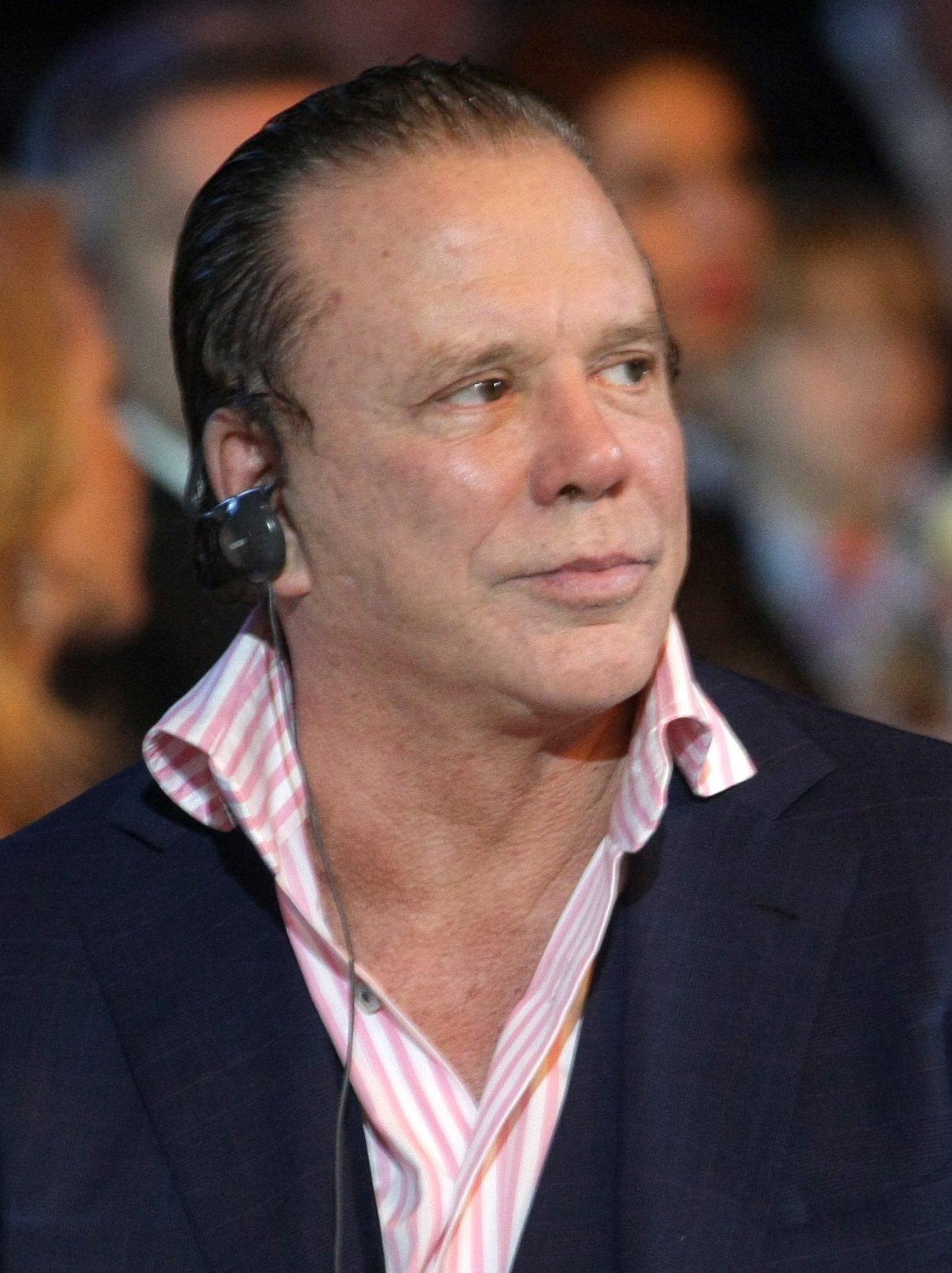
Mickey Rourke.

Actor · Screenwriter · Former boxer

Mickey Rourke’s career never moved like a clean prestige arc. He broke through with Body Heat and Diner, became one of the most magnetic leading men of the 1980s, walked away to box professionally, then returned for a battered late-career revival in Sin City and The Wrestler. The public image is all danger, bruises and volatility. The more interesting pattern is a man who keeps testing himself through direct risk, then paying heavily when intensity outruns diplomacy.

OBJECTIVE PERSONALITY CLASSIFICATIONFM-Ti/Se-CS/P(B)What does this mean?
PERSONALITY SYSTEMObjective Personality
LEAD FUNCTIONTi · Introverted Thinking
SECOND SAVIOR FUNCTIONSe · Extroverted Sensing
MBTI EQUIVALENTISTP
01 / BEHIND THE CLASSIFICATION

The personality behind the fame.

How does a recorded OPS classification like FM-Ti/Se-CS/P(B) break down? Walk through nine coins and watch the proposed type take shape. These are deductions from the archived code, not independent evidence of typing accuracy.

Scroll below to see Mickey Rourke take shape.

STARTING POINT512 possible OPS typesEach type combines core functions, an animal order, and sexual modalities.
THE FINISH LINEFM-Ti/Se-CS/P(B)One recorded classification, decoded from its components.
Mickey Rourke’s HUMAN NEEDS 01—03
01
DECIDER OR OBSERVER?

Decider over Observer

Deciders have more balanced Observer poles in the middle: Control (Oi) and Chaos (Oe). Organizing what's known and handling what's new tend to feel more manageable. People are the harder territory. Self (Di) and Tribe (De) sit at the extremes, so judgment, rejection, approval, and conflict can trigger the strongest reactions.

Rourke’s story reads less like a battle with bad luck than a long struggle with people, respect and personal significance. Early acclaim in Body Heat, Diner and Angel Heart proved he could command attention, but his career was also repeatedly shaped by reputation, working relationships and whether others could handle the same intensity that made him compelling onscreen. That Decider pressure can create unforgettable presence. The blind spot is turning every career crossroads into a verdict on who values you, who gets you, and whether your place in the room is secure.
D
02
SELF OR TRIBE?

Di · Self over De · Tribe

Self (Di) is the stronger deciding pole. They check decisions against their own values or reasons first: what makes sense to me, what feels right to me? The strength is independent conviction; the recurring friction is the Tribe (De)—other people's standards, feedback, and expectations. As the portrait unfolds, notice how Self takes the lead.

In 1991, Rourke left acting to return to boxing, later saying he did it because he had no respect for himself as an actor and needed to test himself physically. That is a strong Self-first signal: the internal standard mattered more than Hollywood’s external rewards. The upside is conviction. He was willing to walk away from status rather than fake satisfaction. The cost is brutal. A private standard can become so dominant that it dismisses advice, burns bridges, or treats collaboration like compromise when the career itself depends on other people staying in the fight with you.

Di
03
GATHER OR ORGANIZE?

Oe · Gather over Oi · Organize

Gather (Oe) leads with new information, experiences, and possibilities. Its strength is curiosity and adaptability; the recurring friction is narrowing the options and settling into what is already known. Another layer of the personality portrait comes into focus.

Rourke’s career is full of pivots: from early acting promise to leading-man fame, from film to professional boxing, from commercial collapse to an art-house comeback, from screen acting to scriptwriting and voice work. That flexibility points to Gather over Organize. He is willing to move toward the next live option instead of preserving one stable identity. The strength is reinvention under pressure. The growth cost is selectivity. A life built on what is possible next can drift away from what is sustainable, leaving a trail of missed roles, detours and avoidable resets.

Oe
FIRST THREE COINSD + Di + Oe

These establish the preferred human needs in the OPS framework.

Mickey Rourke’s FUNCTIONS 04—05
04
FEELING OR THINKING?

Thinking · T over Feeling · F

Thinking (T) evaluates decisions through reasons, logic, and what works—not a lack of emotion. Its strength is analytical consistency; Feeling (F) provides balance through values, meaning, and the human consequences of a decision. Combined with Self (Di), this forms the recorded Savior Ti.

The Wrestler offers a clean example of Ti. Rourke said he initially did not care for the script and pushed to rewrite his dialogue because the character did not sound like people he had known. That internal calibration gave Randy "The Ram" Robinson much of the role’s bruised credibility. Ti’s strength is precision: the performance has to make sense from the inside. The limit is that an internally correct answer can be socially expensive. If the standard is too private, collaborators may experience rigor not as craft, but as friction they have to survive.

T → Ti
05
SENSING OR INTUITION?

Sensing · S over Intuition · N

Sensing (S) focuses on concrete details, observable reality, and lived experience. Intuition (N) balances it by looking for broader patterns, concepts, and implications. Combined with Gather (Oe), this gives the recorded Savior Se.

Rourke’s work keeps returning to the physical world. He trained as a boxer in his youth, fought professionally in the 1990s, trained under Afa for The Wrestler, and even visited Russian jail inmates while preparing for Iron Man 2. Se shows up as a need to touch the material directly instead of treating roles as abstractions. The strength is immediacy: his characters often feel inhabited rather than merely portrayed. The cost is wear and tear. A life driven by real-world impact can keep choosing harder tests long after the body and career have started sending different instructions.

S → Se
THE TWO SAVIOR FUNCTIONSTi / Se

Opposing functions: Fe and Ni.

Mickey Rourke’s ANIMAL STACK 06—07
06
CONSUME OR BLAST?

Consume over Blast

Consume gathers information for internal processing; Blast organizes and communicates information. The recorded order is Consume → Sleep → Play → Blast. This comparison follows their positions in that stack.

Consume over Blast stands out in how Rourke builds from lived material. He studied at the Actors Studio, borrowed money to move to New York, absorbed boxing culture firsthand, and later rewrote parts of The Wrestler so the voice matched people he had actually known. That appetite for taking in reality gives his best work density and specificity. The blind spot is that gathering can become its own refuge. More research, more experience, more proof can postpone the simpler public task of stating the direction clearly and letting other people work from it.

C > B
07
PLAY OR SLEEP?

Sleep over Play

Play emphasizes external real-time engagement; Sleep emphasizes internal processing. The recorded stack places Sleep earlier.

After Consume, the next emphasis looks more like Sleep than Play. Rourke’s comeback was not built on breezy industry networking; by his own public account, it involved a more private rebuilding structure of meetings, reflection and a slower reset around acting. Even his best late performances feel internally processed before they are socially smoothed out. That can produce work with a real center. The cost is that collaboration does not always wait for private integration. If the inner version feels finished, outside input can arrive too late and register as intrusion instead of useful friction.

S > P
Mickey Rourke’s ANIMAL ORIENTATION 08—09
08
INFO OR ENERGY DOMINANT?

Energy over Info

Energy dominant means Play and Sleep are both in the top three: there is access to expending energy through engagement and conserving it through internal processing. Blast last leaves the information side uneven—Consume may gather far more than gets communicated.

Rourke’s stack lands on the Energy side because the top three animals lean toward conserving and spending life-force rather than packaging information neatly for others. You can see it in the way he throws himself into demanding physical worlds—acting, boxing, comeback reinventions—while still carrying a strongly private center. The missing balance is Blast. He often has the talent, experience and authority, but not always the same ease in turning that into a steady, clear message collaborators can trust. The growth edge is not more intensity; it is cleaner transmission.

Energy
09
INTROVERSION OR EXTROVERSION?

Introversion over Extroversion

The last animal, Blast, determines this OPS coin: Play or Blast last means Introversion; Consume or Sleep last means Extroversion. This describes animal orientation, not sociability or shyness.

Rourke’s OPS Introversion is easy to miss because his public image is so forceful. Sex-symbol fame, boxing matches, villain roles and reality-TV headlines can look outward by default. But this coin is not about sociability. With Blast last in Consume–Sleep–Play–Blast, taking in, privately processing and then engaging come more naturally than broadcasting a settled conclusion. The advantage is depth before declaration. The blind spot is letting the room feel your force without fully understanding your point. Balance means saying the thing plainly before another test, conflict or performance says it for you.

I
Sexual Modalities

The four sexual modalities.

OPS uses masculine/feminine sensory and extroverted-deciding distinctions as framework-specific terms, not gender categories. The four modalities are already included in the original 512 types. The recorded modality is FM · Visual.

MM KinestheticMasculine Sensory · Masculine De
MF AudioMasculine Sensory · Feminine De
FF TesterFeminine Sensory · Feminine De
FM RECORDED MODALITYVisualFeminine Sensory · Masculine De
COMPLETE RECORDED OPS TYPE · MODALITY INCLUDEDFM-Ti/Se-CS/P(B)

Ti leads, Se supports, and the animal stack is Consume → Sleep → Play → Blast.

THE FINISHED PORTRAIT · ALL NINE COINS REVEALED

Mickey Rourke's complete function and animal stack

ConsumeSleepPlayBlastfTifSemNimFe
FM-Ti/Se-CS/P(B)DOUBLE ACTIVATED · CONSUMEExplore the Interactive Coin Builder →
THE MICKEY ROURKE LENS

The bruised craftsman behind the myth

The Wrestler is the fast way into Mickey Rourke: a wrecked body, a face carrying years of boxing damage, and a performance that felt pulled from lived experience. The public image is danger. The person underneath looks stricter than random, constantly testing whether the work feels real enough to stake himself on.

Ti with Se gives him a potent combination: an inner standard for what rings true, fused to firsthand physical reality. That helped make roles like The Wrestler and Barfly feel inhabited instead of merely performed. The limit is obvious too. When private accuracy becomes nonnegotiable, collaboration can start to look like dilution rather than support.

As a Decider and Double Observer, his recurring strain centers on people, respect and significance more than on handling chaos itself. The imbalance is human-need calibration: whose judgment matters, how much to answer to others, and when to soften the delivery. The neglected function is Fe, opposite lead Ti—the shared emotional read that keeps truth from landing like impact.

Consume → Sleep → Play → Blast fits the pattern: take in reality, process it privately, then engage before cleanly broadcasting the conclusion. Blast last creates the bottleneck—strong presence, less consistent translation. The balancing move is concrete: keep the rigor, but state the aim earlier with directors, castmates and interviewers so the message arrives before the friction.

Want to understand the Savior and Demon states behind these nine coins? Explore the complete explanation, visual examples, and typing principles on our Methodology page →

02 / KEEP EXPLORING

Different faces. Familiar patterns.

Explore other celebrities with related recorded OPS classifications. Related functions are not necessarily exact type matches.

Discover Type Twins
YOUR TURN

Curious about your own type?

Discover how your own personality might be classified through Objective Personality.

Get objectively typed
Mickey Rourke's Personality Type & OPS Profile | The Personality Atlas