The Personality Atlas
THE CELEBRITY PERSONALITY ARCHIVE / STYLE & TELEVISION

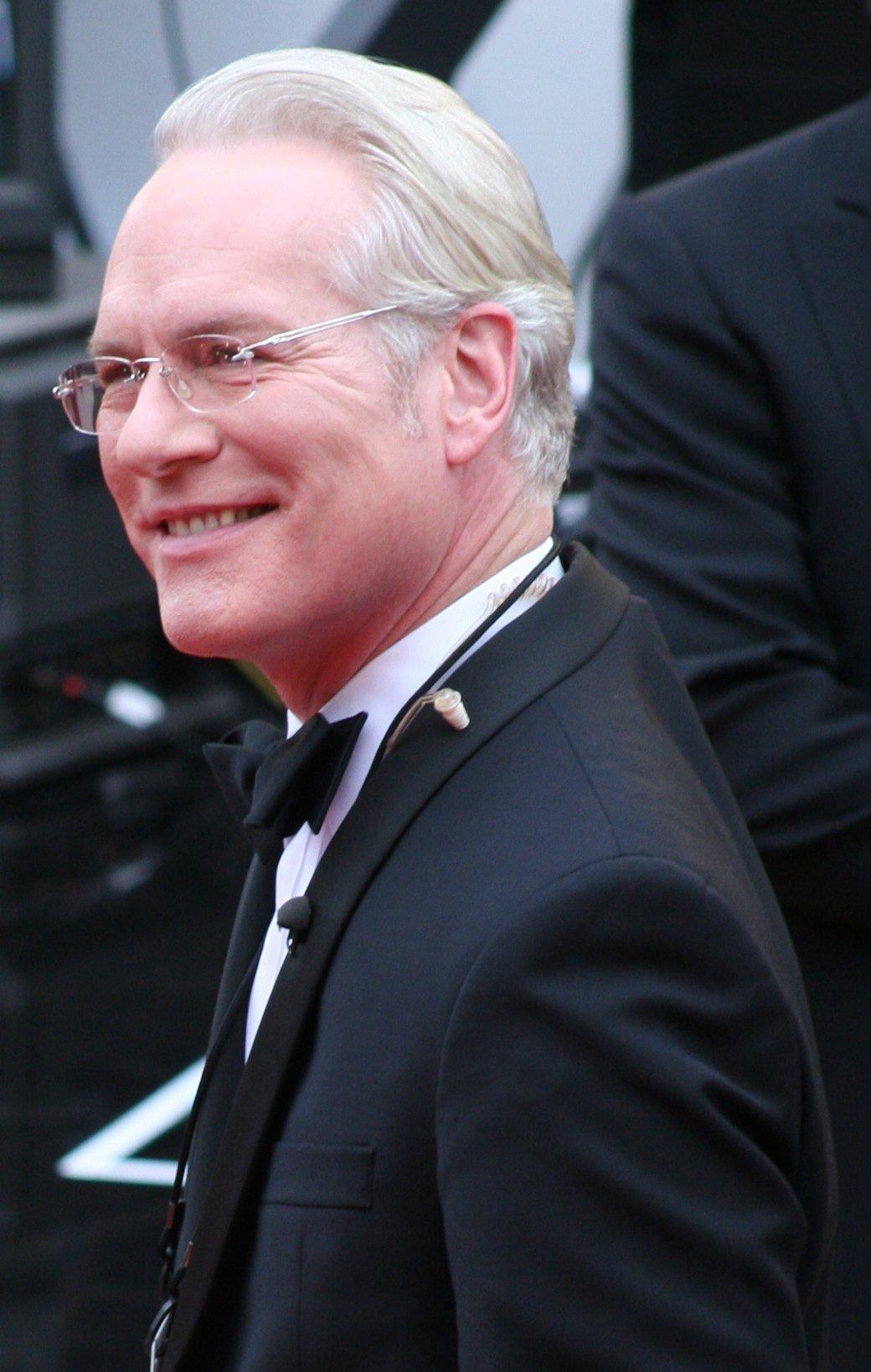
Tim Gunn.

Fashion mentor · Educator · Television personality · Author

Tim Gunn became a fashion institution by turning taste into language. Long before Project Runway made “Make it work” a catchphrase, he spent decades at Parsons, eventually retooling the curriculum for the 21st century, then carried that exacting, unusually articulate mentorship into television, books, corporate creative leadership and even a second-life obsession with fencing in his sixties.

OBJECTIVE PERSONALITY CLASSIFICATIONFM-Ti/Ne-CP/B(S) #1What does this mean?
PERSONALITY SYSTEMObjective Personality
LEAD FUNCTIONTi · Introverted Thinking
SECOND SAVIOR FUNCTIONNe · Extroverted Intuition
MBTI EQUIVALENTINTP
01 / BEHIND THE CLASSIFICATION

The personality behind the fame.

How does a recorded OPS classification like FM-Ti/Ne-CP/B(S) #1 break down? Walk through nine coins and watch the proposed type take shape. These are deductions from the archived code, not independent evidence of typing accuracy.

Scroll below to see Tim Gunn take shape.

STARTING POINT512 possible OPS typesEach type combines core functions, an animal order, and sexual modalities.
THE FINISH LINEFM-Ti/Ne-CP/B(S) #1One recorded classification, decoded from its components.
Tim Gunn’s HUMAN NEEDS 01—03
01
DECIDER OR OBSERVER?

Decider over Observer

Deciders have more balanced Observer poles in the middle: Control (Oi) and Chaos (Oe). Organizing what's known and handling what's new tend to feel more manageable. People are the harder territory. Self (Di) and Tribe (De) sit at the extremes, so judgment, rejection, approval, and conflict can trigger the strongest reactions.

Tim Gunn’s public career keeps circling back to people and standards. At Parsons he moved from faculty member to department chair, and on Project Runway he became famous for guiding designers through pressure, ego and critique. That points to Decider-style friction: the heat is in judgment, expectations and what one person owes another, not merely in managing fabric, schedules or logistics. His strength is making human feedback usable. The blind spot is that when the room is tense, energy can go toward calibrating people so intensely that the practical mess itself gets less attention.


D
02
SELF OR TRIBE?

Di · Self over De · Tribe

Self (Di) is the stronger deciding pole. They check decisions against their own values or reasons first: what makes sense to me, what feels right to me? The strength is independent conviction; the recurring friction is the Tribe (De)—other people's standards, feedback, and expectations. As the portrait unfolds, notice how Self takes the lead.

Gunn’s authority has always sounded self-authored rather than crowd-sourced. Retooling the Parsons curriculum, publishing A Guide to Quality, Taste & Style, and repeating “Make it work” all suggest a man using an internal yardstick before checking whether everyone else approves. Self over Tribe can make his guidance unusually clear: he is not waiting for a committee to decide what counts as quality. The cost is that a private standard can harden into its own certainty. Growth means letting outside priorities refine the verdict instead of treating them as noise around it.

Di
03
GATHER OR ORGANIZE?

Oe · Gather over Oi · Organize

Gather (Oe) leads with new information, experiences, and possibilities. Its strength is curiosity and adaptability; the recurring friction is narrowing the options and settling into what is already known. Another layer of the personality portrait comes into focus.

His résumé looks less like one lane than a series of openings taken seriously: academic, department chair, on-air mentor, chief creative officer, author, voice actor, producer and even competitive fencer beginning at 62. Gather over Organize gives that range a visible edge. He can move toward what is newly useful, interesting or needed instead of defending one frozen identity. The weakness is selectivity. A life rich in possibilities still has to decide which possibilities deserve structure, repetition and protection rather than another intriguing detour.

Oe
FIRST THREE COINSD + Di + Oe

These establish the preferred human needs in the OPS framework.

Tim Gunn’s FUNCTIONS 04—05
04
FEELING OR THINKING?

Thinking · T over Feeling · F

Thinking (T) evaluates decisions through reasons, logic, and what works—not a lack of emotion. Its strength is analytical consistency; Feeling (F) provides balance through values, meaning, and the human consequences of a decision. Combined with Self (Di), this forms the recorded Savior Ti.

Gunn’s public appeal often comes from lucid critique. Whether he was reshaping a Parsons curriculum or walking designers through why a look was not working, his authority lands through Thinking: a drive to make the standard coherent, explainable and internally consistent. That is a real strength in fashion, a field easily padded with vagueness. He can tell you what fails and why. The blind spot sits on the Feeling side. A sound analysis does not automatically answer what another person values, fears or needs in order to hear it well.

T → Ti
05
SENSING OR INTUITION?

Intuition · N over Sensing · S

Intuition (N) focuses on concepts, patterns, and what information might mean. Sensing (S) balances it through observable facts, physical detail, and direct experience. Combined with Gather (Oe), this gives the recorded Savior Ne.

Intuition fits the way Gunn keeps turning one domain into another. A sculpture BFA leads to fashion education; fashion education leads to reality television; television visibility becomes books, style coaching, executive work and new media projects like Making the Cut. Even “Make it work” carries an intuitive flavor: not just obey the obvious rule, but imagine another route through the constraint. That flexibility is a strength. The growth cost is that possibility can become its own seduction. Not every clever new angle deserves equal weight once the concrete demands of execution arrive.

N → Ne
THE TWO SAVIOR FUNCTIONSTi / Ne

Opposing functions: Fe and Si.

Tim Gunn’s ANIMAL STACK 06—07
06
CONSUME OR BLAST?

Consume over Blast

Consume gathers information for internal processing; Blast organizes and communicates information. The recorded order is Consume → Play → Blast → Sleep. This comparison follows their positions in that stack.

Consume has a very visible public record in Gunn’s life. He spent twenty-five years at Parsons before leaving in 2007, wrote five books, and even published a fashion history volume, Tim Gunn’s Fashion Bible. That is a career built on taking in material, refining taste and building a deep reference library before speaking. The strength is substance; his advice rarely sounds borrowed five minutes earlier. The blind spot, especially against Blast, is delay by enrichment. More context can keep improving the lesson while postponing the cleanest, simplest conclusion.

C > B
07
PLAY OR SLEEP?

Play over Sleep

Play emphasizes external real-time engagement; Sleep emphasizes internal processing. The recorded stack places Play earlier.

Play helps explain why Gunn’s expertise became television instead of remaining a private archive. Project Runway, Tim Gunn’s Guide to Style, Under the Gunn and Project Runway: Junior all put him in live exchange with contestants, clients and audiences. Alongside Consume, the knowledge gets tested in motion, with another person in the room. That gives his mentoring quickness and accessibility. The tradeoff against Sleep is recovery. Constant outward engagement can keep the insights flowing while making it easier to skip the slower internal reset that keeps guidance fresh.

P > S
Tim Gunn’s ANIMAL ORIENTATION 08—09
08
INFO OR ENERGY DOMINANT?

Info over Energy

Info dominant means Consume and Blast are both in the top three: gathering and communicating information are more balanced. Sleep last leaves the energy side uneven—Play can keep engagement going without enough private recovery.

His stack is Info-dominant, which suits a man who made a career out of learning and then translating what he learned for other people. Parsons, five books, commencement speaking, style television and years of mentoring all show the loop between absorbing information and delivering it clearly. The void comes from what is missing at the bottom: Sleep. Gunn can keep the informational circuit active—study, advise, explain, respond—long after his inner battery would benefit from stepping back. The cost is not ignorance; it is insufficient private consolidation between performances of usefulness.

Info
09
INTROVERSION OR EXTROVERSION?

Extroversion over Introversion

The last animal, Sleep, determines this OPS coin: Play or Blast last means Introversion; Consume or Sleep last means Extroversion. This describes animal orientation, not sociability or shyness.

Sleep sits last in Consume–Play–Blast–Sleep, which gives the final orientation coin as Extroversion in OPS terms. That does not mean party-loving or socially indiscriminate. It means outward information exchange tends to outrank prolonged private processing. Gunn’s public life fits that emphasis: decades of teaching, mentoring, hosting and explaining on camera. The strength is accessibility; his mind becomes useful in public, not just in solitude. The blind spot is assuming continued engagement will solve what only withdrawal can settle. Growth means protecting off-camera reflection before the next round of guidance begins.

E
Sexual Modalities

The four sexual modalities.

OPS uses masculine/feminine sensory and extroverted-deciding distinctions as framework-specific terms, not gender categories. The four modalities are already included in the original 512 types. The recorded modality is FM · Visual.

MM KinestheticMasculine Sensory · Masculine De
MF AudioMasculine Sensory · Feminine De
FF TesterFeminine Sensory · Feminine De
FM RECORDED MODALITYVisualFeminine Sensory · Masculine De
ADDITIONAL LAYER · SOCIAL TYPE

The four social types.

Social types are an additional layer on top of the original Objective Personality classification, introduced later in OPS research. They describe two proposed social preference coins: Flex vs. Friends and Generalize vs. Specialize. The combination and priority of these preferences produce four social types. Tim Gunn's recorded social type is #1.

SOCIAL #1 RECORDED SOCIAL TYPE#1Flex · Generalize
SOCIAL #2 #2Generalize · Friends
SOCIAL #3 #3Specialize · Flex
SOCIAL #4 #4Friends · Specialize
COMPLETE RECORDED OPS TYPE · MODALITY INCLUDED + SOCIAL TYPEFM-Ti/Ne-CP/B(S) #1

Ti leads, Ne supports, and the animal stack is Consume → Play → Blast → Sleep.

THE FINISHED PORTRAIT · ALL NINE COINS REVEALED

Tim Gunn's complete function and animal stack

ConsumePlayBlastSleepfTimNefSimFe
FM-Ti/Ne-CP/B(S) #1DOUBLE ACTIVATED · PLAYExplore the Interactive Coin Builder →
THE TIM GUNN LENS

The man behind “Make it work”

The public image is so crisp it can almost flatten him: the impeccably dressed mentor entering a workroom, surveying panic, and turning a catchphrase into triage. But Tim Gunn’s authority did not begin on television. It was built through decades at Parsons, where he taught, administered and eventually reshaped a curriculum before fame made him look instantly legible.

His Ti/Ne savior pairing gives that authority its particular charge. Ti wants the standard to make sense, not merely sound fashionable, while Ne keeps scanning for another route when the obvious one fails. That combination is why his guidance can feel both exacting and unexpectedly nimble. The limit is equally clear: a logically elegant possibility is not the same thing as universal buy-in.

As a Decider and Double Observer, Gunn is more likely to get snagged on people, judgment and relational expectations than on sheer chaos in the environment. The Observer side is relatively flexible; the Decider side carries the pressure. The neglected function opposite his lead savior is Fe, so the recurring imbalance is not a lack of standards but difficulty letting shared emotional priorities help set them.

Consume → Play → Blast → Sleep shows a life built around taking in information, testing it with people and then broadcasting what works, while private processing falls last. That last-animal imbalance can make usefulness feel continuous and rest feel optional. The balancing move is not softer standards. It is scheduling protected off-camera decompression after major teaching or judging stretches so his next conclusion stays sharp instead of merely immediate.

Want to understand the Savior and Demon states behind these nine coins? Explore the complete explanation, visual examples, and typing principles on our Methodology page →

02 / KEEP EXPLORING

Different faces. Familiar patterns.

Explore other celebrities with related recorded OPS classifications. Related functions are not necessarily exact type matches.

Discover Type Twins
YOUR TURN

Curious about your own type?

Discover how your own personality might be classified through Objective Personality.

Get objectively typed
Tim Gunn's Personality Type & OPS Profile | The Personality Atlas