The Personality Atlas
THE CELEBRITY PERSONALITY ARCHIVE / TECH & BUSINESS

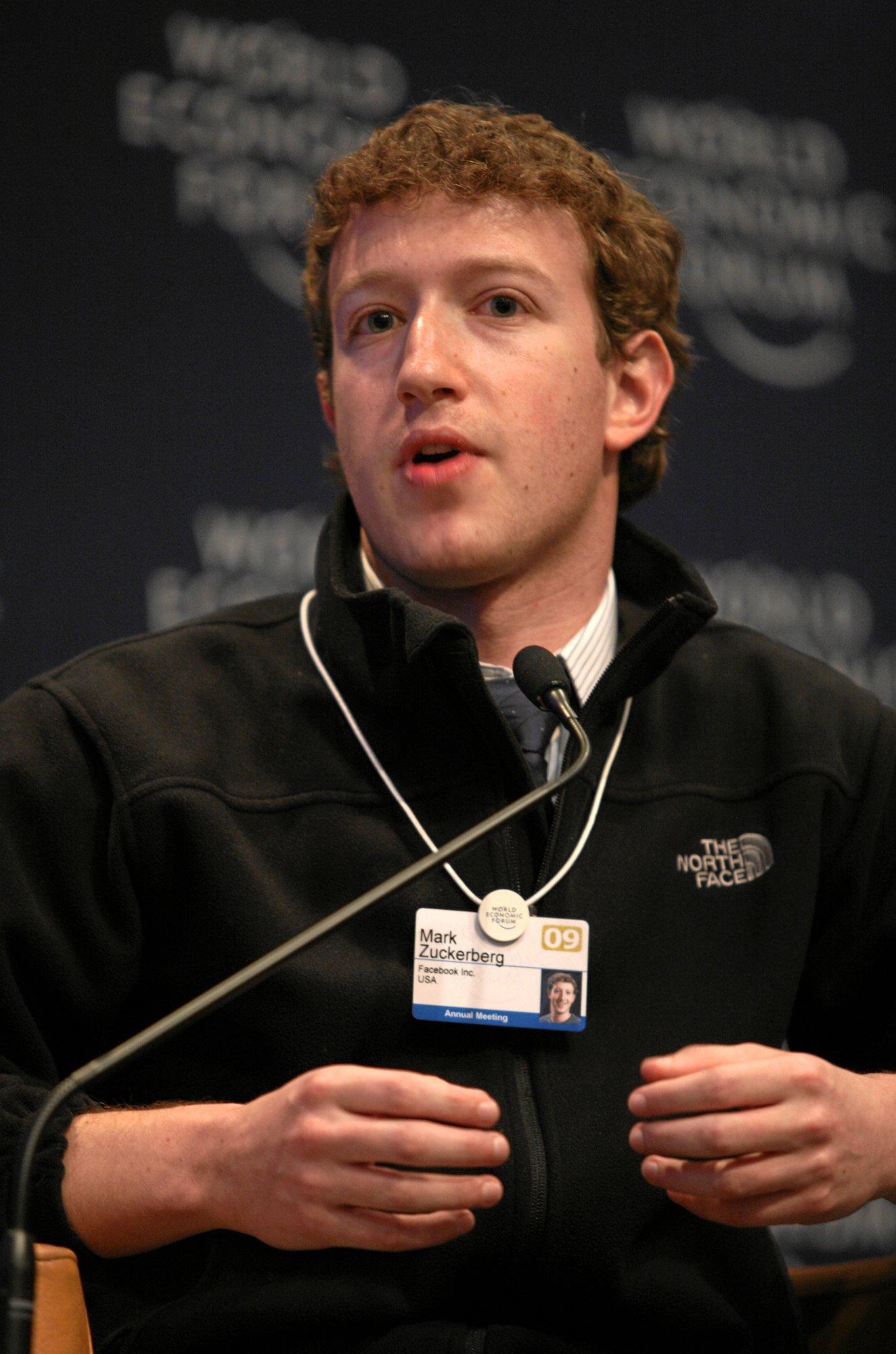
Mark Zuckerberg.

Entrepreneur · Programmer · Meta CEO

From a Harvard dorm project to the controlling-shareholder perch at Meta, Mark Zuckerberg turned student code into global infrastructure—and into a career measured not just by scale and wealth, but by lawsuits, congressional testimony, philanthropy and relentless public argument over what his systems do to other people's lives.

OBJECTIVE PERSONALITY CLASSIFICATIONFF-Ti/Ne-CS/B(P)What does this mean?
PERSONALITY SYSTEMObjective Personality
LEAD FUNCTIONTi · Introverted Thinking
SECOND SAVIOR FUNCTIONNe · Extroverted Intuition
MBTI EQUIVALENTINTP
01 / BEHIND THE CLASSIFICATION

The personality behind the fame.

How does a recorded OPS classification like FF-Ti/Ne-CS/B(P) break down? Walk through nine coins and watch the proposed type take shape. These are deductions from the archived code, not independent evidence of typing accuracy.

Scroll below to see Mark Zuckerberg take shape.

STARTING POINT512 possible OPS typesEach type combines core functions, an animal order, and sexual modalities.
THE FINISH LINEFF-Ti/Ne-CS/B(P)One recorded classification, decoded from its components.
Mark Zuckerberg’s HUMAN NEEDS 01—03
01
DECIDER OR OBSERVER?

Decider over Observer

Deciders have more balanced Observer poles in the middle: Control (Oi) and Chaos (Oe). Organizing what's known and handling what's new tend to feel more manageable. People are the harder territory. Self (Di) and Tribe (De) sit at the extremes, so judgment, rejection, approval, and conflict can trigger the strongest reactions.

Facebook made Zuckerberg one of the most publicly judged executives on earth: ownership lawsuits in the early years, recurring user-privacy scrutiny, and hours before Congress in 2018, 2021 and 2024. The recurring pressure is not mainly uncertain circumstances but other people weighing his significance, responsibility and trustworthiness. That Decider focus can be a strength; he keeps building and speaking under extraordinary criticism. The blind spot is that a product or policy can be treated like a technical dispute long after other people are experiencing it as a relational breach that needs repair, not just explanation.


D
02
SELF OR TRIBE?

Di · Self over De · Tribe

Self (Di) is the stronger deciding pole. They check decisions against their own values or reasons first: what makes sense to me, what feels right to me? The strength is independent conviction; the recurring friction is the Tribe (De)—other people's standards, feedback, and expectations. As the portrait unfolds, notice how Self takes the lead.

Zuckerberg’s career repeatedly shows Self over Tribe. He left Harvard in his second year to keep building Facebook, moved to Palo Alto, and kept control as chairman, CEO and controlling shareholder instead of drifting with outside expectations about school, age or conventional management. The advantage is a remarkably stable inner standard: he does not seem to need unanimous approval to pursue a direction. The cost is equally clear. When a leader trusts his own read first, partners, regulators and even senior colleagues can feel like obstacles to route around rather than outside inputs that deserve more weight.

Di
03
GATHER OR ORGANIZE?

Oe · Gather over Oi · Organize

Gather (Oe) leads with new information, experiences, and possibilities. Its strength is curiosity and adaptability; the recurring friction is narrowing the options and settling into what is already known. Another layer of the personality portrait comes into focus.

Before Facebook became infrastructure, Zuckerberg kept generating new openings: ZuckNet as a child, Synapse in high school, CourseMatch and Facemash at Harvard, then Facebook, Wirehog, Internet.org and later messaging integration across Meta’s platforms. That pattern fits Gather over Organize: he is quick to spot another possibility, another network effect, another scale jump. The strength is obvious in technology, where fresh options are oxygen. The growth cost is selectivity. Facemash was shut down almost immediately, and later projects like Internet.org ran into resistance when expansion moved faster than the local rules and settled boundaries around it.

Oe
FIRST THREE COINSD + Di + Oe

These establish the preferred human needs in the OPS framework.

Mark Zuckerberg’s FUNCTIONS 04—05
04
FEELING OR THINKING?

Thinking · T over Feeling · F

Thinking (T) evaluates decisions through reasons, logic, and what works—not a lack of emotion. Its strength is analytical consistency; Feeling (F) provides balance through values, meaning, and the human consequences of a decision. Combined with Self (Di), this forms the recorded Savior Ti.

His public record makes Thinking easy to see. Zuckerberg is a programmer who built tools like CourseMatch and Facebook by asking what system would work, then scaling the mechanism. Steven Levy’s description of his “hacker” self-image and Facebook’s hackathon culture shows the appeal of clean internal logic: test it, ship it, improve it. That creates enormous analytical strength. The blind spot is that a sound mechanism is not the same as a trusted institution. During data-privacy hearings, explaining the architecture could clarify the product without answering the human question of why people should trust the people running it.

T → Ti
05
SENSING OR INTUITION?

Intuition · N over Sensing · S

Intuition (N) focuses on concepts, patterns, and what information might mean. Sensing (S) balances it through observable facts, physical detail, and direct experience. Combined with Gather (Oe), this gives the recorded Savior Ne.

Zuckerberg’s observer side looks more Intuitive than Sensing. The leap from a campus photo directory to a global social graph, or from a social network to Internet.org’s attempt to connect billions more people, depends on seeing the larger pattern hiding inside a current tool. Ne is useful here: it notices what else the idea could become. That vision can be catalytic; entire industries are built on it. The limit is that a compelling possibility can outrun concrete constraints. India’s opposition to Internet.org showed that the next big concept still collides with local rules, histories and practical realities.

N → Ne
THE TWO SAVIOR FUNCTIONSTi / Ne

Opposing functions: Fe and Si.

Mark Zuckerberg’s ANIMAL STACK 06—07
06
CONSUME OR BLAST?

Consume over Blast

Consume gathers information for internal processing; Blast organizes and communicates information. The recorded order is Consume → Sleep → Blast → Play. This comparison follows their positions in that stack.

Before Zuckerberg launched Facebook, there was already a long trail of intake: learning programming as a child, building ZuckNet, creating Synapse, taking a graduate computer course while still in high school, then iterating through Harvard projects like CourseMatch and Facemash. That is a very public case of Consume beating Blast. The strength is depth. He rarely looks like someone forced to speak before he has gathered the material. The cost is that collecting more data and refining the system can postpone the simpler job of telling other people, plainly and early, what the project is and where its limits are.

C > B
07
PLAY OR SLEEP?

Sleep over Play

Play emphasizes external real-time engagement; Sleep emphasizes internal processing. The recorded stack places Sleep earlier.

Sleep coming before Play fits the pattern of a founder who often seems more comfortable refining a framework than living in open-ended back-and-forth. Zuckerberg’s long push to integrate encrypted messaging across Facebook, Instagram and WhatsApp shows the appeal of consolidating an internal direction and then moving the system toward it. That private processing can produce consistency across sprawling products. The weakness appears when the conversation will not stay on rails. Congressional testimony, land disputes and public safety criticism all required real-time engagement with other people’s reactions, not just a more internally coherent plan.

S > P
Mark Zuckerberg’s ANIMAL ORIENTATION 08—09
08
INFO OR ENERGY DOMINANT?

Info over Energy

Info dominant means Consume and Blast are both in the top three: gathering and communicating information are more balanced. Play last leaves the energy side uneven—Sleep can conserve energy without enough spontaneous outward engagement.

His recorded stack lands on Info over Energy, which makes sense for a public career built on taking in enormous amounts of technical and social information and then packaging direction for others. Zuckerberg can go from coder to keynote speaker, Harvard commencement speaker, or congressional witness without abandoning the same system-building center. The balance is useful: research, internal processing and outward explanation all show up. The missing pressure point is Play. When unscripted exchange becomes the main demand—families at a Senate hearing, critics of teen-safety policies, frustrated lawmakers—responsive back-and-forth can look less natural than analysis and prepared messaging.

Info
09
INTROVERSION OR EXTROVERSION?

Introversion over Extroversion

The last animal, Play, determines this OPS coin: Play or Blast last means Introversion; Consume or Sleep last means Extroversion. This describes animal orientation, not sociability or shyness.

Zuckerberg’s OPS Introversion does not disappear because he runs giant events, speaks Mandarin at Tsinghua, or testifies before Congress. In this system, the point is that Play lands last: Consume, Sleep and Blast all arrive earlier than the fast, improvised ping-pong of external engagement. The strength is concentration. He can hold an internally coherent direction through noise and enormous public pressure. The growth cost is that spontaneous feedback can arrive late or feel secondary. A hyperpublic CEO can still be Introverted here if prepared understanding and delivery consistently outrank live mutual adjustment.

I
Sexual Modalities

The four sexual modalities.

OPS uses masculine/feminine sensory and extroverted-deciding distinctions as framework-specific terms, not gender categories. The four modalities are already included in the original 512 types. The recorded modality is FF · Tester.

MM KinestheticMasculine Sensory · Masculine De
MF AudioMasculine Sensory · Feminine De
FF RECORDED MODALITYTesterFeminine Sensory · Feminine De
FM VisualFeminine Sensory · Masculine De
COMPLETE RECORDED OPS TYPE · MODALITY INCLUDEDFF-Ti/Ne-CS/B(P)

Ti leads, Ne supports, and the animal stack is Consume → Sleep → Blast → Play.

THE FINISHED PORTRAIT · ALL NINE COINS REVEALED

Mark Zuckerberg's complete function and animal stack

ConsumeSleepBlastPlaymTimNefSifFe
FF-Ti/Ne-CS/B(P)DOUBLE ACTIVATED · SLEEPExplore the Interactive Coin Builder →
THE MARK ZUCKERBERG LENS

The engineer inside the argument.

At the 2024 Senate Judiciary hearing, Zuckerberg stood, turned toward families of children harmed online, and apologized in person. It was striking because the public caricature is colder: the dorm-room coder who scaled a website into social infrastructure. The deeper throughline is not just ambition, but a repeated willingness to keep building after the software became a civic argument.

Ti/Ne is excellent at leverage. Ti wants the mechanism to work; Ne keeps spotting the next expansion, from Facebook’s campus launch to Meta-wide messaging integration and Internet.org. That pairing can turn code into global reach. Its limit is equally concrete: an elegant system can arrive socially underexplained when privacy, safety and trust stop feeling like side questions.

As a Decider and Double Observer, Zuckerberg’s core strain is people, not missing information. He can absorb options and map systems for years; the harder problem is the human temperature around those systems—who feels heard, protected or overruled. The neglected function is Fe, opposite his lead Ti: shared values, relational maintenance and the outside emotional atmosphere that does not yield to cleaner logic alone.

Consume → Sleep → Blast → Play explains the familiar contrast: heavy intake, private consolidation, then large-scale messaging, with live mutual adjustment coming last. Play last can make unscripted exchange feel secondary until conflict is already public. The balancing move is specific: bring more recurring, unscripted sessions with parents, safety teams and outside critics into product planning before major launches, while keeping the technical rigor that made his work powerful.

Want to understand the Savior and Demon states behind these nine coins? Explore the complete explanation, visual examples, and typing principles on our Methodology page →

02 / KEEP EXPLORING

Different faces. Familiar patterns.

Explore other celebrities with related recorded OPS classifications. Related functions are not necessarily exact type matches.

Discover Type Twins
YOUR TURN

Curious about your own type?

Discover how your own personality might be classified through Objective Personality.

Get objectively typed
Mark Zuckerberg's Personality Type & OPS Profile | The Personality Atlas