The Personality Atlas
THE CELEBRITY PERSONALITY ARCHIVE / FILM & TELEVISION

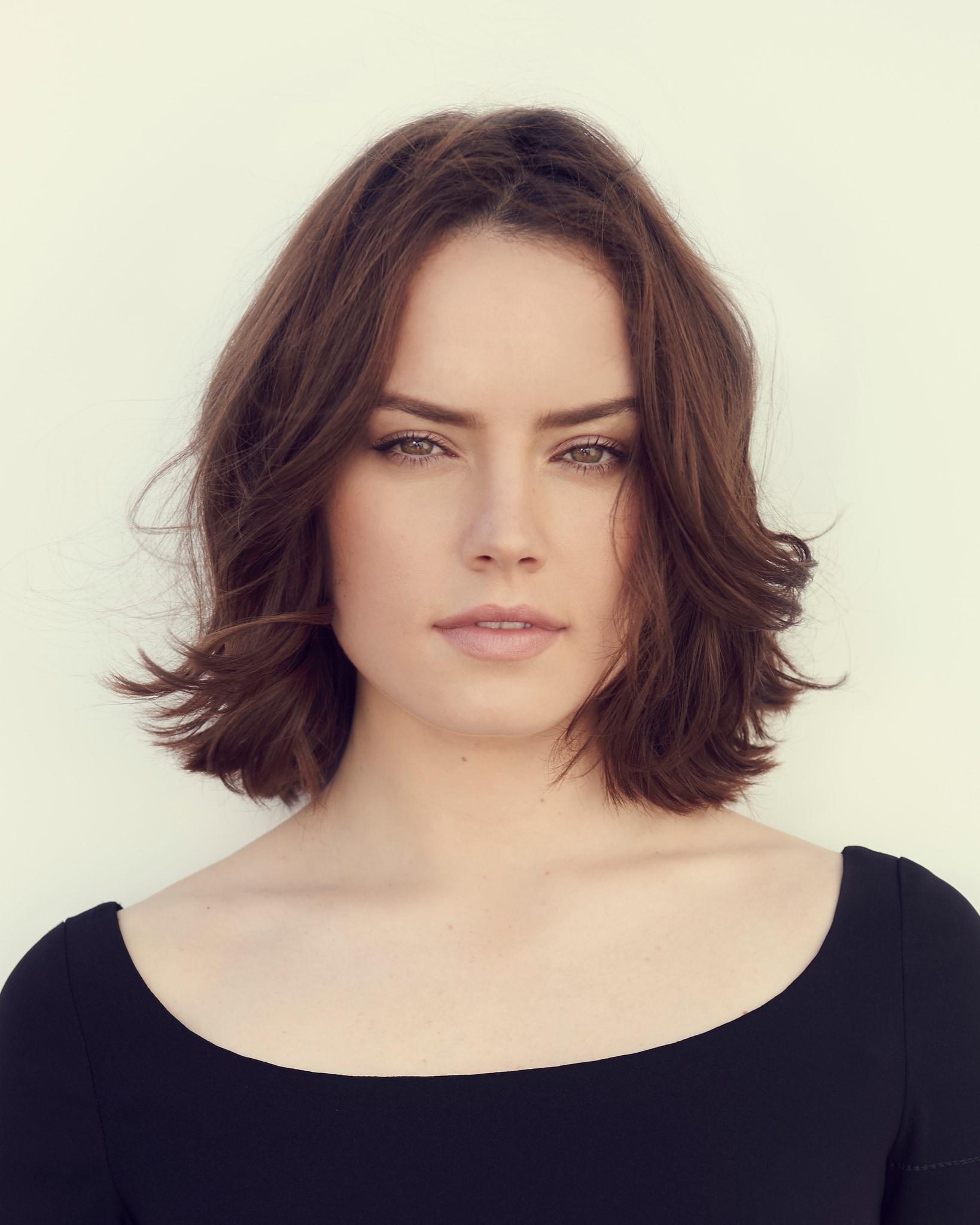
Daisy Ridley.

Actor · Producer · Podcast Host

Daisy Ridley went from tiny TV parts, a deleted film appearance and pub shifts in London to carrying the Star Wars sequel trilogy as Rey, then kept swerving on purpose: Agatha Christie, a Hamlet reimagining, voice acting, indie drama, thriller work, producing and a return to the galaxy that made her famous. The interesting pattern is not just scale. It is a career that keeps testing her own read of a project against public expectations, franchise machinery and relentless opinion.

OBJECTIVE PERSONALITY CLASSIFICATIONMF-Ti/Ne-CP/B(S)What does this mean?
PERSONALITY SYSTEMObjective Personality
LEAD FUNCTIONTi · Introverted Thinking
SECOND SAVIOR FUNCTIONNe · Extroverted Intuition
MBTI EQUIVALENTINTP
01 / BEHIND THE CLASSIFICATION

The personality behind the fame.

How does a recorded OPS classification like MF-Ti/Ne-CP/B(S) break down? Walk through nine coins and watch the proposed type take shape. These are deductions from the archived code, not independent evidence of typing accuracy.

Scroll below to see Daisy Ridley take shape.

STARTING POINT512 possible OPS typesEach type combines core functions, an animal order, and sexual modalities.
THE FINISH LINEMF-Ti/Ne-CP/B(S)One recorded classification, decoded from its components.
Daisy Ridley’s HUMAN NEEDS 01—03
01
DECIDER OR OBSERVER?

Decider over Observer

Deciders have more balanced Observer poles in the middle: Control (Oi) and Chaos (Oe). Organizing what's known and handling what's new tend to feel more manageable. People are the harder territory. Self (Di) and Tribe (De) sit at the extremes, so judgment, rejection, approval, and conflict can trigger the strongest reactions.

Ridley’s most publicly visible friction has not been a lack of opportunity so much as the people-noise surrounding it. After posting against gun violence following the 2016 Teen Choice Awards tribute, she faced criticism and comments about her appearance, then deleted her social media accounts. That is classic Decider pressure: judgment, reaction and significance getting loud fast. The strength is that she still kept working through blockbuster scrutiny. The blind spot is letting the human weather dominate the picture, where stepping away protects peace but can also shrink room for useful exchange.
D
02
SELF OR TRIBE?

Di · Self over De · Tribe

Self (Di) is the stronger deciding pole. They check decisions against their own values or reasons first: what makes sense to me, what feels right to me? The strength is independent conviction; the recurring friction is the Tribe (De)—other people's standards, feedback, and expectations. As the portrait unfolds, notice how Self takes the lead.

Ridley’s path has a stubbornly self-directed shape. She trained at Tring Park on scholarship, studied classical civilisation at Birkbeck, dropped out to pursue acting, worked behind bars in London pubs before Star Wars, then later picked up online Open University study in social science. That pattern fits Self over Tribe: she keeps calibrating by an inner standard instead of waiting for a committee to authorize the next move. The strength is independence under uncertainty. The cost is that outside feedback can start to look like drag, even when some of it could sharpen the route.

Di
03
GATHER OR ORGANIZE?

Oe · Gather over Oi · Organize

Gather (Oe) leads with new information, experiences, and possibilities. Its strength is curiosity and adaptability; the recurring friction is narrowing the options and settling into what is already known. Another layer of the personality portrait comes into focus.

Once Star Wars made her bankable, Ridley did not settle into one safe lane. She moved from franchise science fiction to Murder on the Orient Express, Ophelia, Peter Rabbit, Twelve Minutes, Sometimes I Think About Dying, The Marsh King's Daughter and Young Woman and the Sea, while also hosting a True Spies miniseries. Gather over Organize shows up as range and openness to another possibility. That is a real advantage in a volatile industry. The blind spot is selectivity: a career can keep expanding sideways long after it needs a firmer center.

Oe
FIRST THREE COINSD + Di + Oe

These establish the preferred human needs in the OPS framework.

Daisy Ridley’s FUNCTIONS 04—05
04
FEELING OR THINKING?

Thinking · T over Feeling · F

Thinking (T) evaluates decisions through reasons, logic, and what works—not a lack of emotion. Its strength is analytical consistency; Feeling (F) provides balance through values, meaning, and the human consequences of a decision. Combined with Self (Di), this forms the recorded Savior Ti.

Ridley’s first-time main producer credit on Sometimes I Think About Dying and her original story idea for Magpie both point to Thinking in a very practical sense: not just performing inside a project, but helping define the structure of it. Ti wants the work to make sense from the inside out. That can produce clarity, precision and a strong internal bar for what belongs. The limit is relational translation. A project can feel coherent in her own read while collaborators or audiences still need the reasoning made more explicit.

T → Ti
05
SENSING OR INTUITION?

Intuition · N over Sensing · S

Intuition (N) focuses on concepts, patterns, and what information might mean. Sensing (S) balances it through observable facts, physical detail, and direct experience. Combined with Gather (Oe), this gives the recorded Savior Ne.

Her filmography is full of alternate versions rather than one repeated persona: a Shakespeare reimagining in Ophelia, the speculative world of Chaos Walking, the looping mystery of Twelve Minutes, a noir thriller built from her original story idea in Magpie, and a spy podcast centered on Lee Harvey Oswald. That is Intuition pushing toward what else a premise could become. The strength is conceptual range. The blind spot is dispersion. When many directions look alive at once, choosing the one that deserves the next few years gets harder.

N → Ne
THE TWO SAVIOR FUNCTIONSTi / Ne

Opposing functions: Fe and Si.

Daisy Ridley’s ANIMAL STACK 06—07
06
CONSUME OR BLAST?

Consume over Blast

Consume gathers information for internal processing; Blast organizes and communicates information. The recorded order is Consume → Play → Blast → Sleep. This comparison follows their positions in that stack.

Before Rey made her globally recognizable, Ridley spent years taking things in: formal training at Tring Park, bit parts in Youngers, Toast of London, Silent Witness and Casualty, an interactive film nominated for a BAFTA, and then more study through the Open University. Consume over Blast fits that long apprenticeship. The strength is depth built from real intake rather than instant branding. The growth cost is familiar: one more role, course or reference point can feel productive while delaying the harder task of stating plainly what the next chapter is.

C > B
07
PLAY OR SLEEP?

Play over Sleep

Play emphasizes external real-time engagement; Sleep emphasizes internal processing. The recorded stack places Play earlier.

After that Consume-over-Blast tilt, Ridley’s next preference looks more Play than Sleep. Her post-Star Wars career stayed visibly collaborative and in motion: ensemble films, voice work, a game performance with major co-stars, podcast hosting, and developing Magpie from her own story idea into a shared production. The strength is momentum through interaction; she can test material in real projects with real people. The blind spot is recovery. When movement itself keeps generating opportunity, private consolidation can become the bill that gets paid late.

P > S
Daisy Ridley’s ANIMAL ORIENTATION 08—09
08
INFO OR ENERGY DOMINANT?

Info over Energy

Info dominant means Consume and Blast are both in the top three: gathering and communicating information are more balanced. Sleep last leaves the energy side uneven—Play can keep engagement going without enough private recovery.

Ridley’s stack lands on the Info side, which suits a career built on absorbing material and then delivering it publicly. She has not only acted; she has narrated The Eagle Huntress, executive-produced it, taken a main producer role on Sometimes I Think About Dying, and fronted a podcast miniseries. The advantage is throughput: information comes in and gets turned into something usable for other people. The missing balance is internal recovery. With Sleep last, the risk is not insufficient activity but staying in public-output mode after the inner system has already spent the fuel.

Info
09
INTROVERSION OR EXTROVERSION?

Extroversion over Introversion

The last animal, Sleep, determines this OPS coin: Play or Blast last means Introversion; Consume or Sleep last means Extroversion. This describes animal orientation, not sociability or shyness.

This profile reads as OPS Extroversion, and that does not mean a bubbly celebrity stereotype. It means Sleep is fourth, so outward engagement comes more naturally than extended private consolidation. Ridley can move from franchise publicity to genre shifts, producing, hosting and back to a major franchise return without the stack automatically privileging retreat first. That is excellent for momentum and visibility. The cost is subtler: the internal check-in can get postponed until fatigue makes it unavoidable. Growth means building deliberate quiet before the next obligation claims it.

E
Sexual Modalities

The four sexual modalities.

OPS uses masculine/feminine sensory and extroverted-deciding distinctions as framework-specific terms, not gender categories. The four modalities are already included in the original 512 types. The recorded modality is MF · Audio.

MM KinestheticMasculine Sensory · Masculine De
MF RECORDED MODALITYAudioMasculine Sensory · Feminine De
FF TesterFeminine Sensory · Feminine De
FM VisualFeminine Sensory · Masculine De
COMPLETE RECORDED OPS TYPE · MODALITY INCLUDEDMF-Ti/Ne-CP/B(S)

Ti leads, Ne supports, and the animal stack is Consume → Play → Blast → Sleep.

THE FINISHED PORTRAIT · ALL NINE COINS REVEALED

Daisy Ridley's complete function and animal stack

ConsumePlayBlastSleepmTifNemSifFe
MF-Ti/Ne-CP/B(S)DOUBLE ACTIVATED · PLAYExplore the Interactive Coin Builder →
THE DAISY RIDLEY LENS

The calibrated star inside the franchise glare

Ridley can still be reduced to a neat franchise fairy tale: unknown actor becomes Rey and suddenly belongs to one of the biggest film properties on earth. But the public record behind that image is more instructive—scholarship training, pub work, small TV roles, a deleted film appearance, then a career that kept branching instead of repeating itself.

Her Ti/Ne savior pairing helps explain that pattern. Ti wants an internally solid read on the material, while Ne keeps noticing another angle, genre or format worth trying, from Ophelia to Twelve Minutes to producing Sometimes I Think About Dying. The strength is adaptable range with a private standard. The limit is that a sharp inner model can still leave collaborators wanting the larger direction stated more plainly.

As a Decider and Double Observer, Ridley is dealing first with people, judgment and significance rather than with pure chaos in the environment. That pairing can bring breadth and flexibility while leaving the human side louder than expected: how to position oneself, how much feedback matters, when to disengage. The neglected function opposite her lead savior is Fe, so growth means making room for shared emotional calibration, not just private precision.

Consume → Play → Blast → Sleep shows the final pressure point. Sleep last makes this OPS Extroversion, where outward engagement can outrun deeper internal consolidation. The gift is momentum and responsiveness across roles, formats and publicity demands. The balancing move is concrete: protect unscheduled decompression between productions so the next performance keeps its spark without running on accumulated depletion.

Want to understand the Savior and Demon states behind these nine coins? Explore the complete explanation, visual examples, and typing principles on our Methodology page →

02 / KEEP EXPLORING

Different faces. Familiar patterns.

Explore other celebrities with related recorded OPS classifications. Related functions are not necessarily exact type matches.

Discover Type Twins
YOUR TURN

Curious about your own type?

Discover how your own personality might be classified through Objective Personality.

Get objectively typed
Daisy Ridley's Personality Type & OPS Profile | The Personality Atlas