The Personality Atlas
THE CELEBRITY PERSONALITY ARCHIVE / Business

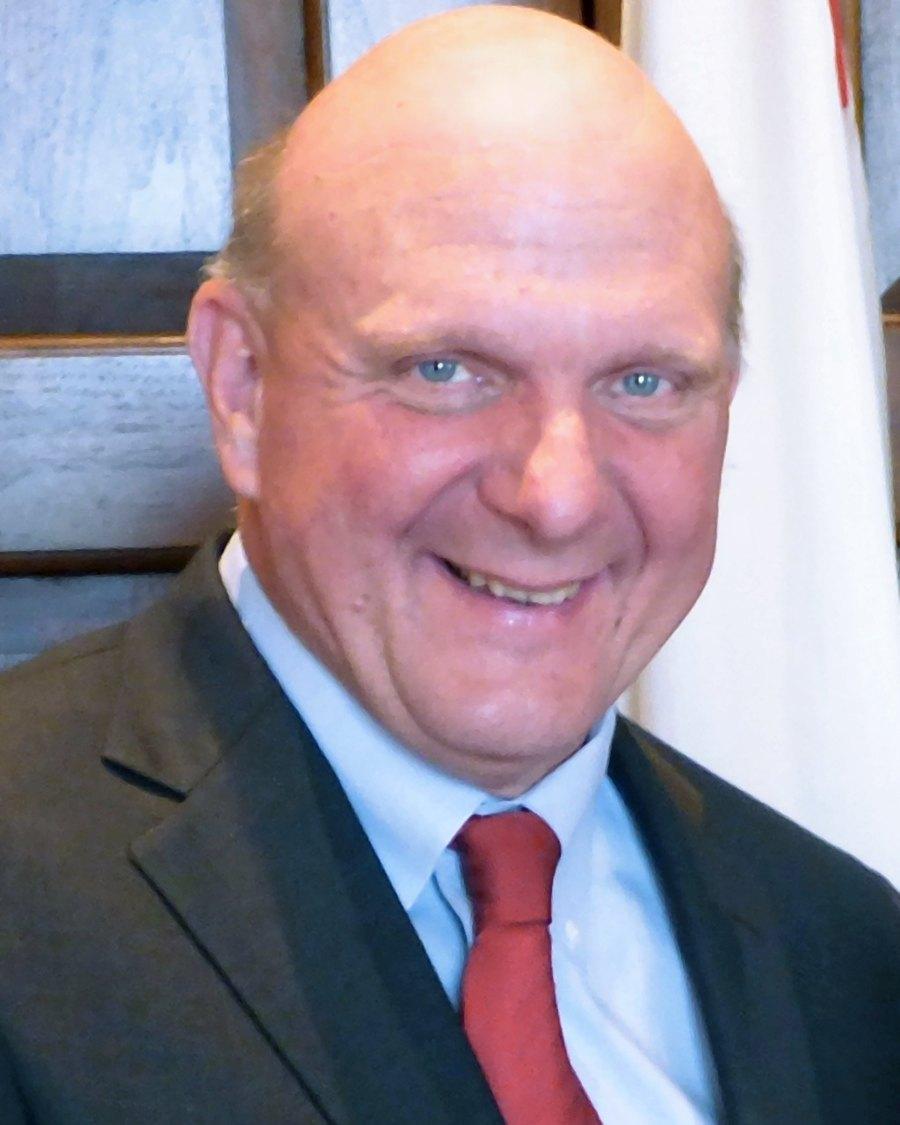
Steve Ballmer.

Business executive and team owner

Steve Ballmer left Stanford business school to join Microsoft and went on to succeed Bill Gates as CEO. He later bought the Los Angeles Clippers, founded USAFacts, and worked with his wife, Connie, on philanthropy focused on economic mobility.

PROVISIONAL OPS CLASSIFICATIONMM-Te/Si-BP/C(S)What does this mean?
PERSONALITY SYSTEMObjective Personality
LEAD FUNCTIONTe · Extroverted Thinking
SECOND SAVIOR FUNCTIONSi · Introverted Sensing
MBTI EQUIVALENTESTJ
01 / BEHIND THE CLASSIFICATION

The personality behind the fame.

How does a recorded OPS classification like MM-Te/Si-BP/C(S) break down? Walk through nine coins and watch the proposed type take shape. These are deductions from the archived code, not independent evidence of typing accuracy.

Scroll below to see Steve Ballmer take shape.

STARTING POINT512 possible OPS typesEach type combines core functions, an animal order, and sexual modalities.
THE FINISH LINEMM-Te/Si-BP/C(S)One recorded classification, decoded from its components.
Steve Ballmer’s HUMAN NEEDS 01—03
01
DECIDER OR OBSERVER?

Decider over Observer

Deciders have more balanced Observer poles in the middle: Control (Oi) and Chaos (Oe). Organizing what's known and handling what's new tend to feel more manageable. People are the harder territory. Self (Di) and Tribe (De) sit at the extremes, so judgment, rejection, approval, and conflict can trigger the strongest reactions.

Ballmer succeeded Bill Gates as Microsoft’s CEO after years of working alongside him. Their relationship was already important long before one had to answer for the company’s direction in the other’s place. The Decider tension is whose judgment counts once friendship, a predecessor’s influence, and the responsibilities of a new title meet. A clear decision can get a company moving. It can also make a personal relationship carry the weight of disagreement that previously belonged somewhere else.

D
02
SELF OR TRIBE?

De · Tribe over Di · Self

Tribe (De) is the stronger deciding pole. They check decisions against people, shared standards, and what works for the group: what do we need, what will others think? The strength is coordination and responsiveness; the recurring friction is the Self (Di)—knowing and defending their own position. As the portrait unfolds, notice how Tribe takes the lead.

Steve and Connie Ballmer built a philanthropic organization around helping other people gain economic mobility. The work puts an outside standard on a decision about their own resources: do people and organizations receiving support have something they can actually use? That is more concrete for Tribe over Self than calling an executive outgoing. A shared measure also has a risk. The work that can be described clearly in a grant report can crowd out needs that are harder for recipients to count.

De
03
GATHER OR ORGANIZE?

Oi · Organize over Oe · Gather

Organize (Oi) leads with refining, preserving, and structuring what is already known. Its strength is preparation and clear direction; the recurring friction is unexpected change that disrupts the plan. Another layer of the personality portrait comes into focus.

Ballmer has talked about remaining a Microsoft investor after stepping down. He knew the company from decades inside it and could compare later decisions with what he had seen customers need over time. Organize sees an advantage in staying with a base of knowledge deep enough to tell when a supposed novelty really changes the business. Familiarity can also stretch too far. Someone leaving the company has to notice when the latest management team is working with conditions his own experience no longer explains.

Oi
FIRST THREE COINSD + De + Oi

These establish the preferred human needs in the OPS framework.

Steve Ballmer’s FUNCTIONS 04—05
04
FEELING OR THINKING?

Thinking · T over Feeling · F

Thinking (T) evaluates decisions through reasons, logic, and what works—not a lack of emotion. Its strength is analytical consistency; Feeling (F) provides balance through values, meaning, and the human consequences of a decision. Combined with Tribe (De), this forms the recorded Savior Te.

Ballmer started asking what he and other Americans were getting for their taxes after talking with Connie about money and public services. USAFacts grew out of an attempt to bring government data together in one place. Thinking is in the decision to make a question about fairness answerable with evidence someone can examine. A table can make a disputed claim easier to check. It cannot settle the personal question of what different readers believe government ought to do with the money.

T → Te
05
SENSING OR INTUITION?

Sensing · S over Intuition · N

Sensing (S) focuses on concrete details, observable reality, and lived experience. Intuition (N) balances it by looking for broader patterns, concepts, and implications. Combined with Organize (Oi), this gives the recorded Savior Si.

At Harvard, Ballmer managed the football team and studied mathematics and economics. The team role gave him an early version of practical work that depends on routines and on getting details right for other people. Si is useful for making sense of the attention that role rewards: experience builds a record of what people need on the next day rather than just a picture of the final result. The downside is that a familiar checklist can keep serving yesterday’s arrangement after the conditions that made it useful have changed.

S → Si
THE TWO SAVIOR FUNCTIONSTe / Si

Opposing functions: Fi and Ne.

Steve Ballmer’s ANIMAL STACK 06—07
06
CONSUME OR BLAST?

Blast over Consume

Consume gathers information for internal processing; Blast organizes and communicates information. The recorded order is Blast → Play → Consume → Sleep. This comparison follows their positions in that stack.

When Ballmer bought the Clippers, the team still shared an arena with the Lakers and Kings. He went on to fund a dedicated building with specific priorities for the experience of a game. Blast ahead of Consume shows up when a person turns a long-running practical frustration into a plan multiple teams can carry out. That gives architects and operators something specific to build. The danger in being ready to specify the experience is overlooking the fan or worker who will use it differently than expected.

B > C
07
PLAY OR SLEEP?

Play over Sleep

Play emphasizes external real-time engagement; Sleep emphasizes internal processing. The recorded stack places Play earlier.

Ballmer has become a conspicuous courtside presence at Clippers games. He bought the team, but he also chooses to spend time in the physical environment where the players and fans experience it. Play over Sleep is useful in explaining the feedback that kind of contact makes possible. A person can find out what a room does with a decision while it is happening. The next step is giving himself enough distance to decide whether the reaction that felt most vivid is the one that should guide a permanent choice.

P > S
Steve Ballmer’s ANIMAL ORIENTATION 08—09
08
INFO OR ENERGY DOMINANT?

Info over Energy

Info dominant means Consume and Blast are both in the top three: gathering and communicating information are more balanced. Sleep last leaves the energy side uneven—Play can keep engagement going without enough private recovery.

As Microsoft’s CEO, Ballmer oversaw a span that included both the original Xbox and the early move into cloud computing. These decisions required learning about unfamiliar markets and setting direction for people whose work was already committed elsewhere. The information pattern makes both demands visible. An organization needs to keep gathering facts good enough to change a decision and deliver a plan clear enough for teams to act on it. A thick stack of reports can seem like progress while leaving both requirements unmet.

Info
09
INTROVERSION OR EXTROVERSION?

Extroversion over Introversion

The last animal, Sleep, determines this OPS coin: Play or Blast last means Introversion; Consume or Sleep last means Extroversion. This describes animal orientation, not sociability or shyness.

Ballmer left Stanford business school to join Microsoft after Gates recruited him. Sleep last yields Extroversion here, and it helps frame the decision to go where he could take part in the work during a period of uncertainty. Time spent integrating possibilities on his own did not have to finish before he could learn from the opportunity. The advantage of moving while a real offer exists comes with a separate risk: momentum can close off an alternative before a person has heard what he would miss about it.

E
Sexual Modalities

The four sexual modalities.

OPS uses masculine/feminine sensory and extroverted-deciding distinctions as framework-specific terms, not gender categories. The four modalities are already included in the original 512 types. The recorded modality is MM · Kinesthetic.

MM RECORDED MODALITYKinestheticMasculine Sensory · Masculine De
MF AudioMasculine Sensory · Feminine De
FF TesterFeminine Sensory · Feminine De
FM VisualFeminine Sensory · Masculine De
COMPLETE RECORDED OPS TYPE · MODALITY INCLUDEDMM-Te/Si-BP/C(S)

Te leads, Si supports, and the animal stack is Blast → Play → Consume → Sleep.

THE FINISHED PORTRAIT · ALL NINE COINS REVEALED

Steve Ballmer's complete function and animal stack

BlastPlayConsumeSleepmTemSifNefFi
MM-Te/Si-BP/C(S)DOUBLE ACTIVATED · PLAYExplore the Interactive Coin Builder →
THE STEVE BALLMER LENS

What are we getting for the money?

Ballmer went looking for an answer to a question about taxes and public services and built USAFacts because government numbers were hard to bring together. He also bought a basketball team and built it a home of its own. Both choices show what happens when he takes hold of a frustration other people might live with and gives it a budget, staff, and a visible result.

Te and Si offer a way to understand the combination of standards people can use and a habit of returning to particulars. If two years of public spending use different definitions, a clean chart can conceal the difference. Doing the practical work of comparison gives people something more dependable to argue from. It still doesn't decide what those people should care about.

The Decider and Double Observer framing makes the judgment behind a metric worth examining. Fi is the neglected function here. Ballmer and Connie chose economic mobility as a philanthropic commitment. Their ability to count outcomes serves that choice. An honest review asks which people or purposes they would still protect if a useful measure stopped making the work look successful.

Blast → Play → Consume → Sleep suggests setting a practical direction, testing it with people who use the project, and collecting the problems they find. Set aside private time before announcing the next decision. In a building or a data organization, that pause can protect a concern that would be easy to pass over when everyone in the room is ready to move.

Want to understand the Savior and Demon states behind these nine coins? Explore the complete explanation, visual examples, and typing principles on our Methodology page →

02 / KEEP EXPLORING

Different faces. Familiar patterns.

Explore other celebrities with related recorded OPS classifications. Related functions are not necessarily exact type matches.

Discover Type Twins
YOUR TURN

Curious about your own type?

Discover how your own personality might be classified through Objective Personality.

Get objectively typed
Steve Ballmer's Personality Type & OPS Profile | The Personality Atlas