The Personality Atlas
THE CELEBRITY PERSONALITY ARCHIVE / RELIGIOUS BROADCASTING

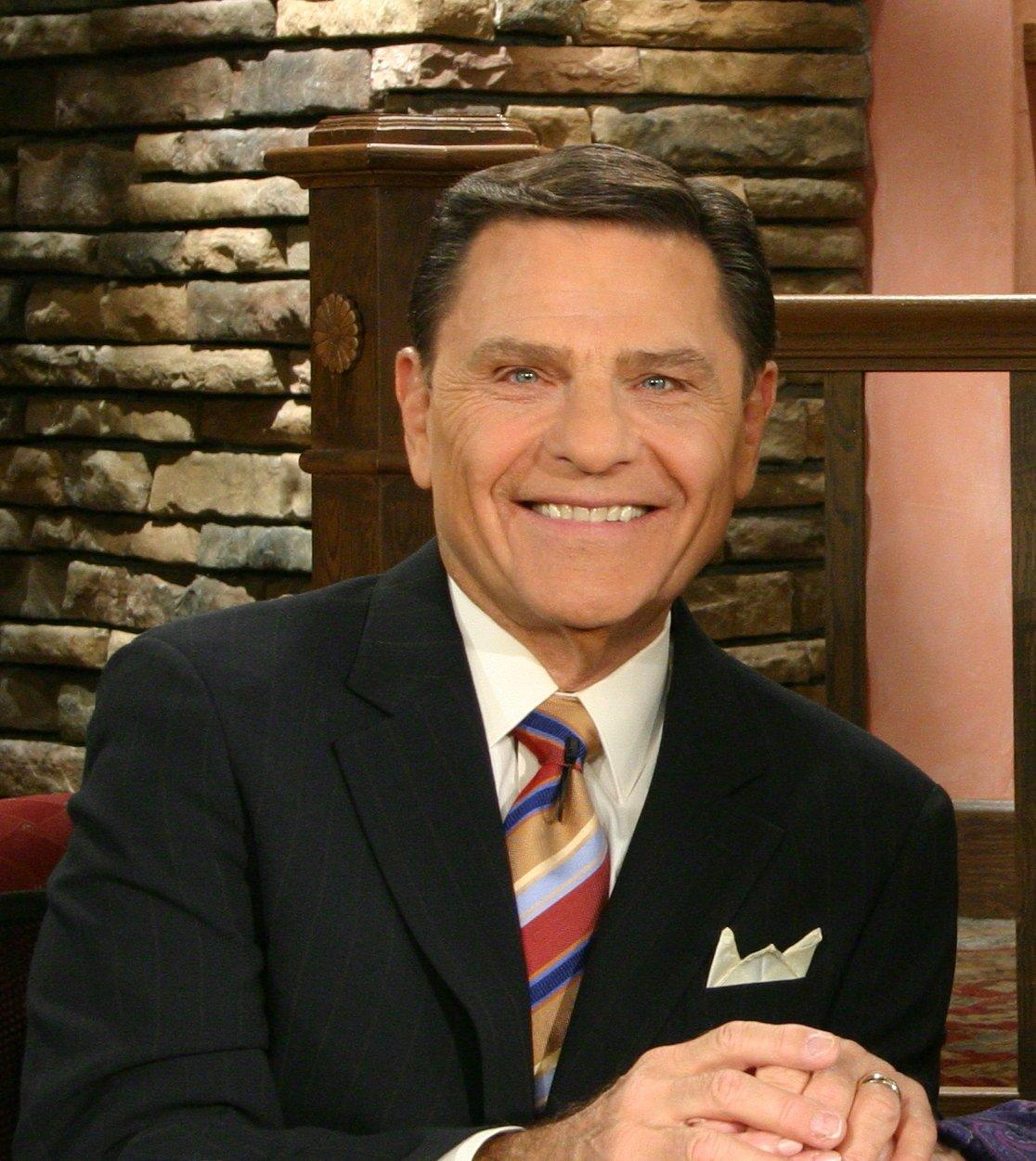
Kenneth Copeland.

Televangelist · Broadcaster · Author

Kenneth Copeland turned a singer-and-pilot backstory into one of the most durable machines in American religious broadcasting: a Fort Worth ministry campus, international offices, books, conventions, a daily television franchise, and even an airport folded into the brand. Whatever one thinks of his message, the public pattern is unmistakable—he scales belief through structure, repetition, and direct command.

OBJECTIVE PERSONALITY CLASSIFICATIONMM-Te/Si-BP/C(S)What does this mean?
PERSONALITY SYSTEMObjective Personality
LEAD FUNCTIONTe · Extroverted Thinking
SECOND SAVIOR FUNCTIONSi · Introverted Sensing
MBTI EQUIVALENTESTJ
01 / BEHIND THE CLASSIFICATION

The personality behind the fame.

How does a recorded OPS classification like MM-Te/Si-BP/C(S) break down? Walk through nine coins and watch the proposed type take shape. These are deductions from the archived code, not independent evidence of typing accuracy.

Scroll below to see Kenneth Copeland take shape.

STARTING POINT512 possible OPS typesEach type combines core functions, an animal order, and sexual modalities.
THE FINISH LINEMM-Te/Si-BP/C(S)One recorded classification, decoded from its components.
Kenneth Copeland’s HUMAN NEEDS 01—03
01
DECIDER OR OBSERVER?

Decider over Observer

Deciders have more balanced Observer poles in the middle: Control (Oi) and Chaos (Oe). Organizing what's known and handling what's new tend to feel more manageable. People are the harder territory. Self (Di) and Tribe (De) sit at the extremes, so judgment, rejection, approval, and conflict can trigger the strongest reactions.

Copeland’s public career keeps circling back to people, legitimacy, and allegiance. The recurring flashpoints are not just planes, buildings, or airtime, but whether followers, critics, politicians, and journalists accept his authority and message. Prosperity teaching, political statements, and his high-profile defenses of ministry choices all land in the territory of judgment and significance. That Decider pressure can create a real strength: he does not seem easily knocked off his public stance. The cost is obvious too. When everything becomes a question of who is right, loyal, or faithless, disagreement can harden instead of clarifying.


D
02
SELF OR TRIBE?

De · Tribe over Di · Self

Tribe (De) is the stronger deciding pole. They check decisions against people, shared standards, and what works for the group: what do we need, what will others think? The strength is coordination and responsiveness; the recurring friction is the Self (Di)—knowing and defending their own position. As the portrait unfolds, notice how Tribe takes the lead.

Copeland’s style is strikingly Tribe-forward: shared standards, collective direction, and forceful public conclusions. His ministry slogan, long-running broadcasts, fundraising appeals, and convention preaching all ask listeners to move with a message rather than merely inspect it privately. The same pattern shows up in politics, where he framed voting as a sacred trust and made sweeping claims about what Christians should do. The strength in that De posture is mobilization; it can rally a huge audience around a common frame. The blind spot is that outside alignment can become so important that individual conscience, nuance, or dissent gets less oxygen.

De
03
GATHER OR ORGANIZE?

Oi · Organize over Oe · Gather

Organize (Oi) leads with refining, preserving, and structuring what is already known. Its strength is preparation and clear direction; the recurring friction is unexpected change that disrupts the plan. Another layer of the personality portrait comes into focus.

His public life is built less like a wandering ministry than like a repeatable system. Kenneth Copeland Ministries grew into international offices, a large Fort Worth campus, annual conventions, production facilities, a Bible college, and a branded media channel. That settled, organized pattern fits Oi well: information is not just gathered, it is arranged into a stable structure that can keep running for decades. The strength is durability. The cost is rigidity. When scrutiny, media pressure, or changing public conditions arrive, an entrenched system can defend its existing order faster than it adapts to a new one.

Oi
FIRST THREE COINSD + De + Oi

These establish the preferred human needs in the OPS framework.

Kenneth Copeland’s FUNCTIONS 04—05
04
FEELING OR THINKING?

Thinking · T over Feeling · F

Thinking (T) evaluates decisions through reasons, logic, and what works—not a lack of emotion. Its strength is analytical consistency; Feeling (F) provides balance through values, meaning, and the human consequences of a decision. Combined with Tribe (De), this forms the recorded Savior Te.

Thinking here looks concrete, managerial, and external. Copeland did not remain only a preacher with a microphone; he built organizations, facilities, broadcasts, and distribution channels that required decisions, delegation, and clear executable standards. Even criticism over ministry aircraft was met with procedural and legal justification, including appeals to compliance and operational necessity. That Te strength is useful when an idea must become payroll, programming, and infrastructure. The blind spot is tone. A hard, efficient answer can sound persuasive inside the system while feeling cold, transactional, or evasive to people who are asking a moral rather than operational question.

T → Te
05
SENSING OR INTUITION?

Sensing · S over Intuition · N

Sensing (S) focuses on concrete details, observable reality, and lived experience. Intuition (N) balances it by looking for broader patterns, concepts, and implications. Combined with Organize (Oi), this gives the recorded Savior Si.

Copeland’s Sensing side shows up in his attachment to repetition, legacy formats, and established patterns. He came from a background shaped by aviation, became a pilot, and later folded aircraft and a private airport into the ministry’s operating world. His flagship public presence is also relentlessly familiar: recurring conventions, long-running broadcasts, daily devotional material, and a message delivered again and again in recognizable terms. That Si strength creates continuity and a dependable brand. The cost is that familiar formulas can start to feel self-confirming. A practiced script can steady an audience while also making new conditions harder to read on their own terms.

S → Si
THE TWO SAVIOR FUNCTIONSTe / Si

Opposing functions: Fi and Ne.

Kenneth Copeland’s ANIMAL STACK 06—07
06
CONSUME OR BLAST?

Blast over Consume

Consume gathers information for internal processing; Blast organizes and communicates information. The recorded order is Blast → Play → Consume → Sleep. This comparison follows their positions in that stack.

Between Consume and Blast, the public weight lands on Blast. Copeland’s career is defined by declaring, teaching, exhorting, publishing, and broadcasting at scale. From multi-day conventions to Believer’s Voice of Victory and a long shelf of ministry books, his instinct is to put the conclusion on the table and repeat it until it becomes the atmosphere. That is the strength of Blast: clarity, direction, and reach. The cost is that Consume comes later. More gathering, more qualification, or more patient exploration can easily look secondary when the machine is already built to speak.

B > C
07
PLAY OR SLEEP?

Play over Sleep

Play emphasizes external real-time engagement; Sleep emphasizes internal processing. The recorded stack places Play earlier.

Play shows up earlier than Sleep, and that matters for how the message moves. Copeland’s ministry has always been visibly interactive and participatory: co-hosting with Gloria Copeland, appearing with other ministry figures, building conference culture, joining political advisory settings, and staying active in live public events. Combined with the earlier Blast-over-Consume pattern, it creates a style that advances through engagement and momentum. The advantage is obvious public force. The tradeoff is subtler. When Play outruns Sleep, there can be less appetite for slowing down, withdrawing, and privately reworking the message before the next round of participation begins.

P > S
Kenneth Copeland’s ANIMAL ORIENTATION 08—09
08
INFO OR ENERGY DOMINANT?

Info over Energy

Info dominant means Consume and Blast are both in the top three: gathering and communicating information are more balanced. Sleep last leaves the energy side uneven—Play can keep engagement going without enough private recovery.

His recorded stack points to Info dominance, and his public career makes that easy to picture. The ministry runs on messages, books, broadcasts, teachings, fundraising appeals, and continual explanation. From the 1971 television start to the later daily program and then Victory Channel, Copeland built a life around taking in material and turning it outward for an audience. That Info balance gives him strong throughput: input and output keep feeding the system. The missing piece is the last animal, Sleep. When Sleep sits last, private consolidation and slower internal recalibration are easier to postpone while the public signal keeps going.

Info
09
INTROVERSION OR EXTROVERSION?

Extroversion over Introversion

The last animal, Sleep, determines this OPS coin: Play or Blast last means Introversion; Consume or Sleep last means Extroversion. This describes animal orientation, not sociability or shyness.

The Extroversion result here does not mean “social butterfly,” and Copeland’s long gap between scheduled sit-down interviews is a useful reminder of that. In OPS terms, last Sleep means the outward pressure comes easier than the inward retreat. Blast → Play → Consume → Sleep describes a life that naturally moves toward public declaration, engagement, and ongoing informational work before quiet internal settling. The strength is sustained momentum across decades of ministry media. The blind spot is that the deepest reset arrives last. A person can keep transmitting with enormous force while giving private stillness the least automatic priority.

E
Sexual Modalities

The four sexual modalities.

OPS uses masculine/feminine sensory and extroverted-deciding distinctions as framework-specific terms, not gender categories. The four modalities are already included in the original 512 types. The recorded modality is MM · Kinesthetic.

MM RECORDED MODALITYKinestheticMasculine Sensory · Masculine De
MF AudioMasculine Sensory · Feminine De
FF TesterFeminine Sensory · Feminine De
FM VisualFeminine Sensory · Masculine De
COMPLETE RECORDED OPS TYPE · MODALITY INCLUDEDMM-Te/Si-BP/C(S)

Te leads, Si supports, and the animal stack is Blast → Play → Consume → Sleep.

THE FINISHED PORTRAIT · ALL NINE COINS REVEALED

Kenneth Copeland's complete function and animal stack

BlastPlayConsumeSleepmTemSifNefFi
MM-Te/Si-BP/C(S)DOUBLE ACTIVATED · PLAYExplore the Interactive Coin Builder →
THE KENNETH COPELAND LENS

The institution was the sermon.

The public image is easy to caricature: the television close-up, the convention platform, the airport, the polished certainty. But behind that impression is a man who moved from 1950s pop recording and aviation into a ministry built like an operating system. Copeland did not just preach a message; he industrialized its delivery.

Te with Si is a formidable pairing for building repetition into reach. The strength is obvious in the scale: broadcasts, annual conventions, books, offices, facilities, and a message that stays recognizable for decades. The limit is just as obvious. What is efficient, familiar, and executable can become too settled, especially when critics are asking for moral nuance rather than administrative confidence.

As a Decider and Double Observer, the deeper imbalance is not mainly about handling circumstances. He appears far readier to manage systems, routines, and institutional complexity than to soften the human stakes of disagreement. That pairing often means the unresolved tension sits in people and values. Neglected Fi, opposite lead Te, is the quieter question of personal conscience apart from the mission, crowd, or platform.

Blast → Play → Consume → Sleep shows why the machine keeps moving. Public declaration and active engagement come first, while private withdrawal and internal recalibration come last. That imbalance can preserve momentum but delay the pause that refines it. The balancing move is not less conviction; it is a deliberate private review before the next campaign, sermon series, or fundraising push.

Want to understand the Savior and Demon states behind these nine coins? Explore the complete explanation, visual examples, and typing principles on our Methodology page →

02 / KEEP EXPLORING

Different faces. Familiar patterns.

Explore other celebrities with related recorded OPS classifications. Related functions are not necessarily exact type matches.

Discover Type Twins
YOUR TURN

Curious about your own type?

Discover how your own personality might be classified through Objective Personality.

Get objectively typed
Kenneth Copeland's Personality Type & OPS Profile | The Personality Atlas