The Personality Atlas
THE CELEBRITY PERSONALITY ARCHIVE / FILM & MILITARY CONSULTING

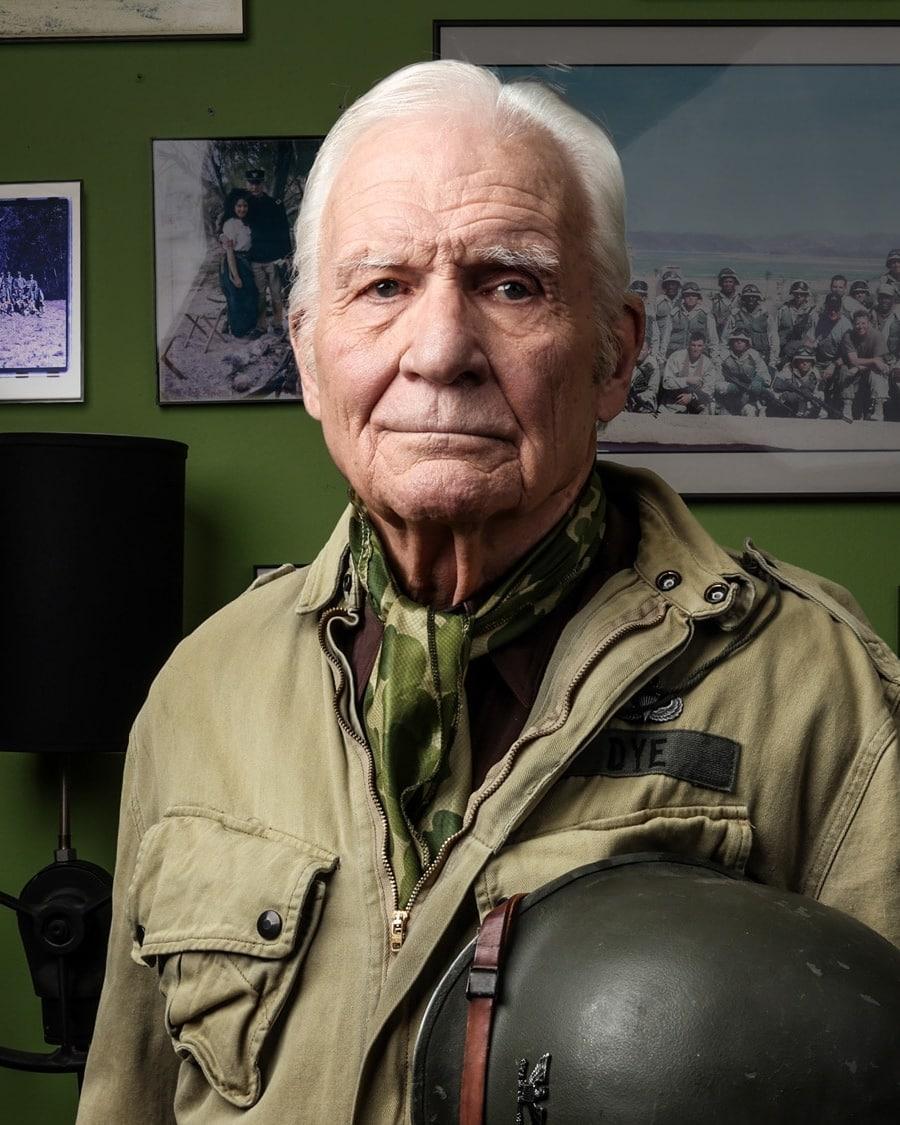
Dale Dye.

Actor · Technical Advisor · Writer

Dale Dye carried battlefield credibility into Hollywood and then refused to let war movies stay fake. After three tours in Vietnam and a Bronze Star with Combat "V," he built Warriors, Inc., drilled actors through punishing boot camps for Platoon and Saving Private Ryan, and became the face directors called when they needed military authority that actually looked lived-in.

OBJECTIVE PERSONALITY CLASSIFICATIONMM-Te/Si-BP/C(S)What does this mean?
PERSONALITY SYSTEMObjective Personality
LEAD FUNCTIONTe · Extroverted Thinking
SECOND SAVIOR FUNCTIONSi · Introverted Sensing
MBTI EQUIVALENTESTJ
01 / BEHIND THE CLASSIFICATION

The personality behind the fame.

How does a recorded OPS classification like MM-Te/Si-BP/C(S) break down? Walk through nine coins and watch the proposed type take shape. These are deductions from the archived code, not independent evidence of typing accuracy.

Scroll below to see Dale Dye take shape.

STARTING POINT512 possible OPS typesEach type combines core functions, an animal order, and sexual modalities.
THE FINISH LINEMM-Te/Si-BP/C(S)One recorded classification, decoded from its components.
Dale Dye’s HUMAN NEEDS 01—03
01
DECIDER OR OBSERVER?

Decider over Observer

Deciders have more balanced Observer poles in the middle: Control (Oi) and Chaos (Oe). Organizing what's known and handling what's new tend to feel more manageable. People are the harder territory. Self (Di) and Tribe (De) sit at the extremes, so judgment, rejection, approval, and conflict can trigger the strongest reactions.

Civilians met Dale Dye as the man who barked realism into Hollywood, but his public life keeps circling human judgment more than mere bad luck. He persuaded commanders, corrected actors, advised directors, and built a career on whether other people would meet the standard he considered serious. Even in Vietnam, he talked his way back toward the battalion he had been separated from as a correspondent. That Decider pressure can look formidable: he will step into the social hierarchy and push. The cost is that every room can become a referendum on competence, loyalty, and who is pulling weight.

D
02
SELF OR TRIBE?

De · Tribe over Di · Self

Tribe (De) is the stronger deciding pole. They check decisions against people, shared standards, and what works for the group: what do we need, what will others think? The strength is coordination and responsiveness; the recurring friction is the Self (Di)—knowing and defending their own position. As the portrait unfolds, notice how Tribe takes the lead.

The clearest thread in Dye’s civilian career is Tribe-first responsibility. Founding Warriors, Inc. was not a private hobby; it was a public campaign to make casts, crews, and audiences believe the chain of command on screen. His Platoon boot camp imposed shared rules on Charlie Sheen, Willem Dafoe, Johnny Depp, and Forest Whitaker, and Tom Hanks later said Dye’s training gave Saving Private Ryan its authenticity. The strength is obvious: he can establish an external standard and get people aligned behind it. The growth cost is bluntness. A standard that clarifies the mission can also steamroll differences in pace, temperament, or receptivity.

De
03
GATHER OR ORGANIZE?

Oi · Organize over Oe · Gather

Organize (Oi) leads with refining, preserving, and structuring what is already known. Its strength is preparation and clear direction; the recurring friction is unexpected change that disrupts the plan. Another layer of the personality portrait comes into focus.

Dye’s Organize preference shows up in his lifelong attachment to disciplined systems. He failed the Naval Academy entrance exam three times, then chose the more concrete route of enlisting and mastering the institution from the inside. Later he turned combat experience into repeatable training methods for Warriors, Inc.: research, planning, staging, boot camp, on-set correction. That structure is a strength because it turns chaos into procedure other people can follow. The blind spot is rigidity. When proven methods have worked in war and film, improvising a softer or less formal approach can look wasteful, even when a new situation actually needs it.

Oi
FIRST THREE COINSD + De + Oi

These establish the preferred human needs in the OPS framework.

Dale Dye’s FUNCTIONS 04—05
04
FEELING OR THINKING?

Thinking · T over Feeling · F

Thinking (T) evaluates decisions through reasons, logic, and what works—not a lack of emotion. Its strength is analytical consistency; Feeling (F) provides balance through values, meaning, and the human consequences of a decision. Combined with Tribe (De), this forms the recorded Savior Te.

His recorded judging function is Thinking, and his public career makes that easy to picture without reducing him to a stereotype. Dye did not complain abstractly that movies felt wrong; he built concrete standards for formations, weapons handling, movement, and command presence. Directors hired him because he could tell them what worked, what looked false, and how to fix it. That objectivity is a serious strength. It creates credibility fast. The void is relational nuance. A correct note delivered with enough force can still miss how differently another person receives pressure, correction, or authority.

T → Te
05
SENSING OR INTUITION?

Sensing · S over Intuition · N

Sensing (S) focuses on concrete details, observable reality, and lived experience. Intuition (N) balances it by looking for broader patterns, concepts, and implications. Combined with Organize (Oi), this gives the recorded Savior Si.

Dye’s observer function is Sensing, rooted in concrete recall and lived detail. Michael Herr’s Tet Offensive portrait of him—yellow flower in the helmet, sniper rounds cracking nearby, Dye coolly narrating the danger—captures a man reading the immediate terrain instead of floating in abstraction. The same trait later powered his insistence on realistic military behavior in film, from field discipline to exhausted body language. Sensing gives him authority because the details feel earned. Its blind spot is impatience with ideas that arrive without proof on the ground. If a concept has not survived contact with reality, he is unlikely to treat it gently.

S → Si
THE TWO SAVIOR FUNCTIONSTe / Si

Opposing functions: Fi and Ne.

Dale Dye’s ANIMAL STACK 06—07
06
CONSUME OR BLAST?

Blast over Consume

Consume gathers information for internal processing; Blast organizes and communicates information. The recorded order is Blast → Play → Consume → Sleep. This comparison follows their positions in that stack.

Between Consume and Blast, Dye’s career reads Blast first. He did not retire into endless archival study; he founded Warriors, Inc., pitched Oliver Stone a plan, drilled actors for thirty days, wrote, advised, and translated experience into doctrine people could immediately use. Blast earlier than Consume is a strength when a group needs direction now, not another shelf of notes. The tradeoff is that teaching can outrun fresh intake. Later Consume still shows up in books, commentary, and continued consulting, but the growth edge is letting new information revise the briefing instead of only reinforcing it.

B > C
07
PLAY OR SLEEP?

Play over Sleep

Play emphasizes external real-time engagement; Sleep emphasizes internal processing. The recorded stack places Play earlier.

Play comes earlier than Sleep in the public shape of Dye’s work. He did not keep his expertise sealed inside memoirs; he moved through film sets, miniseries, radio, documentaries, and video games, testing his knowledge in live collaboration with actors, directors, and audiences. That earlier Play is a strength because it rallies people through action and shared momentum. The cost is that private processing lands later. When your value is tied to being the man who can jump in, correct the scene, and keep it moving, quieter reflection can look optional right up until fatigue or overextension proves otherwise.

P > S
Dale Dye’s ANIMAL ORIENTATION 08—09
08
INFO OR ENERGY DOMINANT?

Info over Energy

Info dominant means Consume and Blast are both in the top three: gathering and communicating information are more balanced. Sleep last leaves the energy side uneven—Play can keep engagement going without enough private recovery.

Dye’s stack lands on Info over Energy, which fits a man who keeps turning experience into briefing, training, performance, and commentary. He served as correspondent, adviser, actor, radio host, documentary presenter, and writer—roles built around taking in information and sending it back out in a form others can use. That balance is powerful: he can make specialized knowledge legible under pressure. The void sits with the missing Sleep at the bottom. Output and engagement can keep winning the day while internal recovery, solitary re-centering, and slower self-review get postponed until they become the very thing that would sharpen the next mission.

Info
09
INTROVERSION OR EXTROVERSION?

Extroversion over Introversion

The last animal, Sleep, determines this OPS coin: Play or Blast last means Introversion; Consume or Sleep last means Extroversion. This describes animal orientation, not sociability or shyness.

This profile also codes as OPS Extroversion, and the important point is not cocktail-party sociability. It means the outward animals outrun the inward ones, with Sleep landing last. Dye’s public life fits that pattern: battlefield correspondent, company founder, on-set adviser, actor, host, and game consultant all place him in motion with other people and shared tasks. The strength is external traction—he can move the mission into the world. The blind spot is assuming action itself equals clarity. When inward consolidation comes last, the growth work is pausing long enough to ask what the next order serves before driving everyone harder.

E
Sexual Modalities

The four sexual modalities.

OPS uses masculine/feminine sensory and extroverted-deciding distinctions as framework-specific terms, not gender categories. The four modalities are already included in the original 512 types. The recorded modality is MM · Kinesthetic.

MM RECORDED MODALITYKinestheticMasculine Sensory · Masculine De
MF AudioMasculine Sensory · Feminine De
FF TesterFeminine Sensory · Feminine De
FM VisualFeminine Sensory · Masculine De
COMPLETE RECORDED OPS TYPE · MODALITY INCLUDEDMM-Te/Si-BP/C(S)

Te leads, Si supports, and the animal stack is Blast → Play → Consume → Sleep.

THE FINISHED PORTRAIT · ALL NINE COINS REVEALED

Dale Dye's complete function and animal stack

BlastPlayConsumeSleepmTemSifNefFi
MM-Te/Si-BP/C(S)DOUBLE ACTIVATED · PLAYExplore the Interactive Coin Builder →
THE DALE DYE LENS

Realism with a Command Voice

Onscreen, Dale Dye often looks like military authority incarnate, but the better public example is offscreen: the former Marine who marched the Platoon cast through a brutal mock boot camp so the film would stop pretending. The hard edge is real, yet so is the craftsman turning lived experience into a teachable standard for actors, directors, and audiences.

His Te/Si pairing excels at setting an external standard and backing it with remembered procedure. That is why Warriors, Inc. became more than a consulting credit; Dye could specify what looked wrong and train people into something believable. The limit is visible too. A method that protects realism can press so hard on correctness that softer values or a slower learning curve get less room.

As a Decider and Double Observer, Dye is fundamentally working the people problem while carrying more range with chaos and control. The pressure point is judgment: who is serious, who is reliable, whose standard wins. That is the usefulness and strain of leading with Te. The neglected function opposite that lead savior is Fi, so personal values and quieter sentiments can get outpaced by the mission and the measurable result.

Blast → Play → Consume → Sleep explains why Dye so naturally briefs, mobilizes, and keeps information moving through groups before retreating into private consolidation. Sleep last is not a flaw; it is the imbalance that makes internal recovery easier to postpone. The best correction is practical: keep the demanding standards, but schedule offstage time to write, review, and reset before the next production asks him to command the room again.

Want to understand the Savior and Demon states behind these nine coins? Explore the complete explanation, visual examples, and typing principles on our Methodology page →

02 / KEEP EXPLORING

Different faces. Familiar patterns.

Explore other celebrities with related recorded OPS classifications. Related functions are not necessarily exact type matches.

Discover Type Twins
YOUR TURN

Curious about your own type?

Discover how your own personality might be classified through Objective Personality.

Get objectively typed
Dale Dye's Personality Type & OPS Profile | The Personality Atlas