The Personality Atlas
THE CELEBRITY PERSONALITY ARCHIVE / MEDIA & BOOKS

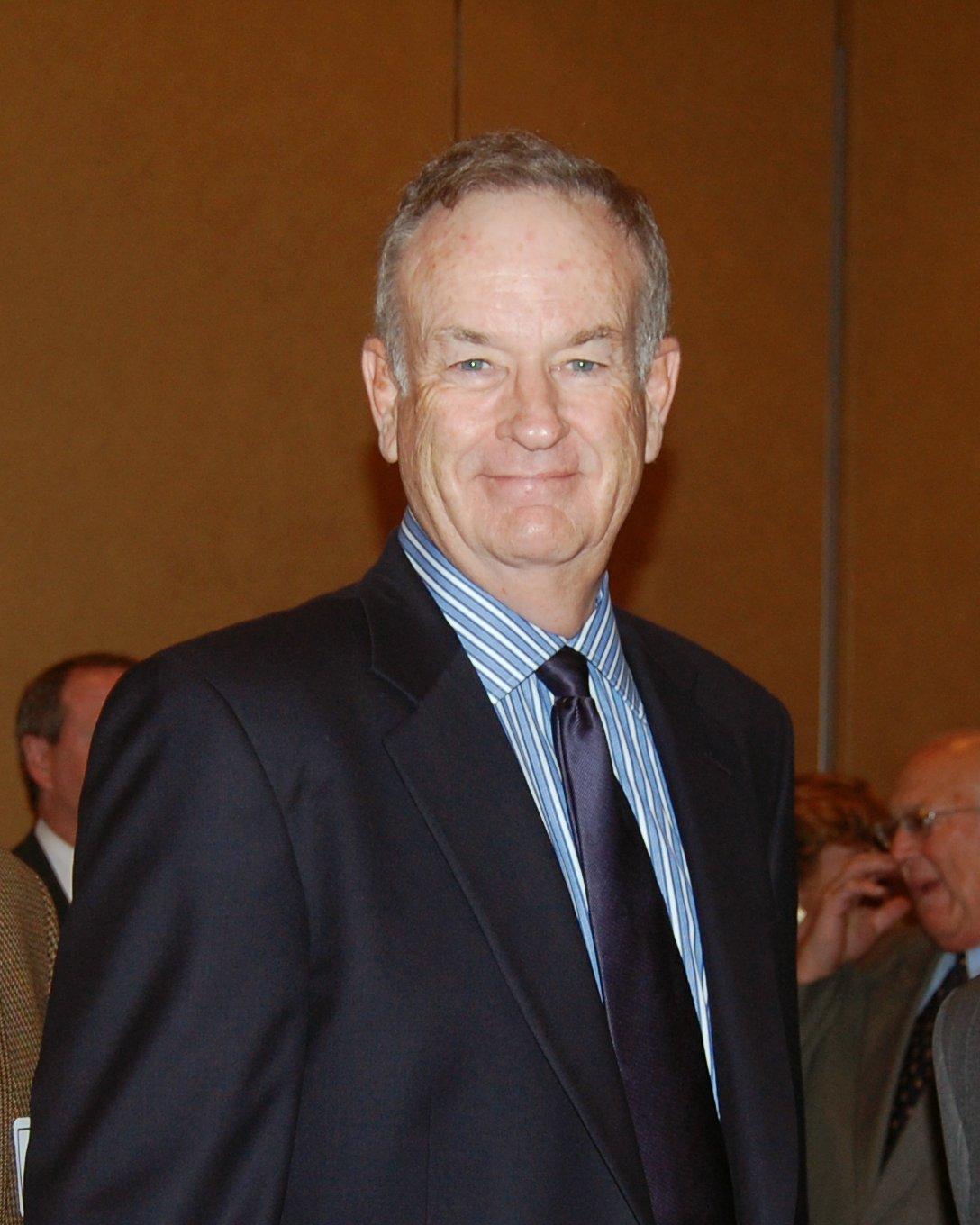
Bill O'Reilly.

Television Host · Author

Bill O'Reilly spent decades turning television commentary into a nightly courtroom, first as an award-winning reporter, then as the engine of The O'Reilly Factor, then as a post-Fox podcast host and bestselling history co-author. The appeal was never softness. It was the sense that someone had already arranged the evidence, picked the fight, and was ready to tell the audience what counted.

OBJECTIVE PERSONALITY CLASSIFICATIONMM-Te/Si-BP/C(S)What does this mean?
PERSONALITY SYSTEMObjective Personality
LEAD FUNCTIONTe · Extroverted Thinking
SECOND SAVIOR FUNCTIONSi · Introverted Sensing
MBTI EQUIVALENTESTJ
01 / BEHIND THE CLASSIFICATION

The personality behind the fame.

How does a recorded OPS classification like MM-Te/Si-BP/C(S) break down? Walk through nine coins and watch the proposed type take shape. These are deductions from the archived code, not independent evidence of typing accuracy.

Scroll below to see Bill O'Reilly take shape.

STARTING POINT512 possible OPS typesEach type combines core functions, an animal order, and sexual modalities.
THE FINISH LINEMM-Te/Si-BP/C(S)One recorded classification, decoded from its components.
Bill O'Reilly’s HUMAN NEEDS 01—03
01
DECIDER OR OBSERVER?

Decider over Observer

Deciders have more balanced Observer poles in the middle: Control (Oi) and Chaos (Oe). Organizing what's known and handling what's new tend to feel more manageable. People are the harder territory. Self (Di) and Tribe (De) sit at the extremes, so judgment, rejection, approval, and conflict can trigger the strongest reactions.

Bill O'Reilly's public career is defined less by waiting out bad circumstances than by walking straight into fights with other people. The Daily Show debates with Jon Stewart, the walk-off on The View, and his combative interview style all made human conflict the main stage. That Decider pattern is a strength when a broadcaster has to cut through noise and make a dispute unmistakably clear. The blind spot is that every disagreement can start to look like a loyalty test—who is with him, who is against him—when some problems would benefit more from slower fact sorting than sharper confrontation.

D
02
SELF OR TRIBE?

De · Tribe over Di · Self

Tribe (De) is the stronger deciding pole. They check decisions against people, shared standards, and what works for the group: what do we need, what will others think? The strength is coordination and responsiveness; the recurring friction is the Self (Di)—knowing and defending their own position. As the portrait unfolds, notice how Tribe takes the lead.

His brand was "No Spin," but the way he used it was distinctly Tribe-first: not as a private diary, but as a public standard he expected guests, institutions, and audiences to measure themselves against. On The O'Reilly Factor he routinely told viewers what organizations, politicians, or companies should do, from his 9/11 charity criticism to the Pepsi-Ludacris boycott. That outward calibration can rally a massive audience and force accountability into the open. The cost is overcommitting to public judgment, where building a case for the tribe can harden into policing everyone else's conduct instead of testing his own assumptions first.

De
03
GATHER OR ORGANIZE?

Oi · Organize over Oe · Gather

Organize (Oi) leads with refining, preserving, and structuring what is already known. Its strength is preparation and clear direction; the recurring friction is unexpected change that disrupts the plan. Another layer of the personality portrait comes into focus.

O'Reilly's long success depended on giving chaotic news a settled frame. The O'Reilly Factor, his "Talking Points Memo," and the Killing books all turned sprawling events into firm narratives an audience could follow. Even his background—history major, government degree, career in reporting—fits an Organize-first habit of building a durable map before moving on. The strength is clarity: viewers always knew the angle and the hierarchy of facts. The weakness is rigidity. When a framework becomes the product, new information can get pressed into an existing storyline instead of being allowed to rearrange it.

Oi
FIRST THREE COINSD + De + Oi

These establish the preferred human needs in the OPS framework.

Bill O'Reilly’s FUNCTIONS 04—05
04
FEELING OR THINKING?

Thinking · T over Feeling · F

Thinking (T) evaluates decisions through reasons, logic, and what works—not a lack of emotion. Its strength is analytical consistency; Feeling (F) provides balance through values, meaning, and the human consequences of a decision. Combined with Tribe (De), this forms the recorded Savior Te.

The notorious "We'll do it live" outtake is crude, but it also exposes the engine of Te: get the segment working, fix the problem now, keep the machine moving. That same directness helped him win reporting awards early in his career and command prime time later, because he delivered conclusions in plain, forceful language. Te's strength is decisive external judgment—what works, what fails, what must be said next. Its blind spot is collateral damage. Efficiency and bluntness can produce clarity on air while leaving little room for tact, nuance, or another person's pace.

T → Te
05
SENSING OR INTUITION?

Sensing · S over Intuition · N

Sensing (S) focuses on concrete details, observable reality, and lived experience. Intuition (N) balances it by looking for broader patterns, concepts, and implications. Combined with Organize (Oi), this gives the recorded Savior Si.

His bestselling Killing Lincoln, Killing Kennedy, Killing Jesus, and Killing Reagan franchise is an Si showcase: concrete dates, recognizable institutions, and a drive to anchor commentary in established record rather than abstraction alone. The same bent appears in his early investigative reporting and war correspondence, where documented detail built his credibility. Si's strength is making history and current events legible through specifics people can verify and remember. The cost is that past precedent can start governing the present too heavily. A commentator grounded in record can also become attached to familiar frames, even when a newer situation resists the old template.

S → Si
THE TWO SAVIOR FUNCTIONSTe / Si

Opposing functions: Fi and Ne.

Bill O'Reilly’s ANIMAL STACK 06—07
06
CONSUME OR BLAST?

Blast over Consume

Consume gathers information for internal processing; Blast organizes and communicates information. The recorded order is Blast → Play → Consume → Sleep. This comparison follows their positions in that stack.

O'Reilly's stack starts with Blast over Consume, and his career shows it. He did not become a household name by quietly stockpiling context; he became one by stepping to the camera with a thesis, a verdict, and a nightly structure for the audience. The books and decades of reporting prove Consume is present, but it arrives later in the order—supporting the message rather than delaying it. That can be a major strength in mass media, where decisive framing wins attention. The growth cost is obvious: more intake sometimes needs to come before another confident summary.

B > C
07
PLAY OR SLEEP?

Play over Sleep

Play emphasizes external real-time engagement; Sleep emphasizes internal processing. The recorded stack places Play earlier.

With Blast already ahead of Consume, the next split matters too: Play comes before Sleep. O'Reilly's public life is built on live exchange—fifteen appearances with Jon Stewart on The Daily Show, the 2012 charity debate, radio call-ins, panels, and argumentative interviews that gained energy from resistance. Play's strength is momentum; another person pushes back and he gets sharper, faster, more animated. The blind spot is that private consolidation comes later. When interaction is the preferred fuel, stepping back to cool the system, refine the wording, or simply stop reacting can feel less urgent than it actually is.

P > S
Bill O'Reilly’s ANIMAL ORIENTATION 08—09
08
INFO OR ENERGY DOMINANT?

Info over Energy

Info dominant means Consume and Blast are both in the top three: gathering and communicating information are more balanced. Sleep last leaves the energy side uneven—Play can keep engagement going without enough private recovery.

This is an Info-dominant build. In O'Reilly's top three animals, taking in material and transmitting conclusions both stay active: local reporting, network correspondence, the sixteen-year cable juggernaut, radio, bestselling history books, then No Spin News after Fox. He keeps the information cycle moving. That is the strength—few broadcasters have turned reporting, commentary, interviews, and publishing into one continuous pipeline so effectively. The missing balance is Sleep last. Without enough internal reset, the machine can keep outputting long after a better move would be to pause, re-center, and let the message sharpen before the next blast.

Info
09
INTROVERSION OR EXTROVERSION?

Extroversion over Introversion

The last animal, Sleep, determines this OPS coin: Play or Blast last means Introversion; Consume or Sleep last means Extroversion. This describes animal orientation, not sociability or shyness.

O'Reilly lands on the OPS Extroversion coin because Sleep is fourth, not because he happens to be famous or loud. The pattern is about sequence: public broadcasting and active engagement arrive more readily than private retreat. His career arc—from local TV to network news, Fox, radio, speaking tours, and a podcast-TV hybrid—kept rewarding that outward orientation. The strength is sustained public output under pressure. The blind spot is mistaking constant external motion for complete clarity. Sometimes the next strong segment is easier than the quieter work of deciding what, after all the noise, should actually remain.

E
Sexual Modalities

The four sexual modalities.

OPS uses masculine/feminine sensory and extroverted-deciding distinctions as framework-specific terms, not gender categories. The four modalities are already included in the original 512 types. The recorded modality is MM · Kinesthetic.

MM RECORDED MODALITYKinestheticMasculine Sensory · Masculine De
MF AudioMasculine Sensory · Feminine De
FF TesterFeminine Sensory · Feminine De
FM VisualFeminine Sensory · Masculine De
COMPLETE RECORDED OPS TYPE · MODALITY INCLUDEDMM-Te/Si-BP/C(S)

Te leads, Si supports, and the animal stack is Blast → Play → Consume → Sleep.

THE FINISHED PORTRAIT · ALL NINE COINS REVEALED

Bill O'Reilly's complete function and animal stack

BlastPlayConsumeSleepmTemSifNefFi
MM-Te/Si-BP/C(S)DOUBLE ACTIVATED · PLAYExplore the Interactive Coin Builder →
THE BILL O'REILLY LENS

The broadcaster as verdict machine

The 2008 "We'll do it live" clip became a pop-culture joke, but it works as a useful public snapshot of the person behind the image. O'Reilly's career was built on converting production chaos, political conflict, and sprawling news cycles into immediate on-air certainty. The performance was combative, but the deeper pattern was control through fast, public judgment.

His recorded Te/Si pairing helps explain both the force and the limit. Te pushes for an actionable conclusion; Si supplies the documented record, familiar precedent, and historical framing that make the conclusion sound grounded. That combination made him formidable as a host and as the co-author of bestselling history titles. The weakness is that a strong frame can become too strong, with people or facts forced to fit it.

As a Decider and Double Observer, O'Reilly's central pressure point is people—credibility, conflict, loyalty, authority—while still carrying the stabilizing range of the observer coins. That Double Observer pairing matters: he can organize and reference facts well, yet the human-needs imbalance still tilts toward settling outer judgment before checking inner valuation. The neglected function opposite his lead savior is Fi, the quieter personal weighing of what he himself stands for apart from the audience, the institution, or the fight.

Blast → Play → Consume → Sleep is the exact order, and Sleep last is the pressure test. He naturally explains first, engages second, gathers third, and only later slows down enough to privately integrate. That fuels output, stamina, and unmistakable presence, but it can also keep the engine overheated. A useful balance would be deliberate off-air review before the next verdict: draft the point, cut one unnecessary escalation, then return to the microphone with the same force and more control.

Want to understand the Savior and Demon states behind these nine coins? Explore the complete explanation, visual examples, and typing principles on our Methodology page →

02 / KEEP EXPLORING

Different faces. Familiar patterns.

Explore other celebrities with related recorded OPS classifications. Related functions are not necessarily exact type matches.

Discover Type Twins
YOUR TURN

Curious about your own type?

Discover how your own personality might be classified through Objective Personality.

Get objectively typed
Bill O'Reilly's Personality Type & OPS Profile | The Personality Atlas