The Personality Atlas
THE CELEBRITY PERSONALITY ARCHIVE / FILM & STAGE

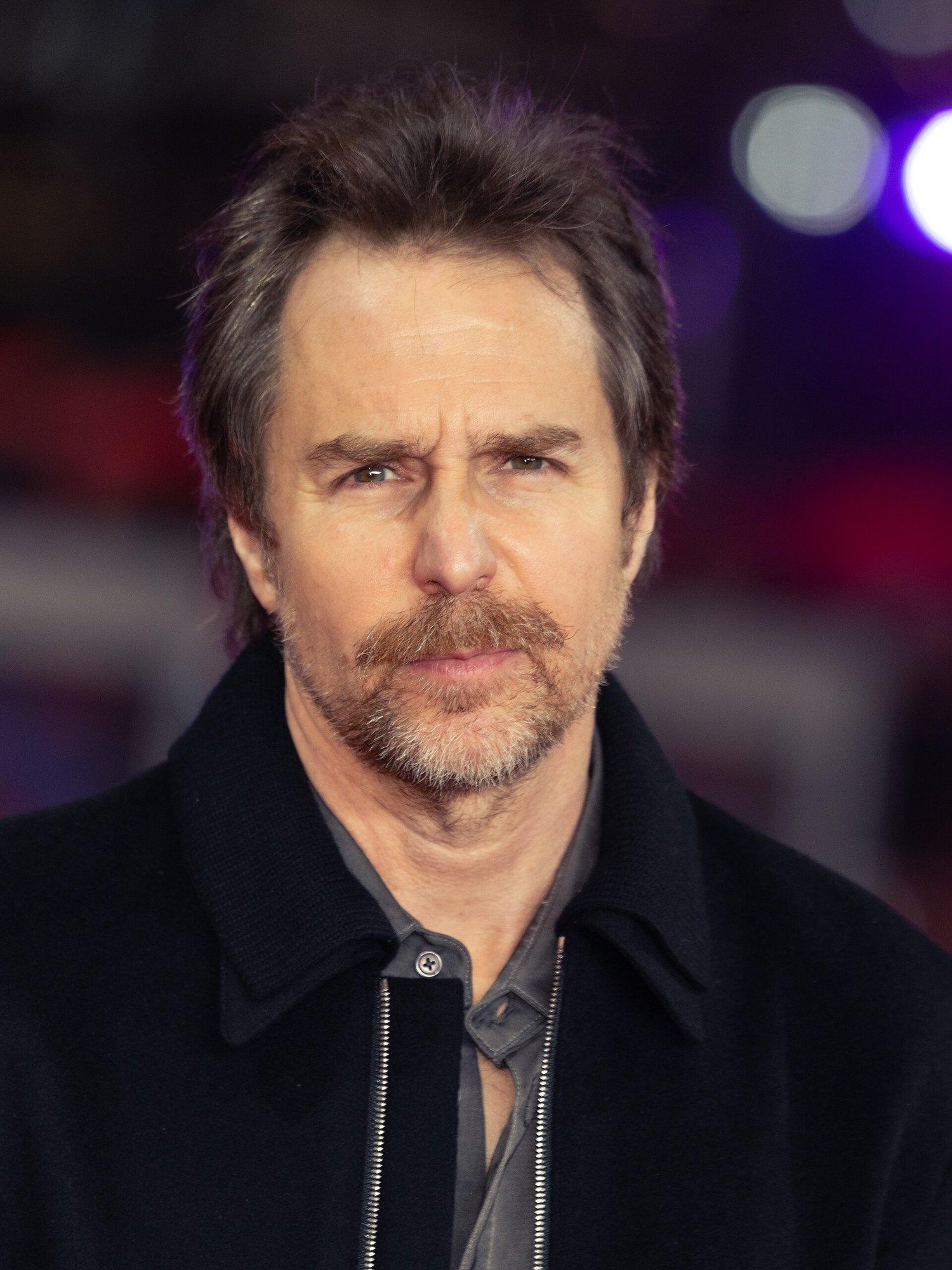
Sam Rockwell.

Actor · Stage and Screen Performer

Sam Rockwell built one of modern film’s great side-door careers: Box of Moonlight, Moon, Three Billboards Outside Ebbing, Missouri, Fosse/Verdon, American Buffalo, and that praised White Lotus monologue that reminded everybody how dangerous a few well-chosen minutes can be in the hands of a character actor. The public impression is loose, charismatic, and offbeat. The throughline underneath it is pickier: a performer who keeps finding roles strange enough to matter to him, then making them legible without sanding off their odd edges.

OBJECTIVE PERSONALITY CLASSIFICATIONMF-Fi/Ne-CP/S(B) #4What does this mean?
PERSONALITY SYSTEMObjective Personality
LEAD FUNCTIONFi · Introverted Feeling
SECOND SAVIOR FUNCTIONNe · Extroverted Intuition
MBTI EQUIVALENTINFP
01 / BEHIND THE CLASSIFICATION

The personality behind the fame.

How does a recorded OPS classification like MF-Fi/Ne-CP/S(B) #4 break down? Walk through nine coins and watch the proposed type take shape. These are deductions from the archived code, not independent evidence of typing accuracy.

Scroll below to see Sam Rockwell take shape.

STARTING POINT512 possible OPS typesEach type combines core functions, an animal order, and sexual modalities.
THE FINISH LINEMF-Fi/Ne-CP/S(B) #4One recorded classification, decoded from its components.
Sam Rockwell’s HUMAN NEEDS 01—03
01
DECIDER OR OBSERVER?

Decider over Observer

Deciders have more balanced Observer poles in the middle: Control (Oi) and Chaos (Oe). Organizing what's known and handling what's new tend to feel more manageable. People are the harder territory. Self (Di) and Tribe (De) sit at the extremes, so judgment, rejection, approval, and conflict can trigger the strongest reactions.

Rockwell’s public career tension reads less like “Will the industry ever give me a chance?” and more like “What do these people want me to be?” After The Green Mile, he openly worried that playing another unlikable character would get him labeled, joking that he needed to play “some lawyers, or a British aristocrat.” That is Decider pressure: significance, reputation, and the social consequences of other people’s judgments. The strength is resilience inside a highly evaluative business. The blind spot is letting identity battles consume attention that could go to the work itself.
D
02
SELF OR TRIBE?

Di · Self over De · Tribe

Self (Di) is the stronger deciding pole. They check decisions against their own values or reasons first: what makes sense to me, what feels right to me? The strength is independent conviction; the recurring friction is the Tribe (De)—other people's standards, feedback, and expectations. As the portrait unfolds, notice how Self takes the lead.

Rockwell’s career has repeatedly followed his own taste before any obvious industry consensus. He spent years in small TV parts, restaurant jobs, and indie films before Box of Moonlight finally put him “on some independent film map,” then kept choosing eccentric material like Confessions of a Dangerous Mind, Moon, and American Buffalo instead of chasing a safer brand. Self over Tribe gives him a strong internal filter; the performances feel owned, not focus-grouped. The growth cost is real: when your standard leads, other people may need more help understanding where you are going and why it matters.

Di
03
GATHER OR ORGANIZE?

Oe · Gather over Oi · Organize

Gather (Oe) leads with new information, experiences, and possibilities. Its strength is curiosity and adaptability; the recurring friction is narrowing the options and settling into what is already known. Another layer of the personality portrait comes into focus.

Rockwell’s résumé is almost aggressively non-linear: Teenage Mutant Ninja Turtles, The Green Mile, Galaxy Quest, Charlie’s Angels, Moon, Seven Psychopaths, Jojo Rabbit, The Bad Guys, Broadway, prestige TV. Gather over Organize shows up in that appetite for fresh terrain. Another genre, another director, another strange supporting turn can all become live options. That flexibility is a career advantage; he rarely feels trapped in one lane. The cost is selectivity. A performer this open to possibility still has to decide which version of his range deserves the next decade, not just the next interesting offer.

Oe
FIRST THREE COINSD + Di + Oe

These establish the preferred human needs in the OPS framework.

Sam Rockwell’s FUNCTIONS 04—05
04
FEELING OR THINKING?

Feeling · F over Thinking · T

Feeling (F) evaluates decisions through values, meaning, and what matters—not simply through emotion. Its strength is a clear sense of significance; Thinking (T) provides balance through impersonal reasons, consistency, and evidence. Combined with Self (Di), this forms the recorded Savior Fi.

Rockwell has said, “I like that dark stuff. I think heroes should be flawed,” which is a tidy public clue to Fi as his recorded Feeling function. His most memorable work often comes from characters who are hard to flatten into tidy morality: Wild Bill in The Green Mile, Chuck Barris, the deputy in Three Billboards, even the lonely split performance in Moon. The strength is conviction around what feels humanly interesting to him. The void is that a personally compelling read on a role does not automatically answer how everyone else will interpret its impact, tone, or meaning.

F → Fi
05
SENSING OR INTUITION?

Intuition · N over Sensing · S

Intuition (N) focuses on concepts, patterns, and what information might mean. Sensing (S) balances it through observable facts, physical detail, and direct experience. Combined with Gather (Oe), this gives the recorded Savior Ne.

Ne Intuition fits how Rockwell keeps finding the less-obvious angle inside a part. Box of Moonlight turns a Davy Crockett oddball into a career pivot; Confessions of a Dangerous Mind and Moon both depend on an actor who can make unreality feel playable instead of abstract. He has also moved easily between satire, crime drama, sci-fi, Broadway, and voice work, which points to a mind comfortable with reframing rather than repeating. The strength is inventive range. The cost is that possibility can multiply faster than direction, and not every intriguing lane can become the main road.

N → Ne
THE TWO SAVIOR FUNCTIONSFi / Ne

Opposing functions: Te and Si.

Sam Rockwell’s ANIMAL STACK 06—07
06
CONSUME OR BLAST?

Consume over Blast

Consume gathers information for internal processing; Blast organizes and communicates information. The recorded order is Consume → Play → Sleep → Blast. This comparison follows their positions in that stack.

Consume over Blast is all over Rockwell’s long runway. He trained at the William Esper Studio, spent years taking small roles, and for Moon he spoke about studying performances like Dead Ringers and Midnight Cowboy to solve the challenge of playing opposite himself. That intake gives him a deep reservoir when a part demands specificity instead of cliché. The strength is substance: he rarely seems to arrive empty. The blind spot is that gathering can keep feeling productive long after a simpler task is required—state the point, commit, and let the work stand.

C > B
07
PLAY OR SLEEP?

Play over Sleep

Play emphasizes external real-time engagement; Sleep emphasizes internal processing. The recorded stack places Play earlier.

Play over Sleep shows up most clearly when Rockwell talks about live creative exchange, not just abstract teamwork. On Matchstick Men, he said Ridley Scott “let us fuck around with that,” and on The Way, Way Back he was blunt: “We were ab-libbing.” That is a more specific public pattern than merely being employable. His strength is responsiveness in motion; scenes can spark because he is working off other people in real time. The cost is that constant external riffing can outrun quieter consolidation, leaving less space to decide what should stay instinctive and what needs deliberate shape.

P > S
Sam Rockwell’s ANIMAL ORIENTATION 08—09
08
INFO OR ENERGY DOMINANT?

Energy over Info

Energy dominant means Play and Sleep are both in the top three: there is access to expending energy through engagement and conserving it through internal processing. Blast last leaves the information side uneven—Consume may gather far more than gets communicated.

Rockwell’s stack lands on Energy over Info, which helps explain a career that can swing from Broadway to animation to limited-series television without losing momentum. With both outward engagement and private processing in the top three, he has access to motion and reset rather than living only in explanation mode. The missing balance is Blast last. So the likely bottleneck is not talent or charisma; it is packaging what he already knows into a clean, repeatable message. His strength is lived texture. The growth cost is that others may have to infer the larger thesis from the fragments he performs so brilliantly.

Energy
09
INTROVERSION OR EXTROVERSION?

Introversion over Extroversion

The last animal, Blast, determines this OPS coin: Play or Blast last means Introversion; Consume or Sleep last means Extroversion. This describes animal orientation, not sociability or shyness.

Rockwell can look exuberantly social on screen and still land on the Introversion coin here. That result comes from Blast being fourth, not from whether he can charm a room, carry a monologue, or anchor an ensemble. In OPS terms, the issue is how naturally private understanding becomes a settled, broadcast conclusion. His charisma makes spontaneity easy to over-credit. The quieter challenge is clarity. When the explanation comes last, he can leave a trail of unforgettable moments while the larger point remains implied. Growth means making the conclusion explicit before another fascinating detour arrives.

I
Sexual Modalities

The four sexual modalities.

OPS uses masculine/feminine sensory and extroverted-deciding distinctions as framework-specific terms, not gender categories. The four modalities are already included in the original 512 types. The recorded modality is MF · Audio.

MM KinestheticMasculine Sensory · Masculine De
MF RECORDED MODALITYAudioMasculine Sensory · Feminine De
FF TesterFeminine Sensory · Feminine De
FM VisualFeminine Sensory · Masculine De
ADDITIONAL LAYER · SOCIAL TYPE

The four social types.

Social types are an additional layer on top of the original Objective Personality classification, introduced later in OPS research. They describe two proposed social preference coins: Flex vs. Friends and Generalize vs. Specialize. The combination and priority of these preferences produce four social types. Sam Rockwell's recorded social type is #4.

SOCIAL #1 #1Flex · Generalize
SOCIAL #2 #2Generalize · Friends
SOCIAL #3 #3Specialize · Flex
SOCIAL #4 RECORDED SOCIAL TYPE#4Friends · Specialize
COMPLETE RECORDED OPS TYPE · MODALITY INCLUDED + SOCIAL TYPEMF-Fi/Ne-CP/S(B) #4

Fi leads, Ne supports, and the animal stack is Consume → Play → Sleep → Blast.

THE FINISHED PORTRAIT · ALL NINE COINS REVEALED

Sam Rockwell's complete function and animal stack

ConsumePlaySleepBlastmFifNemSifTe
MF-Fi/Ne-CP/S(B) #4DOUBLE ACTIVATED · CONSUMEExplore the Interactive Coin Builder →
THE SAM ROCKWELL LENS

The scene-stealer with a private center.

Rockwell’s public image is easy to spot: the sly disruptor who can walk into Galaxy Quest, Moon, Three Billboards, or that White Lotus monologue and change the room’s temperature. But the person behind it was built slowly—years of guest spots, theater, and indie roles before the awards made the looseness look inevitable.

Fi with Ne gives him an actor’s version of selective appetite. Fi keeps asking whether a role feels worth inhabiting on his own terms; Ne keeps finding the odd angle that saves a character from cliché, from Box of Moonlight to Moon. That pairing makes unusual parts vivid. Its limit is translation: his inner read can be stronger than the shared explanation around it.

As a Decider and Double Observer, Rockwell’s main imbalance sits in human significance more than in chaos control. The recurring pressure is identity, judgment, and how to land with other people, while the world of options stays relatively navigable. The neglected function opposite lead Fi is Te: clearer external reasoning, firmer stated conclusions, and more deliberate communication of what the performance is trying to do.

Consume → Play → Sleep → Blast completes the picture. He gathers deeply, tests material live with other people, and processes enough to keep the work textured, but Blast last makes clean, early explanation the stretch. The balancing move is specific: before rehearsal or filming accelerates, say the central read plainly to collaborators, then keep the instinctive weirdness fully intact.

Want to understand the Savior and Demon states behind these nine coins? Explore the complete explanation, visual examples, and typing principles on our Methodology page →

02 / KEEP EXPLORING

Different faces. Familiar patterns.

Explore other celebrities with related recorded OPS classifications. Related functions are not necessarily exact type matches.

Discover Type Twins
YOUR TURN

Curious about your own type?

Discover how your own personality might be classified through Objective Personality.

Get objectively typed
Sam Rockwell's Personality Type & OPS Profile | The Personality Atlas