The Personality Atlas
THE CELEBRITY PERSONALITY ARCHIVE / BUSINESS & TELEVISION

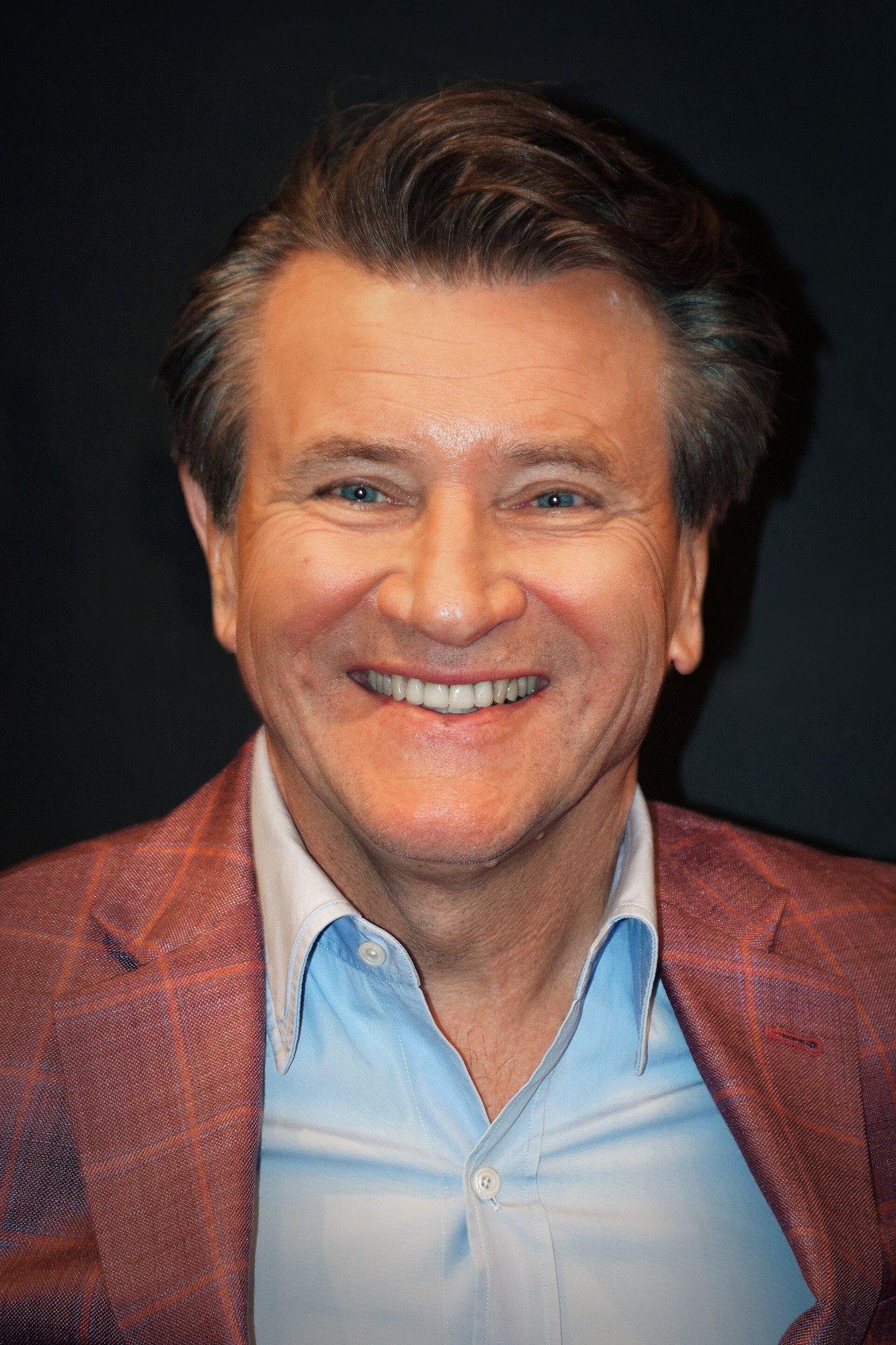
Robert Herjavec.

Entrepreneur · Investor · Television Personality

Robert Herjavec built a public persona out of reassurance and velocity: the immigrant kid whose family arrived in Canada with $20, the salesman who talked Logiquest into hiring him for free, the cybersecurity founder who sold BRAK Systems for $30.2 million, and the TV investor who can turn a pitch meeting into a verdict in one smile.

OBJECTIVE PERSONALITY CLASSIFICATIONMF-Te/Si-BP/S(C)What does this mean?
PERSONALITY SYSTEMObjective Personality
LEAD FUNCTIONTe · Extroverted Thinking
SECOND SAVIOR FUNCTIONSi · Introverted Sensing
MBTI EQUIVALENTESTJ
01 / BEHIND THE CLASSIFICATION

The personality behind the fame.

How does a recorded OPS classification like MF-Te/Si-BP/S(C) break down? Walk through nine coins and watch the proposed type take shape. These are deductions from the archived code, not independent evidence of typing accuracy.

Scroll below to see Robert Herjavec take shape.

STARTING POINT512 possible OPS typesEach type combines core functions, an animal order, and sexual modalities.
THE FINISH LINEMF-Te/Si-BP/S(C)One recorded classification, decoded from its components.
Robert Herjavec’s HUMAN NEEDS 01—03
01
DECIDER OR OBSERVER?

Decider over Observer

Deciders have more balanced Observer poles in the middle: Control (Oi) and Chaos (Oe). Organizing what's known and handling what's new tend to feel more manageable. People are the harder territory. Self (Di) and Tribe (De) sit at the extremes, so judgment, rejection, approval, and conflict can trigger the strongest reactions.

Herjavec’s story is full of moments where the pressure point is human judgment, not mere bad luck. He convinced Logiquest to hire him despite being unqualified, then spent years in sales and on Dragons’ Den and Shark Tank deciding which founders to trust. That is Decider territory: worth, credibility, persuasion, and whether people are buying what you’re selling. The strength is social courage under evaluation. The blind spot is that a stalled outcome can start to look like a verdict on the people involved, not just a problem to wait out or reframe.

D
02
SELF OR TRIBE?

De · Tribe over Di · Self

Tribe (De) is the stronger deciding pole. They check decisions against people, shared standards, and what works for the group: what do we need, what will others think? The strength is coordination and responsiveness; the recurring friction is the Self (Di)—knowing and defending their own position. As the portrait unfolds, notice how Tribe takes the lead.

His public career runs on Tribe-first calibration. Sales, investing, and television all reward reading the room: what customers will buy, what a partner can execute, what an audience immediately understands. Herjavec’s success on investor panels fits that instinct to externalize judgment and move toward shared standards. The advantage is practical influence; he can make his conclusions legible to other people fast. The cost is subtler. When consensus becomes the default measuring stick, a more private conviction may get softened, delayed, or translated into whatever the market will most easily accept.

De
03
GATHER OR ORGANIZE?

Oi · Organize over Oe · Gather

Organize (Oi) leads with refining, preserving, and structuring what is already known. Its strength is preparation and clear direction; the recurring friction is unexpected change that disrupts the plan. Another layer of the personality portrait comes into focus.

Herjavec’s business track record is unusually concrete: IBM mainframe boards at Logiquest, a basement-built security company, then The Herjavec Group scaling from three employees and $400,000 in sales to more than $200 million in annual revenue. Organize over Gather fits that preference for stable systems, repeatable processes, and known lanes that can be expanded deliberately. The strength is turning complexity into an operating structure. The blind spot is that emerging options can look less compelling if they do not slot neatly into an existing model, even when the next opportunity arrives wearing unfamiliar clothes.

Oi
FIRST THREE COINSD + De + Oi

These establish the preferred human needs in the OPS framework.

Robert Herjavec’s FUNCTIONS 04—05
04
FEELING OR THINKING?

Thinking · T over Feeling · F

Thinking (T) evaluates decisions through reasons, logic, and what works—not a lack of emotion. Its strength is analytical consistency; Feeling (F) provides balance through values, meaning, and the human consequences of a decision. Combined with Tribe (De), this forms the recorded Savior Te.

Thinking is hard to miss in a career built on sales targets, acquisitions, and executable decisions. After being fired from Logiquest, Herjavec founded BRAK Systems, sold it to AT&T Canada for $30.2 million, then later built and sold a majority stake in another security firm. Te makes business logic public: what solves the problem, what scales, what closes. That clarity is a strength because other people know where they stand. The limit is that human situations can get framed like operational questions, as if efficiency and usefulness were always the only measures that matter.

T → Te
05
SENSING OR INTUITION?

Sensing · S over Intuition · N

Sensing (S) focuses on concrete details, observable reality, and lived experience. Intuition (N) balances it by looking for broader patterns, concepts, and implications. Combined with Organize (Oi), this gives the recorded Savior Si.

Herjavec’s Sensing side shows up in how grounded his public life is in concrete execution. Cybersecurity is not a vague ideas business; it depends on real systems, real failures, real client needs. Even his racing hobby in the Ferrari Challenge points to measurable performance, disciplined repetition, and respect for the physical realities of timing and control. Si brings reliability to his decision-making. The tradeoff is that what has already been proven can start to feel safer than what is merely promising. A tested system protects against chaos, but it can also narrow the imagination.

S → Si
THE TWO SAVIOR FUNCTIONSTe / Si

Opposing functions: Fi and Ne.

Robert Herjavec’s ANIMAL STACK 06—07
06
CONSUME OR BLAST?

Blast over Consume

Consume gathers information for internal processing; Blast organizes and communicates information. The recorded order is Blast → Play → Sleep → Consume. This comparison follows their positions in that stack.

Blast over Consume fits a man who made a career out of turning experience into direction. Herjavec did not just build companies; he wrote Driven, The Will to Win, and You Don’t Have to Be a Shark, then reinforced the same public role on investor television and business presentations. The gift of Blast is usable clarity. He can take a messy situation and state the lesson, ask, or verdict. The cost is predictable: when expression comes first, additional raw input can feel less urgent than sharpening the message already forming in his head.

B > C
07
PLAY OR SLEEP?

Play over Sleep

Play emphasizes external real-time engagement; Sleep emphasizes internal processing. The recorded stack places Play earlier.

Play over Sleep shows up in how often Herjavec’s work happens in live exchange rather than private seclusion. Dragons’ Den, Shark Tank in multiple countries, awards presentations, and even Dancing with the Stars all put him in fast-moving environments where he has to respond in real time. That flexibility is a real asset; he stays animated by contact and momentum. The downside is that constant engagement can become its own current. If every useful thing happens in motion, quieter internal regrouping is easier to postpone than to prioritize.

P > S
Robert Herjavec’s ANIMAL ORIENTATION 08—09
08
INFO OR ENERGY DOMINANT?

Energy over Info

Energy dominant means Play and Sleep are both in the top three: there is access to expending energy through engagement and conserving it through internal processing. Consume last leaves the information side uneven—Blast may broadcast more than gets taken in.

Herjavec’s stack lands on Energy over Info because both outward engagement and private consolidation sit in the top three while Consume falls last. Publicly, that reads as someone who can build, present, interact, and keep the machine moving across companies, books, and television. The strength is range without paralysis: he does not need endless intake before acting. The missing balance is slower absorption. Once he has a direction, more research or more unfiltered listening can feel secondary to executing and communicating the conclusion already on the table.

Energy
09
INTROVERSION OR EXTROVERSION?

Extroversion over Introversion

The last animal, Consume, determines this OPS coin: Play or Blast last means Introversion; Consume or Sleep last means Extroversion. This describes animal orientation, not sociability or shyness.

This profile lands on OPS Extroversion, but not because Herjavec appears friendly on television. The actual tell is structural: Consume is last, so outward directing and engaging come more readily than disappearing into pure intake. Blast and Play get to the microphone before Consume gets a long private runway. That can be powerful in leadership and investing, where speed matters. The growth edge is simple and uncomfortable: create deliberate due-diligence space before the verdict, so the next confident conclusion is fed by fresh information instead of momentum alone.

E
Sexual Modalities

The four sexual modalities.

OPS uses masculine/feminine sensory and extroverted-deciding distinctions as framework-specific terms, not gender categories. The four modalities are already included in the original 512 types. The recorded modality is MF · Audio.

MM KinestheticMasculine Sensory · Masculine De
MF RECORDED MODALITYAudioMasculine Sensory · Feminine De
FF TesterFeminine Sensory · Feminine De
FM VisualFeminine Sensory · Masculine De
COMPLETE RECORDED OPS TYPE · MODALITY INCLUDEDMF-Te/Si-BP/S(C)

Te leads, Si supports, and the animal stack is Blast → Play → Sleep → Consume.

THE FINISHED PORTRAIT · ALL NINE COINS REVEALED

Robert Herjavec's complete function and animal stack

BlastPlaySleepConsumefTemSifNemFi
MF-Te/Si-BP/S(C)DOUBLE ACTIVATED · BLASTExplore the Interactive Coin Builder →
THE ROBERT HERJAVEC LENS

The salesman with a system.

On Shark Tank, Herjavec often looks effortlessly reassuring: quick smile, quick math, quick sense of whether a founder can actually sell. That public ease hides a harsher beginning. His family arrived in Canada with $20, lived in a friend’s basement, and he once worked for free at Logiquest while waiting tables to cover rent.

His Te/Si pairing is excellent at converting uncertainty into something executable. Te makes the judgment public and useful; Si stabilizes it with proven systems, repeatable standards, and operational memory. That combination can build real businesses and clear decisions. Its limit is that what works reliably can start to outrank what needs slower, less tidy consideration.

As a Decider and Double Observer, Herjavec’s deeper imbalance centers on people-weighted questions of value, trust, respect, and whose standard gets to count. Facts and logistics may be easier to marshal than the softer issue underneath a decision. The neglected function opposite his lead Te is Fi, the private human valuation that does not automatically justify itself to the room.

Blast → Play → Sleep → Consume explains why he can look so naturally public-facing without reducing the profile to charm. The last-animal issue is Consume: gathering fresh input for its own sake can lose to explaining, engaging, and moving. The best correction is not becoming vague or passive; it is keeping the crisp verdict while adding a protected founder-listening block before the decision.

Want to understand the Savior and Demon states behind these nine coins? Explore the complete explanation, visual examples, and typing principles on our Methodology page →

02 / KEEP EXPLORING

Different faces. Familiar patterns.

Explore other celebrities with related recorded OPS classifications. Related functions are not necessarily exact type matches.

Discover Type Twins
YOUR TURN

Curious about your own type?

Discover how your own personality might be classified through Objective Personality.

Get objectively typed
Robert Herjavec's Personality Type & OPS Profile | The Personality Atlas