The Personality Atlas
THE CELEBRITY PERSONALITY ARCHIVE / FILM & MUSIC

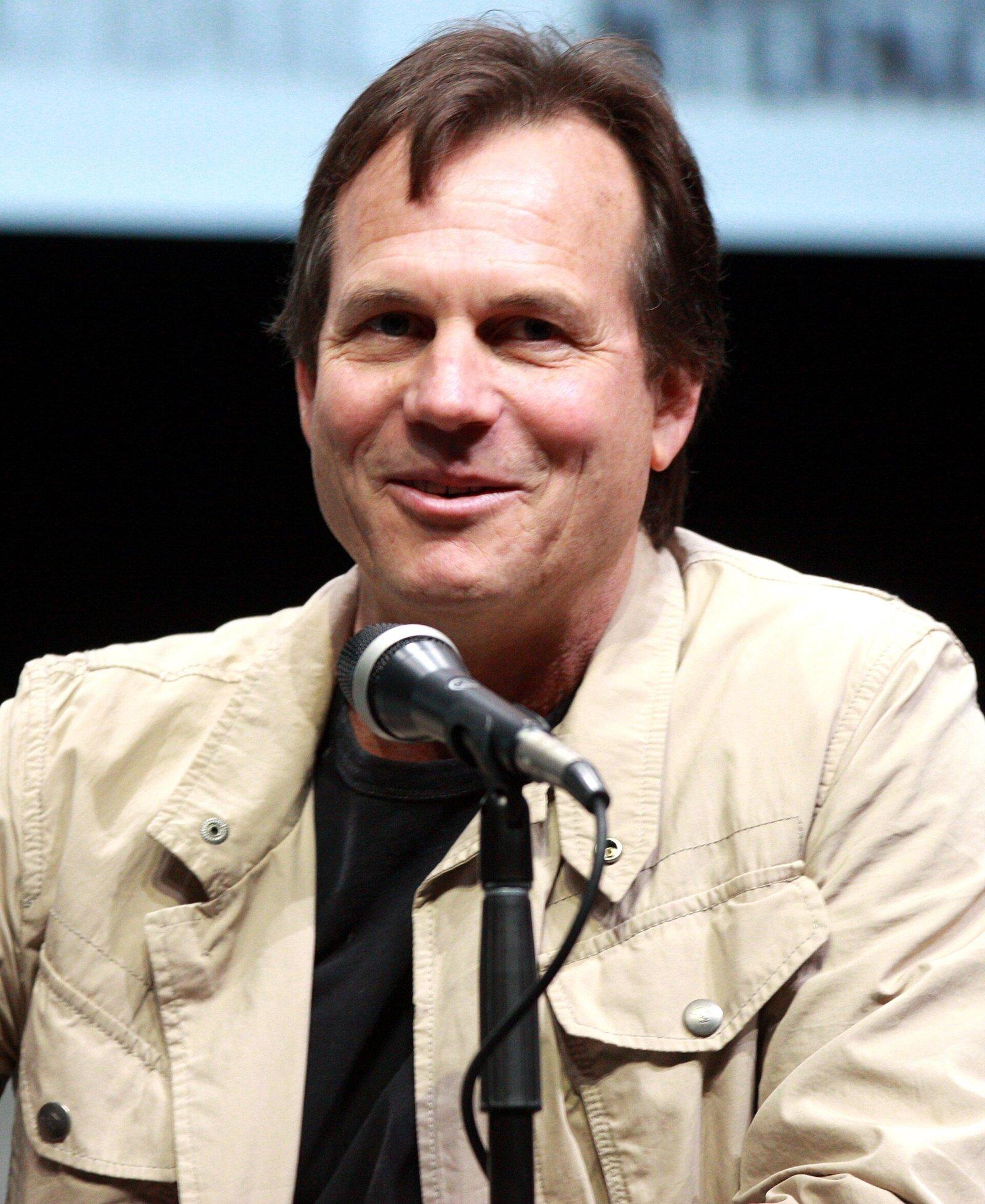
Bill Paxton.

Actor · Filmmaker · Musician

Bill Paxton built one of Hollywood’s most dependable careers by making every part feel specific: the panicked marine in Aliens, the storm-battered lead of Twister, the family patriarch of Big Love, the director-star behind Frailty, even the frontman of Martini Ranch. What looked like effortless Texas charisma was usually something sturdier—an actor and filmmaker who could lock into a world, serve the production, and make audiences trust him fast.

OBJECTIVE PERSONALITY CLASSIFICATIONMM-Te/Si-BS/C(P)What does this mean?
PERSONALITY SYSTEMObjective Personality
LEAD FUNCTIONTe · Extroverted Thinking
SECOND SAVIOR FUNCTIONSi · Introverted Sensing
MBTI EQUIVALENTESTJ
01 / BEHIND THE CLASSIFICATION

The personality behind the fame.

How does a recorded OPS classification like MM-Te/Si-BS/C(P) break down? Walk through nine coins and watch the proposed type take shape. These are deductions from the archived code, not independent evidence of typing accuracy.

Scroll below to see Bill Paxton take shape.

STARTING POINT512 possible OPS typesEach type combines core functions, an animal order, and sexual modalities.
THE FINISH LINEMM-Te/Si-BS/C(P)One recorded classification, decoded from its components.
Bill Paxton’s HUMAN NEEDS 01—03
01
DECIDER OR OBSERVER?

Decider over Observer

Deciders have more balanced Observer poles in the middle: Control (Oi) and Chaos (Oe). Organizing what's known and handling what's new tend to feel more manageable. People are the harder territory. Self (Di) and Tribe (De) sit at the extremes, so judgment, rejection, approval, and conflict can trigger the strongest reactions.

Paxton’s public story is full of people more than problems: a 36-year friendship and repeated collaborations with James Cameron, three Golden Globe nominations for Big Love, and tributes after his death from co-stars and directors who emphasized what he brought to a set. That fits Decider friction. The pressure is not mainly random chaos in the world, but significance, contribution, and the human question of how you land with others. The strength is becoming indispensable inside an ensemble. The blind spot is letting usefulness and reputation carry more weight than the impersonal conditions no relationship can control.
D
02
SELF OR TRIBE?

De · Tribe over Di · Self

Tribe (De) is the stronger deciding pole. They check decisions against people, shared standards, and what works for the group: what do we need, what will others think? The strength is coordination and responsiveness; the recurring friction is the Self (Di)—knowing and defending their own position. As the portrait unfolds, notice how Tribe takes the lead.

Paxton’s career kept bending toward what a production, director, or audience needed. After film-school rejections, he pragmatically pivoted from directing ambitions into acting, then became the kind of performer who could elevate James Cameron spectacles, HBO drama, and studio thrillers without demanding every project revolve around him. That points to Tribe over Self: reading the external standard and meeting it. The advantage is obvious versatility and employability. The growth cost is subtler. When the bar is set outside you, it becomes easy to measure value by the room’s needs, nominations, or approval instead of a private inner line.

De
03
GATHER OR ORGANIZE?

Oi · Organize over Oe · Gather

Organize (Oi) leads with refining, preserving, and structuring what is already known. Its strength is preparation and clear direction; the recurring friction is unexpected change that disrupts the plan. Another layer of the personality portrait comes into focus.

Paxton’s career was broad, but not random. He kept returning to durable lanes: multiple films with James Cameron, historical material like Apollo 13 and Hatfields & McCoys, and later Parkland, which connected back to a concrete childhood memory of seeing Kennedy in Fort Worth. Organize over Gather shows up in that loyalty to established tracks, known collaborators, and material with a clear framework. The strength is coherence: he could step into a world and make it feel already lived-in. The blind spot is that strong continuity can make open-ended detours or unnecessary experimentation feel less compelling than building on what already works.

Oi
FIRST THREE COINSD + De + Oi

These establish the preferred human needs in the OPS framework.

Bill Paxton’s FUNCTIONS 04—05
04
FEELING OR THINKING?

Thinking · T over Feeling · F

Thinking (T) evaluates decisions through reasons, logic, and what works—not a lack of emotion. Its strength is analytical consistency; Feeling (F) provides balance through values, meaning, and the human consequences of a decision. Combined with Tribe (De), this forms the recorded Savior Te.

Te fits how Paxton kept converting ambition into finished work. Rejected by Southern California film schools, he did not romanticize the setback; he worked in props and art departments, switched lanes into acting, and later got Frailty made as his directorial debut while also starring in it. That is practical judgment aimed outward: what can be built, executed, and delivered. The strength is momentum and competence under real-world constraints. The limit is that efficiency can become its own authority. A workable answer may arrive faster than the slower question of whether it fully reflects the person behind the work.

T → Te
05
SENSING OR INTUITION?

Sensing · S over Intuition · N

Sensing (S) focuses on concrete details, observable reality, and lived experience. Intuition (N) balances it by looking for broader patterns, concepts, and implications. Combined with Organize (Oi), this gives the recorded Savior Si.

Paxton’s public life kept circling back to concrete history. As a child he was photographed in the crowd as John F. Kennedy emerged from Hotel Texas; decades later he co-produced Parkland about the assassination. After appearing in Titanic, he joined Cameron on an expedition to the actual wreck and turned that trip into Ghosts of the Abyss. Si gives weight to remembered detail, continuity, and what is physically documented. The strength is credibility and texture. The blind spot is that what is already established can feel so compelling that riskier abstractions or bigger leaps into the unknown get less automatic room.

S → Si
THE TWO SAVIOR FUNCTIONSTe / Si

Opposing functions: Fi and Ne.

Bill Paxton’s ANIMAL STACK 06—07
06
CONSUME OR BLAST?

Blast over Consume

Consume gathers information for internal processing; Blast organizes and communicates information. The recorded order is Blast → Sleep → Consume → Play. This comparison follows their positions in that stack.

Between Consume and Blast, Paxton’s career reads earlier Blast. He was repeatedly cast as the man who could make a world instantly legible: Hudson’s quotable panic in Aliens, the grounded center of Twister, the patriarchal authority of Big Love. Even his move into directing asked for packaging a vision clearly enough that other people could execute it. The strength of Blast is transmission—getting the point across fast and memorably. The cost is that delivery can outrun further intake. When a message already lands, gathering one more layer of research or nuance can feel less urgent than sending it.

B > C
07
PLAY OR SLEEP?

Sleep over Play

Play emphasizes external real-time engagement; Sleep emphasizes internal processing. The recorded stack places Sleep earlier.

In the Play versus Sleep comparison, Sleep comes earlier. Paxton’s directorial work on Frailty and The Greatest Game Ever Played suggests more than raw performance energy; it points to taking experience inward, settling on an interpretation, then releasing something shaped and centered. That quieter internal consolidation can sit behind a very public career. Its strength is steadiness: the performance feels inhabited rather than merely reactive. The tradeoff is that Play gets less priority. In faster, more improvisational exchange, the temptation is to rely on the already-processed take instead of letting the moment stay open long enough to be altered by someone else.

S > P
Bill Paxton’s ANIMAL ORIENTATION 08—09
08
INFO OR ENERGY DOMINANT?

Info over Energy

Info dominant means Consume and Blast are both in the top three: gathering and communicating information are more balanced. Play last leaves the energy side uneven—Sleep can conserve energy without enough spontaneous outward engagement.

Paxton lands on the Info coin because Blast and Consume both sit in the top three while Play falls last. Publicly, that looks like someone who could absorb material and then make it understandable, whether he was carrying the exposition in Apollo 13, anchoring the family structure of Big Love, or turning personal and historical detail into Parkland. The strength is translation: information becomes usable story. The void is not a lack of talent or warmth. It is the lower priority on spontaneous live calibration. Prepared understanding may come more readily than loose, in-the-moment exchange.

Info
09
INTROVERSION OR EXTROVERSION?

Introversion over Extroversion

The last animal, Play, determines this OPS coin: Play or Blast last means Introversion; Consume or Sleep last means Extroversion. This describes animal orientation, not sociability or shyness.

Paxton’s OPS Introversion does not contradict a career spent on film sets, television, and stages. The coin comes from animal order, not from how sociable or charismatic he looked in public. In Blast–Sleep–Consume–Play, Play is fourth, so outward exchange is later than both a settled internal take and a clear delivered message. That helps explain how a performer can seem expansive while still preferring a more contained way of moving through information and people. The growth edge is letting more real-time interaction in before the conclusion hardens—without losing the clarity that made him so dependable on screen.

I
Sexual Modalities

The four sexual modalities.

OPS uses masculine/feminine sensory and extroverted-deciding distinctions as framework-specific terms, not gender categories. The four modalities are already included in the original 512 types. The recorded modality is MM · Kinesthetic.

MM RECORDED MODALITYKinestheticMasculine Sensory · Masculine De
MF AudioMasculine Sensory · Feminine De
FF TesterFeminine Sensory · Feminine De
FM VisualFeminine Sensory · Masculine De
COMPLETE RECORDED OPS TYPE · MODALITY INCLUDEDMM-Te/Si-BS/C(P)

Te leads, Si supports, and the animal stack is Blast → Sleep → Consume → Play.

THE FINISHED PORTRAIT · ALL NINE COINS REVEALED

Bill Paxton's complete function and animal stack

BlastSleepConsumePlaymTemSifNefFi
MM-Te/Si-BS/C(P)DOUBLE ACTIVATED · SLEEPExplore the Interactive Coin Builder →
THE BILL PAXTON LENS

The steady man inside the spectacle

Bill Paxton could be the loudest guy in the room—Hudson melting down in Aliens, the storm-chasing lead in Twister, the genial guide through Titanic’s wreckage—and still come across less like a peacock than a working pro. The public impression was swagger; the deeper pattern was usefulness, steadiness, and earned trust.

His savior Te/Si pairing gave him a rare combination of execution and lived-in specificity. Te helps explain the practical reroutes and finished projects; Si shows up in the concrete historical texture of Parkland, Apollo 13, and the Titanic expedition. That pairing makes a career feel grounded. Its limit is inertia: proven methods and documented reality can outweigh riskier, more personal departures.

As a Decider and Double Observer, Paxton’s pressure centers on people, contribution, and significance while the information world is comparatively stable. That exact pairing matters: a Decider is also a Double Observer. The human-needs imbalance is toward managing the tribe and keeping things workable, sometimes at the expense of neglected Fi, the personal valuation opposite his lead Te.

Blast → Sleep → Consume → Play gives the final shape. He can deliver, then internally settle, then take in more before the most spontaneous interaction shows up. With Play last, the imbalance is not shyness but lower priority on live back-and-forth. The balancing move is simple and hard: keep the professional clarity, but leave a little more room for unfinished conversation before locking the scene.

Want to understand the Savior and Demon states behind these nine coins? Explore the complete explanation, visual examples, and typing principles on our Methodology page →

02 / KEEP EXPLORING

Different faces. Familiar patterns.

Explore other celebrities with related recorded OPS classifications. Related functions are not necessarily exact type matches.

Discover Type Twins
YOUR TURN

Curious about your own type?

Discover how your own personality might be classified through Objective Personality.

Get objectively typed
Bill Paxton's Personality Type & OPS Profile | The Personality Atlas