The Personality Atlas
THE CELEBRITY PERSONALITY ARCHIVE / LITERATURE

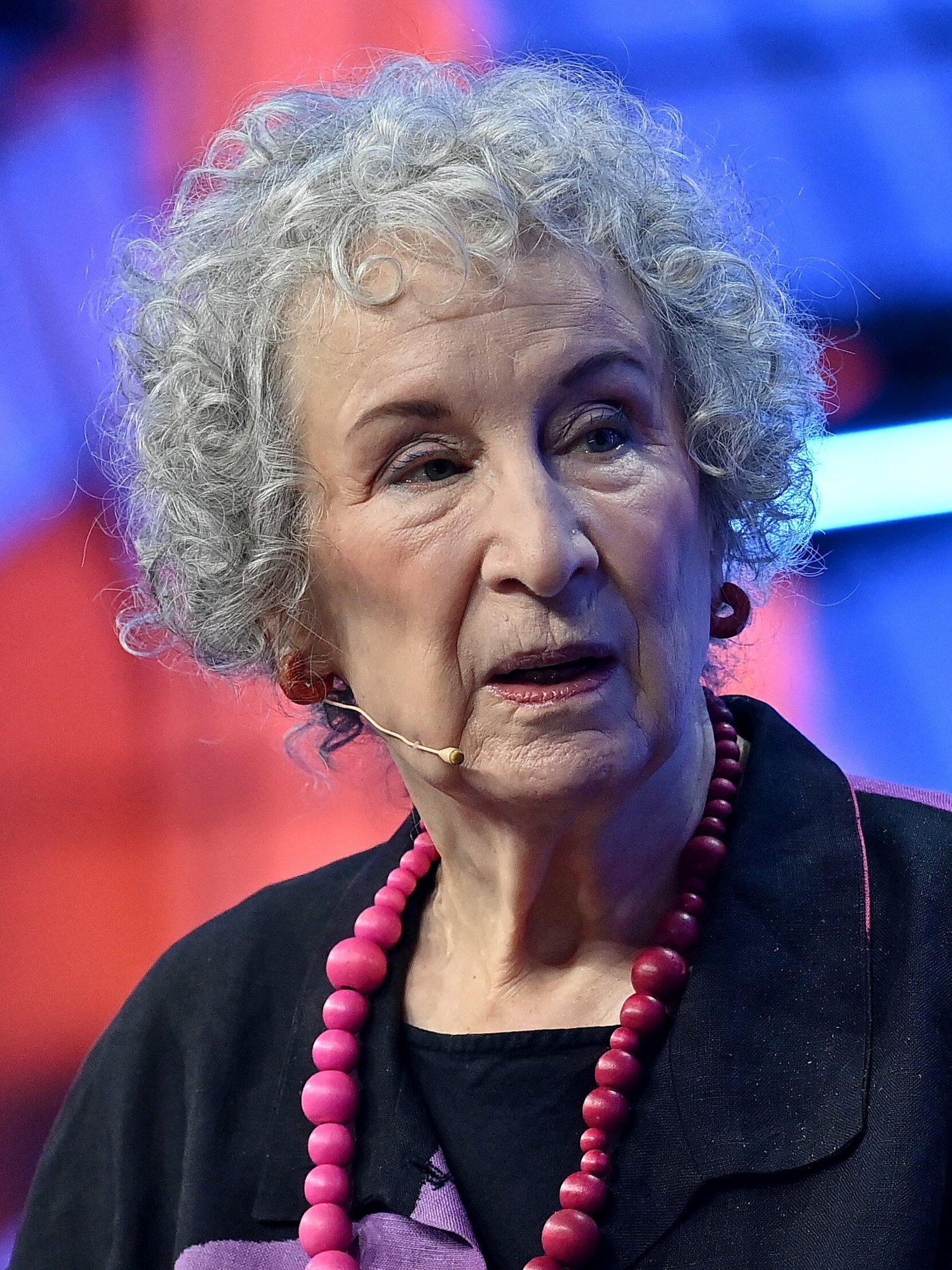
Margaret Atwood.

Novelist · Poet · Critic · Inventor

Margaret Atwood turned Canadian literature into a global argument. Across The Handmaid's Tale, Alias Grace, the MaddAddam trilogy, major lectures, literary institutions, and the LongPen invention, she has built a career on making ideas concrete, portable, and difficult to ignore.

OBJECTIVE PERSONALITY CLASSIFICATIONMM-Te/Si-BS/C(P)What does this mean?
PERSONALITY SYSTEMObjective Personality
LEAD FUNCTIONTe · Extroverted Thinking
SECOND SAVIOR FUNCTIONSi · Introverted Sensing
MBTI EQUIVALENTESTJ
01 / BEHIND THE CLASSIFICATION

The personality behind the fame.

How does a recorded OPS classification like MM-Te/Si-BS/C(P) break down? Walk through nine coins and watch the proposed type take shape. These are deductions from the archived code, not independent evidence of typing accuracy.

Scroll below to see Margaret Atwood take shape.

STARTING POINT512 possible OPS typesEach type combines core functions, an animal order, and sexual modalities.
THE FINISH LINEMM-Te/Si-BS/C(P)One recorded classification, decoded from its components.
Margaret Atwood’s HUMAN NEEDS 01—03
01
DECIDER OR OBSERVER?

Decider over Observer

Deciders have more balanced Observer poles in the middle: Control (Oi) and Chaos (Oe). Organizing what's known and handling what's new tend to feel more manageable. People are the harder territory. Self (Di) and Tribe (De) sit at the extremes, so judgment, rejection, approval, and conflict can trigger the strongest reactions.

By the time Maclean's called her "Canada's most gossiped-about writer," Atwood was already dealing with the social afterlife of her own work. She has publicly resisted critics reading her novels as autobiography and has repeatedly qualified labels like feminist and science fiction. That pattern points to Decider friction: the recurring heat is around people, judgments, and what others think her work means. The strength is staying productive under scrutiny. The blind spot is spending too much energy managing interpretation, as if the right definition could finally settle the human argument.


D
02
SELF OR TRIBE?

De · Tribe over Di · Self

Tribe (De) is the stronger deciding pole. They check decisions against people, shared standards, and what works for the group: what do we need, what will others think? The strength is coordination and responsiveness; the recurring friction is the Self (Di)—knowing and defending their own position. As the portrait unfolds, notice how Tribe takes the lead.

Atwood often argues through shared standards rather than pure self-expression. She defined feminism in terms of women's rights, defended due process in the legal system, and described The Handmaid's Tale by saying she included nothing somebody somewhere had not already done. Tribe-first gives her work public traction: she frames claims so readers, institutions, and critics have something testable to respond to. The cost is endless public adjudication. Orienting to broader standards can clarify the case while also tying the person to arguments that no amount of fairness or precision will conclusively finish.

De
03
GATHER OR ORGANIZE?

Oi · Organize over Oe · Gather

Organize (Oi) leads with refining, preserving, and structuring what is already known. Its strength is preparation and clear direction; the recurring friction is unexpected change that disrupts the plan. Another layer of the personality portrait comes into focus.

Atwood keeps returning to established structures—myths, national literature, historical cases, and already-built fictional worlds. Survival tried to map Canadian literature through a unifying theme; The Penelopiad and Hag-Seed rework canonical stories from a fixed scaffold; The Testaments returns to Gilead with rules already in place. Organize-first is powerful here: she can take sprawling material and lock it into a durable framework. The tradeoff is narrowing. Once a framework becomes influential, it can start deciding too much of what counts, leaving less room for material that resists the system.

Oi
FIRST THREE COINSD + De + Oi

These establish the preferred human needs in the OPS framework.

Margaret Atwood’s FUNCTIONS 04—05
04
FEELING OR THINKING?

Thinking · T over Feeling · F

Thinking (T) evaluates decisions through reasons, logic, and what works—not a lack of emotion. Its strength is analytical consistency; Feeling (F) provides balance through values, meaning, and the human consequences of a decision. Combined with Tribe (De), this forms the recorded Savior Te.

The inventor side of Atwood matters. While touring Oryx and Crake, she conceived the LongPen, founded a company to build it, and remained involved as a director and patent holder. That is a very Te strength: not just having an idea, but turning it into a working system other people can actually use. The advantage is practical clarity—concept, device, application, follow-through. The blind spot sits across from that efficiency. A solution that functions in public or business terms still enters a human world full of symbolism, disagreement, and motives that refuse tidy management.

T → Te
05
SENSING OR INTUITION?

Sensing · S over Intuition · N

Sensing (S) focuses on concrete details, observable reality, and lived experience. Intuition (N) balances it by looking for broader patterns, concepts, and implications. Combined with Organize (Oi), this gives the recorded Savior Si.

Atwood's speculative fiction is famously tethered to precedent. She has said of The Handmaid's Tale that she put in nothing that somebody, somewhere, had not already done, and she made similar claims about the technologies in MaddAddam. Si gives that work its unnerving authority: the future feels credible because it is assembled from remembered patterns, documented history, and observed details. The strength is realism with teeth. The cost is that precedent can become a gatekeeper, tempting a writer to trust what has already happened more readily than what has not yet been publicly archived.

S → Si
THE TWO SAVIOR FUNCTIONSTe / Si

Opposing functions: Fi and Ne.

Margaret Atwood’s ANIMAL STACK 06—07
06
CONSUME OR BLAST?

Blast over Consume

Consume gathers information for internal processing; Blast organizes and communicates information. The recorded order is Blast → Sleep → Consume → Play. This comparison follows their positions in that stack.

Blast is all over Atwood's public career. She did not only publish imaginative work; she built explanatory frameworks around it—Survival for Canadian literature, the Massey Lectures collected as Payback, essays, interviews, and years of teaching. Compared with Consume, the preference is to shape material into a takeaway and hand people a structure. That makes her especially strong at giving readers a frame for what they are seeing. The growth cost is that a clear thesis can harden into a pronouncement before every stray detail has had its say.

B > C
07
PLAY OR SLEEP?

Sleep over Play

Play emphasizes external real-time engagement; Sleep emphasizes internal processing. The recorded stack places Sleep earlier.

With Sleep arriving before Play—and Blast already ahead of Consume—Atwood's public life looks less like spontaneous riffing and more like distilled formulation. She spent part of childhood outside full-time schooling, became a voracious reader, and kept producing work that sounds internally processed rather than casually improvised. Sleep gives her writing a settled center; the voice feels considered, not merely reactive. The cost is that real-time exchange can be less attractive than refining the idea alone. By the time she speaks, the argument may already feel finished to her.

S > P
Margaret Atwood’s ANIMAL ORIENTATION 08—09
08
INFO OR ENERGY DOMINANT?

Info over Energy

Info dominant means Consume and Blast are both in the top three: gathering and communicating information are more balanced. Play last leaves the energy side uneven—Sleep can conserve energy without enough spontaneous outward engagement.

Atwood's stack lands on Info dominance: Blast, Sleep, and Consume all arrive before Play. Her career makes that easy to picture—she absorbs huge ranges of material, privately consolidates it, and then turns it into novels, criticism, lectures, or even a new device. Information gets gathered and delivered. The missing balance is not intelligence or sociability; it is lower preference for spontaneous back-and-forth. With Play last, the risk is holding the prepared framework so firmly that live exchange becomes mostly a place to defend, clarify, or sharpen what was already formed.

Info
09
INTROVERSION OR EXTROVERSION?

Introversion over Extroversion

The last animal, Play, determines this OPS coin: Play or Blast last means Introversion; Consume or Sleep last means Extroversion. This describes animal orientation, not sociability or shyness.

Play sits last in Blast → Sleep → Consume → Play, which makes this Introversion coin even though Atwood has spent decades teaching, touring, lecturing, and appearing in public debates. OPS Introversion here is not shyness; it is the order of the animals. Private processing and prepared delivery come before open-ended interaction. That ordering helps explain why her public voice often arrives as a finished construction rather than a visible brainstorm. The blind spot is waiting for discussion to meet the work on her terms instead of letting reciprocal engagement reshape the message sooner.

I
Sexual Modalities

The four sexual modalities.

OPS uses masculine/feminine sensory and extroverted-deciding distinctions as framework-specific terms, not gender categories. The four modalities are already included in the original 512 types. The recorded modality is MM · Kinesthetic.

MM RECORDED MODALITYKinestheticMasculine Sensory · Masculine De
MF AudioMasculine Sensory · Feminine De
FF TesterFeminine Sensory · Feminine De
FM VisualFeminine Sensory · Masculine De
COMPLETE RECORDED OPS TYPE · MODALITY INCLUDEDMM-Te/Si-BS/C(P)

Te leads, Si supports, and the animal stack is Blast → Sleep → Consume → Play.

THE FINISHED PORTRAIT · ALL NINE COINS REVEALED

Margaret Atwood's complete function and animal stack

BlastSleepConsumePlaymTemSifNefFi
MM-Te/Si-BS/C(P)DOUBLE ACTIVATED · SLEEPExplore the Interactive Coin Builder →
THE MARGARET ATWOOD LENS

The architect behind the warning

The public Margaret Atwood is easy to reduce to one landmark novel, but the source material shows a much broader operating style. Before and after The Handmaid's Tale, she taught at multiple universities, published across poetry, fiction, and criticism, helped found literary institutions, and even conceived the LongPen during a paperback tour so she could solve a practical problem in public life.

Her Te/Si pairing is excellent at turning observation into usable form. She grounds speculative worlds in documented precedent and then gives readers a framework sturdy enough to travel across novels, lectures, and adaptations. The limit is enclosure. A system this coherent can begin to trust the established pattern so strongly that looser, less classifiable meanings get less room than they deserve.

As a Decider and Double Observer, Atwood's recurring pressure centers on people, labels, and collective judgments more than on environmental chaos. The balancing gift is stable observation; the imbalance is the temptation to let structure and evidence carry significance questions they cannot fully settle. The neglected function opposite her lead savior is Fi, a more personal valuation that does not need institutional consensus before it counts.

Blast → Sleep → Consume → Play fits the mix of lecturer, critic, novelist, and inventor. With Play last, the vulnerability is lower preference for unstructured reciprocal exchange once the model is already built. A useful balance would be testing new arguments earlier in live conversation, before the thesis locks, so her clarity stays intact while another person's angle still has the power to reshape the frame.

Want to understand the Savior and Demon states behind these nine coins? Explore the complete explanation, visual examples, and typing principles on our Methodology page →

02 / KEEP EXPLORING

Different faces. Familiar patterns.

Explore other celebrities with related recorded OPS classifications. Related functions are not necessarily exact type matches.

Discover Type Twins
YOUR TURN

Curious about your own type?

Discover how your own personality might be classified through Objective Personality.

Get objectively typed
Margaret Atwood's Personality Type & OPS Profile | The Personality Atlas