The Personality Atlas
THE CELEBRITY PERSONALITY ARCHIVE / FILM & TELEVISION

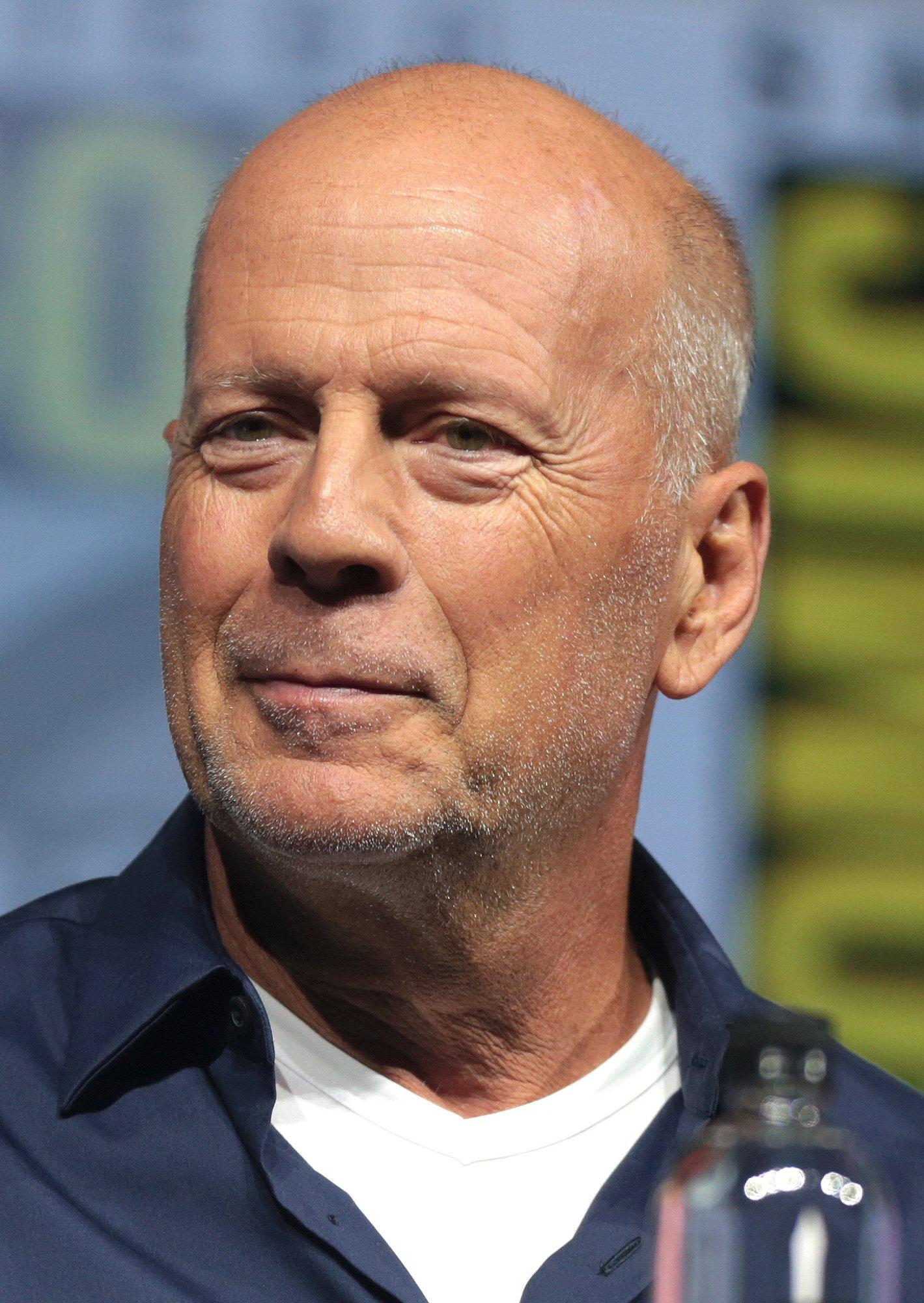
Bruce Willis.

Actor · Producer · Action icon

Bruce Willis built one of Hollywood’s most durable tough-guy images by first winning television on Moonlighting, then turning John McClane into the defining everyman action hero. The grin, the rasp and the deliberate swagger made him easy to read; the longer career shows a worker who kept returning to proven roles, practical deals and public expectations.

OBJECTIVE PERSONALITY CLASSIFICATIONMM-Te/Si-BS/C(P)What does this mean?
PERSONALITY SYSTEMObjective Personality
LEAD FUNCTIONTe · Extroverted Thinking
SECOND SAVIOR FUNCTIONSi · Introverted Sensing
MBTI EQUIVALENTESTJ
01 / BEHIND THE CLASSIFICATION

The personality behind the fame.

How does a recorded OPS classification like MM-Te/Si-BS/C(P) break down? Walk through nine coins and watch the proposed type take shape. These are deductions from the archived code, not independent evidence of typing accuracy.

Scroll below to see Bruce Willis take shape.

STARTING POINT512 possible OPS typesEach type combines core functions, an animal order, and sexual modalities.
THE FINISH LINEMM-Te/Si-BS/C(P)One recorded classification, decoded from its components.
Bruce Willis’ HUMAN NEEDS 01—03
01
DECIDER OR OBSERVER?

Decider over Observer

Deciders have more balanced Observer poles in the middle: Control (Oi) and Chaos (Oe). Organizing what's known and handling what's new tend to feel more manageable. People are the harder territory. Self (Di) and Tribe (De) sit at the extremes, so judgment, rejection, approval, and conflict can trigger the strongest reactions.

Bruce Willis’s career kept putting him in front of human verdicts. He beat out 3,000 actors for Moonlighting, then had to survive the public gamble of becoming an action lead in Die Hard, then later rode through career slumps before films like Pulp Fiction and The Sixth Sense revived the story. That pattern is classic Decider pressure: other people’s expectations, status and judgment stay front and center. The strength is nerve under scrutiny. The blind spot is letting the next proving ground matter so much that the scoreboard starts setting the agenda.
D
02
SELF OR TRIBE?

De · Tribe over Di · Self

Tribe (De) is the stronger deciding pole. They check decisions against people, shared standards, and what works for the group: what do we need, what will others think? The strength is coordination and responsiveness; the recurring friction is the Self (Di)—knowing and defending their own position. As the portrait unfolds, notice how Tribe takes the lead.

Willis’s public image was rarely built as an isolated auteur statement. He was a network lead opposite Cybill Shepherd, a franchise anchor, a Seagram pitchman, a Planet Hollywood promoter and later the face of brands like Sobieski and Hell Energy. That pattern fits Tribe over Self: attention goes to what works for the group, the market or the audience in front of him. The upside is bankable usefulness. The cost is that outside demand can become a very loud ruler, rewarding delivery long before it asks whether the role still matches a personal boundary or pace.

De
03
GATHER OR ORGANIZE?

Oi · Organize over Oe · Gather

Organize (Oi) leads with refining, preserving, and structuring what is already known. Its strength is preparation and clear direction; the recurring friction is unexpected change that disrupts the plan. Another layer of the personality portrait comes into focus.

Once Willis found a lane, he knew how to hold it. He returned to John McClane across twenty-five years, saying the challenge was to compete with himself and improve the role each time. That is Organize over Gather: less fascination with endless new options, more trust in refining a proven shape. It helps explain the durable ordinary-guy-under-pressure brand that ran from Die Hard into later tough-guy roles. The blind spot is obvious too. A reliable formula can become a cage, keeping a career close to what already works instead of risking a more radical reinvention.

Oi
FIRST THREE COINSD + De + Oi

These establish the preferred human needs in the OPS framework.

Bruce Willis’ FUNCTIONS 04—05
04
FEELING OR THINKING?

Thinking · T over Feeling · F

Thinking (T) evaluates decisions through reasons, logic, and what works—not a lack of emotion. Its strength is analytical consistency; Feeling (F) provides balance through values, meaning, and the human consequences of a decision. Combined with Tribe (De), this forms the recorded Savior Te.

Willis’s public career repeatedly shows a Thinking style that treats show business as work, leverage and execution. After the failed Broadway Brawler production, his compensation turned into a three-film obligation that included Armageddon, The Sixth Sense and The Kid—an unromantic business outcome that still produced major hits. His ventures, from Cheyenne Enterprises to an ownership stake tied to Sobieski Vodka, point the same way. The strength is practical clarity: do the job, structure the deal, move the project. The limit is that efficiency can read blunt, and not every important question is settled by what is commercially workable.

T → Te
05
SENSING OR INTUITION?

Sensing · S over Intuition · N

Sensing (S) focuses on concrete details, observable reality, and lived experience. Intuition (N) balances it by looking for broader patterns, concepts, and implications. Combined with Organize (Oi), this gives the recorded Savior Si.

Willis remembered earning an early laugh at a Cub Scout show with a simple prop gag: the substance the audience thought he might throw at them was oatmeal. The joke depended on an object the audience could see and the timing of the reveal. Those particulars offer a concrete way to picture Sensing. The broader question, on the Intuition side, is what else might work once the familiar setup has done its job.

S → Si
THE TWO SAVIOR FUNCTIONSTe / Si

Opposing functions: Fi and Ne.

Bruce Willis’ ANIMAL STACK 06—07
06
CONSUME OR BLAST?

Blast over Consume

Consume gathers information for internal processing; Blast organizes and communicates information. The recorded order is Blast → Sleep → Consume → Play. This comparison follows their positions in that stack.

Between Consume and Blast, Willis’s public career looks clearly earlier Blast. Moonlighting made him famous by projecting a quick, legible attitude; Die Hard turned that into a movie-star signal audiences could read in seconds. Even his Late Show appearances worked the same way—arrive with a bit, commit, land the premise fast. The strength of earlier Blast is decisive communication: people know what they are getting. The cost is that strong delivery can outrun further intake. Sometimes the next gain comes less from hitting the note harder than from taking in more before declaring the point settled.

B > C
07
PLAY OR SLEEP?

Sleep over Play

Play emphasizes external real-time engagement; Sleep emphasizes internal processing. The recorded stack places Sleep earlier.

After that forceful public delivery, the next split is between Play and Sleep, and Willis reads earlier Sleep. For all the wisecracks and action-star swagger, his career often returned to a compact internal center: revisiting McClane, carrying solitary leads in The Sixth Sense, Unbreakable and Looper, and treating improvement as a private contest with his own past work. The strength is contained conviction. The blind spot is that live, unpredictable back-and-forth can feel less useful than arriving with the role already settled. That preserves consistency, but it can narrow how much room other people have to shape the moment.

S > P
Bruce Willis’ ANIMAL ORIENTATION 08—09
08
INFO OR ENERGY DOMINANT?

Info over Energy

Info dominant means Consume and Blast are both in the top three: gathering and communicating information are more balanced. Play last leaves the energy side uneven—Sleep can conserve energy without enough spontaneous outward engagement.

Willis’s stack lands on the Info side: taking in material and sending a clear signal both outrank keeping the whole system energized through constant interaction. That balance fits a career that could absorb scripts, lock onto a role and project a crisp movie-star read across television, action franchises, cameos and commercials. The advantage is usable clarity; his screen presence rarely feels murky. The void is what happens when spontaneous exchange sits farther back. More information and stronger delivery do not automatically create the loose, in-the-moment adjustment that some collaborations need to stay alive.

Info
09
INTROVERSION OR EXTROVERSION?

Introversion over Extroversion

The last animal, Play, determines this OPS coin: Play or Blast last means Introversion; Consume or Sleep last means Extroversion. This describes animal orientation, not sociability or shyness.

Willis’s recorded orientation is Introversion, and that does not clash with the grin, the one-liners or the talk-show stunts. In OPS terms the key is that Play comes last, after more private processing and more prepared forms of communication. A person can fill a screen and still prefer not to live in endless real-time ping-pong. The strength is concentration: the performance arrives with shape already built. The growth cost is relational improvisation. When the room changes, the challenge is to stay engaged long enough for something new to happen, not just deliver the established read more forcefully.

I
Sexual Modalities

The four sexual modalities.

OPS uses masculine/feminine sensory and extroverted-deciding distinctions as framework-specific terms, not gender categories. The four modalities are already included in the original 512 types. The recorded modality is MM · Kinesthetic.

MM RECORDED MODALITYKinestheticMasculine Sensory · Masculine De
MF AudioMasculine Sensory · Feminine De
FF TesterFeminine Sensory · Feminine De
FM VisualFeminine Sensory · Masculine De
COMPLETE RECORDED OPS TYPE · MODALITY INCLUDEDMM-Te/Si-BS/C(P)

Te leads, Si supports, and the animal stack is Blast → Sleep → Consume → Play.

THE FINISHED PORTRAIT · ALL NINE COINS REVEALED

Bruce Willis's complete function and animal stack

BlastSleepConsumePlaymTemSifNefFi
MM-Te/Si-BS/C(P)DOUBLE ACTIVATED · SLEEPExplore the Interactive Coin Builder →
THE BRUCE WILLIS LENS

The worker inside the wisecrack

Barefoot in broken glass, muttering through impossible odds, Bruce Willis sold John McClane as a blue-collar action hero rather than a comic-book superman. That image can make him look like pure swagger, but the biography behind it is a stage-trained worker who climbed from security jobs, bartending and television comedy into one of Hollywood’s most readable screen personas.

His Te/Si pairing is excellent at turning experience into a usable standard. Willis could take a proven lane—wisecracking competence, hard edges, physical specificity—and deliver it cleanly across Moonlighting, Die Hard, Red and later roles. The limit is that the same practical reliability can lean hard on what already works, making repetition easier than deeper reinvention.

As a Decider and Double Observer, Willis is built to look relatively steadier with chaos and changing circumstances than with the human pressure of expectations, judgments and responsibility. The classic imbalance is over-serving what works for others while under-listening to the quieter personal valuation underneath it. That neglected opposite of his lead savior is Fi: private conviction about what matters apart from usefulness, role or results.

Blast → Sleep → Consume → Play gives him a strong public signal, an internal reset and enough intake to keep the role supplied before spontaneous interaction runs out of runway. With Play last, the strain is not shyness but staying flexible when the script disappears and another person changes the rhythm. The balancing move is concrete: keep the decisive delivery, but leave more room in collaboration for unscripted rehearsal, feedback and genuine back-and-forth before locking the performance.

Want to understand the Savior and Demon states behind these nine coins? Explore the complete explanation, visual examples, and typing principles on our Methodology page →

02 / KEEP EXPLORING

Different faces. Familiar patterns.

Explore other celebrities with related recorded OPS classifications. Related functions are not necessarily exact type matches.

Discover Type Twins
YOUR TURN

Curious about your own type?

Discover how your own personality might be classified through Objective Personality.

Get objectively typed
Bruce Willis's Personality Type & OPS Profile | The Personality Atlas