The Personality Atlas
THE CELEBRITY PERSONALITY ARCHIVE / COMBAT SPORTS

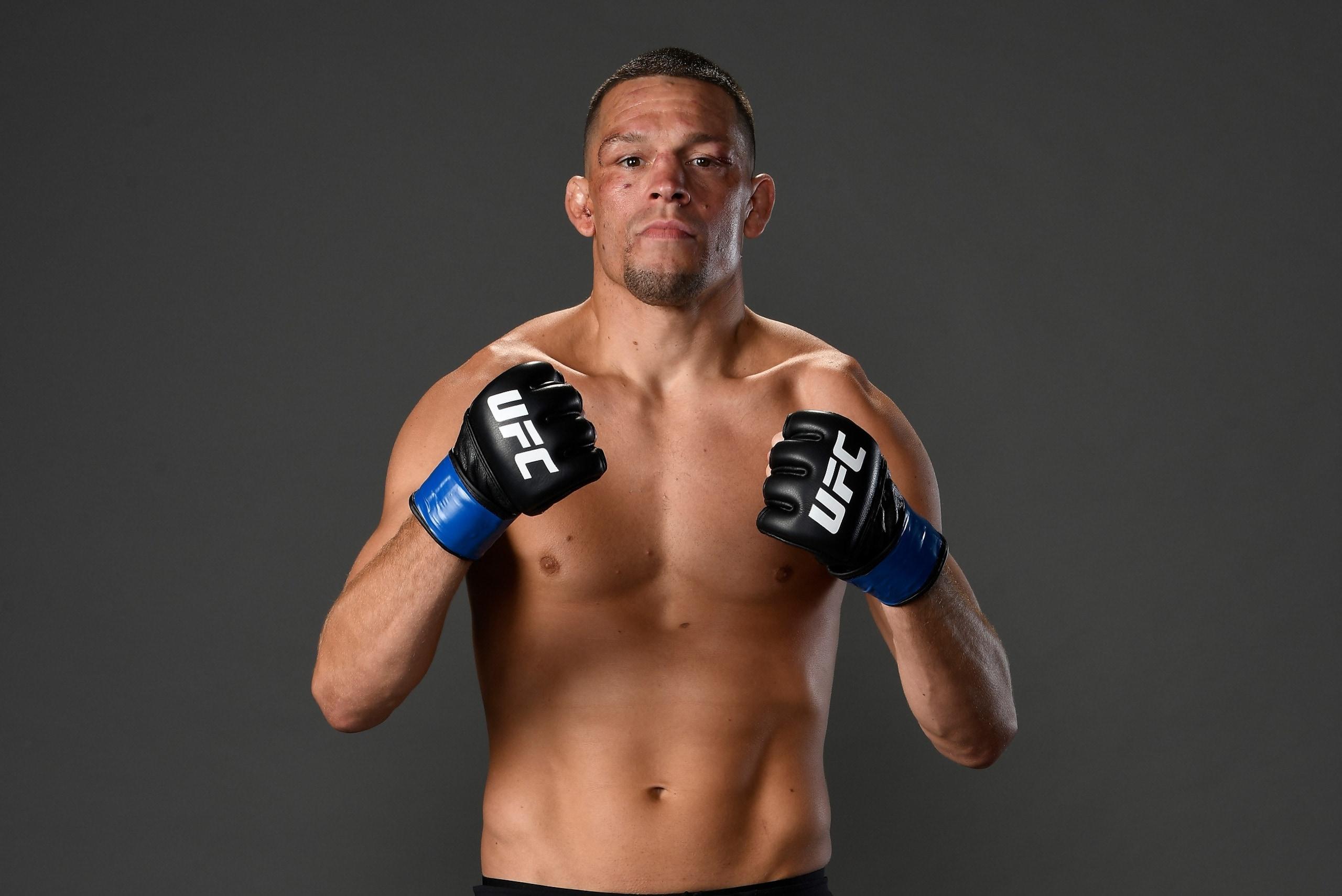
Nate Diaz.

Mixed martial artist · Boxer · Promoter

Nate Diaz built one of combat sports’ most durable cult reputations through a strange mix of elite endurance, submission craft, public defiance and Stockton plainness. He won The Ultimate Fighter 5, spent more than fifteen years in the UFC, upset Conor McGregor on eleven days’ notice, later crossed into boxing, and kept turning every return into an event. The image is combustible and confrontational, but the career underneath it is methodical: years of accumulated fight reps, selective reappearances, and a stubborn refusal to let promoters or hype machines write the entire script.

OBJECTIVE PERSONALITY CLASSIFICATIONFM-Ti/Se-CS/P(B) #3What does this mean?
PERSONALITY SYSTEMObjective Personality
LEAD FUNCTIONTi · Introverted Thinking
SECOND SAVIOR FUNCTIONSe · Extroverted Sensing
MBTI EQUIVALENTISTP
01 / BEHIND THE CLASSIFICATION

The personality behind the fame.

How does a recorded OPS classification like FM-Ti/Se-CS/P(B) #3 break down? Walk through nine coins and watch the proposed type take shape. These are deductions from the archived code, not independent evidence of typing accuracy.

Scroll below to see Nate Diaz take shape.

STARTING POINT512 possible OPS typesEach type combines core functions, an animal order, and sexual modalities.
THE FINISH LINEFM-Ti/Se-CS/P(B) #3One recorded classification, decoded from its components.
Nate Diaz’s HUMAN NEEDS 01—03
01
DECIDER OR OBSERVER?

Decider over Observer

Deciders have more balanced Observer poles in the middle: Control (Oi) and Chaos (Oe). Organizing what's known and handling what's new tend to feel more manageable. People are the harder territory. Self (Di) and Tribe (De) sit at the extremes, so judgment, rejection, approval, and conflict can trigger the strongest reactions.

Nate Diaz’s career is remembered through people-loaded flashpoints: winning The Ultimate Fighter 5, the live-TV callout of Conor McGregor after beating Michael Johnson, contract standoffs, and the way he can turn a post-fight interview into half the story of an event. That points to Decider pressure: the friction is not mainly uncertainty about what a fight is, but how to position himself against opponents, promoters, and the crowd around the fight. The strength is refusing to disappear inside other people’s narratives. The blind spot is making every public exchange another contest that must be answered.

D
02
SELF OR TRIBE?

Di · Self over De · Tribe

Self (Di) is the stronger deciding pole. They check decisions against their own values or reasons first: what makes sense to me, what feels right to me? The strength is independent conviction; the recurring friction is the Tribe (De)—other people's standards, feedback, and expectations. As the portrait unfolds, notice how Self takes the lead.

Diaz’s career decisions repeatedly show Self over Tribe. After difficult stretches, he talked openly about not wanting to cut to 155 “for not enough money,” later chose not to re-sign with the UFC before the Tony Ferguson fight, and then moved into boxing and his own promotion. The advantage is obvious: he does not wait for the institution to tell him what his priorities should be. That independence can preserve leverage and identity. The growth cost is that a decision satisfying his own standard can still strain partnerships, narrow options, and leave useful outside structure sitting on the table.

Di
03
GATHER OR ORGANIZE?

Oe · Gather over Oi · Organize

Gather (Oe) leads with new information, experiences, and possibilities. Its strength is curiosity and adaptability; the recurring friction is narrowing the options and settling into what is already known. Another layer of the personality portrait comes into focus.

Diaz’s path never settled into one tidy lane. He fought at lightweight and welterweight, took bouts on short notice, shifted from MMA to boxing, and kept building around jiu-jitsu schools, CBD products, and Real Fight Inc. Gather-first fits that public pattern: keep the door open, keep scanning for the next workable move, keep adjusting to whatever the fight world throws at you. The strength is adaptability under changing conditions, from a replaced UFC 279 main event to a late-notice McGregor matchup. The blind spot is selectivity. More options can delay the harder question of which direction deserves long, disciplined commitment.

Oe
FIRST THREE COINSD + Di + Oe

These establish the preferred human needs in the OPS framework.

Nate Diaz’s FUNCTIONS 04—05
04
FEELING OR THINKING?

Thinking · T over Feeling · F

Thinking (T) evaluates decisions through reasons, logic, and what works—not a lack of emotion. Its strength is analytical consistency; Feeling (F) provides balance through values, meaning, and the human consequences of a decision. Combined with Self (Di), this forms the recorded Savior Ti.

Diaz’s recorded judging function is Ti, and his fighting style gives it a concrete shape. Against Donald Cerrone, he built a striking clinic around distance, timing, and repeated reads rather than trying to win on sheer spectacle. Against Conor McGregor at UFC 196, he stayed with what was there, saw the opening when McGregor tired, and took the neck. Ti’s strength is trusting an internally consistent read even when the event’s hype points elsewhere. Its limit is communication. A sharp personal logic can be effective in action while still leaving coaches, promoters, or audiences to decode the larger point after the fact.

T → Ti
05
SENSING OR INTUITION?

Sensing · S over Intuition · N

Sensing (S) focuses on concrete details, observable reality, and lived experience. Intuition (N) balances it by looking for broader patterns, concepts, and implications. Combined with Gather (Oe), this gives the recorded Savior Se.

Se shows up in Diaz’s comfort with the immediate physical reality of a fight. His records for total strikes, his 82 percent striking night against Cerrone, and his ability to turn scrappy exchanges into advantages all point to someone reading what is happening right now, not what was supposed to happen on paper. The strength is responsiveness: he can adjust inside the mess instead of freezing when a plan breaks. The blind spot is that the live moment can become the whole story. Immediate reads are powerful, but they do not automatically provide the longer arc, pacing, or structure a career also needs.

S → Se
THE TWO SAVIOR FUNCTIONSTi / Se

Opposing functions: Fe and Ni.

Nate Diaz’s ANIMAL STACK 06—07
06
CONSUME OR BLAST?

Consume over Blast

Consume gathers information for internal processing; Blast organizes and communicates information. The recorded order is Consume → Sleep → Play → Blast. This comparison follows their positions in that stack.

Consume comes before Blast here, and Diaz’s public career gives plenty of evidence for it. He spent years accumulating fight experience across WEC, Strikeforce, Pancrase, and the UFC, then kept adding technical mileage through Brazilian jiu-jitsu, boxing, and constant competition at different weights. The strength of Consume is having real material to draw from instead of selling empty certainty. He usually looks like someone working from firsthand reps, not borrowed slogans. The cost is that taking in more experience can outrun the job of packaging a clean, consistent message. The résumé is rich; the public explanation of the plan can lag behind it.

C > B
07
PLAY OR SLEEP?

Sleep over Play

Play emphasizes external real-time engagement; Sleep emphasizes internal processing. The recorded stack places Sleep earlier.

Sleep comes before Play, which helps explain why Diaz can carry such a settled center into chaotic public moments. Long layoffs, weight-class changes, and even the jump into boxing did not erase the sense that he was still operating from his own processed read of the game. That inner consolidation is a strength: he rarely looks borrowed or over-coached. The tradeoff is that real-time exchange can arrive after the verdict has already been formed. When private certainty hardens early, collaboration, promotion, or tactical back-and-forth may have to fight for room instead of shaping the direction sooner.

S > P
Nate Diaz’s ANIMAL ORIENTATION 08—09
08
INFO OR ENERGY DOMINANT?

Energy over Info

Energy dominant means Play and Sleep are both in the top three: there is access to expending energy through engagement and conserving it through internal processing. Blast last leaves the information side uneven—Consume may gather far more than gets communicated.

Diaz lands on the Energy side because his top three animals keep both private processing and real-world engagement active, while Blast is the missing piece at the bottom. Publicly, that looks less like passivity than a rhythm: long periods of stepping back, then reappearing ready to compete, as with the return for Anthony Pettis after two years away or the Ferguson switch at UFC 279. The strength is pacing himself around what is real rather than performing nonstop availability. The void is clarity. When Blast is last, other people may get the action, the quotes, and the stance without getting the explanation of the plan.

Energy
09
INTROVERSION OR EXTROVERSION?

Introversion over Extroversion

The last animal, Blast, determines this OPS coin: Play or Blast last means Introversion; Consume or Sleep last means Extroversion. This describes animal orientation, not sociability or shyness.

Diaz’s final coin is Introversion, and that does not contradict a fighter who can own an arena or hijack a press cycle. In OPS terms, the point is that Blast sits last: outwardly delivering a settled explanation is less natural than taking in experience, processing it, and then engaging when necessary. His most memorable public moments often come as sharp bursts rather than polished long-form framing. The strength is that the persona stays unmanufactured. The blind spot is that others fill in the blanks—promoters, rivals, fans, and media can end up defining the storyline when he does not spell it out first.

I
Sexual Modalities

The four sexual modalities.

OPS uses masculine/feminine sensory and extroverted-deciding distinctions as framework-specific terms, not gender categories. The four modalities are already included in the original 512 types. The recorded modality is FM · Visual.

MM KinestheticMasculine Sensory · Masculine De
MF AudioMasculine Sensory · Feminine De
FF TesterFeminine Sensory · Feminine De
FM RECORDED MODALITYVisualFeminine Sensory · Masculine De
ADDITIONAL LAYER · SOCIAL TYPE

The four social types.

Social types are an additional layer on top of the original Objective Personality classification, introduced later in OPS research. They describe two proposed social preference coins: Flex vs. Friends and Generalize vs. Specialize. The combination and priority of these preferences produce four social types. Nate Diaz's recorded social type is #3.

SOCIAL #1 #1Flex · Generalize
SOCIAL #2 #2Generalize · Friends
SOCIAL #3 RECORDED SOCIAL TYPE#3Specialize · Flex
SOCIAL #4 #4Friends · Specialize
COMPLETE RECORDED OPS TYPE · MODALITY INCLUDED + SOCIAL TYPEFM-Ti/Se-CS/P(B) #3

Ti leads, Se supports, and the animal stack is Consume → Sleep → Play → Blast.

THE FINISHED PORTRAIT · ALL NINE COINS REVEALED

Nate Diaz's complete function and animal stack

ConsumeSleepPlayBlastfTifSemNimFe
FM-Ti/Se-CS/P(B) #3DOUBLE ACTIVATED · CONSUMEExplore the Interactive Coin Builder →
THE NATE DIAZ LENS

The Stockton read behind the noise

That famous Michael Johnson interview and the McGregor upset made Diaz look like pure disruption, the guy who could turn a broadcast into a dare. But the menace sits on top of a much longer build. He started training at 11, won The Ultimate Fighter 5, and stacked bonuses across fifteen UFC years. The public image is combustible; the career underneath is accumulated craft.

Ti/Se gives him a stripped-down advantage in the cage: read what is actually there, trust the internal calculation, act without needing the moment to look pretty. The Cerrone striking clinic and the McGregor finish both show that strength. The limit is communication. A sharp real-time read can win the exchange while leaving coaches, promoters, and audiences to infer the longer plan.

As a Decider and Double Observer, Diaz is balancing people-weight more than chaos-weight. The recurring tension is respect, leverage, and whose judgment gets to matter around the fight. Because Deciders are Double Observers, he can stay unusually adaptable with changing circumstances while still getting snagged on the human side. The neglected function is Fe, opposite his lead Ti: shared standards, open tribal calibration, and meeting others where they are.

Consume → Sleep → Play → Blast fits the pattern: take in the reps, process them privately, then engage, with plain public explanation arriving last. That makes him Energy-dominant and OPS Introverted without saying anything about shyness. Blast last can leave a contract dispute, comeback, or new promotion under-explained. The balancing move is to keep the blunt edge and state the plan earlier, before everyone else translates it for him.

Want to understand the Savior and Demon states behind these nine coins? Explore the complete explanation, visual examples, and typing principles on our Methodology page →

02 / KEEP EXPLORING

Different faces. Familiar patterns.

Explore other celebrities with related recorded OPS classifications. Related functions are not necessarily exact type matches.

Discover Type Twins
YOUR TURN

Curious about your own type?

Discover how your own personality might be classified through Objective Personality.

Get objectively typed
Nate Diaz's Personality Type & OPS Profile | The Personality Atlas