The Personality Atlas
THE CELEBRITY PERSONALITY ARCHIVE / FILM & STAGE

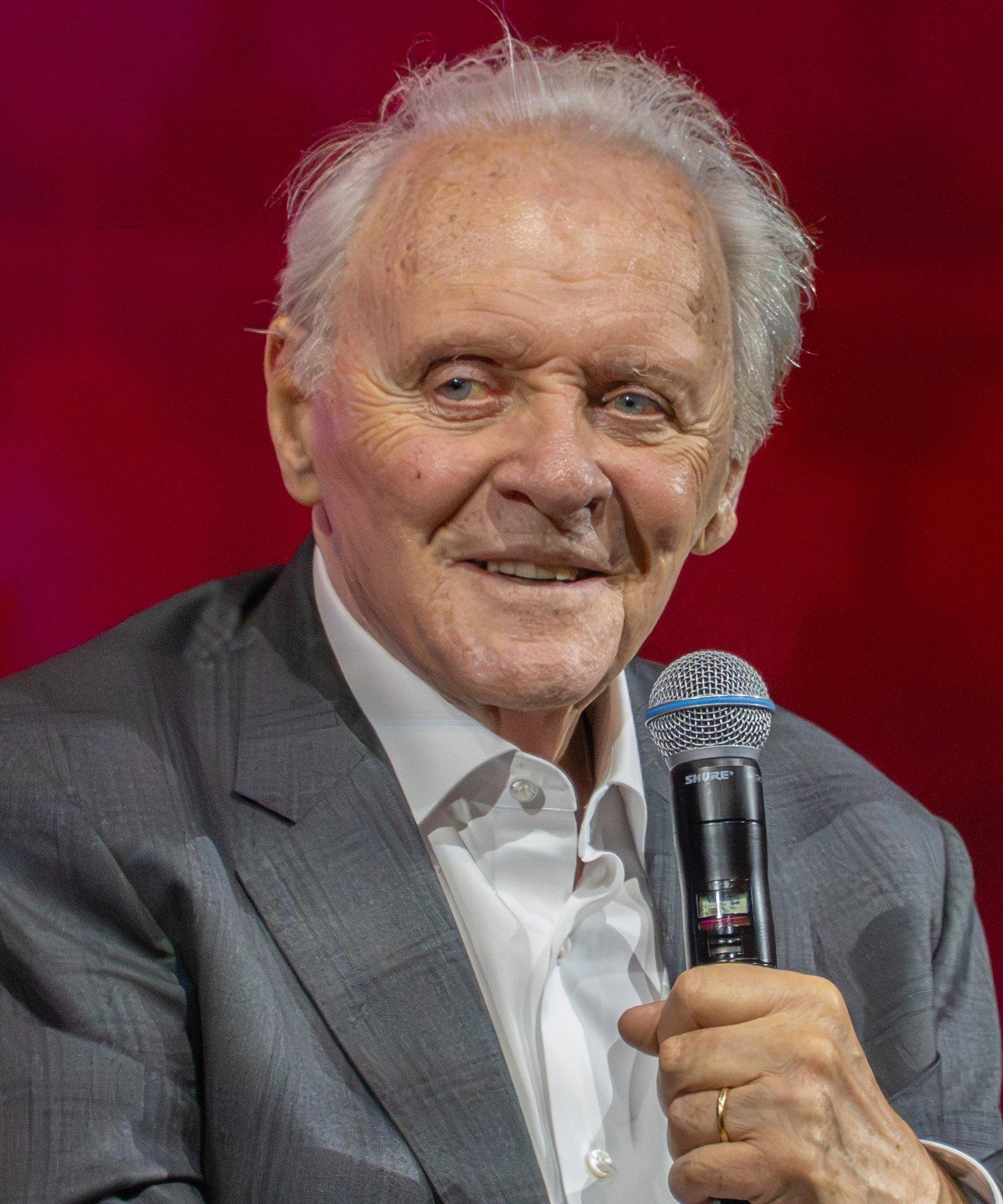
Anthony Hopkins.

Actor · Stage and screen legend

From being spotted by Laurence Olivier at the National Theatre to winning Oscars for The Silence of the Lambs and The Father, Anthony Hopkins built a career on unnerving control. He can play kings, monsters and haunted old men with the same clipped precision, yet his own public remarks are often less grand: a working-class son, a self-described loner, and an actor who learned to cut through nerves by treating them as vanity.

OBJECTIVE PERSONALITY CLASSIFICATIONFM-Ti/Se-CS/P(B) #4What does this mean?
PERSONALITY SYSTEMObjective Personality
LEAD FUNCTIONTi · Introverted Thinking
SECOND SAVIOR FUNCTIONSe · Extroverted Sensing
MBTI EQUIVALENTISTP
01 / BEHIND THE CLASSIFICATION

The personality behind the fame.

How does a recorded OPS classification like FM-Ti/Se-CS/P(B) #4 break down? Walk through nine coins and watch the proposed type take shape. These are deductions from the archived code, not independent evidence of typing accuracy.

Scroll below to see Anthony Hopkins take shape.

STARTING POINT512 possible OPS typesEach type combines core functions, an animal order, and sexual modalities.
THE FINISH LINEFM-Ti/Se-CS/P(B) #4One recorded classification, decoded from its components.
Anthony Hopkins’ HUMAN NEEDS 01—03
01
DECIDER OR OBSERVER?

Decider over Observer

Deciders have more balanced Observer poles in the middle: Control (Oi) and Chaos (Oe). Organizing what's known and handling what's new tend to feel more manageable. People are the harder territory. Self (Di) and Tribe (De) sit at the extremes, so judgment, rejection, approval, and conflict can trigger the strongest reactions.

Hopkins's career is full of intimidating circumstances—last-minute stage substitutions, Shakespeare, playing Hannibal Lecter—but his own public stories keep circling back to people and judgment. He described school ridicule, years of feeling he did not belong, and Olivier's brutal cure for stage nerves: "nerves" is vanity. That is Decider pressure: the social meaning of failure, not merely the logistics of the job. The strength is unusual nerve once the people-problem is cut down to size. The blind spot is letting significance, pride or friction with others set the emotional weather.
D
02
SELF OR TRIBE?

Di · Self over De · Tribe

Self (Di) is the stronger deciding pole. They check decisions against their own values or reasons first: what makes sense to me, what feels right to me? The strength is independent conviction; the recurring friction is the Tribe (De)—other people's standards, feedback, and expectations. As the portrait unfolds, notice how Self takes the lead.

Hopkins regularly returns to an internal barometer. He has said his father's "hardened, broken hands" keep him grounded, and he bluntly corrected the myth that he and Richard Burton were close friends: "For the record, I didn't really know him at all." Self over Tribe does not mean antisocial; it means he would rather be accurate to his own read than flatter a shared story. That independence gives his work spine. The growth cost is obvious too: a private verdict can sound severe, and collaboration can become harder when his standard lands first.

Di
03
GATHER OR ORGANIZE?

Oe · Gather over Oi · Organize

Gather (Oe) leads with new information, experiences, and possibilities. Its strength is curiosity and adaptability; the recurring friction is narrowing the options and settling into what is already known. Another layer of the personality portrait comes into focus.

Few major actors have moved so restlessly across lanes: repertory theatre, Shakespeare, BBC dramas, prestige films, villains, Marvel, HBO, then another late-career Oscar in The Father. Gather over Organize shows up in that appetite for fresh material instead of one tidy brand. New roles become openings, not threats. The advantage is reinvention across decades. The blind spot is that possibility can outrun simplification; a career this wide can resist a single governing identity, and the next intriguing part can keep displacing the slower work of narrowing down what deserves sustained focus.

Oe
FIRST THREE COINSD + Di + Oe

These establish the preferred human needs in the OPS framework.

Anthony Hopkins’ FUNCTIONS 04—05
04
FEELING OR THINKING?

Thinking · T over Feeling · F

Thinking (T) evaluates decisions through reasons, logic, and what works—not a lack of emotion. Its strength is analytical consistency; Feeling (F) provides balance through values, meaning, and the human consequences of a decision. Combined with Self (Di), this forms the recorded Savior Ti.

Hopkins often talks like a mechanic of performance. For Hannibal in Hannibal, he and Ridley Scott chose not to hide Lecter's face, treating that choice as a deliberate statement, and Hopkins altered his body to make the character feel more mercenary and physically dangerous. That is Thinking: build an internally coherent model, then execute it cleanly. The strength is precision without sentimentality. The shadow is that the same sharpness can come off cutting in public, as when he later called Shirley MacLaine "the most obnoxious actress" he had worked with.

T → Ti
05
SENSING OR INTUITION?

Sensing · S over Intuition · N

Sensing (S) focuses on concrete details, observable reality, and lived experience. Intuition (N) balances it by looking for broader patterns, concepts, and implications. Combined with Gather (Oe), this gives the recorded Savior Se.

Hopkins's work repeatedly becomes concrete through physical detail. Laurence Olivier noticed the young understudy who could step into The Dance of Death on no notice; decades later Hopkins was doing scenes with Bart the Bear in The Edge and adjusting Lecter's body, haircut and bearing for Hannibal. Sensing here is not just realism; it is trust in what can be seen, heard and embodied right now. That gives him tremendous on-camera authority. The cost is that immediate force can dominate the room before nuance, reassurance or long-horizon explanation has caught up.

S → Se
THE TWO SAVIOR FUNCTIONSTi / Se

Opposing functions: Fe and Ni.

Anthony Hopkins’ ANIMAL STACK 06—07
06
CONSUME OR BLAST?

Consume over Blast

Consume gathers information for internal processing; Blast organizes and communicates information. The recorded order is Consume → Sleep → Play → Blast. This comparison follows their positions in that stack.

Before the Oscar mythology, there was a long apprenticeship: the Royal Welsh College of Music & Drama, RADA, repertory years, then understudying Laurence Olivier at the National Theatre. Consume over Blast fits that public record well. Hopkins built range by taking in craft, text and experience until the work looked almost predatory in its control. The strength is substance; there is usually something real behind the performance. The growth cost is that gathering can stay comfortable longer than declaring a simple message, direction or doctrine for everyone else to follow.

C > B
07
PLAY OR SLEEP?

Sleep over Play

Play emphasizes external real-time engagement; Sleep emphasizes internal processing. The recorded stack places Sleep earlier.

Hopkins has described himself as a loner who spent years feeling he did not belong, yet he also spent a lifetime inside ensembles, from the National Theatre to Westworld and The Two Popes. Sleep landing ahead of Play explains that contrast better than stage charisma does. The inner processing comes first; the public exchange arrives after the material has been metabolized. Paired with earlier Consume over Blast, it creates performances dense with private consolidation. The limit is timing: collaborators may meet the finished internal version after Hopkins has already decided what the part, or the relationship, means.

S > P
Anthony Hopkins’ ANIMAL ORIENTATION 08—09
08
INFO OR ENERGY DOMINANT?

Energy over Info

Energy dominant means Play and Sleep are both in the top three: there is access to expending energy through engagement and conserving it through internal processing. Blast last leaves the information side uneven—Consume may gather far more than gets communicated.

His top three animals keep both private consolidation and outward engagement in circulation, which helps explain a career that could hold Shakespeare, blockbuster franchises and demanding television without collapsing into one mode. Hopkins can retreat, recharge, then step back into live collaboration and performance. That is the gift of Energy dominance: motion between internal economy and action. The missing balance is Blast last. He can absorb and refine brilliantly while leaving the broader message understated, so the work arrives with force even when the guiding thesis stays mostly inside the performance.

Energy
09
INTROVERSION OR EXTROVERSION?

Introversion over Extroversion

The last animal, Blast, determines this OPS coin: Play or Blast last means Introversion; Consume or Sleep last means Extroversion. This describes animal orientation, not sociability or shyness.

Hopkins is famously watchable, but this coin is not about whether he can command a stage or charm an interviewer. With Blast in the last position, the OPS result is Introversion: communicating a settled, broadly shared conclusion is less automatic than learning, processing and then performing the role itself. That helps explain why he can fill the screen as Lecter, Lear or Odin without turning into a slogan-making public philosopher. The strength is density over chatter. The blind spot is waiting too long to state the lesson plainly enough that others can build with it.

I
Sexual Modalities

The four sexual modalities.

OPS uses masculine/feminine sensory and extroverted-deciding distinctions as framework-specific terms, not gender categories. The four modalities are already included in the original 512 types. The recorded modality is FM · Visual.

MM KinestheticMasculine Sensory · Masculine De
MF AudioMasculine Sensory · Feminine De
FF TesterFeminine Sensory · Feminine De
FM RECORDED MODALITYVisualFeminine Sensory · Masculine De
ADDITIONAL LAYER · SOCIAL TYPE

The four social types.

Social types are an additional layer on top of the original Objective Personality classification, introduced later in OPS research. They describe two proposed social preference coins: Flex vs. Friends and Generalize vs. Specialize. The combination and priority of these preferences produce four social types. Anthony Hopkins's recorded social type is #4.

SOCIAL #1 #1Flex · Generalize
SOCIAL #2 #2Generalize · Friends
SOCIAL #3 #3Specialize · Flex
SOCIAL #4 RECORDED SOCIAL TYPE#4Friends · Specialize
COMPLETE RECORDED OPS TYPE · MODALITY INCLUDED + SOCIAL TYPEFM-Ti/Se-CS/P(B) #4

Ti leads, Se supports, and the animal stack is Consume → Sleep → Play → Blast.

THE FINISHED PORTRAIT · ALL NINE COINS REVEALED

Anthony Hopkins's complete function and animal stack

ConsumeSleepPlayBlastfTifSemNimFe
FM-Ti/Se-CS/P(B) #4DOUBLE ACTIVATED · CONSUMEExplore the Interactive Coin Builder →
THE ANTHONY HOPKINS LENS

The control behind the menace

Hopkins can look like pure command: the glacial poise of Hannibal Lecter, then the shattered confusion of The Father nearly three decades later. The public impression is frightening control. Behind it, his own biography is rougher-edged—school ridicule, feeling he did not belong, and a working-class standard he kept measuring himself against.

Ti/Se gives him a formidable acting engine. Ti wants the part to make sense from the inside; Se makes that logic visible in posture, timing, voice and physical presence. That pairing can turn a few minutes of screen time into something unforgettable. Its limit is sharpness: once his internal read feels clear, softer diplomacy or broader explanation can start to look unnecessary.

He is a Decider and a Double Observer. That usually means the deeper strain sits with people, judgment and belonging more than with chaos, novelty or changing circumstances. Hopkins's public comments about not fitting in track that pressure. Double Observer steadies the world of roles and reinvention; neglected Fe is the missing social glue, the function that asks how the room is landing emotionally for everyone else.

Consume → Sleep → Play → Blast helps explain the pattern. He takes in material, works it over privately, then engages; clear outward doctrine comes last. Blast last creates an introverted information bottleneck: the performance can be fully formed before the explanation is. The balance is not becoming louder for its own sake, but naming the conclusion earlier—on set, in rehearsal, or in interviews—so collaborators can work with the same precision he already has.

Want to understand the Savior and Demon states behind these nine coins? Explore the complete explanation, visual examples, and typing principles on our Methodology page →

02 / KEEP EXPLORING

Different faces. Familiar patterns.

Explore other celebrities with related recorded OPS classifications. Related functions are not necessarily exact type matches.

Discover Type Twins
YOUR TURN

Curious about your own type?

Discover how your own personality might be classified through Objective Personality.

Get objectively typed
Anthony Hopkins's Personality Type & OPS Profile | The Personality Atlas