The Personality Atlas
THE CELEBRITY PERSONALITY ARCHIVE / STATE POLITICS

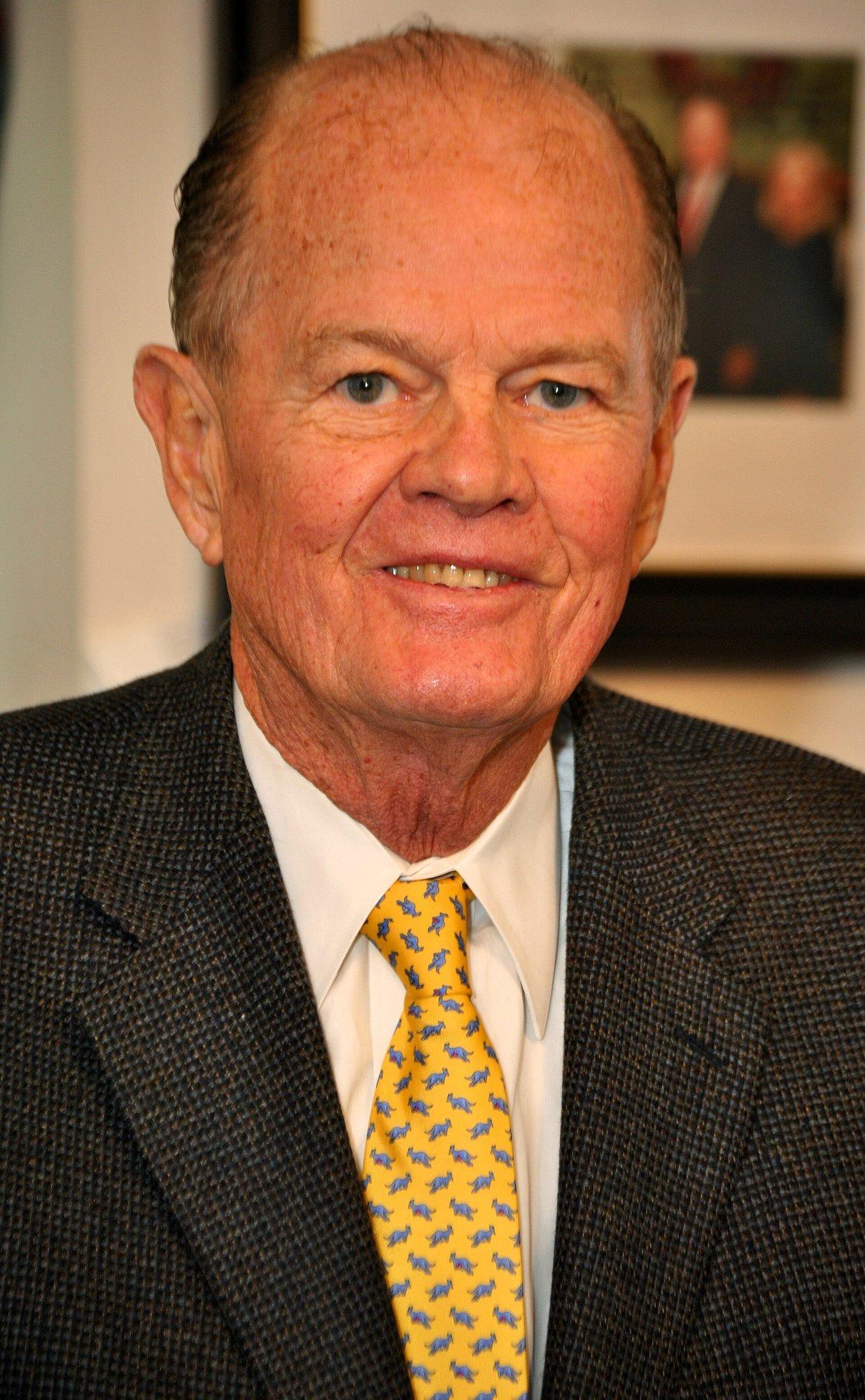
David McBride.

Delaware state legislator · civil engineer

David McBride spent more than four decades in Delaware’s legislature, moving from school board upstart to Senate majority leader and president pro tempore with an engineer’s taste for concrete systems. The public image is durability; the more interesting story is a man who kept building institutions long enough to become one—until a 2020 primary finally showed that longevity is not the same thing as permanence.

OBJECTIVE PERSONALITY CLASSIFICATIONFM-Ti/Se-CS/P(B) #4What does this mean?
PERSONALITY SYSTEMObjective Personality
LEAD FUNCTIONTi · Introverted Thinking
SECOND SAVIOR FUNCTIONSe · Extroverted Sensing
MBTI EQUIVALENTISTP
01 / BEHIND THE CLASSIFICATION

The personality behind the fame.

How does a recorded OPS classification like FM-Ti/Se-CS/P(B) #4 break down? Walk through nine coins and watch the proposed type take shape. These are deductions from the archived code, not independent evidence of typing accuracy.

Scroll below to see David McBride take shape.

STARTING POINT512 possible OPS typesEach type combines core functions, an animal order, and sexual modalities.
THE FINISH LINEFM-Ti/Se-CS/P(B) #4One recorded classification, decoded from its components.
David McBride’s HUMAN NEEDS 01—03
01
DECIDER OR OBSERVER?

Decider over Observer

Deciders have more balanced Observer poles in the middle: Control (Oi) and Chaos (Oe). Organizing what's known and handling what's new tend to feel more manageable. People are the harder territory. Self (Di) and Tribe (De) sit at the extremes, so judgment, rejection, approval, and conflict can trigger the strongest reactions.

McBride’s career kept putting him in judgment-heavy arenas: a 1978 primary against incumbent Robert L. Byrd, a 1984 lieutenant-governor run shaped by endorsements and defections, and a 2020 primary loss after forty years in the Senate. That pattern fits Decider pressure more than circumstantial chaos. The recurring test is not whether the system exists, but where he stands with other people inside it. The strength is staying in the arena long enough to build influence. The blind spot is treating the room’s shifting verdict as either proof of legitimacy or an unfair interruption of it.
D
02
SELF OR TRIBE?

Di · Self over De · Tribe

Self (Di) is the stronger deciding pole. They check decisions against their own values or reasons first: what makes sense to me, what feels right to me? The strength is independent conviction; the recurring friction is the Tribe (De)—other people's standards, feedback, and expectations. As the portrait unfolds, notice how Self takes the lead.

McBride’s path shows a strong internal bar. He challenged incumbents for the school board and the Delaware House, later combined engineering training with legislative work, and held leadership roles for years without needing constant public reinvention. Self over Tribe does not mean solitary; it means the standard starts inside. That can produce steadiness when a caucus or electorate turns noisy. The cost appears when a long-trusted personal read outlasts the coalition around it. Forty years of Senate service demonstrated conviction; his 2020 primary defeat showed that conviction still has to keep re-earning consent.

Di
03
GATHER OR ORGANIZE?

Oe · Gather over Oi · Organize

Gather (Oe) leads with new information, experiences, and possibilities. Its strength is curiosity and adaptability; the recurring friction is narrowing the options and settling into what is already known. Another layer of the personality portrait comes into focus.

Before he became one of Delaware’s longest-serving legislators, McBride moved through Air Force postings from Texas to Japan to Thailand, took courses at multiple universities, then returned home for engineering degrees and a layered public career. Gather-first shows up as range: new settings, new inputs, new roles. That flexibility helps a person absorb changing conditions instead of freezing when the environment shifts. The tradeoff is that breadth does not choose for you. A life full of possible applications still has to decide which version deserves the next decade, not just the next opportunity.

Oe
FIRST THREE COINSD + Di + Oe

These establish the preferred human needs in the OPS framework.

David McBride’s FUNCTIONS 04—05
04
FEELING OR THINKING?

Thinking · T over Feeling · F

Thinking (T) evaluates decisions through reasons, logic, and what works—not a lack of emotion. Its strength is analytical consistency; Feeling (F) provides balance through values, meaning, and the human consequences of a decision. Combined with Self (Di), this forms the recorded Savior Ti.

McBride’s public résumé keeps returning to technical and structural work: BS and MS degrees in civil engineering, registration as a professional engineer, and Senate service on finance, taxation and labor committees. Ti’s advantage is an internal logic for how the system should function, independent of applause. That can make him useful in roles where details, mechanisms and consistency matter more than theatrics. The limit is equally familiar in politics: a plan can be coherent and still fail to persuade. What works cleanly on the inside of a framework does not automatically answer the social question of who feels represented by it.

T → Ti
05
SENSING OR INTUITION?

Sensing · S over Intuition · N

Sensing (S) focuses on concrete details, observable reality, and lived experience. Intuition (N) balances it by looking for broader patterns, concepts, and implications. Combined with Gather (Oe), this gives the recorded Savior Se.

His career is unusually rooted in what can be counted, built or directly managed: vote totals in local races, committee assignments, base postings, engineering credentials, and the day-to-day machinery of state government. Se brings attention to the concrete situation in front of you rather than to a purely symbolic storyline. That is a strength in institutional work, where roads, schools, budgets and procedures are stubbornly real. The possible blind spot is letting immediate practical demands crowd out the larger narrative of where a district or party is heading. Tangible competence still needs a forward-facing story.

S → Se
THE TWO SAVIOR FUNCTIONSTi / Se

Opposing functions: Fe and Ni.

David McBride’s ANIMAL STACK 06—07
06
CONSUME OR BLAST?

Consume over Blast

Consume gathers information for internal processing; Blast organizes and communicates information. The recorded order is Consume → Sleep → Play → Blast. This comparison follows their positions in that stack.

McBride’s biography reads like a long apprenticeship in taking information in before making the larger pronouncement. During his Air Force years he kept adding coursework; after returning to Delaware he earned both bachelor’s and master’s degrees in civil engineering; in government he accumulated committee work before rising to caucus leadership. Consume earlier than Blast favors depth first: study the issue, understand the system, build the base. The growth cost is obvious in public life. More research and context can improve the judgment while still postponing the simpler message other people are waiting to hear.

C > B
07
PLAY OR SLEEP?

Sleep over Play

Play emphasizes external real-time engagement; Sleep emphasizes internal processing. The recorded stack places Sleep earlier.

Sleep landing earlier than Play gives McBride a more settled, internally processed style before the live back-and-forth begins. That fits a career built on long tenure, committee continuity and years of reelection with little visible electoral turbulence until the end. The strength is steadiness: he does not need every decision to be improvised in public. The cost is that a room can change faster than a private framework does. By the time a new coalition fully makes its case, he may already have a worked-out view that is harder to revise midstream.

S > P
David McBride’s ANIMAL ORIENTATION 08—09
08
INFO OR ENERGY DOMINANT?

Energy over Info

Energy dominant means Play and Sleep are both in the top three: there is access to expending energy through engagement and conserving it through internal processing. Blast last leaves the information side uneven—Consume may gather far more than gets communicated.

His recorded stack lands on Energy rather than Info, which helps explain a durable public operator who could maintain a long institutional career without necessarily wanting to live in permanent explanation mode. The useful balance is between private consolidation and real-world engagement: enough inward processing to hold a line, enough outward movement to serve on committees, lead a caucus and keep working. The void comes from Blast sitting last. Communication can become the piece that trails the labor. He may do the homework, handle the role and stay active, yet leave the broader message less explicitly shaped than the work itself.

Energy
09
INTROVERSION OR EXTROVERSION?

Introversion over Extroversion

The last animal, Blast, determines this OPS coin: Play or Blast last means Introversion; Consume or Sleep last means Extroversion. This describes animal orientation, not sociability or shyness.

McBride’s OPS Introversion result is easy to miss because his career was obviously public. He served as majority leader and then president pro tempore; he ran campaigns, accepted endorsements and spent decades inside legislative negotiation. But Blast sitting fourth means the issue is not sociability. It is whether a privately formed understanding readily turns into a clear, shared direction for everyone else. The strength is independence from constant audience feedback. The blind spot is that institutional authority can look like communication even when the actual headline, ask or vision remains more assumed than plainly stated.

I
Sexual Modalities

The four sexual modalities.

OPS uses masculine/feminine sensory and extroverted-deciding distinctions as framework-specific terms, not gender categories. The four modalities are already included in the original 512 types. The recorded modality is FM · Visual.

MM KinestheticMasculine Sensory · Masculine De
MF AudioMasculine Sensory · Feminine De
FF TesterFeminine Sensory · Feminine De
FM RECORDED MODALITYVisualFeminine Sensory · Masculine De
ADDITIONAL LAYER · SOCIAL TYPE

The four social types.

Social types are an additional layer on top of the original Objective Personality classification, introduced later in OPS research. They describe two proposed social preference coins: Flex vs. Friends and Generalize vs. Specialize. The combination and priority of these preferences produce four social types. David McBride's recorded social type is #4.

SOCIAL #1 #1Flex · Generalize
SOCIAL #2 #2Generalize · Friends
SOCIAL #3 #3Specialize · Flex
SOCIAL #4 RECORDED SOCIAL TYPE#4Friends · Specialize
COMPLETE RECORDED OPS TYPE · MODALITY INCLUDED + SOCIAL TYPEFM-Ti/Se-CS/P(B) #4

Ti leads, Se supports, and the animal stack is Consume → Sleep → Play → Blast.

THE FINISHED PORTRAIT · ALL NINE COINS REVEALED

David McBride's complete function and animal stack

ConsumeSleepPlayBlastfTifSemNimFe
FM-Ti/Se-CS/P(B) #4DOUBLE ACTIVATED · CONSUMEExplore the Interactive Coin Builder →
THE DAVID MCBRIDE LENS

The institution-builder who outlasted the room

Forty years in the Delaware Senate can make a politician look permanent. McBride’s public image was exactly that: committee chair, majority leader, then president pro tempore. Behind it was a more workmanlike figure—Air Force veteran, engineer, school-board victor—who built influence step by step rather than through charisma.

His Ti and Se saviors suit that construction job. Ti wants the mechanism to make sense; Se stays with the votes, committees, credentials and practical machinery in front of him. That can produce durable institutional competence. Its limit is political scale: coherent work does not automatically create shared meaning or public buy-in.

As a Decider and Double Observer, McBride is more consistently pressed by people and standards than by logistics alone. The Double Observer side steadies him around facts and systems; the Decider imbalance keeps loyalty, representation and judgment emotionally costly. Neglected Fe, opposite lead Ti, is the missing move: actively building visible common ground instead of assuming the structure will speak for itself.

Consume → Sleep → Play → Blast helps explain both his longevity and his OPS Introversion. He learns first, processes privately and engages outwardly before broad public broadcasting. With Blast last, the message can trail the work. Keep the engineering precision, but close each major fight with a plain public summary of the goal, the people affected and the immediate ask.

Want to understand the Savior and Demon states behind these nine coins? Explore the complete explanation, visual examples, and typing principles on our Methodology page →

02 / KEEP EXPLORING

Different faces. Familiar patterns.

Explore other celebrities with related recorded OPS classifications. Related functions are not necessarily exact type matches.

Discover Type Twins
YOUR TURN

Curious about your own type?

Discover how your own personality might be classified through Objective Personality.

Get objectively typed
David McBride's Personality Type & OPS Profile | The Personality Atlas