The Personality Atlas
THE CELEBRITY PERSONALITY ARCHIVE / MEDIA & JOURNALISM

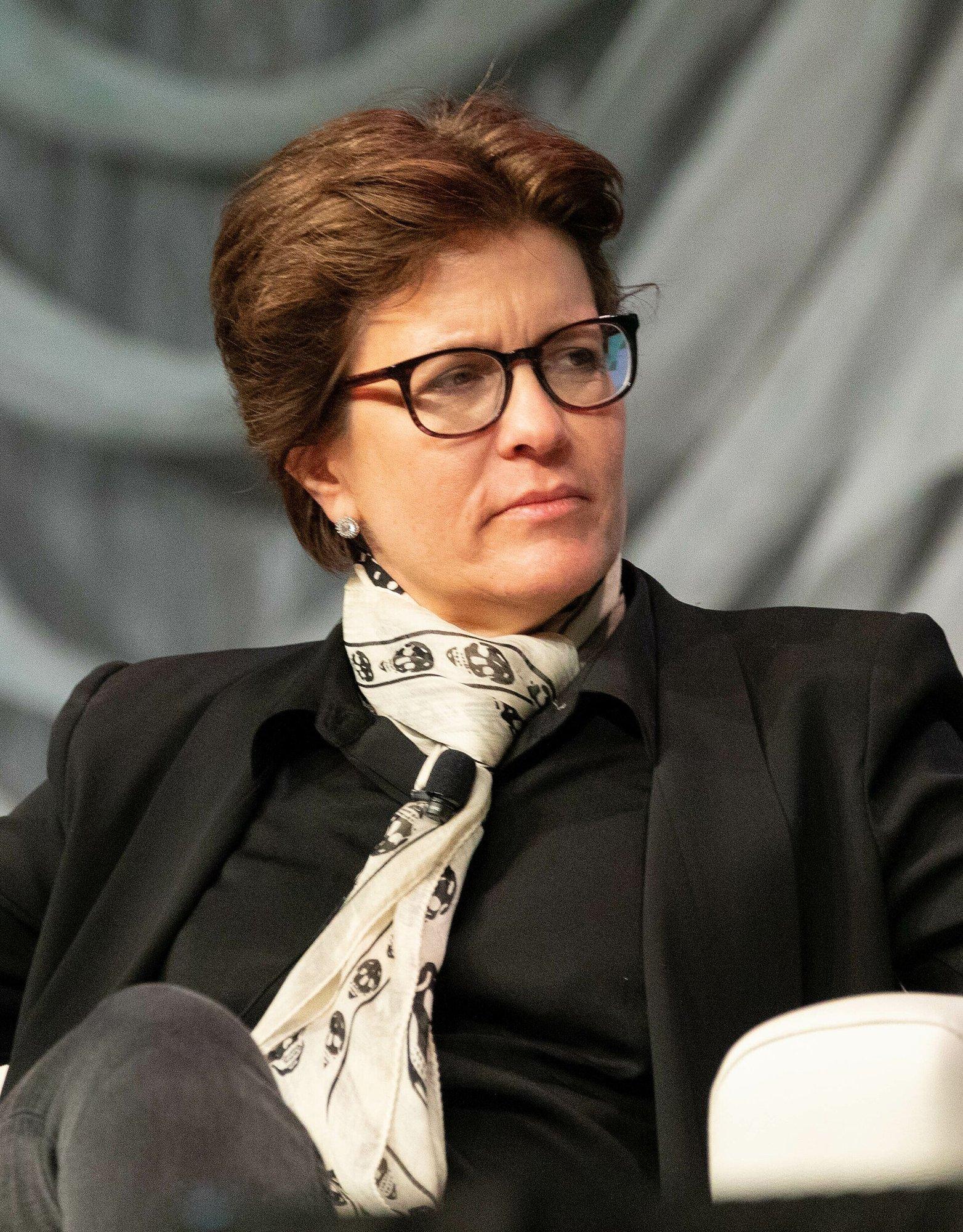
Kara Swisher.

Journalist · Podcaster · Author

For three decades, Kara Swisher has treated Silicon Valley less like a shrine than a reporting beat. From AOL and the dot-com boom to All Things Digital, Recode, Pivot and On with Kara Swisher, she built a career on making powerful tech figures explain themselves in plain English, usually with less deference than they expected.

OBJECTIVE PERSONALITY CLASSIFICATIONMM-Si/Te-BS/C(P)What does this mean?
PERSONALITY SYSTEMObjective Personality
LEAD FUNCTIONSi · Introverted Sensing
SECOND SAVIOR FUNCTIONTe · Extroverted Thinking
MBTI EQUIVALENTISTJ
01 / BEHIND THE CLASSIFICATION

The personality behind the fame.

How does a recorded OPS classification like MM-Si/Te-BS/C(P) break down? Walk through nine coins and watch the proposed type take shape. These are deductions from the archived code, not independent evidence of typing accuracy.

Scroll below to see Kara Swisher take shape.

STARTING POINT512 possible OPS typesEach type combines core functions, an animal order, and sexual modalities.
THE FINISH LINEMM-Si/Te-BS/C(P)One recorded classification, decoded from its components.
Kara Swisher’s HUMAN NEEDS 01—03
01
DECIDER OR OBSERVER?

Observer over Decider

Observers have more balanced Decider poles in the middle: Self (Di) and Tribe (De). Their own perspective and other people's perspectives tend to be easier to navigate. Things are the harder territory. Control (Oi) and Chaos (Oe) sit at the extremes, so disrupted plans, uncertainty, and a changing world can trigger the strongest reactions.

Swisher has covered the business of the internet since 1994, moving from The Washington Post to The Wall Street Journal, then building new platforms at All Things Digital, Recode, the Times and Vox as the industry kept mutating underneath her. That points to Observer friction: the unstable landscape itself is the recurring problem. Her strength is staying oriented while companies, platforms and public narratives keep changing. The blind spot is assuming that if the map gets precise enough, the chaos will finally stay put. Tech almost never grants that favor.


O
02
SELF OR TRIBE?

De · Tribe over Di · Self

Tribe (De) is the stronger deciding pole. They check decisions against people, shared standards, and what works for the group: what do we need, what will others think? The strength is coordination and responsiveness; the recurring friction is the Self (Di)—knowing and defending their own position. As the portrait unfolds, notice how Tribe takes the lead.

Swisher's public work keeps circling power, influence and shared consequences. Her studies of misinformation and propaganda led her to argue for safeguards and government regulation, and her planned San Francisco mayoral run emphasized housing, labor and the divide between tech and the city. That is Tribe-first attention to outside standards and collective impact. The strength is pushing private empires into public accountability. The growth cost is that when other people seem obviously irresponsible, correction can come out scorching, making the point harder for some listeners to absorb.

De
03
GATHER OR ORGANIZE?

Oi · Organize over Oe · Gather

Organize (Oi) leads with refining, preserving, and structuring what is already known. Its strength is preparation and clear direction; the recurring friction is unexpected change that disrupts the plan. Another layer of the personality portrait comes into focus.

Few tech journalists have built such a durable filing system for one industry. Swisher wrote books on AOL and the AOL Time Warner debacle, created Boom Town at the Journal, and kept returning to the same power centers through conferences, columns and podcasts. Organize-first gives her a stored map: who mattered, what they promised, and how today's drama echoes yesterday's cycle. The strength is context. The blind spot is that a strong frame can make genuinely new developments look like familiar reruns before they have earned that verdict.

Oi
FIRST THREE COINSO + De + Oi

These establish the preferred human needs in the OPS framework.

Kara Swisher’s FUNCTIONS 04—05
04
FEELING OR THINKING?

Thinking · T over Feeling · F

Thinking (T) evaluates decisions through reasons, logic, and what works—not a lack of emotion. Its strength is analytical consistency; Feeling (F) provides balance through values, meaning, and the human consequences of a decision. Combined with Tribe (De), this forms the recorded Savior Te.

At Code and All Things Digital, Swisher interviewed executives like Steve Jobs, Bill Gates and Larry Ellison by driving toward the practical bottom line rather than the flattering storyline. Her Times work on Musk, Instagram and Google's censorship questions used the same lens: what are the consequences, who benefits, what actually gets done? Te gives her edge and usefulness. It can also come off like a blade. Her own sharp public remarks and later apology in 2019 show the tradeoff: blunt efficiency can outrun calibration.

T → Te
05
SENSING OR INTUITION?

Sensing · S over Intuition · N

Sensing (S) focuses on concrete details, observable reality, and lived experience. Intuition (N) balances it by looking for broader patterns, concepts, and implications. Combined with Organize (Oi), this gives the recorded Savior Si.

Swisher's advantage is not just having opinions about tech; it is remembering the receipts. She won attention early covering AOL and the dot-com era, then turned that reporting into books detailed enough to track the industry's promises and wreckage across years. Si keeps returning to what already happened, what was said, and what the pattern looked like last time. That makes her hard to snow. The limitation is that novelty faces a high burden of proof. A new pitch has to survive comparison with a very long archive.

S → Si
THE TWO SAVIOR FUNCTIONSSi / Te

Opposing functions: Ne and Fi.

Kara Swisher’s ANIMAL STACK 06—07
06
CONSUME OR BLAST?

Blast over Consume

Consume gathers information for internal processing; Blast organizes and communicates information. The recorded order is Blast → Sleep → Consume → Play. This comparison follows their positions in that stack.

Blast comes earlier than Consume here, and Swisher's career makes that obvious in the best way. Boom Town, Recode, Sway, Pivot and On with Kara Swisher all depend on taking a sprawling, jargon-heavy industry and turning it into a sharp, usable takeaway for an audience. The strength of Blast is decisive communication. The cost is that Consume can feel like the thing to do later, after the thesis already has shape. More input is still valuable, but she is built to state the point before the research rabbit hole becomes infinite.

B > C
07
PLAY OR SLEEP?

Sleep over Play

Play emphasizes external real-time engagement; Sleep emphasizes internal processing. The recorded stack places Sleep earlier.

Sleep comes before Play, and that gives Swisher's public force a private spine. Books like her AOL volumes and Burn Book show someone who does not only spar in real time; she also consolidates years of reporting into a settled internal read. That deepens the output and keeps it from sounding purely reactive. The blind spot is that Play can arrive after the interpretation is already compressed into a verdict. In live exchanges, another person's contribution may be measured against a frame she has largely finished building.

S > P
Kara Swisher’s ANIMAL ORIENTATION 08—09
08
INFO OR ENERGY DOMINANT?

Info over Energy

Info dominant means Consume and Blast are both in the top three: gathering and communicating information are more balanced. Play last leaves the energy side uneven—Sleep can conserve energy without enough spontaneous outward engagement.

Swisher's stack lands on the Info side because Consume and Blast both sit in the top three, and her public life is built around that loop: gather reporting, then explain it. Columns, books, conferences and podcasts all reward that rhythm. It is a serious professional strength because audiences do not just get access; they get synthesis. The missing pressure point is the last animal, Play. Real-time social exchange can become secondary to getting the information right and the argument clear, even when the room still has more to add.

Info
09
INTROVERSION OR EXTROVERSION?

Introversion over Extroversion

The last animal, Play, determines this OPS coin: Play or Blast last means Introversion; Consume or Sleep last means Extroversion. This describes animal orientation, not sociability or shyness.

Swisher's OPS Introversion coin should not be confused with shyness or lack of public presence. She has hosted podcasts, run major interviews onstage, appeared on television and kept herself at the center of tech media for decades. The point is that Play is last: spontaneous back-and-forth sits later than private processing and clear delivery. Her growth edge is not becoming more visible; she already is. It is leaving a little more space for unscripted interaction before the conclusion locks, especially in collaborative or civic settings where the argument must also be shared.

I
Sexual Modalities

The four sexual modalities.

OPS uses masculine/feminine sensory and extroverted-deciding distinctions as framework-specific terms, not gender categories. The four modalities are already included in the original 512 types. The recorded modality is MM · Kinesthetic.

MM RECORDED MODALITYKinestheticMasculine Sensory · Masculine De
MF AudioMasculine Sensory · Feminine De
FF TesterFeminine Sensory · Feminine De
FM VisualFeminine Sensory · Masculine De
COMPLETE RECORDED OPS TYPE · MODALITY INCLUDEDMM-Si/Te-BS/C(P)

Si leads, Te supports, and the animal stack is Blast → Sleep → Consume → Play.

THE FINISHED PORTRAIT · ALL NINE COINS REVEALED

Kara Swisher's complete function and animal stack

BlastSleepConsumePlaymSimTefFifNe
MM-Si/Te-BS/C(P)DOUBLE ACTIVATED · SLEEPExplore the Interactive Coin Builder →
THE KARA SWISHER LENS

The interrogator with the long memory

From Boom Town to All Things Digital, Recode, Pivot and On with Kara Swisher, she turned tech journalism into a contact sport. The public impression is acid certainty. Behind it is decades of beat memory: she has covered the internet business since 1994 and keeps dragging power back onto the record.

Her Si/Te pairing is why the interviews hit so hard. She remembers what executives said, what actually shipped, and which shiny promises already failed in an earlier cycle, then turns that archive into a usable conclusion. The strength is clarity; the limit is making real novelty pay a very high entrance fee.

As an Observer and Double Decider, Swisher is built to handle people tension better than unsettled conditions. The recurring strain is not everyone's opinion of her so much as the unstable terrain of technology, regulation and public consequence. Neglected Ne, opposite lead Si, is the growth edge: letting the unfamiliar possibility breathe before filing it under seen-this-before.

Blast → Sleep → Consume → Play fits the rhythm: state the point, process it privately, gather more, then engage in looser back-and-forth last. With Play fourth, real-time exchange can bottleneck once the thesis hardens. The balancing move is simple and difficult: leave one more unscripted beat for genuine pushback before closing the case.

Want to understand the Savior and Demon states behind these nine coins? Explore the complete explanation, visual examples, and typing principles on our Methodology page →

02 / KEEP EXPLORING

Different faces. Familiar patterns.

Explore other celebrities with related recorded OPS classifications. Related functions are not necessarily exact type matches.

Discover Type Twins
YOUR TURN

Curious about your own type?

Discover how your own personality might be classified through Objective Personality.

Get objectively typed
Kara Swisher's Personality Type & OPS Profile | The Personality Atlas