The Personality Atlas
THE CELEBRITY PERSONALITY ARCHIVE / EDUCATION & MEDIA

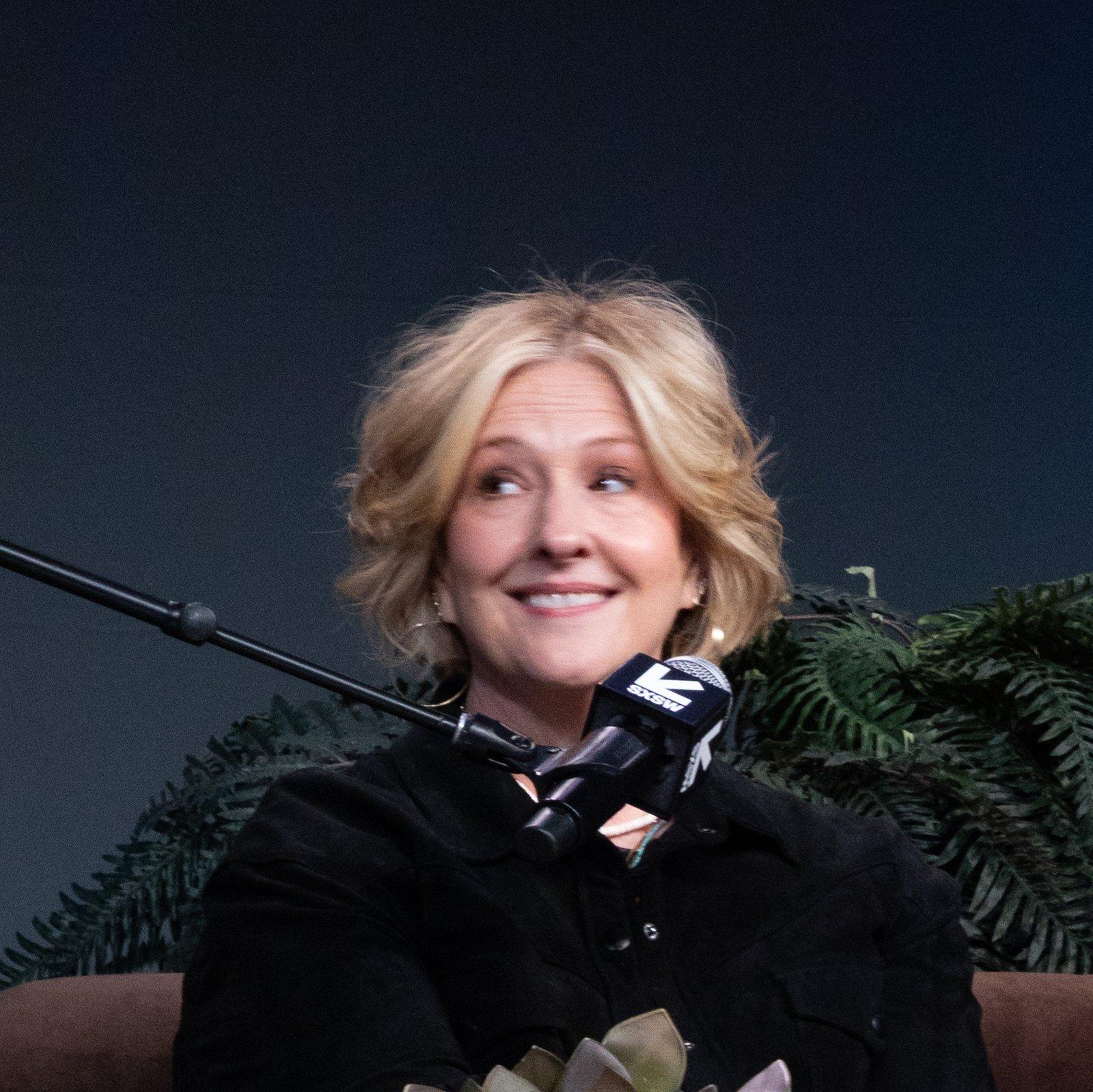
Brené Brown.

Academic · Author · Podcast Host

Brené Brown built an unusually modern public career: a University of Houston social-work researcher became a TED phenomenon, bestselling author, podcast host and streaming lecturer by turning shame, courage and vulnerability into language people could actually use.

OBJECTIVE PERSONALITY CLASSIFICATIONMF-Si/Te-BP/S(C)What does this mean?
PERSONALITY SYSTEMObjective Personality
LEAD FUNCTIONSi · Introverted Sensing
SECOND SAVIOR FUNCTIONTe · Extroverted Thinking
MBTI EQUIVALENTISTJ
01 / BEHIND THE CLASSIFICATION

The personality behind the fame.

How does a recorded OPS classification like MF-Si/Te-BP/S(C) break down? Walk through nine coins and watch the proposed type take shape. These are deductions from the archived code, not independent evidence of typing accuracy.

Scroll below to see Brené Brown take shape.

STARTING POINT512 possible OPS typesEach type combines core functions, an animal order, and sexual modalities.
THE FINISH LINEMF-Si/Te-BP/S(C)One recorded classification, decoded from its components.
Brené Brown’s HUMAN NEEDS 01—03
01
DECIDER OR OBSERVER?

Observer over Decider

Observers have more balanced Decider poles in the middle: Self (Di) and Tribe (De). Their own perspective and other people's perspectives tend to be easier to navigate. Things are the harder territory. Control (Oi) and Chaos (Oe) sit at the extremes, so disrupted plans, uncertainty, and a changing world can trigger the strongest reactions.

Brown’s breakout moment was a TEDx talk built from a decade of research, not a feud or a bid for approval. The core tension in her public life is repeatedly about conditions: how do you take slippery experiences like shame and vulnerability and make them clear enough for people to use? That is Observer friction—wrestling with complexity, uncertainty and the need for a workable map. Her strength is calming chaos with language and structure. The blind spot is thinking one more framework can fully tame a messy human reality.

O
02
SELF OR TRIBE?

De · Tribe over Di · Self

Tribe (De) is the stronger deciding pole. They check decisions against people, shared standards, and what works for the group: what do we need, what will others think? The strength is coordination and responsiveness; the recurring friction is the Self (Di)—knowing and defending their own position. As the portrait unfolds, notice how Tribe takes the lead.

Her career keeps aiming outward. Brown didn’t just write for herself; she taught at the University of Houston, became a visiting management professor at UT Austin, spoke at Google and Disney, and built The Daring Way into a training and certification program. Tribe over Self shows up in that drive to make ideas useful to other people and institutions. The strength is practical relevance: the work leaves the page and enters classrooms, teams and organizations. The growth cost is that outside usefulness can become the standard, crowding out the quieter question of what she still needs to refine privately.

De
03
GATHER OR ORGANIZE?

Oi · Organize over Oe · Gather

Organize (Oi) leads with refining, preserving, and structuring what is already known. Its strength is preparation and clear direction; the recurring friction is unexpected change that disrupts the plan. Another layer of the personality portrait comes into focus.

Brown’s public authority did not come from dabbling in every adjacent trend. She spent her research career at the University of Houston, developed shame-resilience theory, and kept returning to the same core territory across The Gifts of Imperfection, Daring Greatly, Dare to Lead and Atlas of the Heart. Organize over Gather is visible in that urge to name patterns, sort emotional material, and build a stable map people can revisit. The strength is coherence. The cost is selectivity: once a framework proves useful, newer possibilities can look less urgent than deepening the existing one.

Oi
FIRST THREE COINSO + De + Oi

These establish the preferred human needs in the OPS framework.

Brené Brown’s FUNCTIONS 04—05
04
FEELING OR THINKING?

Thinking · T over Feeling · F

Thinking (T) evaluates decisions through reasons, logic, and what works—not a lack of emotion. Its strength is analytical consistency; Feeling (F) provides balance through values, meaning, and the human consequences of a decision. Combined with Tribe (De), this forms the recorded Savior Te.

Brown is famous for topics many people file under feelings, but her public style is unmistakably Thinking. Dare to Lead, her professional training program, and her work teaching grounded theory methodology all show a preference for turning vulnerable material into procedures, definitions and tools that other people can apply. Te at its best makes soft subjects usable without draining them of seriousness. The blind spot is that a framework can sound more settled than lived experience actually feels. A clean model helps leaders and students; it does not remove every personal ambiguity the model describes.

T → Te
05
SENSING OR INTUITION?

Sensing · S over Intuition · N

Sensing (S) focuses on concrete details, observable reality, and lived experience. Intuition (N) balances it by looking for broader patterns, concepts, and implications. Combined with Organize (Oi), this gives the recorded Savior Si.

Atlas of the Heart is practically a manifesto for Sensing: expand emotional vocabulary, name the distinction, give people the language. Brown’s Si works through accumulated evidence, repeated teaching, and careful attention to what has been observed often enough to hold. Even her bestselling titles read like durable reference points rather than novelty for novelty’s sake. The strength is specificity that people can remember and reuse. The cost is that established categories can become so persuasive that fresh edge cases or changing contexts get interpreted through the existing map before they are allowed to stay strange.

S → Si
THE TWO SAVIOR FUNCTIONSSi / Te

Opposing functions: Ne and Fi.

Brené Brown’s ANIMAL STACK 06—07
06
CONSUME OR BLAST?

Blast over Consume

Consume gathers information for internal processing; Blast organizes and communicates information. The recorded order is Blast → Play → Sleep → Consume. This comparison follows their positions in that stack.

When Brown’s 2010 TEDx talk pushed her from academic obscurity into mainstream attention, the striking thing was not hidden research but how decisively she delivered it. Six number-one bestsellers, a Netflix lecture documentary, and leadership talks for major companies all point to Blast landing earlier than Consume. Her advantage is clear transmission: years of study become language other people can act on. The tradeoff is familiar to any prolific teacher. The pressure to explain, summarize and package can arrive before every nuance has been gathered, tested or left unresolved.

B > C
07
PLAY OR SLEEP?

Play over Sleep

Play emphasizes external real-time engagement; Sleep emphasizes internal processing. The recorded stack places Play earlier.

Brown didn’t stop at delivering polished conclusions; she kept the material moving through interviews, podcasts, classrooms and live events. That points to Play arriving earlier than Sleep. Unlocking Us and Dare to Lead are good examples: the work keeps meeting other people in real time instead of staying sealed inside a private reflective loop. The strength is responsiveness. Ideas stay active, relational and adjustable in conversation. The cost is that constant engagement can compress the slower, quieter phase of sitting with an insight long enough to discover what does not yet fit the public version.

P > S
Brené Brown’s ANIMAL ORIENTATION 08—09
08
INFO OR ENERGY DOMINANT?

Energy over Info

Energy dominant means Play and Sleep are both in the top three: there is access to expending energy through engagement and conserving it through internal processing. Consume last leaves the information side uneven—Blast may broadcast more than gets taken in.

Her stack lands on the Energy side, which fits the visible rhythm of her career: public teaching, podcast conversations, documentaries, and then enough internal consolidation to turn the material into books and repeatable frameworks. The balance is between outward engagement and private processing, not between stage presence and shyness. The missing piece is Consume last. Brown can keep ideas moving exceptionally well, but the void is pure intake for its own sake—lingering as a student, gathering without immediately translating, or letting another person’s framework stand without reorganizing it into her own language.

Energy
09
INTROVERSION OR EXTROVERSION?

Extroversion over Introversion

The last animal, Consume, determines this OPS coin: Play or Blast last means Introversion; Consume or Sleep last means Extroversion. This describes animal orientation, not sociability or shyness.

In OPS terms, Brown lands Extroverted not because she looks social, but because Consume comes fourth after Blast, Play and Sleep. The pattern is visible in how quickly her research became communication ecosystems: TED talks, bestselling books, corporate speaking, podcasts and streaming specials. Even private processing tends to feed eventual public usefulness. The strength is momentum; insights do not stay trapped in the notebook. The blind spot is subtler than being too outgoing. It is skipping past long periods of open-ended intake and assuming the next step is to teach, clarify or mobilize what is already known.

E
Sexual Modalities

The four sexual modalities.

OPS uses masculine/feminine sensory and extroverted-deciding distinctions as framework-specific terms, not gender categories. The four modalities are already included in the original 512 types. The recorded modality is MF · Audio.

MM KinestheticMasculine Sensory · Masculine De
MF RECORDED MODALITYAudioMasculine Sensory · Feminine De
FF TesterFeminine Sensory · Feminine De
FM VisualFeminine Sensory · Masculine De
COMPLETE RECORDED OPS TYPE · MODALITY INCLUDEDMF-Si/Te-BP/S(C)

Si leads, Te supports, and the animal stack is Blast → Play → Sleep → Consume.

THE FINISHED PORTRAIT · ALL NINE COINS REVEALED

Brené Brown's complete function and animal stack

BlastPlaySleepConsumemSifTemFifNe
MF-Si/Te-BP/S(C)DOUBLE ACTIVATED · BLASTExplore the Interactive Coin Builder →
THE BRENÉ BROWN LENS

The scholar who made vulnerability teachable

Brown’s public image is brave candor, but the sharper origin story is a social-work professor walking onto a 2010 TEDx stage with a decade of shame research and suddenly becoming globally legible. Behind the bestselling brand is a teacher determined to make emotional life nameable, teachable, and usable in workplaces, classrooms, and ordinary relationships.

Her savior pairing, Si and Te, gives that mission teeth. Si preserves recurring patterns and practical distinctions; Te turns them into books, trainings, and leadership language people can apply. That is Brown’s gift: making slippery material actionable. The limit is compression. A framework can become so serviceable that ambiguity or unfamiliar cases get organized faster than they are truly explored.

As an Observer and Double Decider, Brown is fundamentally managing uncertainty more than living in constant people-drama. The recurring pressure is to get the map right, control the variables, and stabilize experience. That can leave human needs tilted toward certainty over openness. Her neglected function is Ne, the opposite of lead Si: letting unfamiliar possibilities stay alive before sorting them.

Blast → Play → Sleep → Consume completes the pattern. She naturally teaches first, engages next, then processes privately, with pure intake last. That last-Consume imbalance can make new material feel most valuable once it is ready to be explained. Balance means protecting stretches of reading, listening, or research with no immediate takeaway, so her clarity is strengthened rather than diluted.

Want to understand the Savior and Demon states behind these nine coins? Explore the complete explanation, visual examples, and typing principles on our Methodology page →

02 / KEEP EXPLORING

Different faces. Familiar patterns.

Explore other celebrities with related recorded OPS classifications. Related functions are not necessarily exact type matches.

Discover Type Twins
YOUR TURN

Curious about your own type?

Discover how your own personality might be classified through Objective Personality.

Get objectively typed
Brené Brown's Personality Type & OPS Profile | The Personality Atlas