The Personality Atlas
THE CELEBRITY PERSONALITY ARCHIVE / SPACE & AVIATION

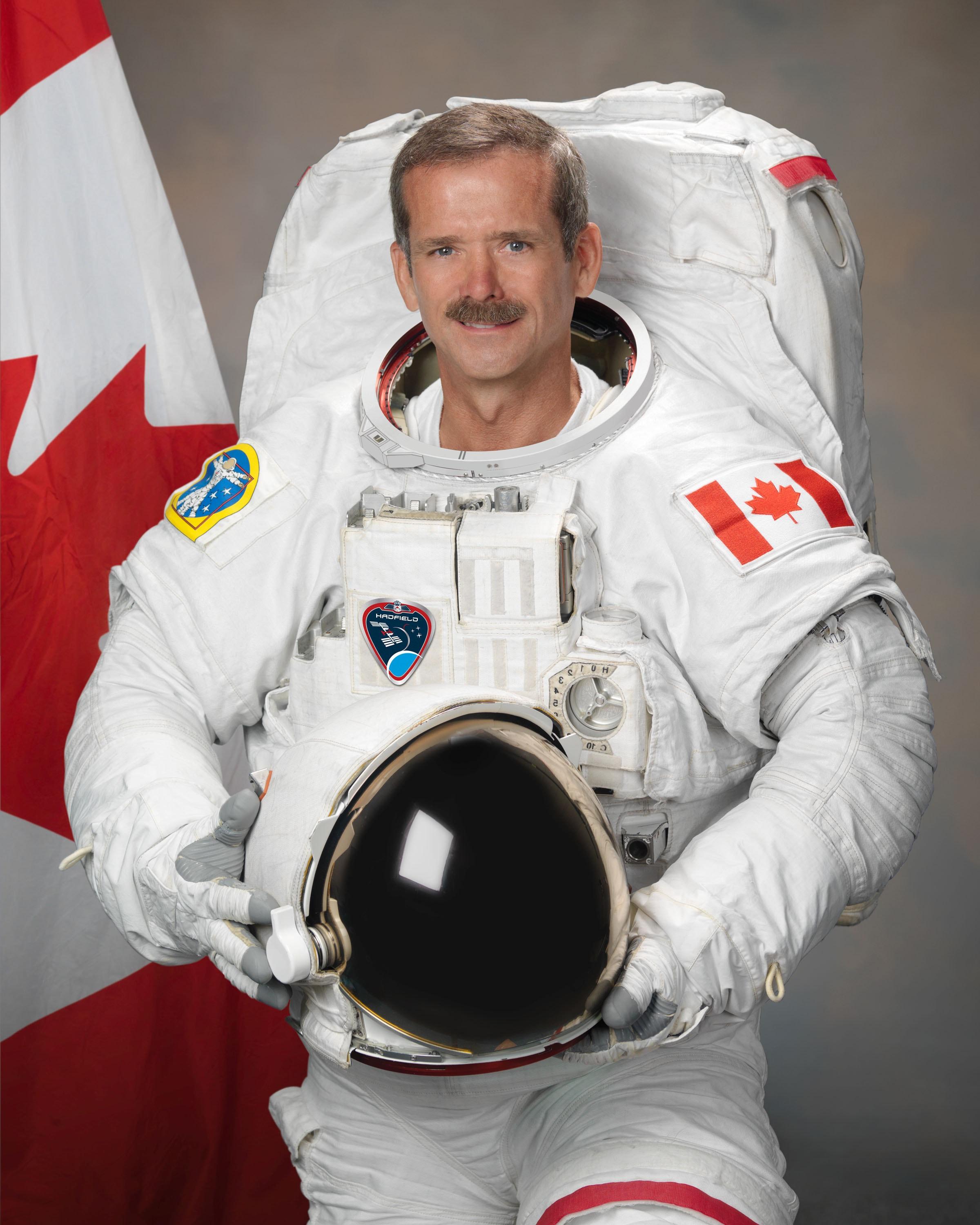
Chris Hadfield.

Astronaut · Test pilot · Author

Chris Hadfield made orbital life look charmingly human—tweeting Earth photos, strumming a guitar, answering questions from space—after spending decades in the brutally unglamorous worlds of military aviation, test flying, and mission procedure. The smile was real; so was the checklist.

OBJECTIVE PERSONALITY CLASSIFICATIONFF-Si/Te-BS/P(C)What does this mean?
PERSONALITY SYSTEMObjective Personality
LEAD FUNCTIONSi · Introverted Sensing
SECOND SAVIOR FUNCTIONTe · Extroverted Thinking
MBTI EQUIVALENTISTJ
01 / BEHIND THE CLASSIFICATION

The personality behind the fame.

How does a recorded OPS classification like FF-Si/Te-BS/P(C) break down? Walk through nine coins and watch the proposed type take shape. These are deductions from the archived code, not independent evidence of typing accuracy.

Scroll below to see Chris Hadfield take shape.

STARTING POINT512 possible OPS typesEach type combines core functions, an animal order, and sexual modalities.
THE FINISH LINEFF-Si/Te-BS/P(C)One recorded classification, decoded from its components.
Chris Hadfield’s HUMAN NEEDS 01—03
01
DECIDER OR OBSERVER?

Observer over Decider

Observers have more balanced Decider poles in the middle: Self (Di) and Tribe (De). Their own perspective and other people's perspectives tend to be easier to navigate. Things are the harder territory. Control (Oi) and Chaos (Oe) sit at the extremes, so disrupted plans, uncertainty, and a changing world can trigger the strongest reactions.

During his 2001 spacewalk to install Canadarm2, Hadfield was temporarily blinded by eye irritation from anti-fog solution in his visor. That is a clean Observer problem: reality does not care how qualified you are. One small physical variable can suddenly dominate the entire mission. His strength is obvious in the response—stay with the situation, work the problem, keep functioning inside harsh conditions. The blind spot is the corresponding obsession with controlling conditions, as if enough preparation can remove uncertainty instead of merely narrowing it.
O
02
SELF OR TRIBE?

De · Tribe over Di · Self

Tribe (De) is the stronger deciding pole. They check decisions against people, shared standards, and what works for the group: what do we need, what will others think? The strength is coordination and responsiveness; the recurring friction is the Self (Di)—knowing and defending their own position. As the portrait unfolds, notice how Tribe takes the lead.

Hadfield's career repeatedly put him in roles where the standard lived outside himself: chief CAPCOM for 25 shuttle missions, coordinator of astronaut activities, policy negotiator with Russian partners, then commander of the ISS. De leans toward shared metrics, shared procedures, shared accountability. That is a real strength in aviation and spaceflight, where private brilliance means very little if the team cannot use it. The cost is that outside needs can become the default reference point, making it harder to pause and ask what he personally wants before the mission, institution, or audience has already set the terms.

De
03
GATHER OR ORGANIZE?

Oi · Organize over Oe · Gather

Organize (Oi) leads with refining, preserving, and structuring what is already known. Its strength is preparation and clear direction; the recurring friction is unexpected change that disrupts the plan. Another layer of the personality portrait comes into focus.

From earning glider and powered pilot licences as a teenager to flying more than 70 aircraft types and mastering spacecraft systems, Hadfield's career is almost absurdly built on stored procedure. Organize-first thrives on settled information, repeatable sequences, and a known map of reality. That is why he could move from fighter pilot to test pilot to astronaut without treating each step like improvisational theater. The blind spot is selectivity hardening into overselectivity: when the map is strong, newer options can look less compelling simply because they are not yet organized enough to trust.

Oi
FIRST THREE COINSO + De + Oi

These establish the preferred human needs in the OPS framework.

Chris Hadfield’s FUNCTIONS 04—05
04
FEELING OR THINKING?

Thinking · T over Feeling · F

Thinking (T) evaluates decisions through reasons, logic, and what works—not a lack of emotion. Its strength is analytical consistency; Feeling (F) provides balance through values, meaning, and the human consequences of a decision. Combined with Tribe (De), this forms the recorded Savior Te.

Hadfield's public image is warm, but his professional record is ruthlessly practical. Te shows up in concrete outputs: addressing technical and safety issues for shuttle operations, helping develop the glass shuttle cockpit, leading ISS operations, and commanding a crew while dozens of experiments ran in orbit. The strength is turning complexity into usable standards and decisions. The blind spot is that what cannot be operationalized quickly may get less attention. Efficiency is powerful, but it can make softer or less measurable considerations wait outside the airlock.

T → Te
05
SENSING OR INTUITION?

Sensing · S over Intuition · N

Sensing (S) focuses on concrete details, observable reality, and lived experience. Intuition (N) balances it by looking for broader patterns, concepts, and implications. Combined with Organize (Oi), this gives the recorded Savior Si.

Hadfield's Sensing side is not just 'hands-on' in some vague inspirational sense. It is visible in real specifics: intercept missions over the Arctic, test programs on high-angle flight behavior, operating Canadarm in orbit, installing Canadarm2 on a spacewalk, and chronicling the mundane mechanics of life aboard the ISS. Si respects what has been learned through direct repetition and concrete detail. That makes him unusually trustworthy in technical environments. The cost is that unproven possibilities can seem lightweight until they have enough evidence, repetition, and procedure to earn a seat at the table.

S → Si
THE TWO SAVIOR FUNCTIONSSi / Te

Opposing functions: Ne and Fi.

Chris Hadfield’s ANIMAL STACK 06—07
06
CONSUME OR BLAST?

Blast over Consume

Consume gathers information for internal processing; Blast organizes and communicates information. The recorded order is Blast → Sleep → Play → Consume. This comparison follows their positions in that stack.

Between Consume and Blast, Blast is clearly the earlier priority. Hadfield has spent years turning specialized knowledge into direction for other people: the voice of mission control as CAPCOM, a station commander, a professor, a television host, a bestselling memoirist. He does not merely know the material; he packages it so others can use it. That is the strength. The growth cost is resisting the urge to explain too soon. When Blast outruns Consume, a polished answer can arrive before the next round of raw input has had time to complicate it.

B > C
07
PLAY OR SLEEP?

Sleep over Play

Play emphasizes external real-time engagement; Sleep emphasizes internal processing. The recorded stack places Sleep earlier.

Between Play and Sleep, Sleep comes earlier. That matters because Hadfield's public charisma can fool people into thinking his style must be primarily spontaneous. The biography points the other way: years of technical training, careful preparation, and even a social-media presence run in tandem with his son rather than pure improvisation. Earlier Sleep helps create a steady inner calibration before the outer exchange. The advantage is composure under pressure. The blind spot is that live collaboration can get filtered through an already-processed model, making surprise useful but not especially welcome.

S > P
Chris Hadfield’s ANIMAL ORIENTATION 08—09
08
INFO OR ENERGY DOMINANT?

Energy over Info

Energy dominant means Play and Sleep are both in the top three: there is access to expending energy through engagement and conserving it through internal processing. Consume last leaves the information side uneven—Blast may broadcast more than gets taken in.

This stack lands on Energy over Info, with both Sleep and Play available before the last animal. You can see the balance in Hadfield's career: private consolidation strong enough for extreme-risk environments, plus enough outward engagement to command crews, work internationally, and turn orbital life into a global public lesson. The void sits elsewhere. With Consume last, the danger is not laziness or lack of intelligence; it is communicating, coordinating, and performing before taking in more unstructured information. Even a world-class explainer still benefits from deliberate beginner mode.

Energy
09
INTROVERSION OR EXTROVERSION?

Extroversion over Introversion

The last animal, Consume, determines this OPS coin: Play or Blast last means Introversion; Consume or Sleep last means Extroversion. This describes animal orientation, not sociability or shyness.

Last Consume makes this OPS Extroversion, which is not the same thing as being socially flashy. Hadfield's fame from the ISS guitar and media appearances is public, but that is not the point of the coin. The point is that outward participation and delivery come more readily than staying in open-ended intake. He can move fast toward briefing, teaching, and engaging. The growth edge is simple and expensive: keep making room to study, listen, and ask technical or creative questions that do not need to become a lesson by the end of the day.

E
Sexual Modalities

The four sexual modalities.

OPS uses masculine/feminine sensory and extroverted-deciding distinctions as framework-specific terms, not gender categories. The four modalities are already included in the original 512 types. The recorded modality is FF · Tester.

MM KinestheticMasculine Sensory · Masculine De
MF AudioMasculine Sensory · Feminine De
FF RECORDED MODALITYTesterFeminine Sensory · Feminine De
FM VisualFeminine Sensory · Masculine De
COMPLETE RECORDED OPS TYPE · MODALITY INCLUDEDFF-Si/Te-BS/P(C)

Si leads, Te supports, and the animal stack is Blast → Sleep → Play → Consume.

THE FINISHED PORTRAIT · ALL NINE COINS REVEALED

Chris Hadfield's complete function and animal stack

BlastSleepPlayConsumefSifTemFimNe
FF-Si/Te-BS/P(C)DOUBLE ACTIVATED · BLASTExplore the Interactive Coin Builder →
THE CHRIS HADFIELD LENS

The astronaut who made rigor look easy

Chris Hadfield became a global favorite by floating through the ISS with a guitar and turning daily orbital life into something oddly intimate. That public ease sat on top of a far less casual reality: decades as a fighter pilot, test pilot, astronaut, and the first Canadian to command the station.

Si/Te is formidable in environments where romance gets people hurt. Hadfield's strength is procedural clarity tied to execution: learn the aircraft, master the system, brief the crew, do the job. The limit is that a proven method can sound so convincing that newer possibilities or unfinished questions wait longer than they should.

As an Observer and Double Decider, he is built to shoulder people demands better than uncertainty demands. The pressure lands more on controlling variables, preparing for failure, and staying ahead of chaos than on identity drama. The neglected function opposite his lead savior is Ne, the wider field of unproven possibilities that does not arrive with a checklist.

Blast → Sleep → Play → Consume explains why the teacher is so visible and the raw intake is the stretch. With Consume last, the imbalance is not lack of intelligence but a tendency to move toward briefing, processing, and engagement before more open-ended gathering. Keep the authority; deliberately schedule beginner mode—long interviews, fresh technical reading, and questions with no immediate lesson attached.

Want to understand the Savior and Demon states behind these nine coins? Explore the complete explanation, visual examples, and typing principles on our Methodology page →

02 / KEEP EXPLORING

Different faces. Familiar patterns.

Explore other celebrities with related recorded OPS classifications. Related functions are not necessarily exact type matches.

Discover Type Twins
YOUR TURN

Curious about your own type?

Discover how your own personality might be classified through Objective Personality.

Get objectively typed
Chris Hadfield's Personality Type & OPS Profile | The Personality Atlas