The Personality Atlas
THE CELEBRITY PERSONALITY ARCHIVE / FILM & TELEVISION

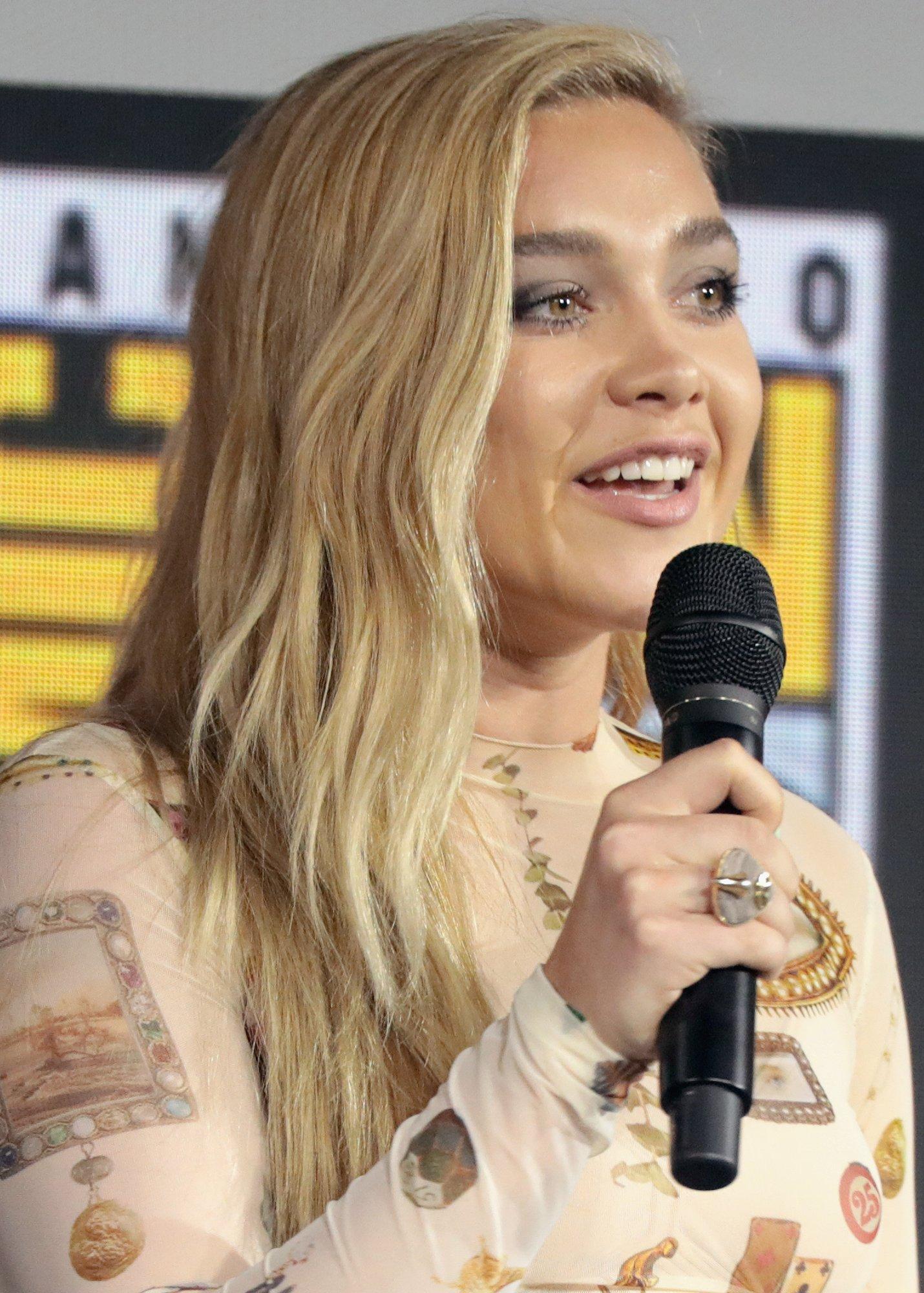
Florence Pugh.

Actor · Producer · Singer

Florence Pugh has made a career out of walking straight into hard material—Lady Macbeth cruelty, Midsommar grief, Little Women wit, Marvel deadpan, and the bruised intimacy of We Live in Time—while publicly pushing back on body policing, appearance pressure, and the idea that a young actress should stay easy to package.

OBJECTIVE PERSONALITY CLASSIFICATIONMM-Se/Ti-CP/B(S) #3What does this mean?
PERSONALITY SYSTEMObjective Personality
LEAD FUNCTIONSe · Extroverted Sensing
SECOND SAVIOR FUNCTIONTi · Introverted Thinking
MBTI EQUIVALENTESTP
01 / BEHIND THE CLASSIFICATION

The personality behind the fame.

How does a recorded OPS classification like MM-Se/Ti-CP/B(S) #3 break down? Walk through nine coins and watch the proposed type take shape. These are deductions from the archived code, not independent evidence of typing accuracy.

Scroll below to see Florence Pugh take shape.

STARTING POINT512 possible OPS typesEach type combines core functions, an animal order, and sexual modalities.
THE FINISH LINEMM-Se/Ti-CP/B(S) #3One recorded classification, decoded from its components.
Florence Pugh’s HUMAN NEEDS 01—03
01
DECIDER OR OBSERVER?

Observer over Decider

Observers have more balanced Decider poles in the middle: Self (Di) and Tribe (De). Their own perspective and other people's perspectives tend to be easier to navigate. Things are the harder territory. Control (Oi) and Chaos (Oe) sit at the extremes, so disrupted plans, uncertainty, and a changing world can trigger the strongest reactions.

Pugh’s public story is full of hard realities that do not care how talented she is: childhood breathing problems serious enough that her family moved to Spain, a TV pilot that simply did not go to series, franchise production constraints, and stunt insurance concerns she had to work around rather than wish away. That is classic Observer friction. Her strength is adapting quickly to the conditions in front of her. The blind spot is assuming the next changed circumstance—another role, another set, another physical test—will finally remove uncertainty instead of simply replacing it.

O
02
SELF OR TRIBE?

Di · Self over De · Tribe

Self (Di) is the stronger deciding pole. They check decisions against their own values or reasons first: what makes sense to me, what feels right to me? The strength is independent conviction; the recurring friction is the Tribe (De)—other people's standards, feedback, and expectations. As the portrait unfolds, notice how Self takes the lead.

When Studio City brought pressure to change her appearance, Pugh later described the experience negatively rather than treating industry approval as sacred. She took the same stance when she publicly defended both her relationship choices and her body after backlash to the sheer Valentino dress. Self over Tribe is not antisocial; it is a willingness to keep an internal standard when the crowd has already formed an opinion. The strength is ownership. The cost is social friction: being sure of your position does not spare you from consequences, misreadings, or the labor of repairing relationships after the fact.

Di
03
GATHER OR ORGANIZE?

Oe · Gather over Oi · Organize

Gather (Oe) leads with new information, experiences, and possibilities. Its strength is curiosity and adaptability; the recurring friction is narrowing the options and settling into what is already known. Another layer of the personality portrait comes into focus.

Pugh’s filmography refuses a single lane: Lady Macbeth, The Little Drummer Girl, a wrestling biopic, folk horror, period drama, Marvel espionage, Nolan biography, Dune royalty, intimate romance. Gather over Organize fits that restless appetite for new material and new situations. The advantage is range; she can keep finding fresh angles instead of repeating one marketable trick. The blind spot is selection pressure. A career cannot become every intriguing possibility at once, and constant openness can postpone the harder question of what long-form direction deserves the next few years.

Oe
FIRST THREE COINSO + Di + Oe

These establish the preferred human needs in the OPS framework.

Florence Pugh’s FUNCTIONS 04—05
04
FEELING OR THINKING?

Thinking · T over Feeling · F

Thinking (T) evaluates decisions through reasons, logic, and what works—not a lack of emotion. Its strength is analytical consistency; Feeling (F) provides balance through values, meaning, and the human consequences of a decision. Combined with Self (Di), this forms the recorded Savior Ti.

Pugh’s argument for doing Yelena’s Merdeka 118 jump was revealing: she said actors have a duty to protect and defend their characters, and that the last extra detail is what brings them to life. That is a Thinking lens in the Ti sense—an internal standard for how the mechanism should work, not just what will play well publicly. The strength is precision; she wants the part to make sense from the inside. The growth cost is that inner certainty can outrun diplomacy, making practical limits or other people’s priorities feel like interference rather than useful constraints.

T → Ti
05
SENSING OR INTUITION?

Sensing · S over Intuition · N

Sensing (S) focuses on concrete details, observable reality, and lived experience. Intuition (N) balances it by looking for broader patterns, concepts, and implications. Combined with Gather (Oe), this gives the recorded Savior Se.

Pugh keeps making choices that put reality on camera instead of faking conviction from a distance. She cut off her hair for A Good Person rather than use a wig, shaved her head for We Live in Time, and insisted on performing the Thunderbolts jump herself. That is Sensing at full volume: trust what can be physically done, seen, and felt. The strength is tangibility; her work carries texture and risk. The blind spot is betting on immediacy so hard that long-range patterning can become an afterthought, especially when the present challenge is thrilling enough to seem self-justifying.

S → Se
THE TWO SAVIOR FUNCTIONSSe / Ti

Opposing functions: Ni and Fe.

Florence Pugh’s ANIMAL STACK 06—07
06
CONSUME OR BLAST?

Consume over Blast

Consume gathers information for internal processing; Blast organizes and communicates information. The recorded order is Consume → Play → Blast → Sleep. This comparison follows their positions in that stack.

Before the blockbuster run, Pugh spent years absorbing craft through indies, television, music covers as Flossie Rose, and characters with sharply different textures. Consume landing earlier than Blast fits an actress who gathers substance before announcing a thesis. That gives her roles unusual density: Amy March, Dani Ardor, and Yelena do not feel copied from one reusable persona. The tradeoff is clarity. More research, more nuance, and more collected experience can keep enriching the material while postponing the simpler public act of saying exactly what the project, or even the career, is trying to communicate.

C > B
07
PLAY OR SLEEP?

Play over Sleep

Play emphasizes external real-time engagement; Sleep emphasizes internal processing. The recorded stack places Play earlier.

Pugh’s career is also full of live engagement: rapid ensemble chemistry, outspoken social media responses, and persistent back-and-forth with Marvel leadership until she won approval to do the Thunderbolts stunt herself. Play showing up earlier than Sleep fits that readiness to meet the moment while it is unfolding instead of waiting for perfect internal certainty. The strength is immediacy; she can energize a scene or situation in real time. The cost is that private decompression and slower internal sorting can get shoved aside, leaving yesterday’s experience only partially digested when today’s demand arrives.

P > S
Florence Pugh’s ANIMAL ORIENTATION 08—09
08
INFO OR ENERGY DOMINANT?

Info over Energy

Info dominant means Consume and Blast are both in the top three: gathering and communicating information are more balanced. Sleep last leaves the energy side uneven—Play can keep engagement going without enough private recovery.

Her recorded animal balance is Info-dominant: taking in material and then making it public outruns pure energy management. You can see it in the run from A Good Person to Oppenheimer to Dune: Part Two to We Live in Time, where acting, producing, singing, and promotional visibility all keep the channel open. The advantage is throughput; ideas and roles do not stay trapped inside preparation. The void is recovery. When outward exchange and delivery come easily, true off-camera consolidation can look optional right up until exhaustion, repetition, or overcommitment exposes the bill.

Info
09
INTROVERSION OR EXTROVERSION?

Extroversion over Introversion

The last animal, Sleep, determines this OPS coin: Play or Blast last means Introversion; Consume or Sleep last means Extroversion. This describes animal orientation, not sociability or shyness.

Pugh lands on OPS Extroversion because Sleep is fourth: Consume, Play, and Blast arrive earlier than the quieter work of retreating, sorting, and letting an inner conclusion fully harden. That does not mean she is always socially hungry or endlessly available. It means the stack more readily moves toward taking in, engaging, and expressing than toward extended private processing. The growth edge is simple and uncomfortable: stop treating recovery as dead air. More deliberate downtime would not dull her force; it would keep that force from spending itself on every available battle.

E
Sexual Modalities

The four sexual modalities.

OPS uses masculine/feminine sensory and extroverted-deciding distinctions as framework-specific terms, not gender categories. The four modalities are already included in the original 512 types. The recorded modality is MM · Kinesthetic.

MM RECORDED MODALITYKinestheticMasculine Sensory · Masculine De
MF AudioMasculine Sensory · Feminine De
FF TesterFeminine Sensory · Feminine De
FM VisualFeminine Sensory · Masculine De
ADDITIONAL LAYER · SOCIAL TYPE

The four social types.

Social types are an additional layer on top of the original Objective Personality classification, introduced later in OPS research. They describe two proposed social preference coins: Flex vs. Friends and Generalize vs. Specialize. The combination and priority of these preferences produce four social types. Florence Pugh's recorded social type is #3.

SOCIAL #1 #1Flex · Generalize
SOCIAL #2 #2Generalize · Friends
SOCIAL #3 RECORDED SOCIAL TYPE#3Specialize · Flex
SOCIAL #4 #4Friends · Specialize
COMPLETE RECORDED OPS TYPE · MODALITY INCLUDED + SOCIAL TYPEMM-Se/Ti-CP/B(S) #3

Se leads, Ti supports, and the animal stack is Consume → Play → Blast → Sleep.

THE FINISHED PORTRAIT · ALL NINE COINS REVEALED

Florence Pugh's complete function and animal stack

ConsumePlayBlastSleepmSefTimFefNi
MM-Se/Ti-CP/B(S) #3DOUBLE ACTIVATED · PLAYExplore the Interactive Coin Builder →
THE FLORENCE PUGH LENS

Fearless isn’t the same as finished.

Pugh’s public image is daring for good reason: the actress who defended a sheer Valentino dress and lobbied Marvel until she could jump from Merdeka 118 does not read as timid. But the bolder pattern underneath is not random rebellion. She repeatedly chooses work that demands physical and emotional immediacy, then meets it head-on.

Se/Ti gives her a potent combination: acute contact with what is actually happening, plus an internal read on how a character or decision should work. That helps make Yelena feel lived-in rather than generic and lets performances stay concrete under pressure. The limit is overtrusting what feels immediately true without always slowing down for the longer arc.

As an Observer and Double Decider, Pugh’s core imbalance centers more on uncertainty, conditions, and what to do with the next reality than on getting endlessly stuck in people drama. The neglected function is Ni, opposite her lead Se: narrowing the sensory flood into a patient through-line, not just a vivid moment, is the quieter stretch.

Consume → Play → Blast → Sleep shows why her career can look so charged and present. She takes in material, engages fast, and can deliver it publicly before deep retreat gets its due. Sleep last is the imbalance: recovery and private consolidation arrive late. A useful counterweight would be protecting longer between-project decompression, so the next fearless choice comes from clarity instead of sheer momentum.

Want to understand the Savior and Demon states behind these nine coins? Explore the complete explanation, visual examples, and typing principles on our Methodology page →

02 / KEEP EXPLORING

Different faces. Familiar patterns.

Explore other celebrities with related recorded OPS classifications. Related functions are not necessarily exact type matches.

Discover Type Twins
YOUR TURN

Curious about your own type?

Discover how your own personality might be classified through Objective Personality.

Get objectively typed
Florence Pugh's Personality Type & OPS Profile | The Personality Atlas