The Personality Atlas
THE CELEBRITY PERSONALITY ARCHIVE / WRESTLING & MEDIA

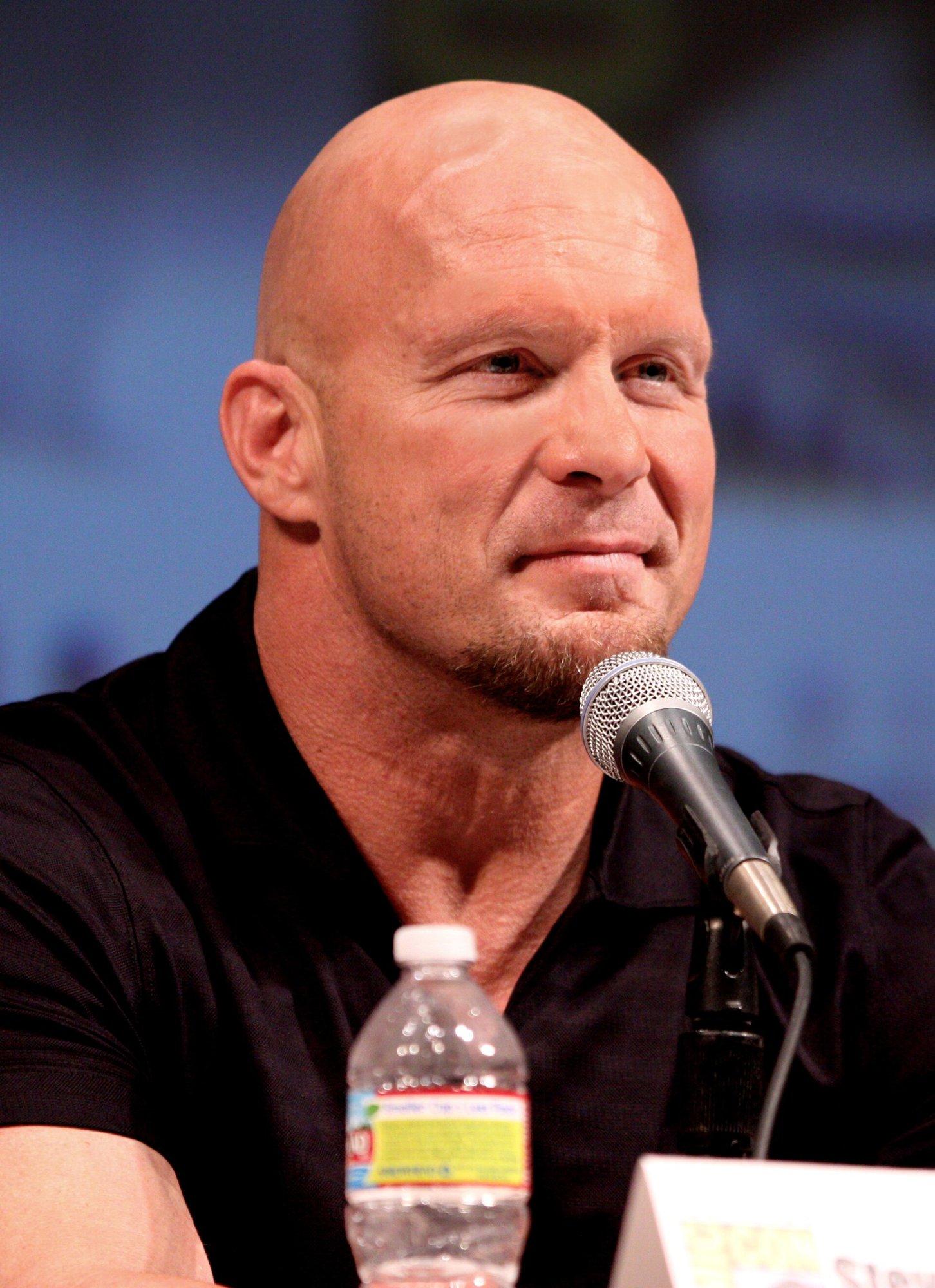
Steve Austin.

Wrestler · Actor · Podcast Host

Steve Austin did not become Stone Cold by playing a polished company man. From the discarded Ringmaster gimmick to the Austin 3:16 eruption, the Attitude Era wars, and later podcast and hosting work, he built a career on making pressure feel immediate, physical, and impossible to ignore.

OBJECTIVE PERSONALITY CLASSIFICATIONMM-Se/Ti-CP/B(S)What does this mean?
PERSONALITY SYSTEMObjective Personality
LEAD FUNCTIONSe · Extroverted Sensing
SECOND SAVIOR FUNCTIONTi · Introverted Thinking
MBTI EQUIVALENTESTP
01 / BEHIND THE CLASSIFICATION

The personality behind the fame.

How does a recorded OPS classification like MM-Se/Ti-CP/B(S) break down? Walk through nine coins and watch the proposed type take shape. These are deductions from the archived code, not independent evidence of typing accuracy.

Scroll below to see Steve Austin take shape.

STARTING POINT512 possible OPS typesEach type combines core functions, an animal order, and sexual modalities.
THE FINISH LINEMM-Se/Ti-CP/B(S)One recorded classification, decoded from its components.
Steve Austin’s HUMAN NEEDS 01—03
01
DECIDER OR OBSERVER?

Observer over Decider

Observers have more balanced Decider poles in the middle: Self (Di) and Tribe (De). Their own perspective and other people's perspectives tend to be easier to navigate. Things are the harder territory. Control (Oi) and Chaos (Oe) sit at the extremes, so disrupted plans, uncertainty, and a changing world can trigger the strongest reactions.

Steve Austin's career kept colliding with brute circumstance: a WCW firing during injury rehab, the botched Owen Hart piledriver that temporarily paralyzed him, then retirement in 2003 after knee damage and a serious neck injury. That pattern fits Observer friction, where the fight is with reality's limits more than with other people's approval. His strength was practical adaptation—ECW promos, a WWF reinvention, later hosting and podcasting. The blind spot is believing the next hard reset or comeback can solve conditions that still demand patience, rehab, or an entirely different plan.
O
02
SELF OR TRIBE?

Di · Self over De · Tribe

Self (Di) is the stronger deciding pole. They check decisions against their own values or reasons first: what makes sense to me, what feels right to me? The strength is independent conviction; the recurring friction is the Tribe (De)—other people's standards, feedback, and expectations. As the portrait unfolds, notice how Self takes the lead.

When Austin decided The Ringmaster was dead on arrival, he did not wait for the room to lovingly explain it. He shaved his head, dropped the weak gimmick, pushed for change, and turned Stone Cold into a sharper standard he could actually own. Self over Tribe is useful here: the work stops sounding committee-built. The cost is obvious. A strong private verdict can make gatekeepers look slow, foolish, or irrelevant, which helps a persona cut through noise but can also harden conflict with the people controlling the opportunity.

Di
03
GATHER OR ORGANIZE?

Oe · Gather over Oi · Organize

Gather (Oe) leads with new information, experiences, and possibilities. Its strength is curiosity and adaptability; the recurring friction is narrowing the options and settling into what is already known. Another layer of the personality portrait comes into focus.

Austin's public career is full of pivots that stayed alive by gathering rather than settling: college football to wrestling, technical WCW heel to ECW promo experiment, antihero megastar to podcast host, reality host, ambassador, and even desert racer. Gather over Organize thrives on whatever fresh lane opens next. The advantage is range; he did not need one closed system to keep moving. The cost is that novelty does not organize itself. Every new opening tempts a person to keep expanding instead of deciding which version of the career deserves the next decade.

Oe
FIRST THREE COINSO + Di + Oe

These establish the preferred human needs in the OPS framework.

Steve Austin’s FUNCTIONS 04—05
04
FEELING OR THINKING?

Thinking · T over Feeling · F

Thinking (T) evaluates decisions through reasons, logic, and what works—not a lack of emotion. Its strength is analytical consistency; Feeling (F) provides balance through values, meaning, and the human consequences of a decision. Combined with Self (Di), this forms the recorded Savior Ti.

The famous Austin 3:16 promo worked because it sounded less like brand management than a man deciding, in real time, what nonsense he was not going to respect. Ti brings an internal logical scalpel: strip the gimmick down, keep the line that lands, discard the ornament. That same edge sharpened his ECW shots at WCW and later his blunt interview style. The strength is clarity without perfume. The blind spot is that a conclusion can feel so obviously correct from the inside that tact, context, or another person's slower reasoning gets treated as disposable.

T → Ti
05
SENSING OR INTUITION?

Sensing · S over Intuition · N

Sensing (S) focuses on concrete details, observable reality, and lived experience. Intuition (N) balances it by looking for broader patterns, concepts, and implications. Combined with Gather (Oe), this gives the recorded Savior Se.

Few wrestlers made the present tense feel as physical as Austin. The shaved head, the stomp-down walk, the Stunner, the Madison Square Garden hit on McMahon, even his WrestleMania 38 return all depended on what an audience could see and feel right now. That is Se's concrete advantage: immediacy, impact, reaction speed. The tradeoff is that the body keeps the receipts. A career built on live force can outrun its longer-term limits, and Austin's record of knee damage and a severe neck injury shows how punishing that bargain becomes.

S → Se
THE TWO SAVIOR FUNCTIONSSe / Ti

Opposing functions: Ni and Fe.

Steve Austin’s ANIMAL STACK 06—07
06
CONSUME OR BLAST?

Consume over Blast

Consume gathers information for internal processing; Blast organizes and communicates information. The recorded order is Consume → Play → Blast → Sleep. This comparison follows their positions in that stack.

Austin's first animal comparison favors Consume over Blast, and his career gives that preference unusually public evidence. Before the catchphrases became folklore, he spent years absorbing the craft: technical wrestling in WCW, promo development in ECW, and later long-form interview work on The Steve Austin Show and Broken Skull Sessions. The strength is having real material behind the voice. The blind spot is familiar: collecting more detail can feel productive long after the situation is already asking for a cleaner, simpler statement that other people can immediately follow.

C > B
07
PLAY OR SLEEP?

Play over Sleep

Play emphasizes external real-time engagement; Sleep emphasizes internal processing. The recorded stack places Play earlier.

Play comes earlier than Sleep, which helps explain why Austin's most durable work happened in collision with other people rather than in careful retreat from them. The Bret Hart rivalry, the McMahon feud, the Rock programs, the Hollywood Blonds, and his later interview format all gain energy from live exchange, friction, and response. That immediacy is a strength. The cost is recovery. When movement, banter, and confrontation stay active, the quieter work of stepping back, integrating, and letting the body or perspective reset can arrive too late.

P > S
Steve Austin’s ANIMAL ORIENTATION 08—09
08
INFO OR ENERGY DOMINANT?

Info over Energy

Info dominant means Consume and Blast are both in the top three: gathering and communicating information are more balanced. Sleep last leaves the energy side uneven—Play can keep engagement going without enough private recovery.

Austin's recorded stack is Info-dominant, and his career fits it: he gathers material, pressure-tests it with people, then turns it into a blunt public takeaway. The Austin 3:16 promo, anti-McMahon storytelling, podcast conversations, and hosting work all show a man repeatedly converting raw input into something shareable and unmistakable. That balance can move huge audiences. The void sits with the missing fourth animal, Sleep. Learning and broadcasting are not the same as internal recovery. If the system never truly powers down, the bill arrives through exhaustion, injury, or a message that keeps escalating because stillness never got its turn.

Info
09
INTROVERSION OR EXTROVERSION?

Extroversion over Introversion

The last animal, Sleep, determines this OPS coin: Play or Blast last means Introversion; Consume or Sleep last means Extroversion. This describes animal orientation, not sociability or shyness.

Austin's final animal is Sleep, which gives the official Extroversion result here. That does not mean "most sociable guy in the room." It means Consume, Play, and Blast all arrive before prolonged internal consolidation. His career repeatedly shows the upside: he can re-enter the arena as wrestler, host, ambassador, or interviewer and make the exchange feel live. The cost is that slowing down rarely happens by preference alone. In a life this kinetic, reflection and restoration may need to be scheduled on purpose before the next comeback, recording session, or race takes over.

E
Sexual Modalities

The four sexual modalities.

OPS uses masculine/feminine sensory and extroverted-deciding distinctions as framework-specific terms, not gender categories. The four modalities are already included in the original 512 types. The recorded modality is MM · Kinesthetic.

MM RECORDED MODALITYKinestheticMasculine Sensory · Masculine De
MF AudioMasculine Sensory · Feminine De
FF TesterFeminine Sensory · Feminine De
FM VisualFeminine Sensory · Masculine De
COMPLETE RECORDED OPS TYPE · MODALITY INCLUDEDMM-Se/Ti-CP/B(S)

Se leads, Ti supports, and the animal stack is Consume → Play → Blast → Sleep.

THE FINISHED PORTRAIT · ALL NINE COINS REVEALED

Steve Austin's complete function and animal stack

ConsumePlayBlastSleepmSefTimFefNi
MM-Se/Ti-CP/B(S)DOUBLE ACTIVATED · PLAYExplore the Interactive Coin Builder →
THE STEVE AUSTIN LENS

The antihero was forged in collision.

The easy public image is all shattered glass, middle fingers, and one of wrestling's loudest crowd eruptions. But the career behind Stone Cold is more methodical than the snarl suggests: a college football player turned technician, then a fired WCW talent who used ECW as a promo laboratory before becoming WWE's anti-establishment engine.

His Se/Ti pairing made that engine believable. Se gave Austin the physical immediacy—the walk, the timing, the sense that a room could turn on one hit—while Ti kept trimming the character toward what actually worked. The same pairing can underrate diplomacy and long-range costs when the direct answer seems obviously better.

As an Observer and Double Decider, Austin's recurring imbalance is not primarily people approval versus self-worth. It is the pressure of circumstances, control, damage, and what's happening now. The neglected function opposite his lead savior is Ni, the slower long-view filter that asks where all this force is heading before reality collects interest.

Consume → Play → Blast → Sleep shows why he can absorb, engage, and broadcast before truly shutting the engine off. Sleep last makes recovery the expensive step, especially in a career already marked by serious injuries. Keep the edge, but protect it: block real downtime and long-view planning before the next appearance, interview project, or race.

Want to understand the Savior and Demon states behind these nine coins? Explore the complete explanation, visual examples, and typing principles on our Methodology page →

02 / KEEP EXPLORING

Different faces. Familiar patterns.

Explore other celebrities with related recorded OPS classifications. Related functions are not necessarily exact type matches.

Discover Type Twins
YOUR TURN

Curious about your own type?

Discover how your own personality might be classified through Objective Personality.

Get objectively typed
Steve Austin's Personality Type & OPS Profile | The Personality Atlas