The Personality Atlas
THE CELEBRITY PERSONALITY ARCHIVE / PSYCHOLOGY & IDEAS

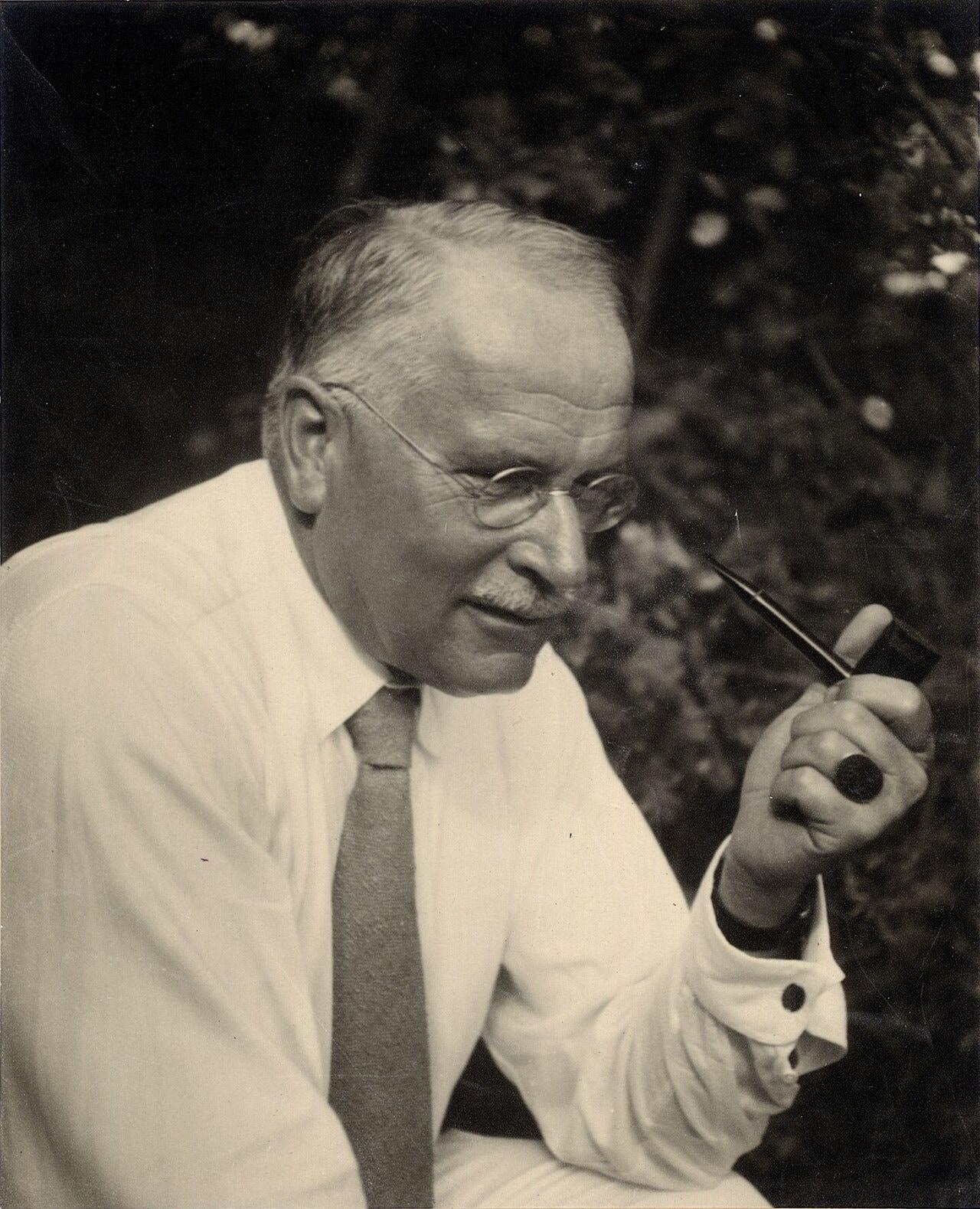
Carl Jung.

Psychiatrist · Psychologist · Author

From the research wards of Burghölzli to a six-year alliance and rupture with Freud, Carl Jung turned psychiatry into a battleground of symbols, types and competing theories. He founded analytical psychology, published more than twenty books, and sent ideas like archetypes, introversion and individuation far beyond the clinic.

OBJECTIVE PERSONALITY CLASSIFICATIONFF-Ti/Ne-CP/S(B)What does this mean?
PERSONALITY SYSTEMObjective Personality
LEAD FUNCTIONTi · Introverted Thinking
SECOND SAVIOR FUNCTIONNe · Extroverted Intuition
MBTI EQUIVALENTINTP
01 / BEHIND THE CLASSIFICATION

The personality behind the fame.

How does a recorded OPS classification like FF-Ti/Ne-CP/S(B) break down? Walk through nine coins and watch the proposed type take shape. These are deductions from the archived code, not independent evidence of typing accuracy.

Scroll below to see Carl Jung take shape.

STARTING POINT512 possible OPS typesEach type combines core functions, an animal order, and sexual modalities.
THE FINISH LINEFF-Ti/Ne-CP/S(B)One recorded classification, decoded from its components.
Carl Jung’s HUMAN NEEDS 01—03
01
DECIDER OR OBSERVER?

Decider over Observer

Deciders have more balanced Observer poles in the middle: Control (Oi) and Chaos (Oe). Organizing what's known and handling what's new tend to feel more manageable. People are the harder territory. Self (Di) and Tribe (De) sit at the extremes, so judgment, rejection, approval, and conflict can trigger the strongest reactions.

Jung’s career is impossible to separate from his alliance and break with Sigmund Freud. Freud promoted him, helped secure his presidency of the International Psychoanalytical Association, and treated him as a possible heir; Jung then pushed back on doctrine hard enough to split the movement. That is classic Decider friction: the pressure point is not mainly unstable circumstances but people, loyalty, status and whose interpretation carries authority. The strength is unusual independence inside a hierarchy. The blind spot is that a conviction can be intellectually fruitful while still wrecking an alliance that once amplified the work.


D
02
SELF OR TRIBE?

Di · Self over De · Tribe

Self (Di) is the stronger deciding pole. They check decisions against their own values or reasons first: what makes sense to me, what feels right to me? The strength is independent conviction; the recurring friction is the Tribe (De)—other people's standards, feedback, and expectations. As the portrait unfolds, notice how Self takes the lead.

Before he became a founder, Jung kept choosing his own line. He abandoned the expected path toward ministry, rejected religious traditionalism, chose psychiatry after reading Krafft-Ebing, and later refused to stay inside Freud’s framework when his own model diverged. Self over Tribe does not mean antisocial; it means the inner standard keeps winning. That gives him a powerful originality, because the theory is not assembled from consensus. The growth cost is obvious in his public life: when your private judgment outranks the room, cooperation becomes harder even when the room contains useful correction.

Di
03
GATHER OR ORGANIZE?

Oe · Gather over Oi · Organize

Gather (Oe) leads with new information, experiences, and possibilities. Its strength is curiosity and adaptability; the recurring friction is narrowing the options and settling into what is already known. Another layer of the personality portrait comes into focus.

Jung’s public record sprawls across medicine, philosophy, spiritualism, anthropology, religion, archaeology and literature. His doctoral thesis examined séances; he studied psychosis at Burghölzli; he later drew links between childhood ritual, myth and cross-cultural symbols. Gather over Organize is all over that range. The strength is breadth: he keeps finding fresh material instead of treating one discipline as the final container. The blind spot is selectivity. A mind that can connect many domains can also keep opening doors faster than it settles one map, which makes followers inspired and critics impatient for firmer boundaries.

Oe
FIRST THREE COINSD + Di + Oe

These establish the preferred human needs in the OPS framework.

Carl Jung’s FUNCTIONS 04—05
04
FEELING OR THINKING?

Thinking · T over Feeling · F

Thinking (T) evaluates decisions through reasons, logic, and what works—not a lack of emotion. Its strength is analytical consistency; Feeling (F) provides balance through values, meaning, and the human consequences of a decision. Combined with Self (Di), this forms the recorded Savior Ti.

Jung’s most public contribution was not just empathy or charisma; it was system-building. Diagnostic Association Studies, his arguments with Freud over libido, and his later architecture of archetypes, complexes and typology all show Thinking at work. Ti wants the framework to make sense from the inside out. That strength helped him build an intellectual world sturdy enough to outlive the original quarrel. The cost is that an internally elegant model can sound self-sealing to outsiders. Precision becomes a blind spot when the theory feels clearer to its author than to the people asked to trust it.

T → Ti
05
SENSING OR INTUITION?

Intuition · N over Sensing · S

Intuition (N) focuses on concepts, patterns, and what information might mean. Sensing (S) balances it through observable facts, physical detail, and direct experience. Combined with Gather (Oe), this gives the recorded Savior Ne.

Jung’s name still travels with big pattern language: archetypes, synchronicity, the collective unconscious, introversion and extraversion. Even in the childhood episode of the carved mannequin and secret ritual, he later saw a symbolic pattern connecting his private act with distant cultural practices he had not yet studied. Intuition gives him that reach toward underlying meaning rather than stopping at the isolated fact. The strength is conceptual fertility; he could turn scattered experiences into portable ideas. The blind spot is concrete restraint. When patterns multiply quickly, skeptics start asking where interpretation ends and where demonstrable evidence actually begins.

N → Ne
THE TWO SAVIOR FUNCTIONSTi / Ne

Opposing functions: Fe and Si.

Carl Jung’s ANIMAL STACK 06—07
06
CONSUME OR BLAST?

Consume over Blast

Consume gathers information for internal processing; Blast organizes and communicates information. The recorded order is Consume → Play → Sleep → Blast. This comparison follows their positions in that stack.

Jung’s career began with voracious intake. He absorbed philosophy as a student, studied medicine, immersed himself in psychiatric research at Burghölzli, corresponded intensely with Freud, and published across decades. Consume over Blast fits the visible rhythm: first take in, compare, explore, refine. That gives his work unusual density; he rarely sounds under-read. The tradeoff is that more material can always justify postponing a cleaner public conclusion. Consume keeps deepening the reservoir. Blast asks for simplification, and simplification can feel like betrayal when the subject is the psyche and every symbol seems to open another layer.

C > B
07
PLAY OR SLEEP?

Play over Sleep

Play emphasizes external real-time engagement; Sleep emphasizes internal processing. The recorded stack places Play earlier.

Jung did not build his reputation in isolation. He worked under Bleuler, published with Franz Riklin, carried on a long correspondence with Freud, lectured at Clark University, and served as president of the International Psychoanalytical Association. With Play earlier than Sleep, ideas get pressure-tested through live exchange before they are fully settled in private. The strength is momentum: collaboration and debate can quickly expand a theory’s reach. The blind spot is that external engagement can outrun inward consolidation. A fast intellectual partnership may spread the work widely while also sharpening the eventual fracture when deeper differences harden.

P > S
Carl Jung’s ANIMAL ORIENTATION 08—09
08
INFO OR ENERGY DOMINANT?

Energy over Info

Energy dominant means Play and Sleep are both in the top three: there is access to expending energy through engagement and conserving it through internal processing. Blast last leaves the information side uneven—Consume may gather far more than gets communicated.

Jung’s recorded stack lands on Energy dominance: the top three include both outward engagement and inward processing, which helps explain a life that could alternate between institutional leadership, collaboration, solitary reflection and prolific writing. The void sits elsewhere. Blast is last, so the issue is not lack of material but turning a massive archive into an organized message other people can reliably carry. He wrote more than twenty books, yet some work remained unpublished until after his death. The strength is depth. The cost is that the explanation can arrive later, looser, or more sprawling than the culture wants.

Energy
09
INTROVERSION OR EXTROVERSION?

Introversion over Extroversion

The last animal, Blast, determines this OPS coin: Play or Blast last means Introversion; Consume or Sleep last means Extroversion. This describes animal orientation, not sociability or shyness.

Jung’s public résumé can look socially huge: hospital research, lectures in America, international correspondence, a professional association, famous disciples and famous enemies. None of that cancels the Introversion coin here. Blast sits fourth, after the earlier animals have already spent time learning, engaging and processing. In OPS terms, the pressure is not shyness versus charm; it is how reluctantly private understanding becomes a compact shared directive. His growth edge is bluntness of delivery. The theory changed modern psychology, but its clearest service to readers often comes when the symbols are translated into plain conclusions someone else can actually use.

I
Sexual Modalities

The four sexual modalities.

OPS uses masculine/feminine sensory and extroverted-deciding distinctions as framework-specific terms, not gender categories. The four modalities are already included in the original 512 types. The recorded modality is FF · Tester.

MM KinestheticMasculine Sensory · Masculine De
MF AudioMasculine Sensory · Feminine De
FF RECORDED MODALITYTesterFeminine Sensory · Feminine De
FM VisualFeminine Sensory · Masculine De
COMPLETE RECORDED OPS TYPE · MODALITY INCLUDEDFF-Ti/Ne-CP/S(B)

Ti leads, Ne supports, and the animal stack is Consume → Play → Sleep → Blast.

THE FINISHED PORTRAIT · ALL NINE COINS REVEALED

Carl Jung's complete function and animal stack

ConsumePlaySleepBlastmTimNefSifFe
FF-Ti/Ne-CP/S(B)DOUBLE ACTIVATED · CONSUMEExplore the Interactive Coin Builder →
THE CARL JUNG LENS

The heir who drew his own map

Jung is often remembered as psychology’s mystic cartographer, but the public image hides a harder-edged career. Before archetypes became cultural shorthand, he was a Burghölzli researcher, a prolific correspondent, and Freud’s chosen successor who refused to keep his ideas inside another man’s doctrine. The mythic aura came later; the engine was public argument, study, and a split that changed modern psychology.

His Ti/Ne pairing explains both the reach and the irritation of his work. Ti keeps building an internally coherent system; Ne keeps opening symbolic territory, from typology to myth, religion, and ritual. That combination made analytical psychology durable and original. The limit is closure: the same mind that makes a framework can keep expanding it until readers get a universe of meanings instead of one clean conclusion.

As a Decider and Double Observer, Jung’s strain lands first in the human world of authority, loyalty, and competing interpretations, not in a shortage of information. The Freud rupture is the clearest public example. He could range widely across ideas, but consensus stayed costly. Neglected Fe, opposite lead Ti, is the missing work of shaping insight into values and shared language a group can readily receive.

Consume → Play → Sleep → Blast gave Jung a vast reservoir before the final demand of plain delivery. Last Blast does not erase the books, lectures, or influence; it names the imbalance in turning a rich symbolic world into a compact, teachable message. Keep the depth, but force one thesis at a time: state the conclusion first, then open the next chamber.

Want to understand the Savior and Demon states behind these nine coins? Explore the complete explanation, visual examples, and typing principles on our Methodology page →

02 / KEEP EXPLORING

Different faces. Familiar patterns.

Explore other celebrities with related recorded OPS classifications. Related functions are not necessarily exact type matches.

Discover Type Twins
YOUR TURN

Curious about your own type?

Discover how your own personality might be classified through Objective Personality.

Get objectively typed
Carl Jung's Personality Type & OPS Profile | The Personality Atlas