The Personality Atlas
THE CELEBRITY PERSONALITY ARCHIVE / LITERATURE

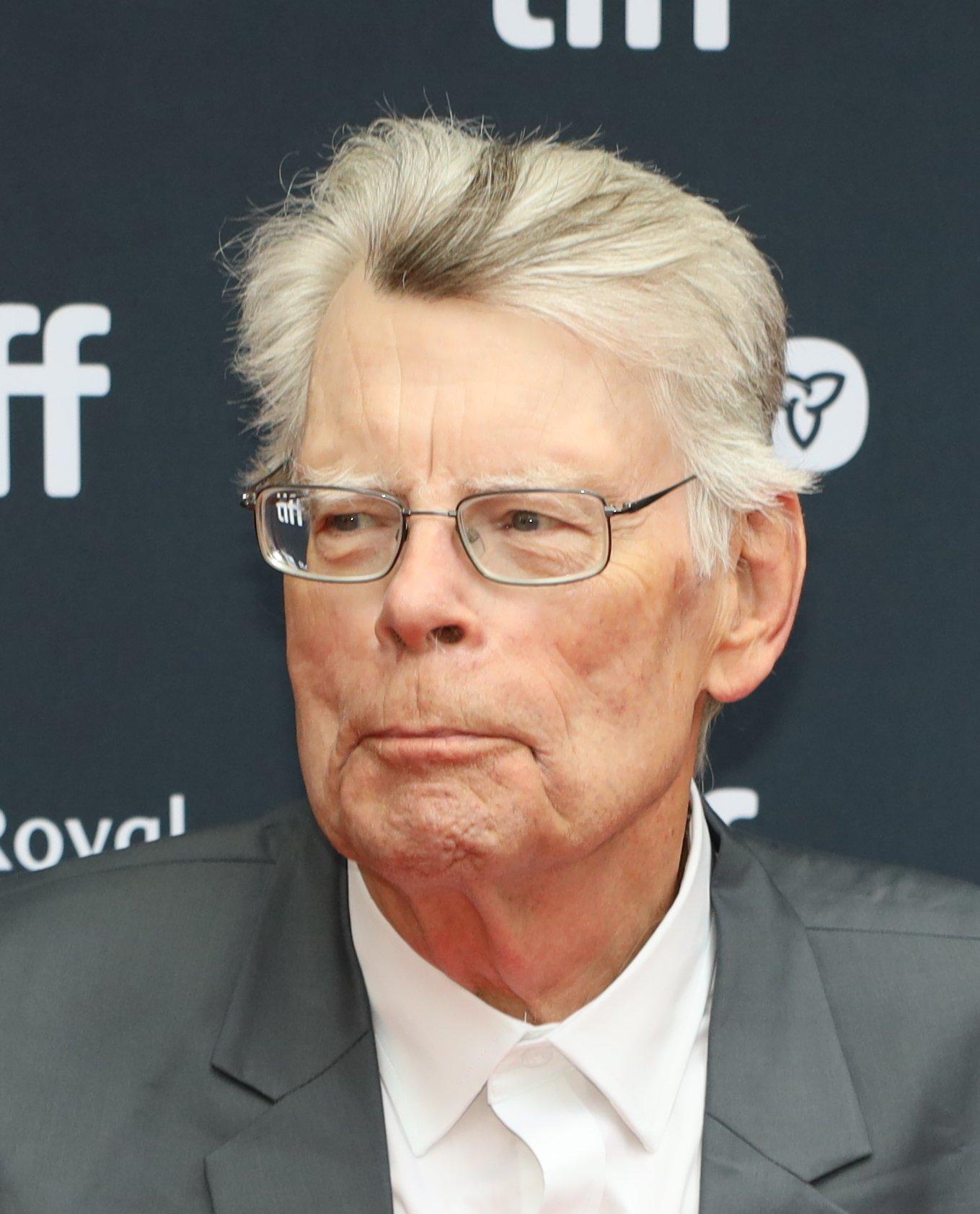
Stephen King.

Novelist · Story Writer · Essayist

Stephen King turned a Maine schoolteacher’s discarded pages into Carrie and then into one of the largest writing careers in modern American culture. The public image is the "King of Horror," but the engine underneath is more specific: an image-driven craftsman, voracious reader, and relentless working author who keeps testing how many forms one imagination can hold.

OBJECTIVE PERSONALITY CLASSIFICATIONFF-Ti/Ne-CP/S(B)What does this mean?
PERSONALITY SYSTEMObjective Personality
LEAD FUNCTIONTi · Introverted Thinking
SECOND SAVIOR FUNCTIONNe · Extroverted Intuition
MBTI EQUIVALENTINTP
01 / BEHIND THE CLASSIFICATION

The personality behind the fame.

How does a recorded OPS classification like FF-Ti/Ne-CP/S(B) break down? Walk through nine coins and watch the proposed type take shape. These are deductions from the archived code, not independent evidence of typing accuracy.

Scroll below to see Stephen King take shape.

STARTING POINT512 possible OPS typesEach type combines core functions, an animal order, and sexual modalities.
THE FINISH LINEFF-Ti/Ne-CP/S(B)One recorded classification, decoded from its components.
Stephen King’s HUMAN NEEDS 01—03
01
DECIDER OR OBSERVER?

Decider over Observer

Deciders have more balanced Observer poles in the middle: Control (Oi) and Chaos (Oe). Organizing what's known and handling what's new tend to feel more manageable. People are the harder territory. Self (Di) and Tribe (De) sit at the extremes, so judgment, rejection, approval, and conflict can trigger the strongest reactions.

King’s public life keeps circling other people’s judgments. Critics argued for years about whether a blockbuster horror writer counted as serious literature; some fans pushed back when he veered into books like The Eyes of the Dragon; publishers once assumed readers would only accept so much of him in a year. That is Decider pressure: significance, legitimacy, and whose verdict gets to stick. The strength is refusing to stop producing because the room is divided. The blind spot is letting the social courtroom become the main event.

D
02
SELF OR TRIBE?

Di · Self over De · Tribe

Self (Di) is the stronger deciding pole. They check decisions against their own values or reasons first: what makes sense to me, what feels right to me? The strength is independent conviction; the recurring friction is the Tribe (De)—other people's standards, feedback, and expectations. As the portrait unfolds, notice how Self takes the lead.

The Richard Bachman experiment is a sharp Self-over-Tribe example. King published under a pseudonym partly because the business believed the public would only accept one book a year, yet he still wanted the work out there. He later joked that you can change your name but not really disguise your style. That is an internal standard refusing to wait for outside permission. The strength is ownership of his own bar for what deserves publication. The cost is that private certainty does not automatically answer markets, collaborators, or readers who experience the choice differently.

Di
03
GATHER OR ORGANIZE?

Oe · Gather over Oi · Organize

Gather (Oe) leads with new information, experiences, and possibilities. Its strength is curiosity and adaptability; the recurring friction is narrowing the options and settling into what is already known. Another layer of the personality portrait comes into focus.

King’s career keeps expanding sideways: horror, suspense, crime, science fiction, fantasy, mystery, memoir, nonfiction, e-books, and the long Dark Tower saga. Different Seasons alone was a major departure from the genre that first made him famous. Gather-first fits that restless appetite for another possibility, another format, another angle on fear and memory. The strength is range and reinvention. The blind spot is selectivity. A mind that can turn almost anything into a premise still has to decide which direction deserves years of labor, not just an afternoon of fascination.

Oe
FIRST THREE COINSD + Di + Oe

These establish the preferred human needs in the OPS framework.

Stephen King’s FUNCTIONS 04—05
04
FEELING OR THINKING?

Thinking · T over Feeling · F

Thinking (T) evaluates decisions through reasons, logic, and what works—not a lack of emotion. Its strength is analytical consistency; Feeling (F) provides balance through values, meaning, and the human consequences of a decision. Combined with Self (Di), this forms the recorded Savior Ti.

On Writing and Danse Macabre show King using Ti rather than hiding behind mystique. He does not treat writing as sacred fog; he turns it into principles, mechanisms, and craft choices that can be examined and used. Even his account of Carrie begins with two ideas clicking into a workable structure. That is the strength of Thinking here: build a clear internal model and keep refining it. The blind spot is that a logically satisfying explanation does not automatically settle every human reaction. Craft can be exact while reception stays emotional and contested.

T → Ti
05
SENSING OR INTUITION?

Intuition · N over Sensing · S

Intuition (N) focuses on concepts, patterns, and what information might mean. Sensing (S) balances it through observable facts, physical detail, and direct experience. Combined with Gather (Oe), this gives the recorded Savior Ne.

King’s Intuition is easiest to see in how quickly separate images become full narrative engines. Carrie starts when adolescent cruelty and telekinesis collide. ’Salem’s Lot becomes "Peyton Place meets Dracula." The Shining grows out of a hotel visit. It becomes his own attempt to bring in every monster at once. Ne makes worlds from collisions rather than staying inside one lane. The strength is inexhaustible conceptual fertility. The cost is that a powerful premise can arrive faster than its limits, tempting a writer to open one more door before finishing what the last one already revealed.

N → Ne
THE TWO SAVIOR FUNCTIONSTi / Ne

Opposing functions: Fe and Si.

Stephen King’s ANIMAL STACK 06—07
06
CONSUME OR BLAST?

Consume over Blast

Consume gathers information for internal processing; Blast organizes and communicates information. The recorded order is Consume → Play → Sleep → Blast. This comparison follows their positions in that stack.

Before the brand name, there was intake. King described himself as a voracious reader who went from Nancy Drew to Psycho, copied comic-book panels as a child, asked a bookmobile driver for stories "about how kids really are," and kept selling stories while teaching. That history leans hard toward Consume over Blast. The strength is obvious: a huge reservoir of images, tones, and narrative DNA to draw from. The blind spot is subtler. More material can always be gathered, which makes it easy to postpone the cleaner job of stating exactly what the finished work is trying to say.

C > B
07
PLAY OR SLEEP?

Play over Sleep

Play emphasizes external real-time engagement; Sleep emphasizes internal processing. The recorded stack places Play earlier.

With Consume already setting the pace, Play comes before Sleep in the stack. You can see it in the outward movement of his career: newspaper work, teaching at Hampden Academy and the University of Maine, serial publication, online installments, and collaborations with Peter Straub and later with his sons. The strength is momentum through interaction; ideas do not just ferment, they get thrown into circulation. The blind spot is that exchange can keep the machine humming while slower private consolidation lags behind, leaving less room to sit still and simplify what all that activity is building toward.

P > S
Stephen King’s ANIMAL ORIENTATION 08—09
08
INFO OR ENERGY DOMINANT?

Energy over Info

Energy dominant means Play and Sleep are both in the top three: there is access to expending energy through engagement and conserving it through internal processing. Blast last leaves the information side uneven—Consume may gather far more than gets communicated.

King’s recorded stack lands on Energy over Info, which fits a career powered not just by learning but by the live cycle of taking in material, engaging with projects, and retreating to process before going again. That rhythm helps explain how six decades of work can stay active without becoming one note. The missing balance is Blast last. After hundreds of stories, novels, essays, and experiments, the bottleneck is not raw material. It is packaging the material into the clearest outward directive, so other people do not have to infer the thesis from sheer volume alone.

Energy
09
INTROVERSION OR EXTROVERSION?

Introversion over Extroversion

The last animal, Blast, determines this OPS coin: Play or Blast last means Introversion; Consume or Sleep last means Extroversion. This describes animal orientation, not sociability or shyness.

Blast sits fourth, which makes this an OPS Introversion result even though King has taught, collaborated, toured, and spoken publicly for years. The point is not sociability; it is the relative difficulty of locking private understanding into a final shared message. His nonfiction stands out partly because much of his strongest communication happens through stories rather than manifesto. That is the strength: fiction carries the argument indirectly and vividly. The growth edge is deciding when the point deserves a blunt public form—one clear statement, not another premise—before the next fascinating idea arrives.

I
Sexual Modalities

The four sexual modalities.

OPS uses masculine/feminine sensory and extroverted-deciding distinctions as framework-specific terms, not gender categories. The four modalities are already included in the original 512 types. The recorded modality is FF · Tester.

MM KinestheticMasculine Sensory · Masculine De
MF AudioMasculine Sensory · Feminine De
FF RECORDED MODALITYTesterFeminine Sensory · Feminine De
FM VisualFeminine Sensory · Masculine De
COMPLETE RECORDED OPS TYPE · MODALITY INCLUDEDFF-Ti/Ne-CP/S(B)

Ti leads, Ne supports, and the animal stack is Consume → Play → Sleep → Blast.

THE FINISHED PORTRAIT · ALL NINE COINS REVEALED

Stephen King's complete function and animal stack

ConsumePlaySleepBlastmTimNefSifFe
FF-Ti/Ne-CP/S(B)DOUBLE ACTIVATED · CONSUMEExplore the Interactive Coin Builder →
THE STEPHEN KING LENS

The furnace behind the folklore

Stephen King’s public image is huge enough to feel like a brand category of its own, but Carrie started with pages he threw away until Tabitha pulled them from the trash. Behind the horror crown is a Maine schoolteacher, comic-book mimic, and compulsive reader who kept turning scraps into work.

His Ti/Ne pairing helps explain the engine. Ti wants the mechanism to cohere; Ne keeps finding another collision—telekinesis and cruelty, Dracula and small-town Maine, a hotel and a winter. That strength makes the catalog feel inexhaustible. Its limit is that another fertile concept can arrive before the last one has been distilled for others.

As a Decider and Double Observer, King’s pressure lands less in a shortage of ideas than in the social theater around them: legitimacy, fan expectation, and whose judgment counts. The imbalance leans toward private precision and expanding options. Neglected Fe, opposite his lead Ti, is the quieter task of shaping the message so it lands as shared human meaning.

Consume → Play → Sleep → Blast puts Blast last, creating an introverted information bottleneck even in a highly public career. He can gather, test, and incubate material almost endlessly; the strain is stating the takeaway cleanly. A useful balance would be more deliberate summary—sharp introductions, brief craft lectures, concise prefaces—before opening the next haunted door.

Want to understand the Savior and Demon states behind these nine coins? Explore the complete explanation, visual examples, and typing principles on our Methodology page →

02 / KEEP EXPLORING

Different faces. Familiar patterns.

Explore other celebrities with related recorded OPS classifications. Related functions are not necessarily exact type matches.

Discover Type Twins
YOUR TURN

Curious about your own type?

Discover how your own personality might be classified through Objective Personality.

Get objectively typed
Stephen King's Personality Type & OPS Profile | The Personality Atlas