The Personality Atlas
THE CELEBRITY PERSONALITY ARCHIVE / SCIENCE

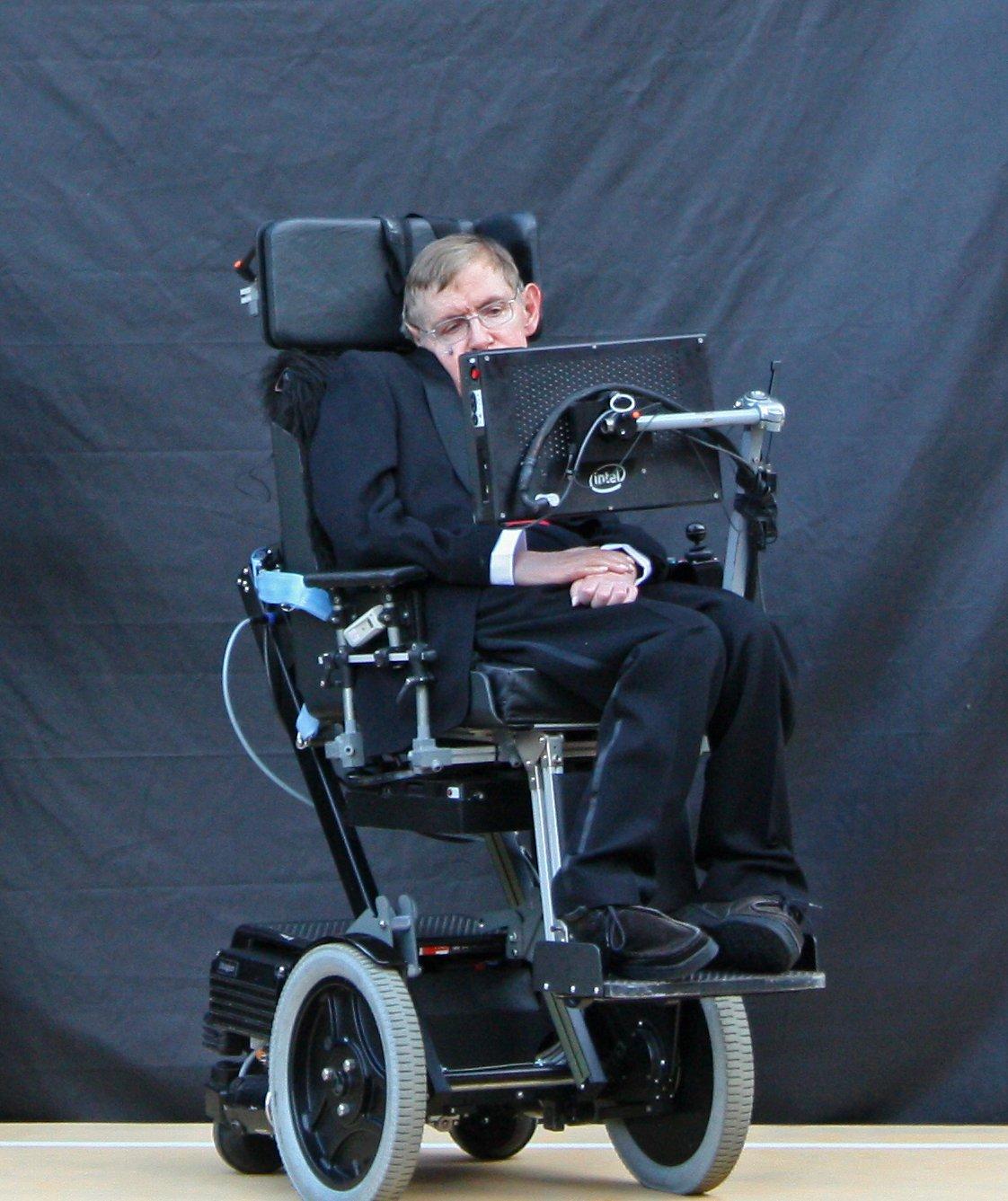
Stephen Hawking.

Theoretical Astrophysicist · Cosmologist · Author

Stephen Hawking made theoretical physics look like a public event: Lucasian Professor at Cambridge, architect of Hawking radiation, and author of A Brief History of Time, he turned black holes, wagers, and universe-sized questions into mainstream culture without softening the intellectual edge.

OBJECTIVE PERSONALITY CLASSIFICATIONFF-Ti/Ne-CP/S(B)What does this mean?
PERSONALITY SYSTEMObjective Personality
LEAD FUNCTIONTi · Introverted Thinking
SECOND SAVIOR FUNCTIONNe · Extroverted Intuition
MBTI EQUIVALENTINTP
01 / BEHIND THE CLASSIFICATION

The personality behind the fame.

How does a recorded OPS classification like FF-Ti/Ne-CP/S(B) break down? Walk through nine coins and watch the proposed type take shape. These are deductions from the archived code, not independent evidence of typing accuracy.

Scroll below to see Stephen Hawking take shape.

STARTING POINT512 possible OPS typesEach type combines core functions, an animal order, and sexual modalities.
THE FINISH LINEFF-Ti/Ne-CP/S(B)One recorded classification, decoded from its components.
Stephen Hawking’s HUMAN NEEDS 01—03
01
DECIDER OR OBSERVER?

Decider over Observer

Deciders have more balanced Observer poles in the middle: Control (Oi) and Chaos (Oe). Organizing what's known and handling what's new tend to feel more manageable. People are the harder territory. Self (Di) and Tribe (De) sit at the extremes, so judgment, rejection, approval, and conflict can trigger the strongest reactions.

Stephen Hawking’s most visible pressure points were rarely about lacking raw data; they were about staking a position in front of other minds. He publicly challenged Fred Hoyle’s work as a young researcher, then spent years in high-profile disputes over black holes and information. That is Decider friction: significance, judgment and who gets to be right. The strength is nerve under social pressure. The blind spot is that an elegant argument can make relationship fallout look secondary, even when the human stakes in a field or collaboration are very real.

D
02
SELF OR TRIBE?

Di · Self over De · Tribe

Self (Di) is the stronger deciding pole. They check decisions against their own values or reasons first: what makes sense to me, what feels right to me? The strength is independent conviction; the recurring friction is the Tribe (De)—other people's standards, feedback, and expectations. As the portrait unfolds, notice how Self takes the lead.

His Oxford viva answer—“If you award me a First, I will go to Cambridge... so I expect you will give me a First”—was pure internal standard delivered without much cushioning. The same independence showed later in bets with Kip Thorne and his willingness to defend unpopular conclusions. Self over Tribe does not mean antisocial; it means the final bar sits inside. That can preserve originality when consensus is sleepy. The cost is obvious: other people may experience conviction as dismissal, and useful outside feedback can arrive later than it should.

Di
03
GATHER OR ORGANIZE?

Oe · Gather over Oi · Organize

Gather (Oe) leads with new information, experiences, and possibilities. Its strength is curiosity and adaptability; the recurring friction is narrowing the options and settling into what is already known. Another layer of the personality portrait comes into focus.

Hawking’s career kept opening outward: singularity theorems, black hole mechanics, quantum gravity, the no-boundary proposal, the information paradox, even a cheeky time-traveller party. Gather-first fits that appetite for fresh angles and unsettled questions better than a life built around one protected system. The advantage is range. He could move toward the next live problem before the old one was fully domesticated. The blind spot is selectivity. A brilliant line of inquiry can multiply possibilities faster than it produces a stable framework other people can reliably build on.

Oe
FIRST THREE COINSD + Di + Oe

These establish the preferred human needs in the OPS framework.

Stephen Hawking’s FUNCTIONS 04—05
04
FEELING OR THINKING?

Thinking · T over Feeling · F

Thinking (T) evaluates decisions through reasons, logic, and what works—not a lack of emotion. Its strength is analytical consistency; Feeling (F) provides balance through values, meaning, and the human consequences of a decision. Combined with Self (Di), this forms the recorded Savior Ti.

When Hawking’s calculations implied that black holes should emit radiation, he followed the logic even though it appeared to clash with his own earlier commitments and drew outright ridicule from some physicists. That is Thinking in a crisp Ti register: the model has to cohere, even if prestige objects. Its strength is intellectual self-correction. He was willing to let an idea live or die by the internal mechanics. The growth cost is interpersonal and practical. A theory can be brilliantly reasoned and still need patient translation, evidence, and tolerance for people who are not convinced yet.

T → Ti
05
SENSING OR INTUITION?

Intuition · N over Sensing · S

Intuition (N) focuses on concepts, patterns, and what information might mean. Sensing (S) balances it through observable facts, physical detail, and direct experience. Combined with Gather (Oe), this gives the recorded Savior Ne.

Hawking’s public legacy is full of conceptual leaps: a universe with no boundary, black holes evaporating, information apparently lost, time-travellers invited to a party announced too late to attend. Intuition here is not vagueness; it is the ability to see an unseen possibility and push it until everyone else has to respond. The strength is opening territory that did not look available before. The counterweight is reality’s slower pace. An idea can be breathtakingly generative while remaining difficult to test, explain cleanly, or anchor in settled physical evidence.

N → Ne
THE TWO SAVIOR FUNCTIONSTi / Ne

Opposing functions: Fe and Si.

Stephen Hawking’s ANIMAL STACK 06—07
06
CONSUME OR BLAST?

Consume over Blast

Consume gathers information for internal processing; Blast organizes and communicates information. The recorded order is Consume → Play → Sleep → Blast. This comparison follows their positions in that stack.

Consume versus Blast shows up in how Hawking built authority: not by beginning with a tidy public doctrine, but by absorbing enormous amounts of theory, mathematics, and competing claims until a deeper model emerged. His work with Penrose, his engagement with Soviet research, and the long gestation behind A Brief History of Time all point to intake first. The strength is substance. He usually had more behind the statement than the statement itself revealed. The blind spot is classic: one more round of learning can feel more responsible than saying plainly what the conclusion now is.

C > B
07
PLAY OR SLEEP?

Play over Sleep

Play emphasizes external real-time engagement; Sleep emphasizes internal processing. The recorded stack places Play earlier.

Hawking did not keep his ideas sealed in private notebooks. He sharpened them through collaboration with Roger Penrose, scientific wagers with Kip Thorne and John Preskill, and public exchanges that made cosmology feel unusually alive. That tilt toward Play over Sleep adds movement to the earlier Consume: deep intake did not stay inert. The strength is real-time testing with other minds. The cost is that constant engagement can outrun quieter consolidation. A theory can become sharper in debate while the slower work of settling, simplifying, or stepping back gets postponed.

P > S
Stephen Hawking’s ANIMAL ORIENTATION 08—09
08
INFO OR ENERGY DOMINANT?

Energy over Info

Energy dominant means Play and Sleep are both in the top three: there is access to expending energy through engagement and conserving it through internal processing. Blast last leaves the information side uneven—Consume may gather far more than gets communicated.

Hawking’s stack lands on Energy, which fits the strange combination of intense private processing and active exchange across collaborations, lectures, interviews, and yearly Caltech visits. He could study, spar, and then return to inward integration without needing life to become simple first. That balance helped turn difficult physics into a sustained public presence. The missing piece is Blast last. Even with a bestseller and global fame, the pressure point was still organized transmission: converting a vast internal model into a clean, repeatable message that students, colleagues, or readers could absorb without filling in so many gaps themselves.

Energy
09
INTROVERSION OR EXTROVERSION?

Introversion over Extroversion

The last animal, Blast, determines this OPS coin: Play or Blast last means Introversion; Consume or Sleep last means Extroversion. This describes animal orientation, not sociability or shyness.

Hawking’s OPS Introversion result should not be confused with shyness, passivity, or a lack of public impact. He gave lectures, did television, wrote a monster bestseller, and became one of the most recognizable scientists on earth. The coin comes from Blast being fourth after Consume, Play, and Sleep: broadcasting settled conclusions is later than learning, engaging, and processing. The strength is depth before declaration. The blind spot is that audiences can receive the icon before the explanation. Growth means making the takeaway explicit sooner, not becoming a different, chattier person.

I
Sexual Modalities

The four sexual modalities.

OPS uses masculine/feminine sensory and extroverted-deciding distinctions as framework-specific terms, not gender categories. The four modalities are already included in the original 512 types. The recorded modality is FF · Tester.

MM KinestheticMasculine Sensory · Masculine De
MF AudioMasculine Sensory · Feminine De
FF RECORDED MODALITYTesterFeminine Sensory · Feminine De
FM VisualFeminine Sensory · Masculine De
COMPLETE RECORDED OPS TYPE · MODALITY INCLUDEDFF-Ti/Ne-CP/S(B)

Ti leads, Ne supports, and the animal stack is Consume → Play → Sleep → Blast.

THE FINISHED PORTRAIT · ALL NINE COINS REVEALED

Stephen Hawking's complete function and animal stack

ConsumePlaySleepBlastmTimNefSifFe
FF-Ti/Ne-CP/S(B)DOUBLE ACTIVATED · CONSUMEExplore the Interactive Coin Builder →
THE STEPHEN HAWKING LENS

The universe was never the whole fight.

As the voice from a speech synthesizer explaining black holes to mass audiences, Hawking could look like pure cosmic authority. But the public image sat on a very human pattern: a young researcher bold enough to challenge senior figures, a Cambridge professor turning abstruse cosmology into a bestseller, and a celebrity scholar still drawn to jokes, wagers, and argument.

His Ti/Ne pairing gave him a rare combination of internal rigor and conceptual reach. It helped him follow a line of reasoning toward Hawking radiation and the no-boundary proposal before the world was ready to agree. The limit is equally visible: elegant models can race ahead of ordinary communication, proof standards, or the patience required to bring everyone else along.

As a Decider and Double Observer, Hawking had more natural range with information than with the human question of significance. He could roam across theories and possibilities, yet still hit the harder problem of judgment: whose conclusion stands, how disagreement lands, and what other people need from the exchange. Neglected Fe, opposite his lead Ti, is the missing relational calibration around shared values and audience impact.

Consume → Play → Sleep → Blast describes a mind built to take in, test, and internally refine before cleanly broadcasting. With Blast last, the imbalance is not lack of brilliance but delayed packaging: the theory can be richer than the takeaway. The balancing move is brutally practical—state the conclusion earlier, in plainer language, and let collaborators challenge the frame while the ideas are still alive.

Want to understand the Savior and Demon states behind these nine coins? Explore the complete explanation, visual examples, and typing principles on our Methodology page →

02 / KEEP EXPLORING

Different faces. Familiar patterns.

Explore other celebrities with related recorded OPS classifications. Related functions are not necessarily exact type matches.

Discover Type Twins
YOUR TURN

Curious about your own type?

Discover how your own personality might be classified through Objective Personality.

Get objectively typed
Stephen Hawking's Personality Type & OPS Profile | The Personality Atlas