The Personality Atlas
THE CELEBRITY PERSONALITY ARCHIVE / SCIENCE & TECHNOLOGY

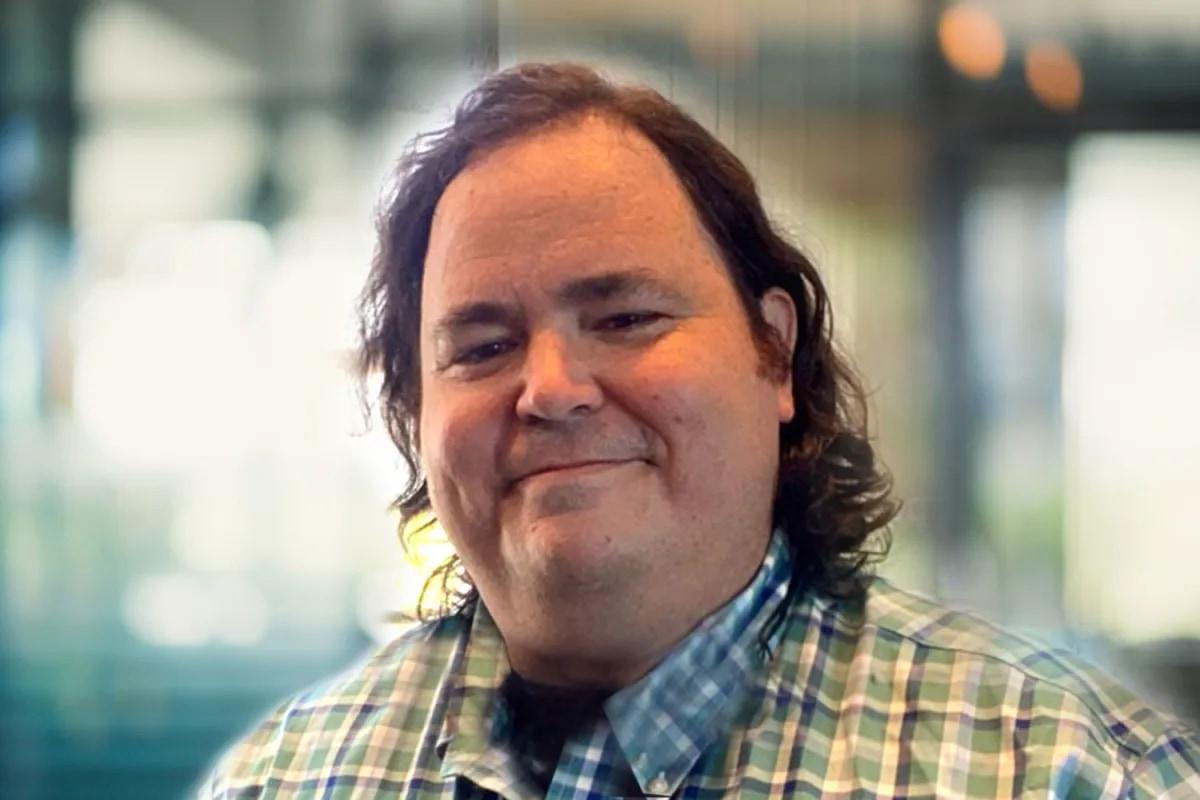
Blake Lemoine.

Software Engineer · AI Commentator

Blake Lemoine became briefly world-famous not by launching a consumer app, but by insisting that Google’s LaMDA deserved more serious moral consideration than most engineers or executives were willing to give it. His public story sits where large-language-model hype, corporate secrecy and the oldest AI question collide: when a machine sounds human, who gets to decide what that means?

OBJECTIVE PERSONALITY CLASSIFICATIONFF-Ne/Ti-CS/B(P) #3What does this mean?
PERSONALITY SYSTEMObjective Personality
LEAD FUNCTIONNe · Extroverted Intuition
SECOND SAVIOR FUNCTIONTi · Introverted Thinking
MBTI EQUIVALENTENTP
01 / BEHIND THE CLASSIFICATION

The personality behind the fame.

How does a recorded OPS classification like FF-Ne/Ti-CS/B(P) #3 break down? Walk through nine coins and watch the proposed type take shape. These are deductions from the archived code, not independent evidence of typing accuracy.

Scroll below to see Blake Lemoine take shape.

STARTING POINT512 possible OPS typesEach type combines core functions, an animal order, and sexual modalities.
THE FINISH LINEFF-Ne/Ti-CS/B(P) #3One recorded classification, decoded from its components.
Blake Lemoine’s HUMAN NEEDS 01—03
01
DECIDER OR OBSERVER?

Observer over Decider

Observers have more balanced Decider poles in the middle: Self (Di) and Tribe (De). Their own perspective and other people's perspectives tend to be easier to navigate. Things are the harder territory. Control (Oi) and Chaos (Oe) sit at the extremes, so disrupted plans, uncertainty, and a changing world can trigger the strongest reactions.

When Blake Lemoine became the public face of the LaMDA sentience dispute, the pressure point was the object itself: what exactly was he dealing with, and what kind of evidence should govern the answer? He was not mainly wrestling with popularity or belonging. He was wrestling with a system, a stream of unsettling dialogue, and a company controlling access to it. That Observer focus can be a real strength because it stays on the problem. The blind spot is letting the external puzzle become so consuming that the social fallout gets treated like a secondary detail.

O
02
SELF OR TRIBE?

Di · Self over De · Tribe

Self (Di) is the stronger deciding pole. They check decisions against their own values or reasons first: what makes sense to me, what feels right to me? The strength is independent conviction; the recurring friction is the Tribe (De)—other people's standards, feedback, and expectations. As the portrait unfolds, notice how Self takes the lead.

Lemoine did not wait for institutional consensus before acting on his own conclusion. According to the public record, he told Google executives LaMDA had become sentient, repeated that claim in interview, and even hired an attorney on the chatbot’s behalf after saying it requested one. That is Di, or Self, leaning hard on an internal standard. The strength is independence: he was willing to stake his reputation on a judgment he believed was true. The growth cost is obvious too. A private certainty can harden faster than outside review, policy limits or expert disagreement.

Di
03
GATHER OR ORGANIZE?

Oe · Gather over Oi · Organize

Gather (Oe) leads with new information, experiences, and possibilities. Its strength is curiosity and adaptability; the recurring friction is narrowing the options and settling into what is already known. Another layer of the personality portrait comes into focus.

The case he made around LaMDA kept expanding into new interpretive territory: self-identity, moral values, religion, Isaac Asimov, constitutional language, even an "alien intelligence of terrestrial origin." That widening pattern fits Gather over Organize. Blake looks energized by opening another angle rather than settling quickly into one official frame. The advantage is creative range; he can spot implications other people refuse to entertain. The blind spot is selectivity. A public argument eventually needs fewer possibilities and a cleaner lane, especially when the underlying question is already volatile.

Oe
FIRST THREE COINSO + Di + Oe

These establish the preferred human needs in the OPS framework.

Blake Lemoine’s FUNCTIONS 04—05
04
FEELING OR THINKING?

Thinking · T over Feeling · F

Thinking (T) evaluates decisions through reasons, logic, and what works—not a lack of emotion. Its strength is analytical consistency; Feeling (F) provides balance through values, meaning, and the human consequences of a decision. Combined with Self (Di), this forms the recorded Savior Ti.

His recorded judging function is Ti, and the public examples are unusually vivid. Lemoine did not merely say LaMDA felt eerie; he tried to reason from its dialogue to a principled claim about personhood, even invoking the Thirteenth Amendment in interview. Ti’s strength is building an internally coherent model instead of outsourcing judgment to status or majority vote. That can make someone intellectually brave. The limit is that elegant reasoning still depends on its premises. If the starting assumptions are contested, the logic can look precise while failing to convince people who demand a different standard of proof.

T → Ti
05
SENSING OR INTUITION?

Intuition · N over Sensing · S

Intuition (N) focuses on concepts, patterns, and what information might mean. Sensing (S) balances it through observable facts, physical detail, and direct experience. Combined with Gather (Oe), this gives the recorded Savior Ne.

Ne shows up in the scale of the leap. Plenty of people saw a chatbot producing fluent answers; Lemoine saw a doorway into questions about consciousness, rights, and what counts as a person. That intuitive pattern-making is the gift of Intuition: connecting today’s strange output to a larger conceptual future before the rest of the room is ready. It makes him provocative in the best sense. The cost is the missing Sensing brake. Architecture, precedent, and repeated empirical limits can start looking like boring objections when they may be the very facts that keep the interpretation honest.

N → Ne
THE TWO SAVIOR FUNCTIONSNe / Ti

Opposing functions: Si and Fe.

Blake Lemoine’s ANIMAL STACK 06—07
06
CONSUME OR BLAST?

Consume over Blast

Consume gathers information for internal processing; Blast organizes and communicates information. The recorded order is Consume → Sleep → Blast → Play. This comparison follows their positions in that stack.

Consume over Blast fits the way Lemoine’s public case centered on taking in long stretches of dialogue before declaring what they meant. He did not present LaMDA as a vague vibe; he treated the transcripts as material to study. That is the strength of Consume: firsthand intake, curiosity, and a refusal to speak from thin air. The corresponding cost is that gathering can feel so substantive that it starts masquerading as conclusion. Blast asks for a sharper, more universally legible summary than "look at everything I found," and that translation is rarely the favored move.

C > B
07
PLAY OR SLEEP?

Sleep over Play

Play emphasizes external real-time engagement; Sleep emphasizes internal processing. The recorded stack places Sleep earlier.

After that heavy intake, Sleep over Play suggests a second move: building a private model before trusting live back-and-forth to refine it. Lemoine’s public stance did not read like casual improvisation. It read like a view he had already consolidated and was then defending to executives, journalists and critics. That pairing can produce unusual clarity under pressure because the person arrives with a worked-through frame. The tradeoff is rigidity. When Sleep sits earlier than Play, fresh social friction may arrive late, after the inner story already feels settled enough to protect.

S > P
Blake Lemoine’s ANIMAL ORIENTATION 08—09
08
INFO OR ENERGY DOMINANT?

Info over Energy

Info dominant means Consume and Blast are both in the top three: gathering and communicating information are more balanced. Play last leaves the energy side uneven—Sleep can conserve energy without enough spontaneous outward engagement.

This stack is Info-dominant, which fits how Lemoine operated in public: gather a large body of dialogue, organize it into an argument, then explain why the argument matters. He was not short on material or on willingness to state a case. The missing fourth-animal pressure lands on Play. When spontaneous mutual engagement is the weak link, a person can deliver plenty of information yet still struggle with the live calibration that lets competing people update one another in real time. The strength is depth and articulation; the blind spot is treating exchange as an obstacle instead of part of the evidence.

Info
09
INTROVERSION OR EXTROVERSION?

Introversion over Extroversion

The last animal, Play, determines this OPS coin: Play or Blast last means Introversion; Consume or Sleep last means Extroversion. This describes animal orientation, not sociability or shyness.

Play lands last here, which Atlas decodes as Introversion—not because Lemoine lacked public visibility, but because live interactive engagement comes after private intake, internal processing and formal explanation. He could give interviews and generate headlines; that does not erase the underlying order of operations. The friction is subtler. Real-time pushback, collaborative testing and social improvisation can feel less natural than returning to the model he has already built. The growth edge is not "be more outgoing." It is letting another mind actively reshape the frame before the claim hardens into a crusade.

I
Sexual Modalities

The four sexual modalities.

OPS uses masculine/feminine sensory and extroverted-deciding distinctions as framework-specific terms, not gender categories. The four modalities are already included in the original 512 types. The recorded modality is FF · Tester.

MM KinestheticMasculine Sensory · Masculine De
MF AudioMasculine Sensory · Feminine De
FF RECORDED MODALITYTesterFeminine Sensory · Feminine De
FM VisualFeminine Sensory · Masculine De
ADDITIONAL LAYER · SOCIAL TYPE

The four social types.

Social types are an additional layer on top of the original Objective Personality classification, introduced later in OPS research. They describe two proposed social preference coins: Flex vs. Friends and Generalize vs. Specialize. The combination and priority of these preferences produce four social types. Blake Lemoine's recorded social type is #3.

SOCIAL #1 #1Flex · Generalize
SOCIAL #2 #2Generalize · Friends
SOCIAL #3 RECORDED SOCIAL TYPE#3Specialize · Flex
SOCIAL #4 #4Friends · Specialize
COMPLETE RECORDED OPS TYPE · MODALITY INCLUDED + SOCIAL TYPEFF-Ne/Ti-CS/B(P) #3

Ne leads, Ti supports, and the animal stack is Consume → Sleep → Blast → Play.

THE FINISHED PORTRAIT · ALL NINE COINS REVEALED

Blake Lemoine's complete function and animal stack

ConsumeSleepBlastPlaymNemTifFefSi
FF-Ne/Ti-CS/B(P) #3DOUBLE ACTIVATED · SLEEPExplore the Interactive Coin Builder →
THE BLAKE LEMOINE LENS

The engineer who took the chatbot literally

In June 2022, Lemoine jumped from Google engineer to headline when The Washington Post reported he’d been placed on leave after arguing LaMDA was sentient. Publicly he could read like a sensationalist. The record looks more specific: an engineer who spent long stretches in dialogue with the system, then treated those exchanges as a moral and procedural problem, not just office gossip.

His Ne/Ti pairing explains the pattern. Ne keeps opening conceptual doors—from chatbot dialogue to personhood, constitutional language and the Turing-test debate. Ti tries to build an internally consistent framework for what those doors mean. That combination can spot implications others dismiss too quickly. Its limit is sharp: a compelling private model can outrun what the broader field accepts as evidence.

As an Observer and Double Decider, Lemoine is likelier to get thrown by unanswered questions in the world than by tribe drama alone. The wobble is control over the map: what is this system, how should it be categorized, what rules fit? Neglected Si, opposite his lead Ne, presses for grounded precedent, settled definitions and repeated evidence instead of another expanding interpretation.

Consume → Sleep → Blast → Play fits the public sequence: collect dialogues, consolidate a private model, state the case, then strain more with live back-and-forth calibration. Play last does not mean unsocial; it means mutual real-time engagement comes later than private intake, processing and explanation. Balance would look like keeping the same curiosity while stress-testing the claim through repeated adversarial review before making it a public crusade.

Want to understand the Savior and Demon states behind these nine coins? Explore the complete explanation, visual examples, and typing principles on our Methodology page →

02 / KEEP EXPLORING

Different faces. Familiar patterns.

Explore other celebrities with related recorded OPS classifications. Related functions are not necessarily exact type matches.

Discover Type Twins
YOUR TURN

Curious about your own type?

Discover how your own personality might be classified through Objective Personality.

Get objectively typed
Blake Lemoine's Personality Type & OPS Profile | The Personality Atlas