The Personality Atlas
THE CELEBRITY PERSONALITY ARCHIVE / SCIENCE & EDUCATION

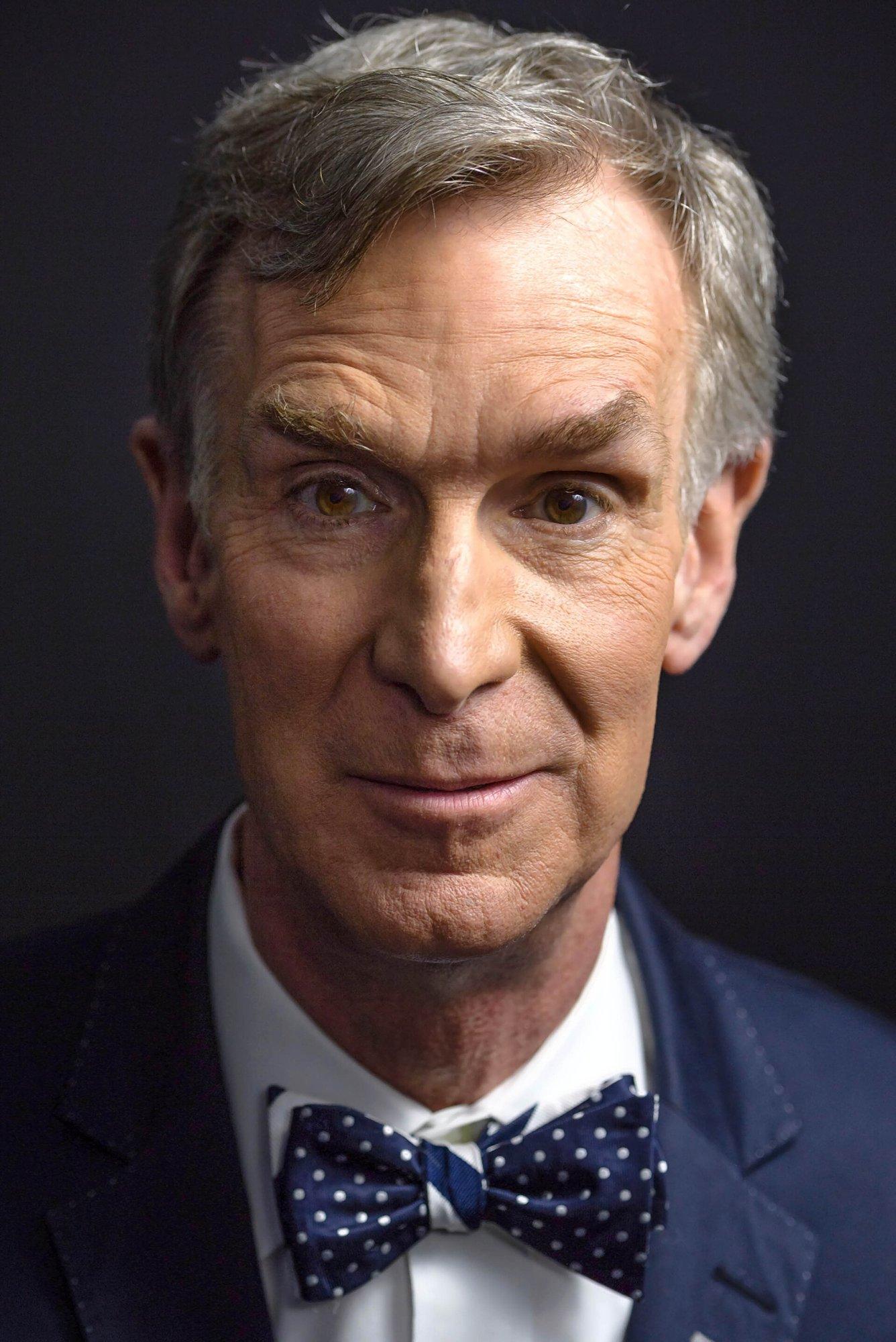
Bill Nye.

Science communicator · TV host · Mechanical engineer

Bill Nye turned a Boeing engineering career and a Seattle sketch-comedy detour into one of the most recognizable science-education brands in American media. The bow tie and lab coat look effortless now, but the persona was built through engineering precision, repeated reinvention, and a public willingness to argue for science when the room would rather turn it into entertainment, ideology, or a fight about identity.

OBJECTIVE PERSONALITY CLASSIFICATIONFF-Ti/Si-SC/P(B)What does this mean?
PERSONALITY SYSTEMObjective Personality
LEAD FUNCTIONTi · Introverted Thinking
SECOND SAVIOR FUNCTIONSi · Introverted Sensing
MBTI EQUIVALENTINTP
01 / BEHIND THE CLASSIFICATION

The personality behind the fame.

How does a recorded OPS classification like FF-Ti/Si-SC/P(B) break down? Walk through nine coins and watch the proposed type take shape. These are deductions from the archived code, not independent evidence of typing accuracy.

Scroll below to see Bill Nye take shape.

STARTING POINT512 possible OPS typesEach type combines core functions, an animal order, and sexual modalities.
THE FINISH LINEFF-Ti/Si-SC/P(B)One recorded classification, decoded from its components.
Bill Nye’s HUMAN NEEDS 01—03
01
DECIDER OR OBSERVER?

Decider over Observer

Deciders have more balanced Observer poles in the middle: Control (Oi) and Chaos (Oe). Organizing what's known and handling what's new tend to feel more manageable. People are the harder territory. Self (Di) and Tribe (De) sit at the extremes, so judgment, rejection, approval, and conflict can trigger the strongest reactions.

Whether debating Ken Ham in 2014 or telling climate-change viewers on Last Week Tonight to “grow the fuck up,” Nye repeatedly steps into human conflict, not just technical puzzles. The friction is often about people attaching identity, politics and ego to scientific questions. That fits a Decider problem more than an Observer one. His strength is taking a public stand without collapsing under judgment. The blind spot is that resistance can start to look like stubbornness in people alone, narrowing the range of persuasion he is willing to attempt.
D
02
SELF OR TRIBE?

Di · Self over De · Tribe

Self (Di) is the stronger deciding pole. They check decisions against their own values or reasons first: what makes sense to me, what feels right to me? The strength is independent conviction; the recurring friction is the Tribe (De)—other people's standards, feedback, and expectations. As the portrait unfolds, notice how Self takes the lead.

Nye left Boeing in 1986 to chase comedy and science communication, then later said The Eyes of Nye lost something essential when he dropped the bow tie: “It wasn’t me.” That is Self over Tribe in a very visible form. He trusts an internal standard strongly enough to keep the persona coherent even when a network or broader audience might want a different presentation. The strength is unmistakable ownership. The cost is that when his own meter feels settled, outside objections can register as dilution or noise instead of feedback worth incorporating.

Di
03
GATHER OR ORGANIZE?

Oi · Organize over Oe · Gather

Organize (Oi) leads with refining, preserving, and structuring what is already known. Its strength is preparation and clear direction; the recurring friction is unexpected change that disrupts the plan. Another layer of the personality portrait comes into focus.

Before television made him a mascot, Nye engineered a hydraulic resonance suppressor tube for 747 airplanes and later helped develop the MarsDial used on rover missions. That points to Organize over Gather: he likes science stabilized into systems, procedures and repeatable demonstrations. The strength is structure. He can break large ideas into reliable teachable parts, which is a big reason teachers kept using his work in classrooms. The growth cost is that a trusted framework can become a comfort zone, making major reinvention or looser exploration less natural than refining the model already built.

Oi
FIRST THREE COINSD + Di + Oi

These establish the preferred human needs in the OPS framework.

Bill Nye’s FUNCTIONS 04—05
04
FEELING OR THINKING?

Thinking · T over Feeling · F

Thinking (T) evaluates decisions through reasons, logic, and what works—not a lack of emotion. Its strength is analytical consistency; Feeling (F) provides balance through values, meaning, and the human consequences of a decision. Combined with Self (Di), this forms the recorded Savior Ti.

Nye’s public reasoning tends to run through mechanism and internal consistency. He debated Ken Ham over whether creation is a viable model in modern science, and in 2015 he publicly changed his position on GMOs after revisiting the evidence. Ti as Thinking fits that pattern of asking whether a claim actually holds together. The strength is intellectual independence backed by logic rather than team loyalty. The blind spot is tonal: a cleaner argument on paper can still miss what another audience needs in order to hear it rather than brace against it.

T → Ti
05
SENSING OR INTUITION?

Sensing · S over Intuition · N

Sensing (S) focuses on concrete details, observable reality, and lived experience. Intuition (N) balances it by looking for broader patterns, concepts, and implications. Combined with Organize (Oi), this gives the recorded Savior Si.

Nye’s career is full of physical specifics: a suppressor tube on Boeing jets, liquid-nitrogen gags on Almost Live!, sundials inspired by his father, and a calibration tool for Mars rovers. Si as Sensing fits that instinct to anchor ideas in concrete, repeatable reality. He makes science less mystical because he can point to the object, the process and the measurable effect. The tradeoff is that concrete mastery can overtrust what already works. When the culture needs a fresh frame, established demonstrations alone may not move the argument far enough.

S → Si
THE TWO SAVIOR FUNCTIONSTi / Si

Opposing functions: Fe and Ne. This is a jumper classification.

Bill Nye’s ANIMAL STACK 06—07
06
PLAY OR SLEEP?

Sleep over Play

Play emphasizes external real-time engagement; Sleep emphasizes internal processing. The recorded stack places Sleep earlier.

Sleep comes earlier than Play in Nye’s recorded animal order. His public persona may look relentlessly extroverted, yet much of the strength seems to come from prior internal calibration: engineer by day, stand-up by night, then a science-host character refined enough to carry decades. Sleep gives him a private center before he enters the room. Play, arriving later, still shows up in live Q&As, sketch work and collaborative production. The cost is that fast back-and-forth can meet a man who has already processed the point and would rather not rebuild it from scratch.

S > P
07
CONSUME OR BLAST?

Consume over Blast

Consume gathers information for internal processing; Blast organizes and communicates information. The recorded order is Sleep → Consume → Play → Blast. This comparison follows their positions in that stack.

After that Sleep-over-Play tilt, Consume also comes before Blast. Nye spent years collecting engineering experience, demo ideas and public-science material before packaging them into Bill Nye the Science Guy, bestselling books and later series. The strength is substance: the fast delivery works because there is real material underneath the bow tie. The growth cost is familiar to many expert educators. Gathering one more fact, example or experiment can feel safer than reducing the message to a blunt, simple takeaway that other people can immediately repeat, question or even misuse.

C > B
Bill Nye’s ANIMAL ORIENTATION 08—09
08
INFO OR ENERGY DOMINANT?

Energy over Info

Energy dominant means Play and Sleep are both in the top three: there is access to expending energy through engagement and conserving it through internal processing. Blast last leaves the information side uneven—Consume may gather far more than gets communicated.

Nye’s stack lands on Energy over Info: Sleep and Play both arrive before the final animal, so private consolidation and outward engagement are both readily available. That helps explain the unusual mix of lab-coat performance and off-camera engineering seriousness. He can retreat, process, then reenter the public square with force. The missing balance comes from Blast last. Even with decades of television, the weaker spot is not stage fright; it is the pressure to turn a mass of learned material into the clearest possible marching orders. More examples can outrun cleaner framing.

Energy
09
INTROVERSION OR EXTROVERSION?

Introversion over Extroversion

The last animal, Blast, determines this OPS coin: Play or Blast last means Introversion; Consume or Sleep last means Extroversion. This describes animal orientation, not sociability or shyness.

Blast sits fourth in Sleep–Consume–Play–Blast, which makes this an OPS Introversion result even though Bill Nye has spent decades on television stages. The point is not sociability. It is sequence: private processing, learning and active engagement tend to come before broadcasting a finalized, simplified conclusion. That ordering can make him compelling in demonstrations and debates while still leaving some audiences to fill in the larger through-line themselves. The growth edge is deliberate repetition—state the thesis earlier, organize the ask more plainly, and let the experiments support a conclusion that is already unmistakable.

I
Sexual Modalities

The four sexual modalities.

OPS uses masculine/feminine sensory and extroverted-deciding distinctions as framework-specific terms, not gender categories. The four modalities are already included in the original 512 types. The recorded modality is FF · Tester.

MM KinestheticMasculine Sensory · Masculine De
MF AudioMasculine Sensory · Feminine De
FF RECORDED MODALITYTesterFeminine Sensory · Feminine De
FM VisualFeminine Sensory · Masculine De
COMPLETE RECORDED OPS TYPE · MODALITY INCLUDEDFF-Ti/Si-SC/P(B)

Ti leads, Si supports, and the animal stack is Sleep → Consume → Play → Blast.

THE FINISHED PORTRAIT · ALL NINE COINS REVEALED

Bill Nye's complete function and animal stack

SleepConsumePlayBlastmTimNefSifFe
FF-Ti/Si-SC/P(B)DOUBLE ACTIVATED · CONSUMEExplore the Interactive Coin Builder →
THE BILL NYE LENS

The bow tie is not the whole machine.

The famous Bill Nye image is motion and certainty: bow tie, lab coat, MTV-speed demos, then the older advocate swearing through a climate warning on Last Week Tonight. Behind that impression sits a former Boeing engineer turning careful mechanical understanding into mass communication.

Ti and Si are a potent pair for a science educator. Ti wants the explanation to make internal sense; Si wants it attached to concrete, repeatable reality. That made Nye memorable and teachable. The limit is that a well-built explanation can seem sufficient even when a new audience needs a different frame.

As a Decider and Double Observer, Nye is better equipped than most to navigate changing data and physical systems, while human judgment becomes the sharper friction point. The recurring problem is not chaos itself but identity and belief colliding with evidence. His neglected function is Fe, opposite his lead Ti, pulling him toward social buy-in he may underrate.

Sleep → Consume → Play → Blast explains why the television performer still lands as OPS Introverted. Internal processing, learning and engagement all come before simplified broadcast. Blast last does not erase his teaching ability; it marks the strain of compression. The balancing move is simple: keep the demos, but open major advocacy moments with one plain sentence people can repeat.

Want to understand the Savior and Demon states behind these nine coins? Explore the complete explanation, visual examples, and typing principles on our Methodology page →

02 / KEEP EXPLORING

Different faces. Familiar patterns.

Explore other celebrities with related recorded OPS classifications. Related functions are not necessarily exact type matches.

Discover Type Twins
YOUR TURN

Curious about your own type?

Discover how your own personality might be classified through Objective Personality.

Get objectively typed
Bill Nye's Personality Type & OPS Profile | The Personality Atlas