The Personality Atlas
THE CELEBRITY PERSONALITY ARCHIVE / FILM & COMEDY

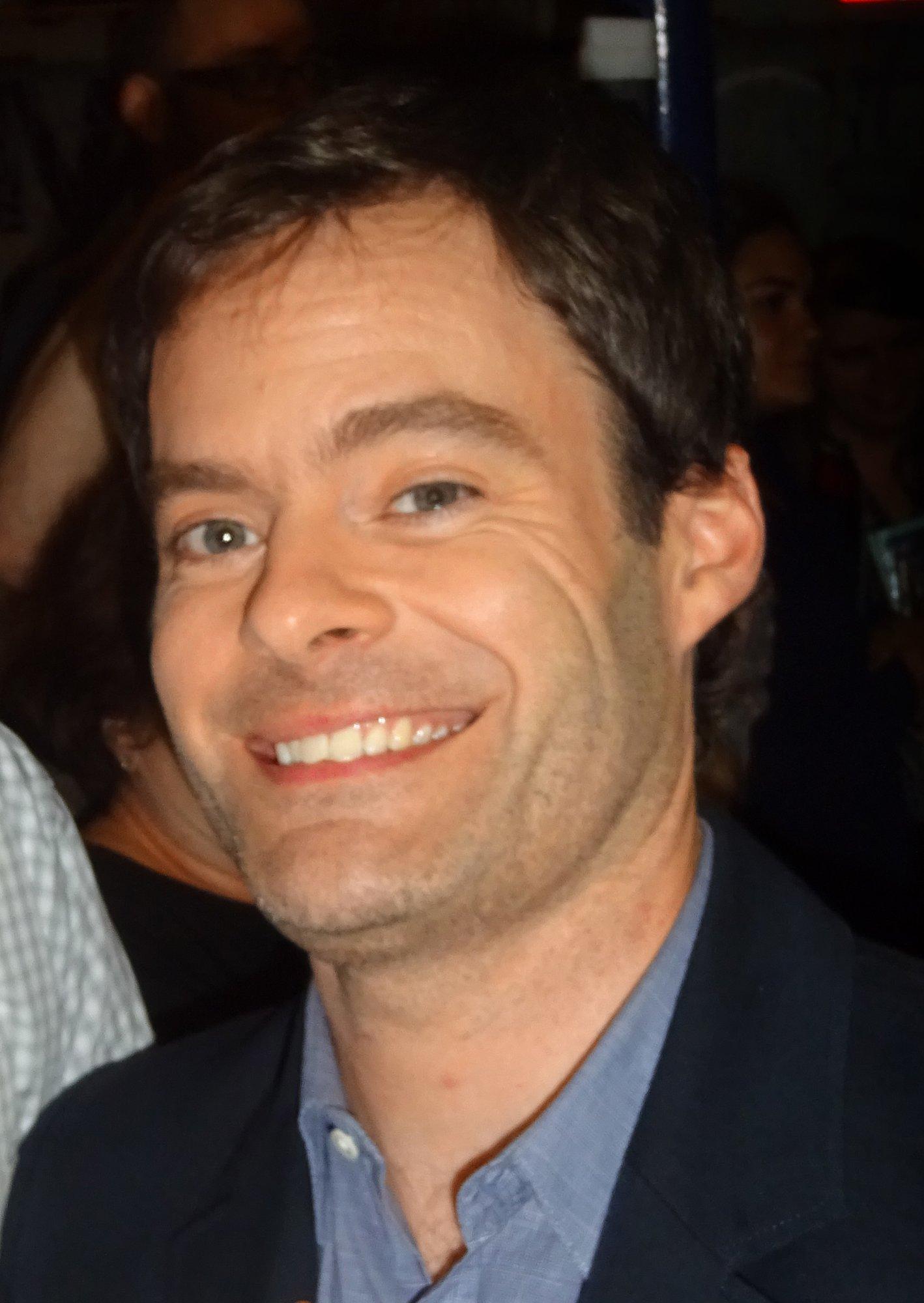
Bill Hader.

Actor · Comedian · Writer · Director

Bill Hader turned a movie-obsessed kid from Tulsa into one of modern comedy’s sharpest utility players, making SNL characters feel loose and effortless before using Barry to prove the same mind could write, direct and star inside something darker, sadder and more structurally exacting than sketch fame ever suggested.

OBJECTIVE PERSONALITY CLASSIFICATIONFF-Ti/Ne-CP/S(B)What does this mean?
PERSONALITY SYSTEMObjective Personality
LEAD FUNCTIONTi · Introverted Thinking
SECOND SAVIOR FUNCTIONNe · Extroverted Intuition
MBTI EQUIVALENTINTP
01 / BEHIND THE CLASSIFICATION

The personality behind the fame.

How does a recorded OPS classification like FF-Ti/Ne-CP/S(B) break down? Walk through nine coins and watch the proposed type take shape. These are deductions from the archived code, not independent evidence of typing accuracy.

Scroll below to see Bill Hader take shape.

STARTING POINT512 possible OPS typesEach type combines core functions, an animal order, and sexual modalities.
THE FINISH LINEFF-Ti/Ne-CP/S(B)One recorded classification, decoded from its components.
Bill Hader’s HUMAN NEEDS 01—03
01
DECIDER OR OBSERVER?

Decider over Observer

Deciders have more balanced Observer poles in the middle: Control (Oi) and Chaos (Oe). Organizing what's known and handling what's new tend to feel more manageable. People are the harder territory. Self (Di) and Tribe (De) sit at the extremes, so judgment, rejection, approval, and conflict can trigger the strongest reactions.

Hader’s public rise at Saturday Night Live came with a very visible strain. He has said he felt less experienced than his peers, called some early performances rigid, and suffered a panic attack live on air in 2010 while playing Julian Assange. That reads less like a battle with logistics and more like pressure around significance, judgment and how he is landing with other people. The strength is acute sensitivity to audience and collaborators. The blind spot is letting the room start to feel like a referendum on his worth.

D
02
SELF OR TRIBE?

Di · Self over De · Tribe

Self (Di) is the stronger deciding pole. They check decisions against their own values or reasons first: what makes sense to me, what feels right to me? The strength is independent conviction; the recurring friction is the Tribe (De)—other people's standards, feedback, and expectations. As the portrait unfolds, notice how Self takes the lead.

Before fame, Hader dropped out, moved to Los Angeles, quit production-assistant work after a bad experience on The Scorpion King, and redirected himself into comedy classes. Later, after Emmy recognition and eight seasons at SNL, he still chose to leave when constant travel made family life harder to sustain. Self over Tribe shows up in those internally driven pivots. The strength is an unmistakable inner barometer. The cost is that private judgment can turn severe and isolating, with decisions becoming emotionally settled before other people can really weigh in.

Di
03
GATHER OR ORGANIZE?

Oe · Gather over Oi · Organize

Gather (Oe) leads with new information, experiences, and possibilities. Its strength is curiosity and adaptability; the recurring friction is narrowing the options and settling into what is already known. Another layer of the personality portrait comes into focus.

Hader’s career keeps opening side doors and actually walking through them: backyard sketch shows, SNL utility player, South Park writers’ retreats, Turner Classic Movies hosting, voice acting, Documentary Now!, then co-creating Barry. Gather-first fits that appetite for fresh material and adjacent possibilities. Another format is not a threat; it is usable fuel. The strength is range without fake reinvention. The blind spot is that a growing menu can delay the narrower, less glamorous task of choosing which possibility deserves the next several years.

Oe
FIRST THREE COINSD + Di + Oe

These establish the preferred human needs in the OPS framework.

Bill Hader’s FUNCTIONS 04—05
04
FEELING OR THINKING?

Thinking · T over Feeling · F

Thinking (T) evaluates decisions through reasons, logic, and what works—not a lack of emotion. Its strength is analytical consistency; Feeling (F) provides balance through values, meaning, and the human consequences of a decision. Combined with Self (Di), this forms the recorded Savior Ti.

Hader said he joined South Park’s orbit partly to learn story structure, not just to be around funny people. On Barry, he expanded into producing, writing and directing, chasing a tonal machine that actually held together. Ti points to that emphasis on internal mechanics. The strength is precision: the scene, premise or episode has to work, not merely charm. The cost shows up in Hader’s own account of early SNL stiffness. A system can become so exact that spontaneity has to fight for oxygen.

T → Ti
05
SENSING OR INTUITION?

Intuition · N over Sensing · S

Intuition (N) focuses on concepts, patterns, and what information might mean. Sensing (S) balances it through observable facts, physical detail, and direct experience. Combined with Gather (Oe), this gives the recorded Savior Ne.

Stefon is a tidy public example of Hader’s Intuition. The character started from two real people, then got inflated into a surreal conceptual universe of nightmare clubs, impossible details and escalating nonsense that still felt coherent enough to repeat. That move from raw input to alternate possibility is the tell. The strength is generating angles other performers miss and refusing the literal first draft. The blind spot is multiplication. Possibilities can outrun production reality, where even a brilliant premise still has to fit one scene, one script and one actual schedule.

N → Ne
THE TWO SAVIOR FUNCTIONSTi / Ne

Opposing functions: Fe and Si.

Bill Hader’s ANIMAL STACK 06—07
06
CONSUME OR BLAST?

Consume over Blast

Consume gathers information for internal processing; Blast organizes and communicates information. The recorded order is Consume → Play → Sleep → Blast. This comparison follows their positions in that stack.

Consume comes earlier than Blast for Hader, and his biography gives that preference plenty to feed on: a childhood spent watching movies and reading, years in Los Angeles consuming films while underemployed, and later joining South Park writers’ retreats to study structure. Even Turner Classic Movies noticed the depth of his film knowledge. The strength of Consume is obvious: he builds from a stocked reservoir instead of bluffing expertise. The cost of Blast arriving later is that gathering can keep getting richer while the clean takeaway waits offstage.

C > B
07
PLAY OR SLEEP?

Play over Sleep

Play emphasizes external real-time engagement; Sleep emphasizes internal processing. The recorded stack places Play earlier.

After that intake, Play arrives earlier than Sleep. Hader’s growth points kept happening in active collaboration: Animals From The Future backyard shows, the live ensemble churn of SNL, writing with Seth Meyers, building Barry with Alec Berg, and creating Documentary Now! with Fred Armisen and Meyers. Play gives him a fast social lab where bits can mutate in real time. Sleep still matters; it simply comes later. The cost is that the room can keep moving before he has fully consolidated his own framing, and before quieter reflection catches up to the momentum.

P > S
Bill Hader’s ANIMAL ORIENTATION 08—09
08
INFO OR ENERGY DOMINANT?

Energy over Info

Energy dominant means Play and Sleep are both in the top three: there is access to expending energy through engagement and conserving it through internal processing. Blast last leaves the information side uneven—Consume may gather far more than gets communicated.

Hader lands on the Energy side because both active engagement and private processing are available before the final missing balance. Publicly, that looks like someone who can bounce through an SNL ensemble and then lock down the tone of Barry as a writer-director without needing a separate personality for each mode. The void is Blast last. He can absorb material, test it with people, and refine it internally before delivering the clearest executive summary. The strength is layered work. The blind spot is making collaborators infer the thesis from the material.

Energy
09
INTROVERSION OR EXTROVERSION?

Introversion over Extroversion

The last animal, Blast, determines this OPS coin: Play or Blast last means Introversion; Consume or Sleep last means Extroversion. This describes animal orientation, not sociability or shyness.

Hader’s OPS Introversion is easy to miss if you confuse it with shyness. This is someone who played Stefon, hosted SNL, and can dominate a scene with weird confidence. The coin comes from Blast landing fourth after Consume, Play and Sleep, not from how chatty he looks on camera. External explanation simply arrives later than intake, interaction and private processing. The strength is that he usually arrives with substance rather than hot air. The growth edge is stating the point sooner, before everyone else has to reverse-engineer it from the performance or cut.

I
Sexual Modalities

The four sexual modalities.

OPS uses masculine/feminine sensory and extroverted-deciding distinctions as framework-specific terms, not gender categories. The four modalities are already included in the original 512 types. The recorded modality is FF · Tester.

MM KinestheticMasculine Sensory · Masculine De
MF AudioMasculine Sensory · Feminine De
FF RECORDED MODALITYTesterFeminine Sensory · Feminine De
FM VisualFeminine Sensory · Masculine De
COMPLETE RECORDED OPS TYPE · MODALITY INCLUDEDFF-Ti/Ne-CP/S(B)

Ti leads, Ne supports, and the animal stack is Consume → Play → Sleep → Blast.

THE FINISHED PORTRAIT · ALL NINE COINS REVEALED

Bill Hader's complete function and animal stack

ConsumePlaySleepBlastmTimNefSifFe
FF-Ti/Ne-CP/S(B)DOUBLE ACTIVATED · CONSUMEExplore the Interactive Coin Builder →
THE BILL HADER LENS

The architect inside the bit.

Hader’s SNL breakthrough looked improvisational, especially Stefon and that famously loose utility-player energy. But the public impression sits on a more studious person underneath: the Tulsa kid who watched movies obsessively, read constantly, worked long production days in Los Angeles, and learned comedy after trying to build a film career from the ground up.

Ti with Ne gives him precise weirdness. Ne spins odd fragments into fresh possibilities; Ti keeps the bit, scene, or episode architecture from collapsing. That pairing helps explain why Barry could move from sketch-comedy fame into something structurally tight and tonally slippery. The limit is familiar: refinement can become pressure, and the mechanism can get so exact that spontaneity has to fight for space.

As a Decider and Double Observer, Hader is built to handle a lot of informational complexity while feeling the sharper strain around people, comparison, and how he lands. That matches his public comments about anxiety and feeling inexperienced early at SNL. The imbalance is in human significance more than missing facts. His neglected function, opposite lead Ti, is Fe: making the shared emotional message explicit instead of assuming the craft already says it.

Consume → Play → Sleep → Blast rounds out the pattern. Blast last creates the Introversion coin here: not lack of stage presence, but later externalization of the conclusion. He studies, tests, and processes before stating the point cleanly. The balancing move is specific and practical: keep the research and layered weirdness, but give collaborators the thesis earlier in a pitch, table read, or directing note.

Want to understand the Savior and Demon states behind these nine coins? Explore the complete explanation, visual examples, and typing principles on our Methodology page →

02 / KEEP EXPLORING

Different faces. Familiar patterns.

Explore other celebrities with related recorded OPS classifications. Related functions are not necessarily exact type matches.

Discover Type Twins
YOUR TURN

Curious about your own type?

Discover how your own personality might be classified through Objective Personality.

Get objectively typed
Bill Hader's Personality Type & OPS Profile | The Personality Atlas