THE PERSONALITYATLAS
THE CELEBRITY PERSONALITY ARCHIVE / SCIENCE & MEDIA

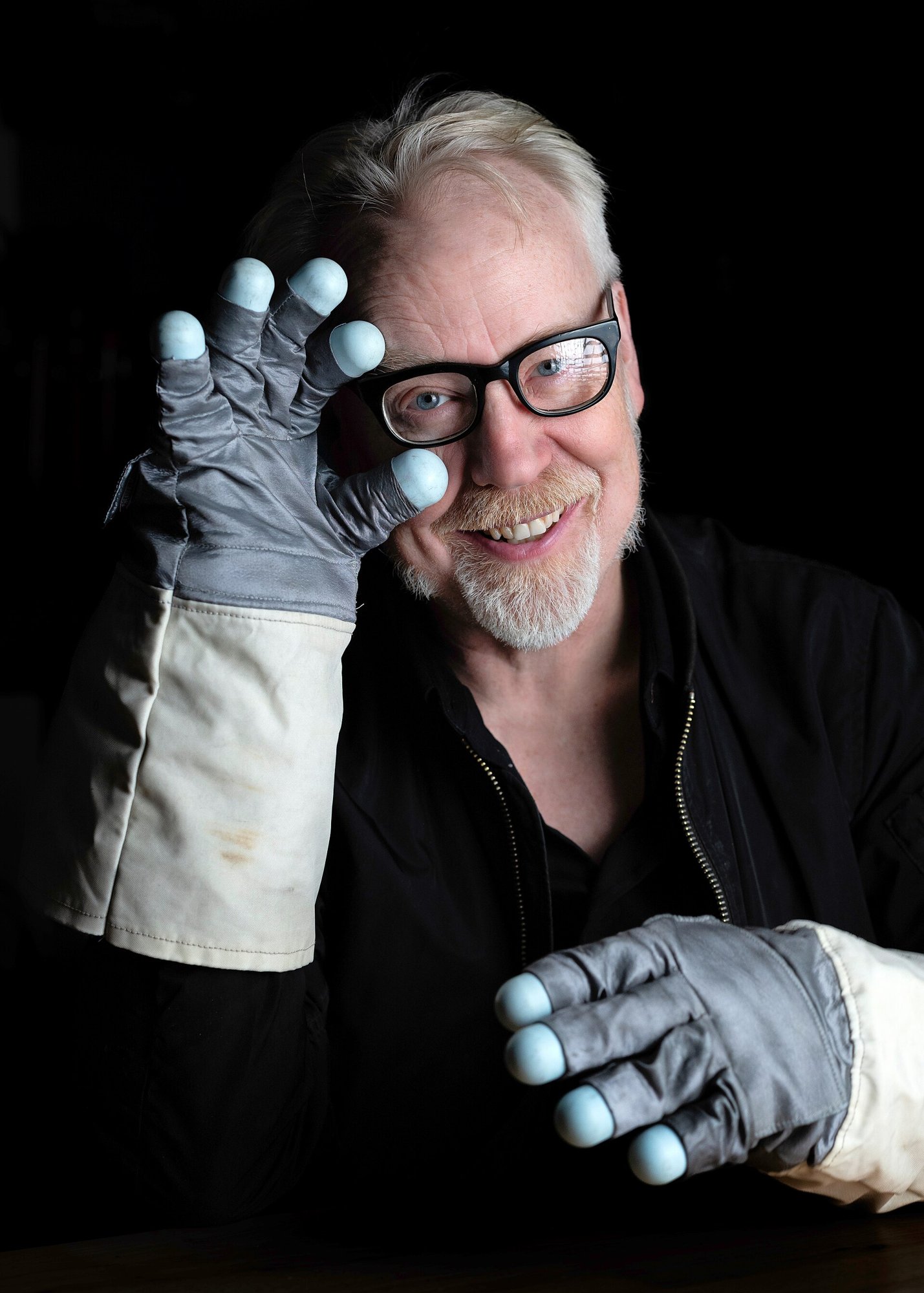
Adam Savage.

Maker · MythBusters host · Science communicator

From film special effects to MythBusters and his workshop-driven Tested videos, Adam Savage has made experimentation a public spectacle. His history building movie props and teaching through mistakes offers a vivid look at what happens when curiosity runs into stubborn physical reality.

OBJECTIVE PERSONALITY CLASSIFICATIONFF-Ne/Ti-CP/B(S)What does this mean?
PERSONALITY SYSTEMObjective Personality
LEAD FUNCTIONNe · Extroverted Intuition
SECOND SAVIOR FUNCTIONTi · Introverted Thinking
MBTI EQUIVALENTENTP
01 / BEHIND THE CLASSIFICATION

The personality behind the fame.

How does a recorded OPS classification like FF-Ne/Ti-CP/B(S) break down? Walk through nine coins and watch the proposed type take shape. These are deductions from the archived code, not independent evidence of typing accuracy.

Scroll below to see Adam Savage take shape.

STARTING POINT512 possible OPS typesNine binary choices narrow the possibilities in the original OPS model.
THE FINISH LINEFF-Ne/Ti-CP/B(S)One recorded classification, decoded from its components.
Adam Savage’s HUMAN NEEDS 01—03
01
DECIDER OR OBSERVER?

Observer over Decider

Observers have more balanced Decider poles in the middle: Self (Di) and Tribe (De). Their own perspective and other people's perspectives tend to be easier to navigate. Things are the harder territory. Control (Oi) and Chaos (Oe) sit at the extremes, so disrupted plans, uncertainty, and a changing world can trigger the strongest reactions.

MythBusters repeatedly put Savage face to face with stubborn physical reality: an experiment could fail no matter how compelling the original idea sounded. That is an Observer problem, centered on the circumstances rather than the audience's opinion of him. His strength is treating the unexpected result as something to investigate instead of a personal insult. The blind spot is expecting the next experiment to behave simply because the preparation was convincing.
O
02
SELF OR TRIBE?

Di · Self over De · Tribe

Self (Di) is the stronger deciding pole. They check decisions against their own values or reasons first: what makes sense to me, what feels right to me? The strength is independent conviction; the recurring friction is the Tribe (De)—other people's standards, feedback, and expectations. As the portrait unfolds, notice how Self takes the lead.

Savage didn't wait for the television audience to tell him whether a machine made sense. His special-effects background rewarded an independent standard: does this actually work? Self-first gives him the courage to question consensus. The void is that a private verdict can become so convincing that another maker's feedback feels like interference rather than useful input.

Di
03
GATHER OR ORGANIZE?

Oe · Gather over Oi · Organize

Gather (Oe) leads with new information, experiences, and possibilities. Its strength is curiosity and adaptability; the recurring friction is narrowing the options and settling into what is already known. Another layer of the personality portrait comes into focus.

A Tested workshop full of new props and techniques is practically an invitation to chase the next discovery. Gather-first makes him unusually adaptable when an experiment changes direction. The downside is the pile of exciting unfinished projects: collecting another possibility can be much easier than organizing the ones already on the bench.

Oe
FIRST THREE COINSO + Di + Oe

These establish the preferred human needs in the OPS framework.

Adam Savage’s FUNCTIONS 04—05
04
FEELING OR THINKING?

Thinking · T over Feeling · F

Thinking (T) evaluates decisions through reasons, logic, and what works—not a lack of emotion. Its strength is analytical consistency; Feeling (F) provides balance through values, meaning, and the human consequences of a decision. Combined with Self (Di), this forms the recorded Savior Ti.

Savage's work repeatedly asks what the evidence supports, not merely what would make a spectacular television reveal. Ti's Thinking side values coherent explanations and a mechanism that survives scrutiny. A test can be entertaining and still expose how seductive a clever-but-wrong belief becomes when nobody checks the reasoning. MythBusters was at its best when a spectacular theory turned out to be nonsense. Thinking has to be willing to kill its favorite explanation on camera.

T → Ti
05
SENSING OR INTUITION?

Intuition · N over Sensing · S

Intuition (N) focuses on concepts, patterns, and what information might mean. Sensing (S) balances it through observable facts, physical detail, and direct experience. Combined with Gather (Oe), this gives the recorded Savior Ne.

From movie-miniature workshops to full-size MythBusters demonstrations, physical objects are where Savage tests his abstractions. Yet his Ne-first OPS reading gives possibilities priority over settled sensory routines: the imagined build comes before the unpleasant discovery that a hinge, weld or measurement will not cooperate. That's the Sensing counterweight. He can imagine a replica in minutes; the real screw still strips and the paint dries at its own speed. Physical details get the last word.

N → Ne
THE TWO SAVIOR FUNCTIONSNe / Ti

Opposing functions: Si and Fe.

Adam Savage’s ANIMAL STACK 06—07
06
CONSUME OR BLAST?

Consume over Blast

Consume gathers information for internal processing; Blast organizes and communicates information. The recorded order is Consume → Play → Blast → Sleep. This comparison follows their positions in that stack.

Consume leads his stack, and Savage's lifelong habit of learning unfamiliar crafts is an unusually visible illustration. Researching materials, studying other makers and gathering techniques creates an enormous toolkit. The shadow is believing one more reference video will solve a project that now needs someone to actually pick up the tool. Watch how passionately he explains an obscure material or tool. Consume makes a formidable student; it can also make research feel like progress when the build hasn't started.

C > B
07
PLAY OR SLEEP?

Play over Sleep

Play emphasizes external real-time engagement; Sleep emphasizes internal processing. The recorded stack places Play earlier.

Play follows Consume in Savage's animal stack. Working alongside Jamie Hyneman on MythBusters and engaging fellow makers through Tested made experiments social rather than solitary. The tension is that rapid interaction can be stimulating while a quieter, slower cycle of testing and revision still has to happen after the cameras stop. The Savage–Hyneman partnership wasn't a cozy agreement machine. Play means testing ideas with another person in real time, including the moment they refuse to agree.

P > S
Adam Savage’s ANIMAL ORIENTATION 08—09
08
INFO OR ENERGY DOMINANT?

Info over Energy

Info dominant means Consume and Blast are both in the top three: gathering and communicating information are more balanced. Sleep last leaves the energy side uneven—Play can keep engagement going without enough private recovery.

Savage is Info-dominant because Consume and Blast are both available in his top three animals: he can take in an astonishing amount of information and turn it into an explanation for an audience. MythBusters and Tested showcase that cycle—learn the technique, then demonstrate what worked. The missing Sleep creates a different void: Play can keep the workshop moving, while private consolidation and genuine downtime get less priority. The challenge isn't learning another craft; it's knowing when to stop experimenting and let an experience settle.

Info
09
INTROVERSION OR EXTROVERSION?

Extroversion over Introversion

The last animal, Sleep, determines this OPS coin: Play or Blast last means Introversion; Consume or Sleep last means Extroversion. This describes animal orientation, not sociability or shyness.

Sleep sits last in the recorded the recorded animal sequence stack. Savage's workshop persona makes visible how much energy can go toward learning and demonstrating; what cameras cannot establish is the depth of his private integration. The provocative growth question is whether setting a project down can sometimes be harder than inventing the next experiment. The hardest workshop task may be setting the tools down and deciding what the frenzy actually meant. Sleep last makes quiet integration the uncomfortable assignment.

E
ADDITIONAL LAYER · SEXUAL MODALITIES

The four sexual modalities.

OPS uses masculine/feminine sensory and extroverted-deciding distinctions as framework-specific terms, not gender categories. The recorded modality is FF · Tester.

MM KinestheticMasculine Sensory · Masculine De
MF AudioMasculine Sensory · Feminine De
FF RECORDED MODALITYTesterFeminine Sensory · Feminine De
FM VisualFeminine Sensory · Masculine De
COMPLETE RECORDED OPS TYPE · NINE COINS + SEXUAL MODALITIESFF-Ne/Ti-CP/B(S)

Ne leads, Ti supports, and the animal stack is Consume → Play → Blast → Sleep.

THE FINISHED PORTRAIT · ALL NINE COINS REVEALED

Adam Savage's complete function and animal stack

ConsumePlayBlastSleepmNemTifFefSi
FF-Ne/Ti-CP/B(S)DOUBLE ACTIVATED · PLAYExplore the Interactive Coin Builder →
THE ADAM SAVAGE LENS

A workshop full of unfinished possibilities.

Adam Savage turned a childhood fascination with making things into movie effects, MythBusters and an entire second act teaching through Tested. The appeal isn't that he always gets the answer right. It's that the wrong answer can explode, collapse or refuse to fit while the experiment keeps moving. Reality gets the final vote, and sometimes that makes better television than the original plan.

His Ne/Ti classification frames an Observer-first approach: new possibilities arrive quickly, while an internal logic filter asks whether the explanation holds together. The obvious strength is imaginative problem-solving. The uncomfortable cost is the sheer volume of possible projects. A workshop can contain one hundred fascinating beginnings and still lack a finished object; more curiosity isn't automatically the missing ingredient.

Consume first and Play second turn learning into active experimentation and exchange. Those animals are easy to visualize through the making process, but they don't verify a private psychological mechanism by themselves. Blast third brings the public lesson; Sleep last represents a less-preferred period of quiet consolidation. The tempting mistake would be confusing constant motion with continuous progress.

The strongest version of this OPS lens isn't 'Adam Savage loves making.' Everybody can see that. It's the harder question of whether a person who can imagine almost anything knows when to stop imagining and commit to what is already in front of them. The growth edge is not less creativity; it's the discipline that lets a brilliant idea become a finished, tested reality.

These coins explain how to read the archived classification; they are not an independent typing assessment. OPS is not an independently scientifically validated personality assessment. Learn about the method →

Want to understand the Savior and Demon states behind these nine coins? Explore the complete explanation, visual examples, and typing principles on our Methodology page →

02 / KEEP EXPLORING

Different faces. Familiar patterns.

Explore other celebrities with related recorded OPS classifications. Related functions are not necessarily exact type matches.

Discover Type Twins
YOUR TURN

Curious about your own type?

Discover how your own personality might be classified through Objective Personality.

Get objectively typed