The Personality Atlas
THE CELEBRITY PERSONALITY ARCHIVE / FILM & TELEVISION

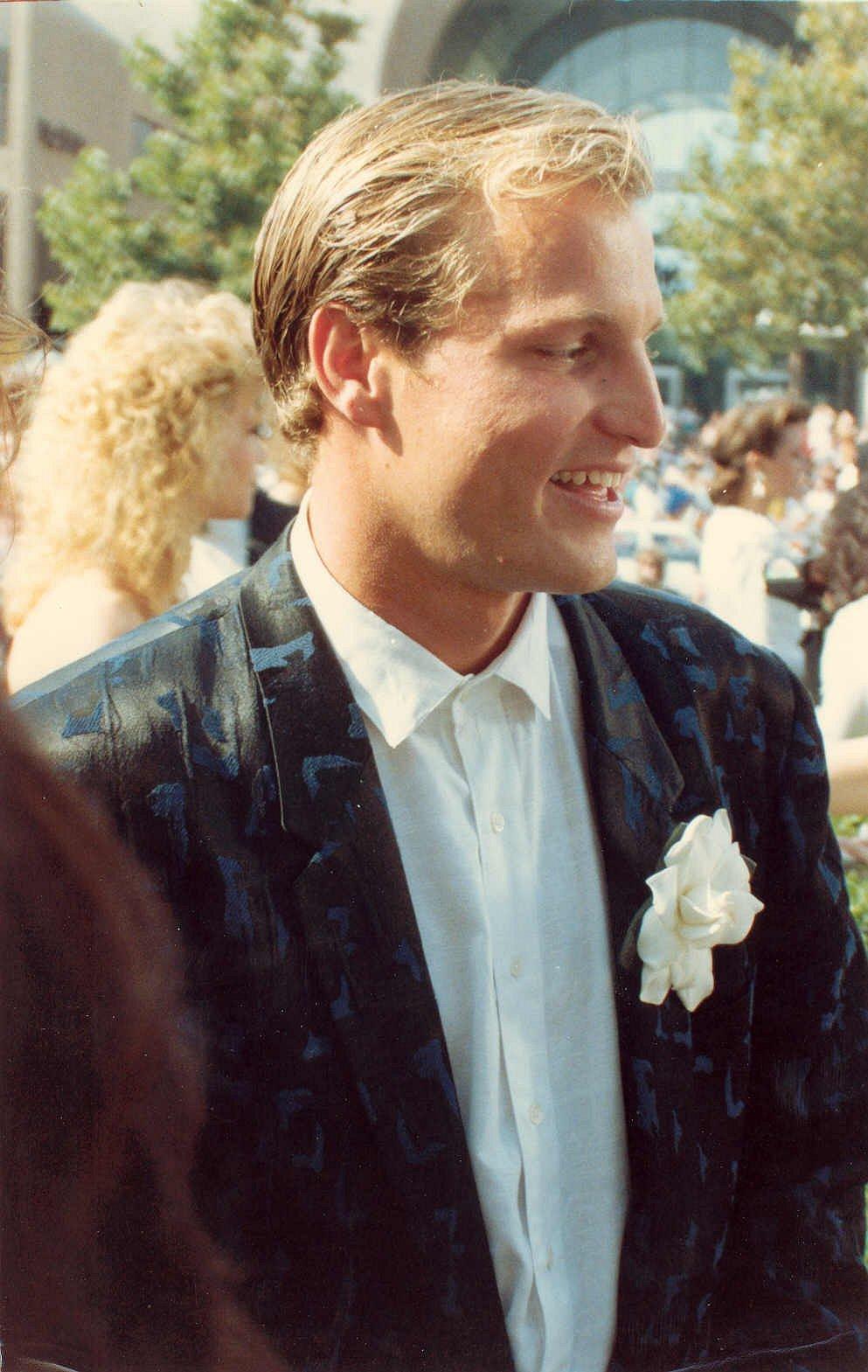
Woody Harrelson.

Actor · Producer · Activist

Woody Harrelson built a career on making unlikely pivots look casual: the lovable bartender on Cheers, the unnerving outlaw in Natural Born Killers, the damaged cop in True Detective, the weary mentor in The Hunger Games. Even his public life has that same restless swing between Hollywood craft, political causes and high-risk experiments that seem half brilliant, half reckless until they somehow become the story.

OBJECTIVE PERSONALITY CLASSIFICATIONMM-Ni/Te-BS/C(P)What does this mean?
PERSONALITY SYSTEMObjective Personality
LEAD FUNCTIONNi · Introverted Intuition
SECOND SAVIOR FUNCTIONTe · Extroverted Thinking
MBTI EQUIVALENTINTJ
01 / BEHIND THE CLASSIFICATION

The personality behind the fame.

How does a recorded OPS classification like MM-Ni/Te-BS/C(P) break down? Walk through nine coins and watch the proposed type take shape. These are deductions from the archived code, not independent evidence of typing accuracy.

Scroll below to see Woody Harrelson take shape.

STARTING POINT512 possible OPS typesEach type combines core functions, an animal order, and sexual modalities.
THE FINISH LINEMM-Ni/Te-BS/C(P)One recorded classification, decoded from its components.
Woody Harrelson’s HUMAN NEEDS 01—03
01
DECIDER OR OBSERVER?

Observer over Decider

Observers have more balanced Decider poles in the middle: Self (Di) and Tribe (De). Their own perspective and other people's perspectives tend to be easier to navigate. Things are the harder territory. Control (Oi) and Chaos (Oe) sit at the extremes, so disrupted plans, uncertainty, and a changing world can trigger the strongest reactions.

Harrelson’s public life keeps circling one familiar problem: not “Do people like me?” but “What exactly is happening here, and how do I navigate it?” His career jumps from Cheers to Natural Born Killers to True Detective without settling into one safe lane, and Lost in London turned a real 2002 arrest-inspired episode into a live one-take film. That is classic Observer terrain: changing circumstances, unstable setups, reality refusing to stay simple. The advantage is adaptability under strange conditions. The blind spot is spending so much energy reading the situation that control itself becomes the obsession.

O
02
SELF OR TRIBE?

De · Tribe over Di · Self

Tribe (De) is the stronger deciding pole. They check decisions against people, shared standards, and what works for the group: what do we need, what will others think? The strength is coordination and responsiveness; the recurring friction is the Self (Di)—knowing and defending their own position. As the portrait unfolds, notice how Tribe takes the lead.

The 1996 hemp protest is a clean example of Tribe over Self. Harrelson did not just hold a private opinion; he staged a public legal challenge, arrived with former Kentucky governor Louie Nunn, alerted the sheriff in advance, and let CNN cameras record the arrest. That is an outward-facing standard, aimed at moving the broader conversation instead of merely protecting a personal preference. The strength is mobilizing other people around a cause. The cost is that once the issue becomes public, backlash, optics and other people’s reactions can start steering the whole event.

De
03
GATHER OR ORGANIZE?

Oi · Organize over Oe · Gather

Organize (Oi) leads with refining, preserving, and structuring what is already known. Its strength is preparation and clear direction; the recurring friction is unexpected change that disrupts the plan. Another layer of the personality portrait comes into focus.

Harrelson’s live one-take film Lost in London is a sharp Organize example. Turning a messy real-life incident into a movie shot in a single continuous take required committing to one structure and trusting it all the way through. Organize-first is good at narrowing chaos into a workable path. It can take a sprawling career or a bizarre story and give it a spine. The tradeoff is obvious: when reality stops cooperating, the plan can become a trap. A strong framework helps him land the shot, but it can also make improvising around new variables less natural.

Oi
FIRST THREE COINSO + De + Oi

These establish the preferred human needs in the OPS framework.

Woody Harrelson’s FUNCTIONS 04—05
04
FEELING OR THINKING?

Thinking · T over Feeling · F

Thinking (T) evaluates decisions through reasons, logic, and what works—not a lack of emotion. Its strength is analytical consistency; Feeling (F) provides balance through values, meaning, and the human consequences of a decision. Combined with Tribe (De), this forms the recorded Savior Te.

His Thinking side shows up in how he has repeatedly turned beliefs into public action steps. The hemp protest was not framed as a mood or a personal confession; it was staged as a test case against a law that treated industrial hemp and marijuana the same way. Te is useful here because it pushes toward external results, visible procedures and a measurable outcome. That gives Harrelson force and clarity when he wants to move an issue forward. The blind spot is that a hard public case can sound settled even when the surrounding conversation is still more tangled.

T → Te
05
SENSING OR INTUITION?

Intuition · N over Sensing · S

Intuition (N) focuses on concepts, patterns, and what information might mean. Sensing (S) balances it through observable facts, physical detail, and direct experience. Combined with Organize (Oi), this gives the recorded Savior Ni.

Harrelson’s Intuition is easier to see in the arc of his role choices than in any one performance. After becoming famous as Woody Boyd, he kept reaching for characters with a stronger conceptual hook: Larry Flynt, Mickey Knox, Marty Hart, Haymitch, Steve Schmidt. He does not just collect parts; he seems drawn to the larger read, the worldview, the angle that makes a character mean something beyond the scene. That gives his career a surprisingly coherent through-line beneath the genre-hopping. The cost is that the big interpretation can sometimes outrun the immediate facts on the ground.

N → Ni
THE TWO SAVIOR FUNCTIONSNi / Te

Opposing functions: Se and Fi.

Woody Harrelson’s ANIMAL STACK 06—07
06
CONSUME OR BLAST?

Blast over Consume

Consume gathers information for internal processing; Blast organizes and communicates information. The recorded order is Blast → Sleep → Consume → Play. This comparison follows their positions in that stack.

Blast comes earlier than Consume, and Harrelson’s public record shows it. He has often been willing to push a message outward—through activism, interviews, narration, and headline-making gestures—before proving any interest in collecting every caveat first. That can be a real strength. He knows how to put a point on the table and make it impossible to ignore. The weaker side appears when open-ended intake is required instead of delivery. His 2012 Reddit AMA became a PR fiasco partly because broad questioning demanded more receptive range than a controlled message usually does.

B > C
07
PLAY OR SLEEP?

Sleep over Play

Play emphasizes external real-time engagement; Sleep emphasizes internal processing. The recorded stack places Sleep earlier.

With Blast already taking the lead, Sleep also lands earlier than Play. Harrelson often works best when he can consolidate an experience into a shaped perspective and then present it, rather than staying in endless real-time ping-pong. Lost in London again fits: a real incident became a tightly processed public artifact. Even his activism often arrives as a formed stance, not a tentative brainstorm. The strength is having an inner center before stepping out. The cost is that spontaneous exchange can get thin or awkward when the room wants back-and-forth instead of a finished angle.

S > P
Woody Harrelson’s ANIMAL ORIENTATION 08—09
08
INFO OR ENERGY DOMINANT?

Info over Energy

Info dominant means Consume and Blast are both in the top three: gathering and communicating information are more balanced. Play last leaves the energy side uneven—Sleep can conserve energy without enough spontaneous outward engagement.

Harrelson’s stack is Info-dominant, which fits a career built on taking material in and then sending a clear signal back out. He has moved between sitcoms, prestige drama, political portrayals, documentaries, activism and even live filmmaking without losing the thread of a communicable point. The missing balance comes from Play sitting last. That does not erase collaboration; his résumé is full of ensembles. It means spontaneous live engagement is less naturally prioritized than information intake, internal consolidation and outward delivery. The cost shows up when an unscripted exchange demands more looseness than message control.

Info
09
INTROVERSION OR EXTROVERSION?

Introversion over Extroversion

The last animal, Play, determines this OPS coin: Play or Blast last means Introversion; Consume or Sleep last means Extroversion. This describes animal orientation, not sociability or shyness.

Harrelson can look socially fearless—long-running ensemble work, comedy, activism, Soccer Aid appearances—but this coin is Introversion, not shyness. Play is fourth, which means constant live interaction is less preferred than building a perspective and delivering it with some structure. That explains why a charismatic public figure can still seem uneven in open-ended, uncontrolled exchanges. OPS Introversion here is about animal order, not whether he can charm a room. The growth edge is letting more of the process happen in public, before the conclusion is fully locked, instead of after it has already hardened.

I
Sexual Modalities

The four sexual modalities.

OPS uses masculine/feminine sensory and extroverted-deciding distinctions as framework-specific terms, not gender categories. The four modalities are already included in the original 512 types. The recorded modality is MM · Kinesthetic.

MM RECORDED MODALITYKinestheticMasculine Sensory · Masculine De
MF AudioMasculine Sensory · Feminine De
FF TesterFeminine Sensory · Feminine De
FM VisualFeminine Sensory · Masculine De
COMPLETE RECORDED OPS TYPE · MODALITY INCLUDEDMM-Ni/Te-BS/C(P)

Ni leads, Te supports, and the animal stack is Blast → Sleep → Consume → Play.

THE FINISHED PORTRAIT · ALL NINE COINS REVEALED

Woody Harrelson's complete function and animal stack

BlastSleepConsumePlayfNimTefFimSe
MM-Ni/Te-BS/C(P)DOUBLE ACTIVATED · SLEEPExplore the Interactive Coin Builder →
THE WOODY HARRELSON LENS

The frame behind the mischief.

Harrelson’s public image often arrives as a grin wrapped around chaos: the camera-ready hemp arrest in Kentucky, the live-wire gamble of Lost in London, the actor who can jump from Cheers warmth to True Detective damage. Behind that looseness is a man who keeps trying to make a strange situation legible enough to move through.

Ni/Te gives him that knack. Ni narrows a sprawling scene into one governing read; Te turns the read into an external move, whether that means building a one-take film or staging a legal challenge with cameras rolling. The strength is decisive patterning. The limit is obvious too: once the frame clicks, contradictory facts can look like noise instead of correction.

As an Observer and Double Decider, Harrelson is dealing first with uncertainty, control and what is actually happening, not with endless people drama. The Double Decider side gives more flexibility with self-and-tribe tension. Neglected Se, the function opposite his lead Ni, asks for the immediate evidence in front of him when the elegant interpretation gets ahead of the moment.

Blast → Sleep → Consume → Play shows why public charisma does not cancel OPS Introversion. Play last points to the thinner spot: staying in open-ended interaction while events are still unfolding. The balance is not less conviction. It is pausing before the takeaway, letting the room push back, and testing the read in live dialogue before he turns it into the next polished statement.

Want to understand the Savior and Demon states behind these nine coins? Explore the complete explanation, visual examples, and typing principles on our Methodology page →

02 / KEEP EXPLORING

Different faces. Familiar patterns.

Explore other celebrities with related recorded OPS classifications. Related functions are not necessarily exact type matches.

Discover Type Twins
YOUR TURN

Curious about your own type?

Discover how your own personality might be classified through Objective Personality.

Get objectively typed
Woody Harrelson's Personality Type & OPS Profile | The Personality Atlas