The Personality Atlas
THE CELEBRITY PERSONALITY ARCHIVE / COMEDY & TELEVISION

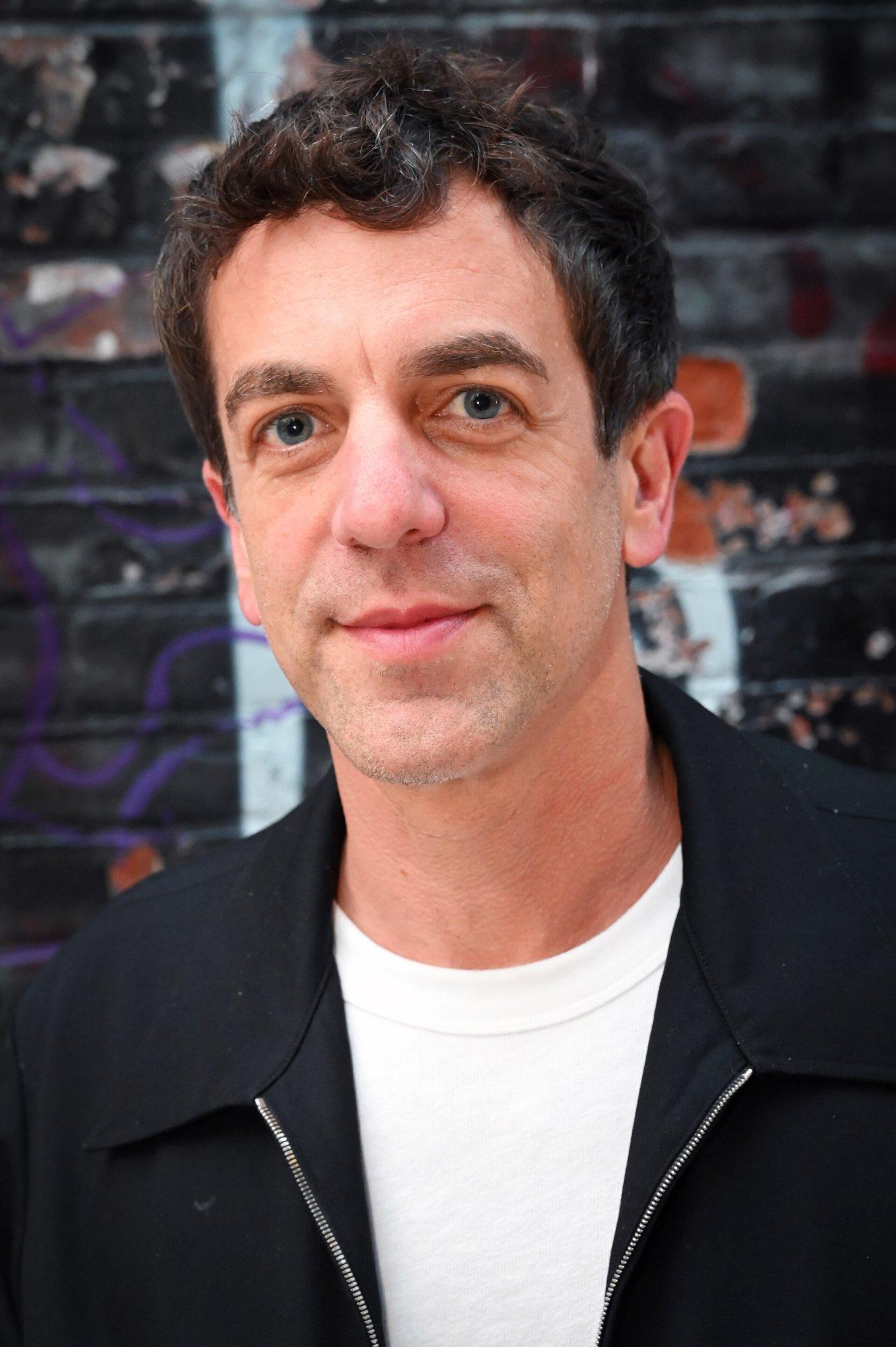
BJ Novak.

Actor · Writer · Producer · Author

B. J. Novak turned an early stand-up break into a career that keeps crossing lanes: The Office actor, writer and producer; bestselling author of The Book with No Pictures; app co-founder; and later the writer-director-star of Vengeance. The throughline is not just wit but a habit of taking sprawling material and locking it into a crisp premise other people can immediately grasp.

OBJECTIVE PERSONALITY CLASSIFICATIONMF-Ni/Te-BS/P(C)What does this mean?
PERSONALITY SYSTEMObjective Personality
LEAD FUNCTIONNi · Introverted Intuition
SECOND SAVIOR FUNCTIONTe · Extroverted Thinking
MBTI EQUIVALENTINTJ
01 / BEHIND THE CLASSIFICATION

The personality behind the fame.

How does a recorded OPS classification like MF-Ni/Te-BS/P(C) break down? Walk through nine coins and watch the proposed type take shape. These are deductions from the archived code, not independent evidence of typing accuracy.

Scroll below to see BJ Novak take shape.

STARTING POINT512 possible OPS typesEach type combines core functions, an animal order, and sexual modalities.
THE FINISH LINEMF-Ni/Te-BS/P(C)One recorded classification, decoded from its components.
BJ Novak’s HUMAN NEEDS 01—03
01
DECIDER OR OBSERVER?

Observer over Decider

Observers have more balanced Decider poles in the middle: Self (Di) and Tribe (De). Their own perspective and other people's perspectives tend to be easier to navigate. Things are the harder territory. Control (Oi) and Chaos (Oe) sit at the extremes, so disrupted plans, uncertainty, and a changing world can trigger the strongest reactions.

Novak’s public career keeps colliding with circumstances he cannot simply will into place: Greg Daniels hearing one club joke changed his trajectory, Vengeance was delayed by the COVID-19 pandemic, and li.st ultimately shut down for lack of users. That pattern points to Observer friction more than a constant fight over personal worth. His strength is adapting the premise to the reality in front of him and moving mediums when the landscape changes. The blind spot is assuming the next clean setup or platform shift will solve a problem that reality may keep reintroducing in new forms.

O
02
SELF OR TRIBE?

De · Tribe over Di · Self

Tribe (De) is the stronger deciding pole. They check decisions against people, shared standards, and what works for the group: what do we need, what will others think? The strength is coordination and responsiveness; the recurring friction is the Self (Di)—knowing and defending their own position. As the portrait unfolds, notice how Tribe takes the lead.

Tribe over Self shows up in how often Novak’s work has to become legible and usable for other people, not just privately satisfying to him. The Office did not reward a clever lone notebook; it rewarded scripts, scenes and production choices that a writers’ room, cast and network could all execute. That outward standard is a strength: he can turn an idea into something a group can rally around. The cost is that external usefulness can become the scoreboard, making it easy to keep refining what works for the room while personal priorities arrive later.

De
03
GATHER OR ORGANIZE?

Oi · Organize over Oe · Gather

Organize (Oi) leads with refining, preserving, and structuring what is already known. Its strength is preparation and clear direction; the recurring friction is unexpected change that disrupts the plan. Another layer of the personality portrait comes into focus.

Organize over Gather fits a career full of tidy frames and controlled concepts. At Harvard he wrote an honors thesis on the films of Hamlet; later he built The Book with No Pictures around a single strict rule and The Premise around clearly defined episode ideas. The gift here is compression: he can take scattered material and lock it into a shape people instantly understand. The blind spot is selectivity. A strong frame can start looking so elegant that the stray possibility, odd detour or unplanned avenue gets dismissed before it has a chance to deepen the work.

Oi
FIRST THREE COINSO + De + Oi

These establish the preferred human needs in the OPS framework.

BJ Novak’s FUNCTIONS 04—05
04
FEELING OR THINKING?

Thinking · T over Feeling · F

Thinking (T) evaluates decisions through reasons, logic, and what works—not a lack of emotion. Its strength is analytical consistency; Feeling (F) provides balance through values, meaning, and the human consequences of a decision. Combined with Tribe (De), this forms the recorded Savior Te.

Te is visible in Novak’s attraction to formats that run on structure and delivery. The Book with No Pictures is funny partly because it behaves like a system: the adult reader must say the words, the rule is clear, and the payoff is repeatable. The same bent shows up in a list-making app whose whole appeal was clean categorization. Te’s strength is practical clarity—making an idea executable for other people. Its growth cost is that the mechanism can become so satisfying that messier human nuance, ambiguity or slower consensus-building feels inefficient by comparison.

T → Te
05
SENSING OR INTUITION?

Intuition · N over Sensing · S

Intuition (N) focuses on concepts, patterns, and what information might mean. Sensing (S) balances it through observable facts, physical detail, and direct experience. Combined with Organize (Oi), this gives the recorded Savior Ni.

Ni gives Novak a concept-first magnetism. He keeps returning to projects built around a distilled angle: a thesis on Hamlet films, an anthology called The Premise, a children’s bestseller whose title announces the whole game, and a mystery-thriller he wrote, directed and starred in. The advantage is memorable compression. He can spot the throughline before everyone else has finished describing the pile. The blind spot is that reality does not always honor the clean pattern. A brilliant premise can still need more concrete texture, testing and present-tense detail than the first vision wanted to admit.

N → Ni
THE TWO SAVIOR FUNCTIONSNi / Te

Opposing functions: Se and Fi.

BJ Novak’s ANIMAL STACK 06—07
06
CONSUME OR BLAST?

Blast over Consume

Consume gathers information for internal processing; Blast organizes and communicates information. The recorded order is Blast → Sleep → Play → Consume. This comparison follows their positions in that stack.

Between Consume and Blast, Novak shows Blast earlier. His public record is full of taking material and pushing it outward as a package: fifteen written Office episodes, executive-producing responsibilities, a seven-figure two-book deal, and later The Premise and Vengeance. The strength is obvious—he does not just collect ideas, he frames them so other people can follow. The tradeoff is that a strong explanation can arrive ahead of deeper intake. Another neat pitch, script or hook can be ready before he has fully sat with more raw material that might complicate or strengthen it.

B > C
07
PLAY OR SLEEP?

Sleep over Play

Play emphasizes external real-time engagement; Sleep emphasizes internal processing. The recorded stack places Sleep earlier.

Between Play and Sleep, Sleep comes earlier, and that matters alongside Blast coming before Consume. Novak publicly described declining the season-nine Office showrunner role because his “fire for the job had burned out,” a very visible sign of stepping back to check his own inner bandwidth before simply staying in motion. That internal consolidation is a strength; it protects selectivity and keeps the work from becoming pure momentum. The limit is that Sleep before Play can favor the privately settled version first, while Blast before Consume still tempts him to present the framework before widening the intake.

S > P
BJ Novak’s ANIMAL ORIENTATION 08—09
08
INFO OR ENERGY DOMINANT?

Energy over Info

Energy dominant means Play and Sleep are both in the top three: there is access to expending energy through engagement and conserving it through internal processing. Consume last leaves the information side uneven—Blast may broadcast more than gets taken in.

This stack lands on Energy dominance because Blast, Sleep and Play all arrive before Consume. Novak’s career makes that easy to picture: acting, writing, producing, publishing, launching an app and directing all require keeping momentum between private consolidation and outward engagement. The strength is range with stamina; he can stay active across formats without waiting for perfect conditions. The missing balance is Consume last. Output, structuring and interaction can outrun simple intake, leaving less room for unpressured research, patient observation or letting other people’s material sit before he turns it into a premise.

Energy
09
INTROVERSION OR EXTROVERSION?

Extroversion over Introversion

The last animal, Consume, determines this OPS coin: Play or Blast last means Introversion; Consume or Sleep last means Extroversion. This describes animal orientation, not sociability or shyness.

Novak’s last animal is Consume, which makes this OPS Extroversion—not a claim about party energy, but about where the stack naturally spends itself. Blast → Sleep → Play → Consume means the outward shaping of information tends to beat prolonged information gathering. That fits a career repeatedly turning ideas into scripts, books, performances and products. The strength is public usefulness; material does not stay trapped in draft form forever. The growth edge is resisting the premature takeaway—staying with the reading, reporting, questions or outside data a little longer before locking the concept and moving on.

E
Sexual Modalities

The four sexual modalities.

OPS uses masculine/feminine sensory and extroverted-deciding distinctions as framework-specific terms, not gender categories. The four modalities are already included in the original 512 types. The recorded modality is MF · Audio.

MM KinestheticMasculine Sensory · Masculine De
MF RECORDED MODALITYAudioMasculine Sensory · Feminine De
FF TesterFeminine Sensory · Feminine De
FM VisualFeminine Sensory · Masculine De
COMPLETE RECORDED OPS TYPE · MODALITY INCLUDEDMF-Ni/Te-BS/P(C)

Ni leads, Te supports, and the animal stack is Blast → Sleep → Play → Consume.

THE FINISHED PORTRAIT · ALL NINE COINS REVEALED

BJ Novak's complete function and animal stack

BlastSleepPlayConsumefNifTemFimSe
MF-Ni/Te-BS/P(C)DOUBLE ACTIVATED · BLASTExplore the Interactive Coin Builder →
THE BJ NOVAK LENS

The elegant premise machine.

Ryan Howard can make Novak look like pure irony, but the public record is broader: original writer-producer on The Office, bestselling author of The Book with No Pictures, app co-founder, then writer-director-star of Vengeance. Behind the wit is somebody repeatedly chasing the clean frame that can survive translation across rooms, formats and audiences.

His Ni/Te pairing is the engine. He can distill sprawling material into a premise, title or script other people can use immediately, which helps explain both a rule-based children’s hit and his anthology-minded projects. The limit rides with the gift: once the frame feels elegant, inconvenient details can look like clutter instead of necessary revision.

As an Observer and Double Decider, Novak’s imbalance centers less on people-drama and more on managing uncertainty, patterns and control. That pairing matters: the human need that gets overworked is sorting reality into a coherent read. Neglected Se, opposite his lead Ni, is the reminder that concrete timing, logistics and present-tense feedback do not always obey the beautiful interpretation.

Blast → Sleep → Play → Consume makes the pressure point visible. He can explain, refine and engage before fully widening the intake. Last Consume does not mean a lack of curiosity; it means gathering can lag behind output. A useful balance would be more raw reporting before the next script or concept pitch—then keep the sharp premise.

Want to understand the Savior and Demon states behind these nine coins? Explore the complete explanation, visual examples, and typing principles on our Methodology page →

02 / KEEP EXPLORING

Different faces. Familiar patterns.

Explore other celebrities with related recorded OPS classifications. Related functions are not necessarily exact type matches.

Discover Type Twins
YOUR TURN

Curious about your own type?

Discover how your own personality might be classified through Objective Personality.

Get objectively typed
BJ Novak's Personality Type & OPS Profile | The Personality Atlas