The Personality Atlas
THE CELEBRITY PERSONALITY ARCHIVE / FILM & TELEVISION

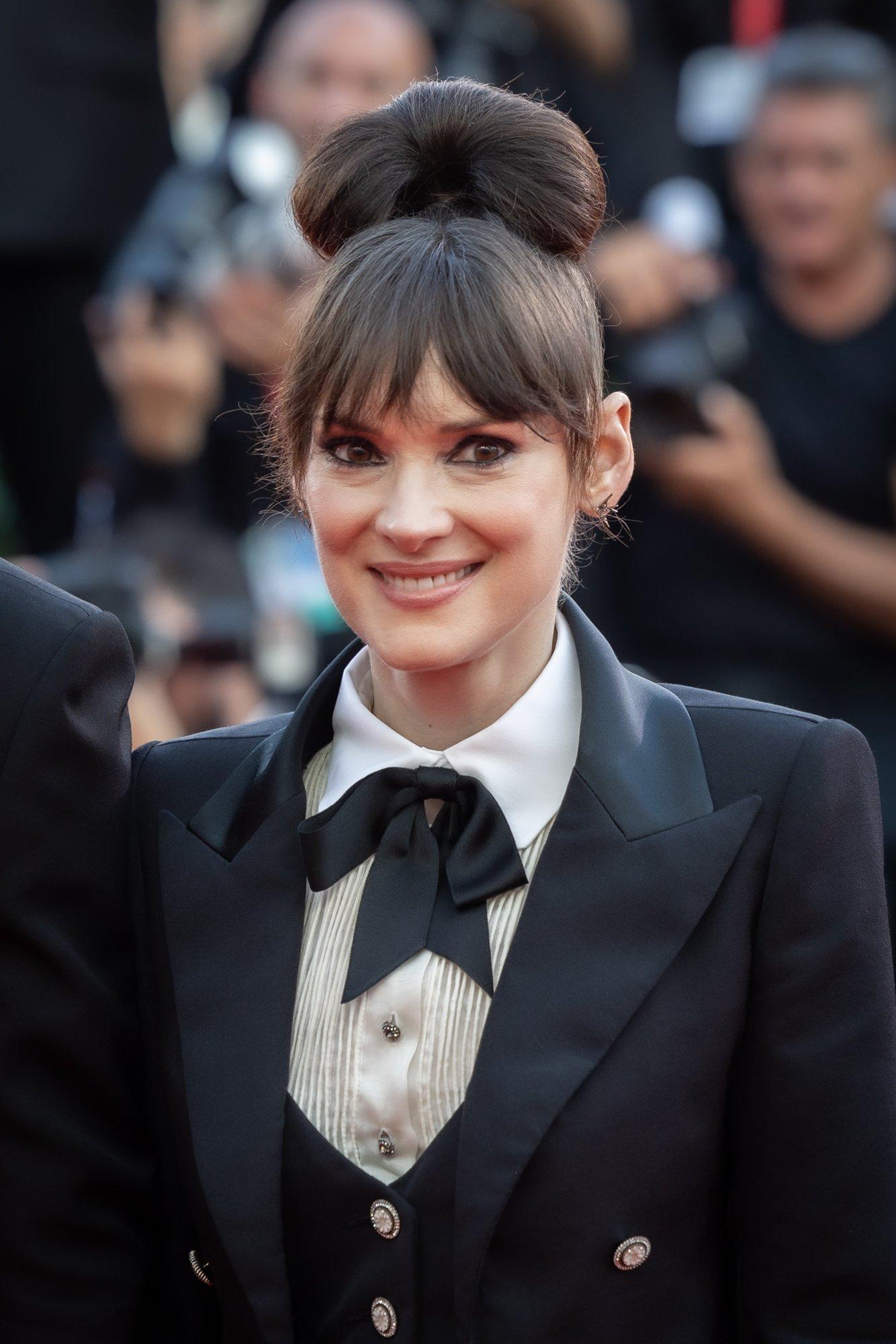
Winona Ryder.

Actor · Producer · Screen icon

Winona Ryder became Hollywood’s patron saint of the intelligent outsider long before Stranger Things made her a new generation’s frantic, haunted mother. From Beetlejuice and Heathers to Little Women and Girl, Interrupted, she kept choosing characters with jagged edges, literary brains and a refusal to behave like neat studio products—and then survived the public urge to flatten her into one headline.

OBJECTIVE PERSONALITY CLASSIFICATIONFF-Fi/Ne-CP/B(S) #4What does this mean?
PERSONALITY SYSTEMObjective Personality
LEAD FUNCTIONFi · Introverted Feeling
SECOND SAVIOR FUNCTIONNe · Extroverted Intuition
MBTI EQUIVALENTINFP
01 / BEHIND THE CLASSIFICATION

The personality behind the fame.

How does a recorded OPS classification like FF-Fi/Ne-CP/B(S) #4 break down? Walk through nine coins and watch the proposed type take shape. These are deductions from the archived code, not independent evidence of typing accuracy.

Scroll below to see Winona Ryder take shape.

STARTING POINT512 possible OPS typesEach type combines core functions, an animal order, and sexual modalities.
THE FINISH LINEFF-Fi/Ne-CP/B(S) #4One recorded classification, decoded from its components.
Winona Ryder’s HUMAN NEEDS 01—03
01
DECIDER OR OBSERVER?

Decider over Observer

Deciders have more balanced Observer poles in the middle: Control (Oi) and Chaos (Oe). Organizing what's known and handling what's new tend to feel more manageable. People are the harder territory. Self (Di) and Tribe (De) sit at the extremes, so judgment, rejection, approval, and conflict can trigger the strongest reactions.

Even before fame, Ryder’s public story was loaded with people problems, not just circumstance problems. She was bullied in junior high, then found that Beetlejuice becoming the number one movie did not improve school life; she later said it made things worse, and classmates called her a witch. That is Decider terrain: the pain lands in judgment, status and belonging. The strength is learning to keep working without waiting for universal approval. The cost is that other people’s reactions can become the whole weather system if you let them.


D
02
SELF OR TRIBE?

Di · Self over De · Tribe

Self (Di) is the stronger deciding pole. They check decisions against their own values or reasons first: what makes sense to me, what feels right to me? The strength is independent conviction; the recurring friction is the Tribe (De)—other people's standards, feedback, and expectations. As the portrait unfolds, notice how Self takes the lead.

When Ryder took Heathers, her agent reportedly begged her to pass because the film would “ruin her career.” She did it anyway, and the performance became one of the signature cult turns of her generation. Self over Tribe shows up in that willingness to trust an inner standard over immediate consensus. The strength is unmistakable taste: she repeatedly chose material that felt like hers before it looked safe on paper. The growth cost is real too. Private conviction can be artistically right and still collide with other people’s fears, branding, or career math.

Di
03
GATHER OR ORGANIZE?

Oe · Gather over Oi · Organize

Gather (Oe) leads with new information, experiences, and possibilities. Its strength is curiosity and adaptability; the recurring friction is narrowing the options and settling into what is already known. Another layer of the personality portrait comes into focus.

Ryder’s filmography resists one tidy lane: Beetlejuice, The Age of Innocence, Reality Bites, Alien Resurrection, Black Swan, Stranger Things. Gather over Organize helps explain that range. She appears more willing to follow the next interesting possibility than to lock herself inside one proven formula. The strength is creative elasticity across decades and genres. The blind spot is selectivity. Openness keeps producing fresh doors, but it does not choose which one deserves the next several years. A career can stay fascinating while its larger organizing line remains looser than the industry prefers.

Oe
FIRST THREE COINSD + Di + Oe

These establish the preferred human needs in the OPS framework.

Winona Ryder’s FUNCTIONS 04—05
04
FEELING OR THINKING?

Feeling · F over Thinking · T

Feeling (F) evaluates decisions through values, meaning, and what matters—not simply through emotion. Its strength is a clear sense of significance; Thinking (T) provides balance through impersonal reasons, consistency, and evidence. Combined with Self (Di), this forms the recorded Savior Fi.

Her attachment to Girl, Interrupted is unusually revealing. Ryder not only starred in it but executive produced it and called the project her “child of the heart.” That points to Fi’s strength: work filtered through a personal value standard rather than detached career calculation. It can make a performance feel chosen, not assigned. The blind spot sits on the other side of that conviction. Caring deeply about what feels meaningful does not automatically solve how a project will be received, framed, or even overshadowed once it leaves your hands and becomes public property.

F → Fi
05
SENSING OR INTUITION?

Intuition · N over Sensing · S

Intuition (N) focuses on concepts, patterns, and what information might mean. Sensing (S) balances it through observable facts, physical detail, and direct experience. Combined with Gather (Oe), this gives the recorded Savior Ne.

Ne fits how often Ryder was drawn to roles with a conceptual twist or an alternate social reality: the gothic teenager of Beetlejuice, the satirical teen world of Heathers, the fairy-tale sadness of Edward Scissorhands, the doubles and curses of Dracula, the generational drift of Reality Bites. The strength of Intuition here is not mere quirkiness; it is spotting possibility in material that safer casting instincts might avoid. The cost is that a compelling idea is still not a finished reality. Production limits, audience expectations, and concrete demands still get their vote.

N → Ne
THE TWO SAVIOR FUNCTIONSFi / Ne

Opposing functions: Te and Si.

Winona Ryder’s ANIMAL STACK 06—07
06
CONSUME OR BLAST?

Consume over Blast

Consume gathers information for internal processing; Blast organizes and communicates information. The recorded order is Consume → Play → Blast → Sleep. This comparison follows their positions in that stack.

Consume comes earlier than Blast in Ryder’s stack, and her public story gives that priority plenty to feed on. She grew up in a book-saturated household, spent childhood reading in a home without television, recited Salinger for an early audition, and kept returning to literary adaptations from Dracula to Little Women to The Age of Innocence. The strength is depth of intake: she does not come off like someone grabbing roles at random. The growth cost is that taking in more material can outrun the blunter work of packaging a clear message about what comes next.

C > B
07
PLAY OR SLEEP?

Play over Sleep

Play emphasizes external real-time engagement; Sleep emphasizes internal processing. The recorded stack places Play earlier.

Play comes earlier than Sleep here, which suits how often Ryder’s career moved through active exchange: ensemble films, music videos, festival jury work, executive-producing Girl, Interrupted, and later the high-relational intensity of Joyce Byers on Stranger Things. The strength is responsiveness with other people; the work gains momentum once there is someone to bounce against. The blind spot is that inner consolidation comes later. A career can stay publicly engaged for years while private regrouping becomes the task postponed until the pace finally demands it more aggressively than preference would.

P > S
Winona Ryder’s ANIMAL ORIENTATION 08—09
08
INFO OR ENERGY DOMINANT?

Info over Energy

Info dominant means Consume and Blast are both in the top three: gathering and communicating information are more balanced. Sleep last leaves the energy side uneven—Play can keep engagement going without enough private recovery.

Ryder lands on the Info side, with both taking in and delivering information arriving before the final animal. Her public career shows that mix well: she absorbs literary and offbeat material, then turns it into performances audiences can actually follow, whether as Jo March, Susanna Kaysen, or Joyce Byers. The missing piece is Sleep last. Quiet internal recovery and settled personal integration come later in the sequence, not earlier. The cost is subtle but expensive: without deliberate space to process, even a gifted career can become one more demand landing before the last role has fully settled.

Info
09
INTROVERSION OR EXTROVERSION?

Extroversion over Introversion

The last animal, Sleep, determines this OPS coin: Play or Blast last means Introversion; Consume or Sleep last means Extroversion. This describes animal orientation, not sociability or shyness.

This profile also codes as OPS Extroversion, and that does not mean “social butterfly.” Ryder’s image has often been bookish, gothic, or inward, but the stack still places external engagement ahead of the deepest internal retreat because Sleep is last. In practice, the pattern is less about sociability than about where momentum goes first: into new input, interaction, and eventual delivery. That helps explain how she could keep reentering public work across very different eras. The blind spot is underestimating how much private settling still has to happen after the cameras stop.

E
Sexual Modalities

The four sexual modalities.

OPS uses masculine/feminine sensory and extroverted-deciding distinctions as framework-specific terms, not gender categories. The four modalities are already included in the original 512 types. The recorded modality is FF · Tester.

MM KinestheticMasculine Sensory · Masculine De
MF AudioMasculine Sensory · Feminine De
FF RECORDED MODALITYTesterFeminine Sensory · Feminine De
FM VisualFeminine Sensory · Masculine De
ADDITIONAL LAYER · SOCIAL TYPE

The four social types.

Social types are an additional layer on top of the original Objective Personality classification, introduced later in OPS research. They describe two proposed social preference coins: Flex vs. Friends and Generalize vs. Specialize. The combination and priority of these preferences produce four social types. Winona Ryder's recorded social type is #4.

SOCIAL #1 #1Flex · Generalize
SOCIAL #2 #2Generalize · Friends
SOCIAL #3 #3Specialize · Flex
SOCIAL #4 RECORDED SOCIAL TYPE#4Friends · Specialize
COMPLETE RECORDED OPS TYPE · MODALITY INCLUDED + SOCIAL TYPEFF-Fi/Ne-CP/B(S) #4

Fi leads, Ne supports, and the animal stack is Consume → Play → Blast → Sleep.

THE FINISHED PORTRAIT · ALL NINE COINS REVEALED

Winona Ryder's complete function and animal stack

ConsumePlayBlastSleepmFimNefSifTe
FF-Fi/Ne-CP/B(S) #4DOUBLE ACTIVATED · PLAYExplore the Interactive Coin Builder →
THE WINONA RYDER LENS

The outsider who kept returning

Ryder’s image was set early: the black-clad teenager in Beetlejuice, the misfit in Heathers, later the frantic mother in Stranger Things. Behind that public impression is a bookish actress repeatedly pulled toward scripts that felt stranger and smarter than the safe studio lane.

Fi and Ne gave her a career built on personal taste and unusual possibility. You can see it in taking Heathers against advice, bringing Dracula to Coppola, and calling Girl, Interrupted her “child of the heart.” The strength is recognizing material worth caring about before consensus arrives. The limit is that conviction and imagination do not control reception.

As a Decider and Double Observer, Ryder’s deeper tension centers on people, judgment and belonging more than on controlling chaos. The human-needs imbalance can tilt toward protecting personal values while tribe reasoning gets less priority. The neglected function opposite her lead savior is Te: the colder external standard, the plain explanation, the organized case.

Consume → Play → Blast → Sleep puts quiet internal processing last. The harder move is slowing down long enough to integrate before the next role claims the stage. Balance does not mean becoming less distinctive. It means keeping the literary instinct and offbeat taste while scheduling real recovery between major projects and protecting reading time before the next yes.

Want to understand the Savior and Demon states behind these nine coins? Explore the complete explanation, visual examples, and typing principles on our Methodology page →

02 / KEEP EXPLORING

Different faces. Familiar patterns.

Explore other celebrities with related recorded OPS classifications. Related functions are not necessarily exact type matches.

Discover Type Twins
YOUR TURN

Curious about your own type?

Discover how your own personality might be classified through Objective Personality.

Get objectively typed
Winona Ryder's Personality Type & OPS Profile | The Personality Atlas