The Personality Atlas
THE CELEBRITY PERSONALITY ARCHIVE / BUSINESS & POLITICS

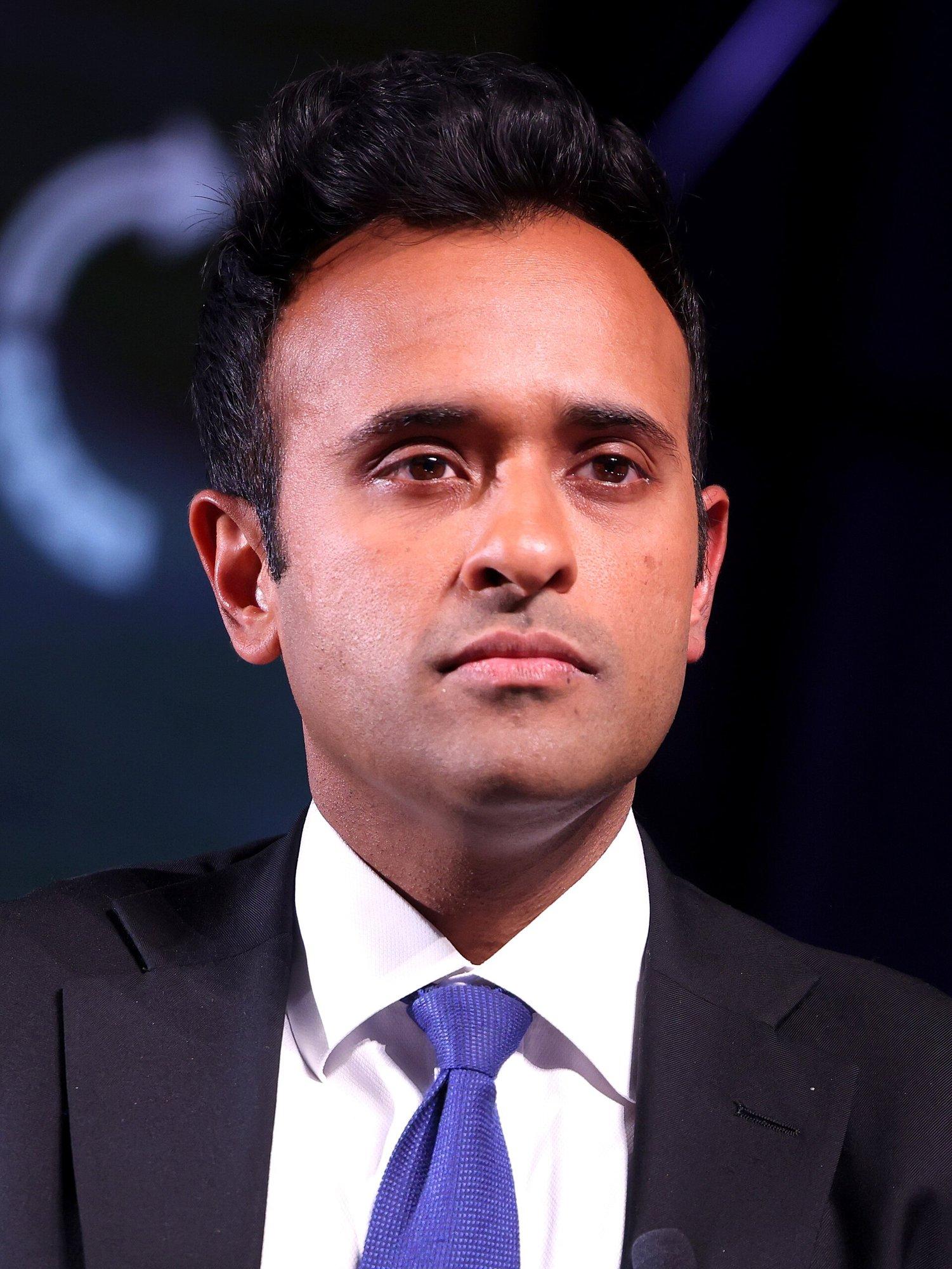
Vivek Ramaswamy.

Entrepreneur · Author · Political Candidate

Vivek Ramaswamy has ricocheted from hedge-fund biotech and the founding of Roivant Sciences to anti-ESG polemics, bestselling books and a fast, media-savvy run through Republican politics. The public image is brash, hyperverbal and strategic: a man who prefers to arrive with a theory already loaded, then test whether the room—or the market, or the electorate—can keep up.

OBJECTIVE PERSONALITY CLASSIFICATIONMF-Ni/Ti-SB/P(C) #1What does this mean?
PERSONALITY SYSTEMObjective Personality
LEAD FUNCTIONNi · Introverted Intuition
SECOND SAVIOR FUNCTIONTi · Introverted Thinking
MBTI EQUIVALENTINFJ
01 / BEHIND THE CLASSIFICATION

The personality behind the fame.

How does a recorded OPS classification like MF-Ni/Ti-SB/P(C) #1 break down? Walk through nine coins and watch the proposed type take shape. These are deductions from the archived code, not independent evidence of typing accuracy.

Scroll below to see Vivek Ramaswamy take shape.

STARTING POINT512 possible OPS typesEach type combines core functions, an animal order, and sexual modalities.
THE FINISH LINEMF-Ni/Ti-SB/P(C) #1One recorded classification, decoded from its components.
Vivek Ramaswamy’s HUMAN NEEDS 01—03
01
DECIDER OR OBSERVER?

Observer over Decider

Observers have more balanced Decider poles in the middle: Self (Di) and Tribe (De). Their own perspective and other people's perspectives tend to be easier to navigate. Things are the harder territory. Control (Oi) and Chaos (Oe) sit at the extremes, so disrupted plans, uncertainty, and a changing world can trigger the strongest reactions.

Roivant was built on a big bet that stalled against an immovable fact: intepirdine failed its phase 3 trial, and Axovant’s value cratered in a day. That kind of public swing points to Observer friction—pressure coming from unstable circumstances, timing and reality refusing to obey the pitch. Ramaswamy’s obvious strength is moving decisively through uncertain terrain, from hedge-fund biotech to a presidential run. The blind spot is believing a sharper strategy or louder case can fully master conditions that still have the last word.
O
02
SELF OR TRIBE?

Di · Self over De · Tribe

Self (Di) is the stronger deciding pole. They check decisions against their own values or reasons first: what makes sense to me, what feels right to me? The strength is independent conviction; the recurring friction is the Tribe (De)—other people's standards, feedback, and expectations. As the portrait unfolds, notice how Self takes the lead.

At Harvard he described himself as a contrarian who loved to debate, and later he built books, companies and campaigns around positions that were unmistakably his own. Self over Tribe is less about stubbornness for its own sake than about using an internal standard before checking the room. That gives him a forceful signature; he rarely sounds focus-grouped. The cost is predictable: once the personal verdict is set, outside criticism—from political rivals, investors or even fellow Republicans—can look like noise instead of information worth integrating.

Di
03
GATHER OR ORGANIZE?

Oi · Organize over Oe · Gather

Organize (Oi) leads with refining, preserving, and structuring what is already known. Its strength is preparation and clear direction; the recurring friction is unexpected change that disrupts the plan. Another layer of the personality portrait comes into focus.

Roivant itself was an Organize move: take scattered drug assets, place them inside a designed structure of specialized "vants," and drive them with a unifying thesis. The same narrowing instinct shows up later in proposals like consolidating duplicated university programs into "centers of excellence." Organize is powerful because it turns a mess of possibilities into a direction people can follow. Its weakness is rigidity at speed. A clean framework can become so persuasive that inconvenient variables start looking like temporary annoyances instead of signs the plan needs reworking.

Oi
FIRST THREE COINSO + Di + Oi

These establish the preferred human needs in the OPS framework.

Vivek Ramaswamy’s FUNCTIONS 04—05
04
FEELING OR THINKING?

Thinking · T over Feeling · F

Thinking (T) evaluates decisions through reasons, logic, and what works—not a lack of emotion. Its strength is analytical consistency; Feeling (F) provides balance through values, meaning, and the human consequences of a decision. Combined with Self (Di), this forms the recorded Savior Ti.

His public arguments usually come packaged as systems: shareholder primacy versus ESG politics, merit versus victimhood, efficiency versus bureaucracy. That style fits Ti, a judging process that wants internally consistent principles rather than merely popular ones. It helps explain why he can move from a Harvard thesis on chimeras to biotech investing to political messaging without sounding random; he is usually chasing a model. The limit is that a coherent model can feel complete before it has answered every practical objection, reputational cost or second-order consequence out in the world.

T → Ti
05
SENSING OR INTUITION?

Intuition · N over Sensing · S

Intuition (N) focuses on concepts, patterns, and what information might mean. Sensing (S) balances it through observable facts, physical detail, and direct experience. Combined with Organize (Oi), this gives the recorded Savior Ni.

Ramaswamy tends to sell a single storyline with unusual confidence. Roivant was pitched as a sweeping thesis about drug development, Strive as a counterrevolution against ESG, and his politics as an answer to a broader national identity crisis. That through-line is Ni: compression, prediction, one big pattern drawn from noisy facts. The strength is clarity. People know the frame he is trying to impose. The growth cost is obvious in biotech, where intepirdine had already failed multiple trials before becoming the centerpiece of an enormous bet. Vision can organize reality, but it cannot repeal it.

N → Ni
THE TWO SAVIOR FUNCTIONSNi / Ti

Opposing functions: Se and Fe. This is a jumper classification.

Vivek Ramaswamy’s ANIMAL STACK 06—07
06
PLAY OR SLEEP?

Sleep over Play

Play emphasizes external real-time engagement; Sleep emphasizes internal processing. The recorded stack places Sleep earlier.

Before the debate stage, there was a long record of privately forged material: valedictorian polish, a Bowdoin-winning thesis, books like Woke Inc., and a habit of arriving with an already built argument. Sleep over Play suggests that internal consolidation comes first. His advantage is obvious in interviews: he can sound finished before other people have finished circling the question. The blind spot is subtler. When the inner script is highly refined, live exchange can turn into rapid deployment rather than genuine adjustment, even when the room has changed.

S > P
07
CONSUME OR BLAST?

Blast over Consume

Consume gathers information for internal processing; Blast organizes and communicates information. The recorded order is Sleep → Blast → Play → Consume. This comparison follows their positions in that stack.

Blast outranking Consume fits how quickly he moves from thesis to declaration. He did not just study biotech finance; he launched Roivant, sold investors on a grand frame, wrote books with bold titles, and ran for president on compressed slogans. That is useful when a complicated landscape needs a memorable message. The liability is underfeeding the message with enough fresh intake. When the conclusion arrives too early, later facts—failed trials, scrutiny of business claims, or campaign backlash—stop feeling like material and start feeling like interruptions.

B > C
Vivek Ramaswamy’s ANIMAL ORIENTATION 08—09
08
INFO OR ENERGY DOMINANT?

Energy over Info

Energy dominant means Play and Sleep are both in the top three: there is access to expending energy through engagement and conserving it through internal processing. Consume last leaves the information side uneven—Blast may broadcast more than gets taken in.

With Sleep, Blast and Play in the top three, the stack reads Energy. He can build privately, push the idea outward, then jump into real-time engagement without looking drained by the handoff. That helps explain the sheer range of arenas: hedge fund work, biotech fundraising, bestselling polemics, cable appearances, a presidential run, then a gubernatorial campaign. The missing balance is Consume. More output is not the answer; more intake is. When new information comes last, a forceful message can outrun the slower work of replenishing it.

Energy
09
INTROVERSION OR EXTROVERSION?

Extroversion over Introversion

The last animal, Consume, determines this OPS coin: Play or Blast last means Introversion; Consume or Sleep last means Extroversion. This describes animal orientation, not sociability or shyness.

In OPS terms this lands on Extroversion, and that does not mean cocktail-party warmth or constant sociability. It means Consume is last in the recorded stack, so fresh intake is the final priority rather than the early one. His public life illustrates that pattern well: he repeatedly turns a settled thesis into books, boardroom pitches, campaign messaging and even a post-purchase BuzzFeed letter proposing a new direction. The growth edge is simple and uncomfortable: pause long enough to absorb disconfirming detail before the next high-definition conclusion.

E
Sexual Modalities

The four sexual modalities.

OPS uses masculine/feminine sensory and extroverted-deciding distinctions as framework-specific terms, not gender categories. The four modalities are already included in the original 512 types. The recorded modality is MF · Audio.

MM KinestheticMasculine Sensory · Masculine De
MF RECORDED MODALITYAudioMasculine Sensory · Feminine De
FF TesterFeminine Sensory · Feminine De
FM VisualFeminine Sensory · Masculine De
ADDITIONAL LAYER · SOCIAL TYPE

The four social types.

Social types are an additional layer on top of the original Objective Personality classification, introduced later in OPS research. They describe two proposed social preference coins: Flex vs. Friends and Generalize vs. Specialize. The combination and priority of these preferences produce four social types. Vivek Ramaswamy's recorded social type is #1.

SOCIAL #1 RECORDED SOCIAL TYPE#1Flex · Generalize
SOCIAL #2 #2Generalize · Friends
SOCIAL #3 #3Specialize · Flex
SOCIAL #4 #4Friends · Specialize
COMPLETE RECORDED OPS TYPE · MODALITY INCLUDED + SOCIAL TYPEMF-Ni/Ti-SB/P(C) #1

Ni leads, Ti supports, and the animal stack is Sleep → Blast → Play → Consume.

THE FINISHED PORTRAIT · ALL NINE COINS REVEALED

Vivek Ramaswamy's complete function and animal stack

SleepBlastPlayConsumefNifFemTimSe
MF-Ni/Ti-SB/P(C) #1DOUBLE ACTIVATED · BLASTExplore the Interactive Coin Builder →
THE VIVEK RAMASWAMY LENS

The theory arrives before the terrain.

Ramaswamy can sound like he entered the room mid-closing argument: on debate stages, cable hits, and Roivant pitches, the case is already assembled. That impression sits on years of concentrated preparation—Harvard biology, Yale Law, hedge-fund biotech work, then the Roivant build. The polish is real, but so is the preloaded framework behind it.

Ni/Ti is the engine. Ni compresses sprawling sectors and political themes into one governing storyline; Ti sharpens that storyline into a crisp internal logic. That combination helps him frame biotech, ESG, or education as parts of a single thesis. Its limit is familiar: a clean model can outrun the noisier evidence, incentives, and operational drag that still decide outcomes.

As an Observer and therefore a Double Decider, Ramaswamy’s pressure point is less tribe approval than getting the map of reality right and keeping chaos under control. That pairing can steady a person around people drama while overfocusing on circumstances. The neglected Se opposite lead Ni is the blunt immediate data—present-tense facts, practical details, and visible conditions that can puncture a beautiful strategic story.

Sleep → Blast → Play → Consume explains the public rhythm: consolidate privately, declare the thesis, engage live, then leave fresh intake for last. With Consume fourth, the imbalance is output outrunning replenishment. The balancing move is not softer messaging; it is scheduled contact with disconfirming specifics—clinical results, operational details, skeptical interviews—before locking the next elegant conclusion.

Want to understand the Savior and Demon states behind these nine coins? Explore the complete explanation, visual examples, and typing principles on our Methodology page →

02 / KEEP EXPLORING

Different faces. Familiar patterns.

Explore other celebrities with related recorded OPS classifications. Related functions are not necessarily exact type matches.

Discover Type Twins
YOUR TURN

Curious about your own type?

Discover how your own personality might be classified through Objective Personality.

Get objectively typed
Vivek Ramaswamy's Personality Type & OPS Profile | The Personality Atlas