The Personality Atlas
THE CELEBRITY PERSONALITY ARCHIVE / SCIENCE & AI

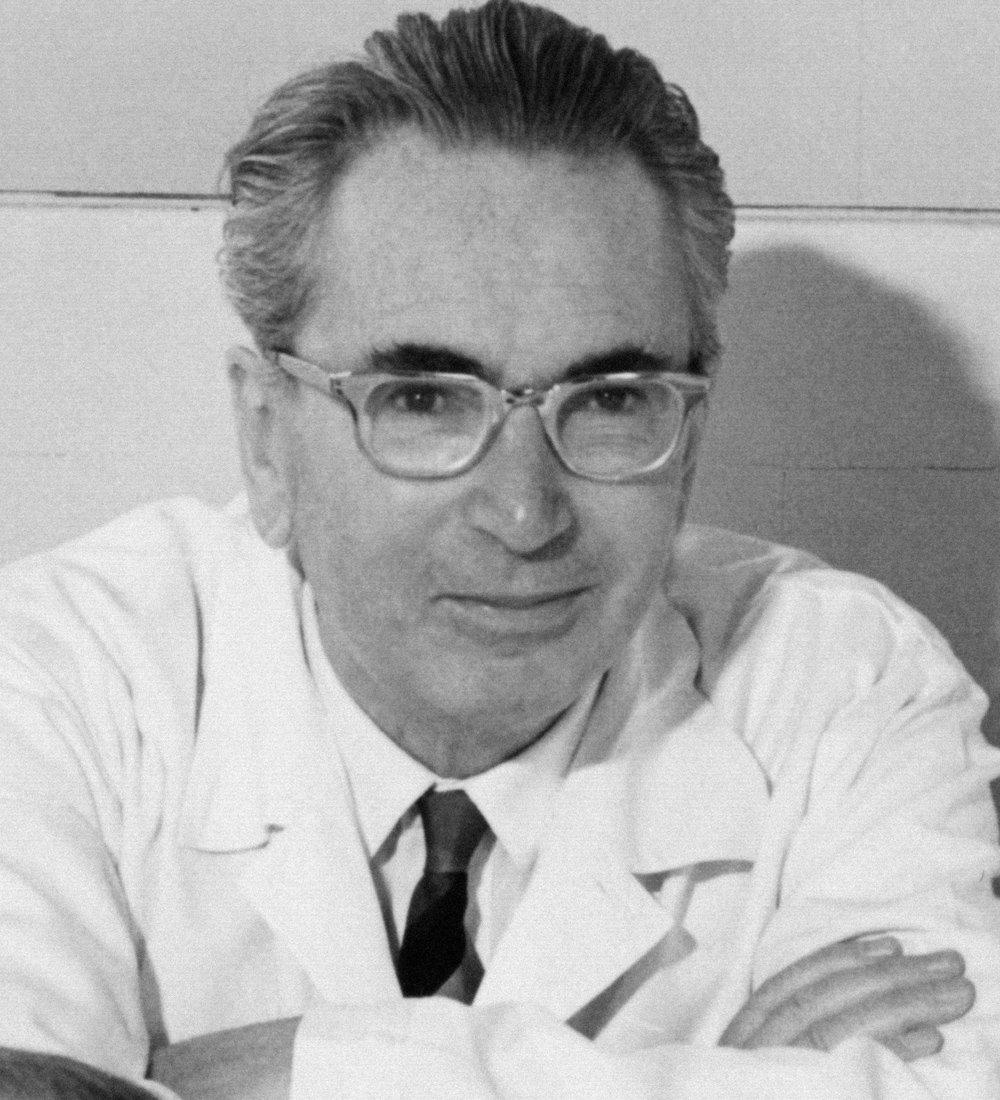
Geoffrey Hinton.

Computer scientist · AI researcher · Educator

Geoffrey Hinton spent decades arguing that neural networks mattered when much of AI treated them as an eccentric detour. Then AlexNet helped trigger a revolution, Google brought him into Google Brain, and the same researcher later left the company so he could warn publicly about the dangers of what he had helped accelerate.

OBJECTIVE PERSONALITY CLASSIFICATIONMF-Ni/Ti-SB/P(C)What does this mean?
PERSONALITY SYSTEMObjective Personality
LEAD FUNCTIONNi · Introverted Intuition
SECOND SAVIOR FUNCTIONTi · Introverted Thinking
MBTI EQUIVALENTINFJ
01 / BEHIND THE CLASSIFICATION

The personality behind the fame.

How does a recorded OPS classification like MF-Ni/Ti-SB/P(C) break down? Walk through nine coins and watch the proposed type take shape. These are deductions from the archived code, not independent evidence of typing accuracy.

Scroll below to see Geoffrey Hinton take shape.

STARTING POINT512 possible OPS typesEach type combines core functions, an animal order, and sexual modalities.
THE FINISH LINEMF-Ni/Ti-SB/P(C)One recorded classification, decoded from its components.
Geoffrey Hinton’s HUMAN NEEDS 01—03
01
DECIDER OR OBSERVER?

Observer over Decider

Observers have more balanced Decider poles in the middle: Self (Di) and Tribe (De). Their own perspective and other people's perspectives tend to be easier to navigate. Things are the harder territory. Control (Oi) and Chaos (Oe) sit at the extremes, so disrupted plans, uncertainty, and a changing world can trigger the strongest reactions.

Hinton’s career was built against inconvenient circumstances: scarce funding in Britain, an AI establishment that favored symbolic systems, then an AI boom he later warned could outrun safety work. That is classic Observer pressure. The friction sits in the state of the world—what technology can do, what institutions will back, what risks are arriving—not mainly in whether people appreciate him enough. The strength is unusual steadiness under shifting conditions. The blind spot is waiting for the external landscape to become clear before narrowing a direction. Growth costs him certainty: acting while reality is still unfinished.

O
02
SELF OR TRIBE?

Di · Self over De · Tribe

Self (Di) is the stronger deciding pole. They check decisions against their own values or reasons first: what makes sense to me, what feels right to me? The strength is independent conviction; the recurring friction is the Tribe (De)—other people's standards, feedback, and expectations. As the portrait unfolds, notice how Self takes the lead.

He kept backing neural networks when the dominant mood in AI often ran elsewhere, and in 2023 he left Google so he could speak without corporate constraint about AI risk. Self over Tribe fits that pattern of using an internal standard before a social one. The advantage is intellectual independence: he can keep a line of thought alive when consensus is bored or hostile. The cost is obvious. A private verdict can become so convincing that collaboration starts looking like delay. Growth means letting outside priorities genuinely reshape the message, not merely receive it.

Di
03
GATHER OR ORGANIZE?

Oi · Organize over Oe · Gather

Organize (Oi) leads with refining, preserving, and structuring what is already known. Its strength is preparation and clear direction; the recurring friction is unexpected change that disrupts the plan. Another layer of the personality portrait comes into focus.

Hinton’s public record is full of long-range organizing bets rather than trend-chasing: decades spent on neural networks, later extensions like capsule networks and GLOM, and repeated attempts to frame where AI development is heading next. Organize over Gather favors narrowing chaos into a durable map. That strength helps him see continuity across changing eras of the field. The blind spot is becoming too loyal to the map once it works. Growth is expensive here because new data can demand a revision that feels smaller, messier and less elegant than the original through-line.

Oi
FIRST THREE COINSO + Di + Oi

These establish the preferred human needs in the OPS framework.

Geoffrey Hinton’s FUNCTIONS 04—05
04
FEELING OR THINKING?

Thinking · T over Feeling · F

Thinking (T) evaluates decisions through reasons, logic, and what works—not a lack of emotion. Its strength is analytical consistency; Feeling (F) provides balance through values, meaning, and the human consequences of a decision. Combined with Self (Di), this forms the recorded Savior Ti.

Even in triumph, Hinton often sounds more interested in mechanism than mythology. He publicly noted that David Rumelhart came up with the basic idea of backpropagation, and his own research career is a string of model-building efforts—from Boltzmann machines to Forward-Forward—that chase internal coherence. Thinking puts the premium on whether the explanation actually works. That is a serious strength in a field addicted to hype. The blind spot is that a correct model can be delivered as if correctness should settle the social question. Growth means translating precision into coordination, not just into another sharper argument.

T → Ti
05
SENSING OR INTUITION?

Intuition · N over Sensing · S

Intuition (N) focuses on concepts, patterns, and what information might mean. Sensing (S) balances it through observable facts, physical detail, and direct experience. Combined with Organize (Oi), this gives the recorded Savior Ni.

AlexNet’s 2012 ImageNet win did more than solve a benchmark; it signaled a coming shift in how the field would build vision systems. Hinton’s career repeatedly lands in that territory of trajectories, not just facts: backprop’s potential, capsule architectures, AGI timelines, AI safety before catastrophe. Intuition is the strength behind those long arcs. He is unusually good at asking what today’s result becomes if you let it compound. The cost is that a compelling future story can outrun immediate constraints. Growth means checking the grand forecast against stubborn present-tense details.

N → Ni
THE TWO SAVIOR FUNCTIONSNi / Ti

Opposing functions: Se and Fe. This is a jumper classification.

Geoffrey Hinton’s ANIMAL STACK 06—07
06
PLAY OR SLEEP?

Sleep over Play

Play emphasizes external real-time engagement; Sleep emphasizes internal processing. The recorded stack places Sleep earlier.

The first animal pressure point shows up in how much Hinton’s work depends on stepping back and developing an internal model before the live exchange. Years of theory building, landmark papers, and even the very title of the wake-sleep algorithm fit a public career shaped by private consolidation. Sleep over Play gives depth and originality to the ideas. The drawback is timing. By the time the real-time conversation starts, the framework may already feel settled to him. Growth asks for more midstream interaction, before the model hardens into the answer.

S > P
07
CONSUME OR BLAST?

Blast over Consume

Consume gathers information for internal processing; Blast organizes and communicates information. The recorded order is Sleep → Blast → Play → Consume. This comparison follows their positions in that stack.

After that private base, Blast arrives before Consume. Hinton did not keep his work sealed in a lab notebook; he taught a free Coursera course in 2012, led research programs at CIFAR, co-founded the Vector Institute, and turned his Google resignation into a public safety argument the world could actually hear. Blast is the strength of making a conclusion legible. With Consume later, the cost is familiar: the clearer the message becomes, the easier it is to keep advancing it. Growth means leaving more room for fresh input before the next elegant explanation lands.

B > C
Geoffrey Hinton’s ANIMAL ORIENTATION 08—09
08
INFO OR ENERGY DOMINANT?

Energy over Info

Energy dominant means Play and Sleep are both in the top three: there is access to expending energy through engagement and conserving it through internal processing. Consume last leaves the information side uneven—Blast may broadcast more than gets taken in.

Hinton’s stack is Energy-dominant, and his public life makes that believable in a very specific way: long stretches of solitary conceptual work coexist with active teaching, institute-building and public debate. The balance is not laziness versus productivity; it is the pairing of private recharge with outward engagement. That combination helped him move between the University of Toronto, Google Brain, CIFAR and AI safety advocacy without becoming a pure hermit or a pure spokesman. The missing imbalance is Consume last. He can keep the system moving through thinking, explaining and interaction while fresh intake becomes the part easiest to postpone.

Energy
09
INTROVERSION OR EXTROVERSION?

Extroversion over Introversion

The last animal, Consume, determines this OPS coin: Play or Blast last means Introversion; Consume or Sleep last means Extroversion. This describes animal orientation, not sociability or shyness.

Sleep → Blast → Play → Consume ends in the officially decoded Extroversion coin, and that does not mean cocktail-party friendliness. It means the least-preferred work is fresh intake, not private processing. Hinton’s public arc fits that pattern: once his internal model is formed, he can broadcast it, debate it and push it into institutions or public warnings. That is why he could leave Google and immediately become one of AI’s clearest cautionary voices. The blind spot is informational closure. Growth means deliberately seeking disconfirming evidence and technical counterarguments before the next forecast becomes the headline.

E
Sexual Modalities

The four sexual modalities.

OPS uses masculine/feminine sensory and extroverted-deciding distinctions as framework-specific terms, not gender categories. The four modalities are already included in the original 512 types. The recorded modality is MF · Audio.

MM KinestheticMasculine Sensory · Masculine De
MF RECORDED MODALITYAudioMasculine Sensory · Feminine De
FF TesterFeminine Sensory · Feminine De
FM VisualFeminine Sensory · Masculine De
COMPLETE RECORDED OPS TYPE · MODALITY INCLUDEDMF-Ni/Ti-SB/P(C)

Ni leads, Ti supports, and the animal stack is Sleep → Blast → Play → Consume.

THE FINISHED PORTRAIT · ALL NINE COINS REVEALED

Geoffrey Hinton's complete function and animal stack

SleepBlastPlayConsumefNifFemTimSe
MF-Ni/Ti-SB/P(C)DOUBLE ACTIVATED · BLASTExplore the Interactive Coin Builder →
THE GEOFFREY HINTON LENS

The prophet who built the machine.

The public image is almost too neat: the “Godfather of AI,” AlexNet breakthrough, Turing Award, Nobel Prize, then the veteran researcher leaving Google so he could warn about AI risk. Behind that arc is a stubborn builder who spent years carrying an unfashionable idea until the world finally caught up.

Ni/Ti gives him a particular kind of strength: seeing the long pattern and then refining an internally coherent explanation for it. That combination can change a field, as his neural-network work clearly did. Its limit is equally sharp. A compelling model can become so persuasive that messier present constraints receive attention late.

As an Observer and Double Decider, Hinton’s core imbalance is with circumstances, trajectories and control of unfolding systems more than with everyday tribe drama. The human need that gets overstretched is securing a reliable map of reality. Neglected Se, opposite his lead Ni, asks for immediate concrete data, present-tense feedback and what the system is doing right now.

Sleep → Blast → Play → Consume explains the last pressure point. He can process privately, state a thesis clearly and engage the public before seeking more raw input. Consume last risks turning the next warning into a finished verdict too soon. The balance is not less vision; it is scheduling real technical listening sessions with builders, skeptics and regulators before the next big pronouncement.

Want to understand the Savior and Demon states behind these nine coins? Explore the complete explanation, visual examples, and typing principles on our Methodology page →

02 / KEEP EXPLORING

Different faces. Familiar patterns.

Explore other celebrities with related recorded OPS classifications. Related functions are not necessarily exact type matches.

Discover Type Twins
YOUR TURN

Curious about your own type?

Discover how your own personality might be classified through Objective Personality.

Get objectively typed
Geoffrey Hinton's Personality Type & OPS Profile | The Personality Atlas