The Personality Atlas
THE CELEBRITY PERSONALITY ARCHIVE / PSYCHIATRY & PHILOSOPHY

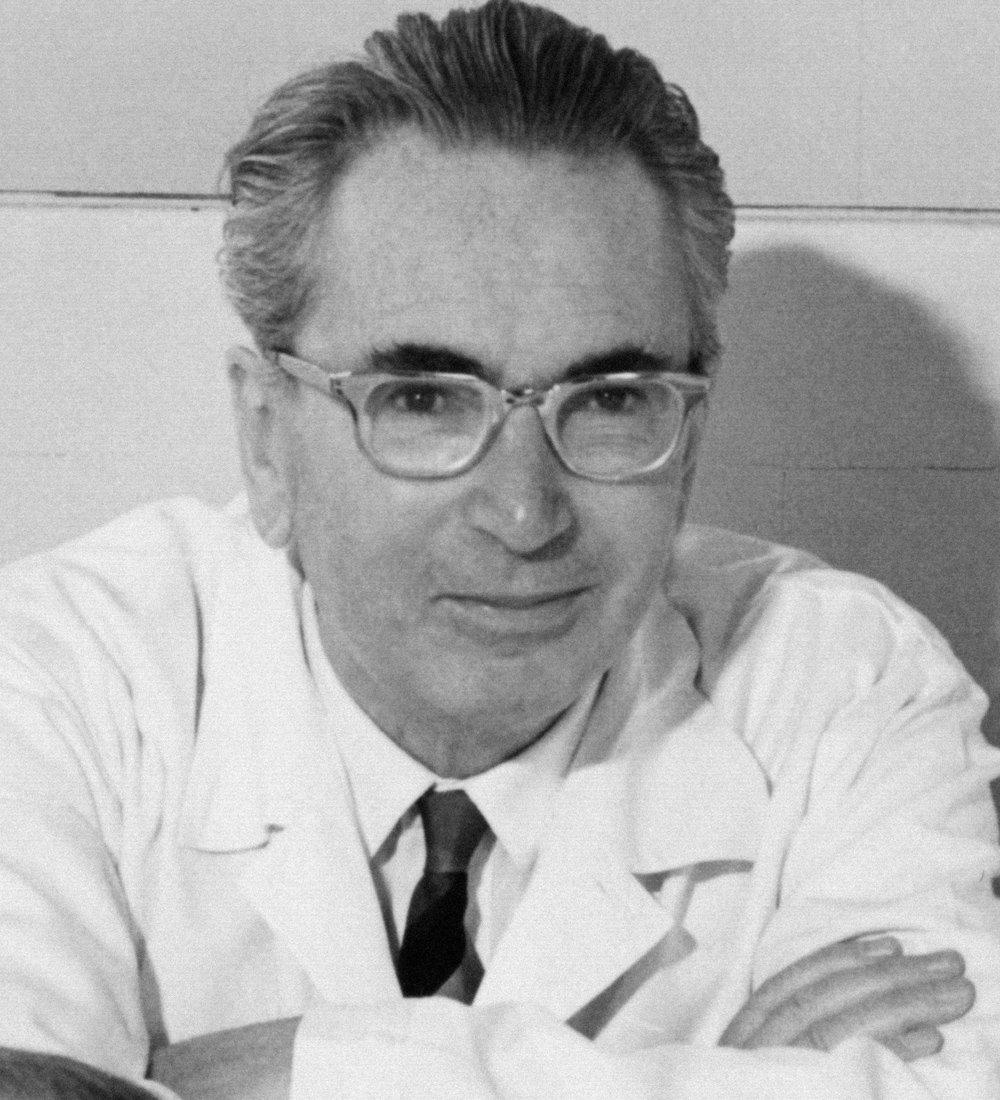
Victor Frankl.

Neurologist · Psychiatrist · Author

Before Viktor Frankl became the author people press into grieving hands, he was a young Viennese doctor organizing free youth counseling centers, later a department head trying to protect Jewish patients under Nazi rule, and after the war a tireless builder of logotherapy. The public image can drift toward saintly monument. The career itself was more interesting: stubborn, system-making, and relentlessly committed to turning catastrophe into a usable theory.

OBJECTIVE PERSONALITY CLASSIFICATIONMF-Ni/Ti-SB/P(C)What does this mean?
PERSONALITY SYSTEMObjective Personality
LEAD FUNCTIONNi · Introverted Intuition
SECOND SAVIOR FUNCTIONTi · Introverted Thinking
MBTI EQUIVALENTINFJ
01 / BEHIND THE CLASSIFICATION

The personality behind the fame.

How does a recorded OPS classification like MF-Ni/Ti-SB/P(C) break down? Walk through nine coins and watch the proposed type take shape. These are deductions from the archived code, not independent evidence of typing accuracy.

Scroll below to see Victor Frankl take shape.

STARTING POINT512 possible OPS typesEach type combines core functions, an animal order, and sexual modalities.
THE FINISH LINEMF-Ni/Ti-SB/P(C)One recorded classification, decoded from its components.
Victor Frankl’s HUMAN NEEDS 01—03
01
DECIDER OR OBSERVER?

Observer over Decider

Observers have more balanced Decider poles in the middle: Self (Di) and Tribe (De). Their own perspective and other people's perspectives tend to be easier to navigate. Things are the harder territory. Control (Oi) and Chaos (Oe) sit at the extremes, so disrupted plans, uncertainty, and a changing world can trigger the strongest reactions.

Frankl’s public life keeps returning to situations he could not simply wish into order: teen suicide waves in Vienna, the Nazi euthanasia program, deportation, then the wreckage after the camps. That points to Observer friction, where the pressure sits in brutal circumstances and the problem of what reality is doing. His strength was refusing paralysis; he organized counseling centers, rebuilt a medical career, and kept working. The blind spot is subtler: a powerful framework for chaos can start to look like a sufficient answer to chaos, even when reality keeps producing cases no system fully resolves.

O
02
SELF OR TRIBE?

Di · Self over De · Tribe

Self (Di) is the stronger deciding pole. They check decisions against their own values or reasons first: what makes sense to me, what feels right to me? The strength is independent conviction; the recurring friction is the Tribe (De)—other people's standards, feedback, and expectations. As the portrait unfolds, notice how Self takes the lead.

Frankl broke with Adler’s circle because he would not surrender his own conviction that meaning, not libido or power alone, was central. That is Self over Tribe in a clean public form: he would rather lose belonging than outsource his standard. The payoff was originality; logotherapy exists because he did not merely echo bigger schools. The cost is relational. A privately held verdict can harden into its own authority, making colleagues, critics, or wounded communities look like obstacles to the principle instead of people whose objections may need more room.

Di
03
GATHER OR ORGANIZE?

Oi · Organize over Oe · Gather

Organize (Oi) leads with refining, preserving, and structuring what is already known. Its strength is preparation and clear direction; the recurring friction is unexpected change that disrupts the plan. Another layer of the personality portrait comes into focus.

Frankl did not just write inspiring lines about purpose; he built an organized system. Logotherapy laid out recurring routes to meaning, named methods such as paradoxical intention and dereflection, and kept returning to responsibility as a durable frame. That is Organize over Gather: settling information into a coherent structure that other people can use. The advantage is portability—students, patients, and readers can grasp the model quickly. The tradeoff is compression. A theory that organizes life powerfully can also squeeze diverse motives and messy histories into one preferred pattern.

Oi
FIRST THREE COINSO + Di + Oi

These establish the preferred human needs in the OPS framework.

Victor Frankl’s FUNCTIONS 04—05
04
FEELING OR THINKING?

Thinking · T over Feeling · F

Thinking (T) evaluates decisions through reasons, logic, and what works—not a lack of emotion. Its strength is analytical consistency; Feeling (F) provides balance through values, meaning, and the human consequences of a decision. Combined with Self (Di), this forms the recorded Savior Ti.

His recorded judging coin is Thinking, and Frankl’s career shows it in the way he argued. He challenged Freud and Adler, criticized reductionist psychotherapy for dehumanizing patients, and used Socratic dialogue to pressure-test assumptions rather than simply affirm emotion. Ti’s strength is building an internally consistent model strong enough to survive disagreement. Its blind spot is sharpness: a logically elegant explanation can feel complete before every human complication has been heard. Meaning may be central in his system, but people do not arrive with their lives arranged as neatly as a theory.

T → Ti
05
SENSING OR INTUITION?

Intuition · N over Sensing · S

Intuition (N) focuses on concepts, patterns, and what information might mean. Sensing (S) balances it through observable facts, physical detail, and direct experience. Combined with Organize (Oi), this gives the recorded Savior Ni.

Frankl’s perceiving coin is Intuition, specifically the long-range kind that keeps asking what everything is pointing toward. Man’s Search for Meaning, the Statue of Responsibility idea, and even his effort to reconstruct a lost manuscript from memory all circle the same move: pull a governing theme out of ruin and orient life around it. Ni can be immensely clarifying. It gives his work a memorable spine instead of a pile of observations. The cost is narrowing. When one big pattern becomes persuasive enough, contradictory details may look secondary rather than like data demanding a revision of the story.

N → Ni
THE TWO SAVIOR FUNCTIONSNi / Ti

Opposing functions: Se and Fe. This is a jumper classification.

Victor Frankl’s ANIMAL STACK 06—07
06
PLAY OR SLEEP?

Sleep over Play

Play emphasizes external real-time engagement; Sleep emphasizes internal processing. The recorded stack places Sleep earlier.

Between Play and Sleep, Sleep comes earlier here. Frankl’s life repeatedly shows private consolidation before outward spontaneity: refining logotherapy over years, reconstructing The Doctor and the Soul from memory on scraps of paper, then writing Man’s Search for Meaning in a concentrated burst after the war. Sleep’s strength is depth. Experience is metabolized into a viewpoint instead of sprayed out half-formed. The blind spot is timing. When the internal model becomes the main workshop, real-time exchange can arrive late, after the interpretation already feels settled and harder to reshape.

S > P
07
CONSUME OR BLAST?

Blast over Consume

Consume gathers information for internal processing; Blast organizes and communicates information. The recorded order is Sleep → Blast → Play → Consume. This comparison follows their positions in that stack.

Between Consume and Blast, Blast comes earlier. Frankl did not keep his ideas tucked away in notebooks; he headed departments, lectured at Harvard and elsewhere, published 39 books, and pushed logotherapy into public circulation as a major school. Blast’s gift is usable distillation: take a sprawling moral and clinical problem and say something clear enough to teach. The cost is that declaration can outrun intake. A message delivered with authority attracts followers, but it also attracts unanswered objections if new evidence, rival readings, or archival disputes are not taken in with equal seriousness.

B > C
Victor Frankl’s ANIMAL ORIENTATION 08—09
08
INFO OR ENERGY DOMINANT?

Energy over Info

Energy dominant means Play and Sleep are both in the top three: there is access to expending energy through engagement and conserving it through internal processing. Consume last leaves the information side uneven—Blast may broadcast more than gets taken in.

This stack lands on Energy over Info. Frankl’s public record shows why: private processing, institutional responsibility, and active engagement all appear before the slow work of continued intake. He could move from clinic leadership to postwar rebuilding to international lecturing without waiting for perfect completeness. That balance made him productive and historically influential. The void sits at the information end, especially with Consume last. The risk is not ignorance; it is momentum—continuing to refine and present a framework while fresh counterevidence, dissent, or newer research receives less sustained room than the mission itself.

Energy
09
INTROVERSION OR EXTROVERSION?

Extroversion over Introversion

The last animal, Consume, determines this OPS coin: Play or Blast last means Introversion; Consume or Sleep last means Extroversion. This describes animal orientation, not sociability or shyness.

Atlas decodes this profile as Extroversion, and that does not mean cocktail-party friendliness. With Consume last, the pattern leans toward output, responsibility, and engagement before prolonged information gathering. Frankl’s career fits that distinction: hospital leadership, professorship, visiting lectureships, and a body of books that kept pressing his central thesis into the world. The strength is public usefulness; ideas become institutions, methods, and language other people can actually use. The growth cost is deliberate intake. Protect time for competing scholarship, difficult historical questions, and perspectives that do not naturally fit the existing frame.

E
Sexual Modalities

The four sexual modalities.

OPS uses masculine/feminine sensory and extroverted-deciding distinctions as framework-specific terms, not gender categories. The four modalities are already included in the original 512 types. The recorded modality is MF · Audio.

MM KinestheticMasculine Sensory · Masculine De
MF RECORDED MODALITYAudioMasculine Sensory · Feminine De
FF TesterFeminine Sensory · Feminine De
FM VisualFeminine Sensory · Masculine De
COMPLETE RECORDED OPS TYPE · MODALITY INCLUDEDMF-Ni/Ti-SB/P(C)

Ni leads, Ti supports, and the animal stack is Sleep → Blast → Play → Consume.

THE FINISHED PORTRAIT · ALL NINE COINS REVEALED

Victor Frankl's complete function and animal stack

SleepBlastPlayConsumefNifFemTimSe
MF-Ni/Ti-SB/P(C)DOUBLE ACTIVATED · BLASTExplore the Interactive Coin Builder →
THE VICTOR FRANKL LENS

The architect of meaning under pressure

Frankl is often remembered as the grave voice of Man’s Search for Meaning, but the public life behind that image is more active and specific: a young Viennese medical student organizing free youth counseling centers, a neurologist shielding patients where he could, and a postwar teacher turning catastrophe into a portable vocabulary of responsibility.

Ni/Ti gave him his great advantage: he could reduce sprawling suffering, philosophy, and clinical practice into a single durable architecture organized around meaning. That is why his work traveled so far. The limit is equally visible. A framework this elegant can begin to sound sufficient even when history, scholarship, or individual cases refuse its neatest conclusions.

As an Observer and Double Decider, Frankl’s basic pressure centers on circumstances, chaos, and what reality is doing, not primarily on winning every social alignment. The pairing matters: an Observer is a Double Decider. The human-needs imbalance is control over conditions, while neglected Se asks for more direct contact with stubborn facts before the interpretation fully closes.

Sleep → Blast → Play → Consume shows the final imbalance. With Consume last, his system can move from private synthesis into teaching and engagement faster than it moves back into fresh intake, which is why Atlas marks Extroversion here. The balancing move is concrete: keep the big meaning-framework, but submit it regularly to new archives, rival scholarship, and patient-level particulars.

Want to understand the Savior and Demon states behind these nine coins? Explore the complete explanation, visual examples, and typing principles on our Methodology page →

02 / KEEP EXPLORING

Different faces. Familiar patterns.

Explore other celebrities with related recorded OPS classifications. Related functions are not necessarily exact type matches.

Discover Type Twins
YOUR TURN

Curious about your own type?

Discover how your own personality might be classified through Objective Personality.

Get objectively typed
Victor Frankl's Personality Type & OPS Profile | The Personality Atlas