The Personality Atlas
THE CELEBRITY PERSONALITY ARCHIVE / FILM & TELEVISION

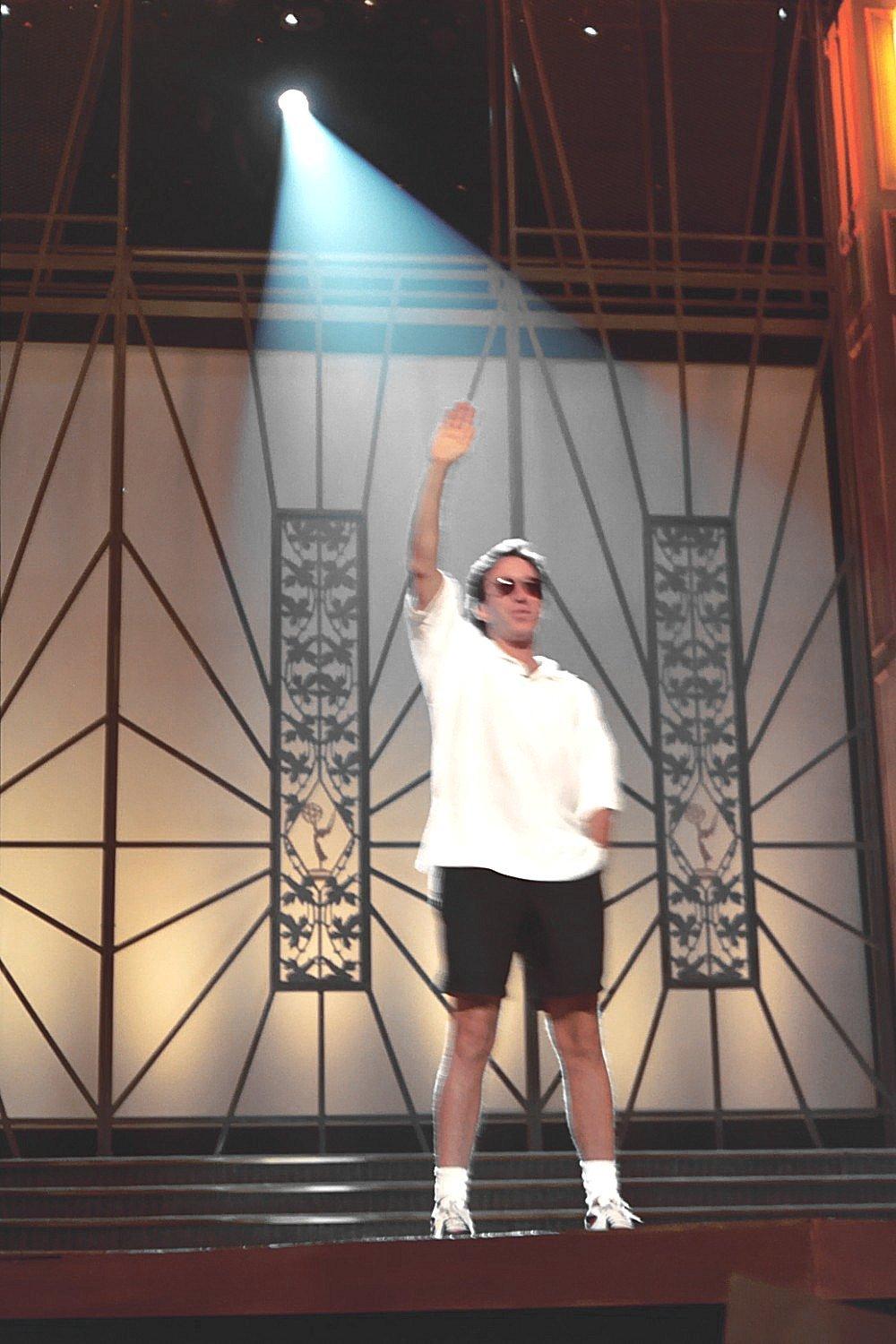
Tim Allen.

Actor · Comedian · Voice Performer

Tim Allen made middle-American competence into a long-running entertainment product: the grunting handyman on Home Improvement, the dad-war commentator of Last Man Standing, the square-jawed certainty of Buzz Lightyear, the familiar voice in commercials and narration. Behind that durable authority is a comedian who kept turning a processed personal viewpoint into franchises, catchphrases, and remarkably bankable sameness.

OBJECTIVE PERSONALITY CLASSIFICATIONMF-Ti/Ni-SB/P(C)What does this mean?
PERSONALITY SYSTEMObjective Personality
LEAD FUNCTIONTi · Introverted Thinking
SECOND SAVIOR FUNCTIONNi · Introverted Intuition
MBTI EQUIVALENTISTP
01 / BEHIND THE CLASSIFICATION

The personality behind the fame.

How does a recorded OPS classification like MF-Ti/Ni-SB/P(C) break down? Walk through nine coins and watch the proposed type take shape. These are deductions from the archived code, not independent evidence of typing accuracy.

Scroll below to see Tim Allen take shape.

STARTING POINT512 possible OPS typesEach type combines core functions, an animal order, and sexual modalities.
THE FINISH LINEMF-Ti/Ni-SB/P(C)One recorded classification, decoded from its components.
Tim Allen’s HUMAN NEEDS 01—03
01
DECIDER OR OBSERVER?

Decider over Observer

Deciders have more balanced Observer poles in the middle: Control (Oi) and Chaos (Oe). Organizing what's known and handling what's new tend to feel more manageable. People are the harder territory. Self (Di) and Tribe (De) sit at the extremes, so judgment, rejection, approval, and conflict can trigger the strongest reactions.

When Allen described moving from being in the “cool group” at one school to the bottom of the social hierarchy at another, he gave a cleaner picture of his main friction than any catchphrase ever could. Even his signature sitcom roles, from Tim Taylor to Mike Baxter, run on rank, respect, and family judgments. That is Decider territory: people, significance, and who gets to define the pecking order. The strength is sharp instinct for human tension. The blind spot is treating the biggest problem as who stands where, when circumstance itself may deserve more attention.
D
02
SELF OR TRIBE?

Di · Self over De · Tribe

Self (Di) is the stronger deciding pole. They check decisions against their own values or reasons first: what makes sense to me, what feels right to me? The strength is independent conviction; the recurring friction is the Tribe (De)—other people's standards, feedback, and expectations. As the portrait unfolds, notice how Self takes the lead.

Allen’s career repeatedly works best when the perspective is unmistakably his. He started stand-up on a dare, then parlayed that voice into Home Improvement, a bestselling book, and later Mike Baxter on Last Man Standing, a character described as loosely based on his own life. Self over Tribe fits that through-line: the persona has an owner. The strength is recognizability; audiences know whose take they are getting. The cost is that a privately satisfying conclusion can arrive pre-decided, making outside feedback feel less like collaboration and more like background noise.

Di
03
GATHER OR ORGANIZE?

Oi · Organize over Oe · Gather

Organize (Oi) leads with refining, preserving, and structuring what is already known. Its strength is preparation and clear direction; the recurring friction is unexpected change that disrupts the plan. Another layer of the personality portrait comes into focus.

Allen has spent decades returning to durable frames: Home Improvement ran through the 1990s, Toy Story has stretched from 1995 into a fifth film, The Santa Clause continued into 2023, Last Man Standing survived cancellation and revival, and Shifting Gears again centers a stubborn shop owner. Organize over Gather shows up in that habit of stabilizing a lane and building within it. The strength is consistency; networks and audiences know the product. The blind spot is that another variation on the trusted format can crowd out stranger possibilities that do not announce themselves so neatly.

Oi
FIRST THREE COINSD + Di + Oi

These establish the preferred human needs in the OPS framework.

Tim Allen’s FUNCTIONS 04—05
04
FEELING OR THINKING?

Thinking · T over Feeling · F

Thinking (T) evaluates decisions through reasons, logic, and what works—not a lack of emotion. Its strength is analytical consistency; Feeling (F) provides balance through values, meaning, and the human consequences of a decision. Combined with Self (Di), this forms the recorded Savior Ti.

Thinking is hard to miss in a career built around tools, cars, mechanisms, and clean premises. Allen studied radio and television production with minors in philosophy and design, raced cars in the 1990s, maintains a serious collection, and now fronts More Power, a series about the history of tools. Ti favors internal logic: does the bit work, does the machine make sense, does the role fit the frame? That clarity is a strength. The cost is that emotional nuance can get flattened when practical reasoning becomes the main language.

T → Ti
05
SENSING OR INTUITION?

Intuition · N over Sensing · S

Intuition (N) focuses on concepts, patterns, and what information might mean. Sensing (S) balances it through observable facts, physical detail, and direct experience. Combined with Organize (Oi), this gives the recorded Savior Ni.

Allen’s Intuition looks less like mysticism and more like narrowing life into a durable through-line. Tim Taylor, Buzz Lightyear, Scott Calvin, Mike Baxter, and the classic-car-shop owner of Shifting Gears are not the same character, but they orbit one recognizable idea: the capable, slightly stubborn man with a settled point of view. Ni gives that long-range coherence. It helps him build franchises instead of one-offs. The tradeoff is selectivity. When the pattern already feels clear, fresh data can seem less urgent than reinforcing the story he already knows how to tell.

N → Ni
THE TWO SAVIOR FUNCTIONSTi / Ni

Opposing functions: Fe and Se. This is a jumper classification.

Tim Allen’s ANIMAL STACK 06—07
06
PLAY OR SLEEP?

Sleep over Play

Play emphasizes external real-time engagement; Sleep emphasizes internal processing. The recorded stack places Sleep earlier.

Allen once said, “I can only play a part if I can draw on personal experience, and that well can go dry pretty quickly.” That is a useful public window into Sleep over Play. The advantage is depth through private processing: the stand-up, the sitcom father, and even the memoir land harder when they have been internally digested first. The blind spot is real-time looseness. If material has to pass through an established inner filter, outside interaction can feel less like discovery and more like interruption. Growth costs spontaneity and a little control.

S > P
07
CONSUME OR BLAST?

Blast over Consume

Consume gathers information for internal processing; Blast organizes and communicates information. The recorded order is Sleep → Blast → Play → Consume. This comparison follows their positions in that stack.

Blast over Consume is easier to see once Allen becomes a voice people instantly recognize. He was simultaneously atop television, film, and the bestseller list in 1994, later narrated Pure Michigan, voiced campaigns for Chevrolet and Campbell’s, hosted the TV Land Awards, and toured with stand-up to promote Crazy on the Outside. The strength is decisive delivery: he can package a premise and send it. The cost is that broadcasting a settled message can outrun further intake. Another interview, another draft, or another perspective may arrive after the conclusion already has.

B > C
Tim Allen’s ANIMAL ORIENTATION 08—09
08
INFO OR ENERGY DOMINANT?

Energy over Info

Energy dominant means Play and Sleep are both in the top three: there is access to expending energy through engagement and conserving it through internal processing. Consume last leaves the information side uneven—Blast may broadcast more than gets taken in.

This stack is Energy-dominant, which fits a career that keeps alternating between private processing and outward performance. Allen can retreat into a defined viewpoint, then step back out to sitcom leads, voice campaigns, stand-up tours, or a tool-history show with Richard Karn. That balance creates stamina around doing and engaging. The void sits in Consume last. The risk is not a lack of activity; it is underinvesting in fresh intake once the lane is already working. Long-running franchises can become a comfort zone where experience keeps paying out faster than new information arrives.

Energy
09
INTROVERSION OR EXTROVERSION?

Extroversion over Introversion

The last animal, Consume, determines this OPS coin: Play or Blast last means Introversion; Consume or Sleep last means Extroversion. This describes animal orientation, not sociability or shyness.

In Sleep → Blast → Play → Consume, the last animal is Consume, which Atlas reads as OPS Extroversion. This is not a claim about party friendliness. It points to a system that more readily processes, declares, and engages than lingers in open-ended intake. Allen’s public life tracks that pattern: after his 1981 release from prison, he returned to comedy, moved to Los Angeles, became a Comedy Store regular, and kept finding outward vehicles for a defined voice. The growth edge is deliberate curiosity before the next performance machine starts running on habit.

E
Sexual Modalities

The four sexual modalities.

OPS uses masculine/feminine sensory and extroverted-deciding distinctions as framework-specific terms, not gender categories. The four modalities are already included in the original 512 types. The recorded modality is MF · Audio.

MM KinestheticMasculine Sensory · Masculine De
MF RECORDED MODALITYAudioMasculine Sensory · Feminine De
FF TesterFeminine Sensory · Feminine De
FM VisualFeminine Sensory · Masculine De
COMPLETE RECORDED OPS TYPE · MODALITY INCLUDEDMF-Ti/Ni-SB/P(C)

Ti leads, Ni supports, and the animal stack is Sleep → Blast → Play → Consume.

THE FINISHED PORTRAIT · ALL NINE COINS REVEALED

Tim Allen's complete function and animal stack

SleepBlastPlayConsumemTimSefNifFe
MF-Ti/Ni-SB/P(C)DOUBLE ACTIVATED · BLASTExplore the Interactive Coin Builder →
THE TIM ALLEN LENS

The authority is the act—and the asset.

In November 1994, Allen simultaneously had the top-rated television series, the highest-grossing film, and a New York Times bestseller in the same week. That public image of blunt, dependable authority can seem almost too complete. Behind it was a Detroit stand-up and radio-production graduate who learned to turn a processed personal voice into a commercial machine.

Ti paired with Ni helps explain that machine. Ti gives Allen an internal standard for what tracks, what sounds right, what joke or role feels mechanically true to his perspective. Ni narrows that judgment into a durable lane, which is why franchises and familiar archetypes kept returning. The strength is coherence. The limit is doubling down on the established thesis when fresher input could refine it.

As a Decider and Double Observer, Allen is comparatively steadier with circumstances than with people-significance questions. The recurring pressure is self versus tribe judgment: how much to trust his own read without letting every audience, network, or critic set the standard. Neglected Fe, opposite his lead Ti, can make the room’s emotional temperature easier to underweight than the logic of the bit, the role, or the point he wants to land.

Sleep → Blast → Play → Consume creates an Energy-first profile with Consume last, so the tax is not performance or engagement but fresh intake. He can process, declare, and interact before stopping to absorb something that does not already fit the lane. The balancing move is specific: keep the sharp voice, but add a deliberate listening-and-research pass before locking the next character, routine, or restoration project.

Want to understand the Savior and Demon states behind these nine coins? Explore the complete explanation, visual examples, and typing principles on our Methodology page →

02 / KEEP EXPLORING

Different faces. Familiar patterns.

Explore other celebrities with related recorded OPS classifications. Related functions are not necessarily exact type matches.

Discover Type Twins
YOUR TURN

Curious about your own type?

Discover how your own personality might be classified through Objective Personality.

Get objectively typed
Tim Allen's Personality Type & OPS Profile | The Personality Atlas