The Personality Atlas
THE CELEBRITY PERSONALITY ARCHIVE / FILM & MARTIAL ARTS

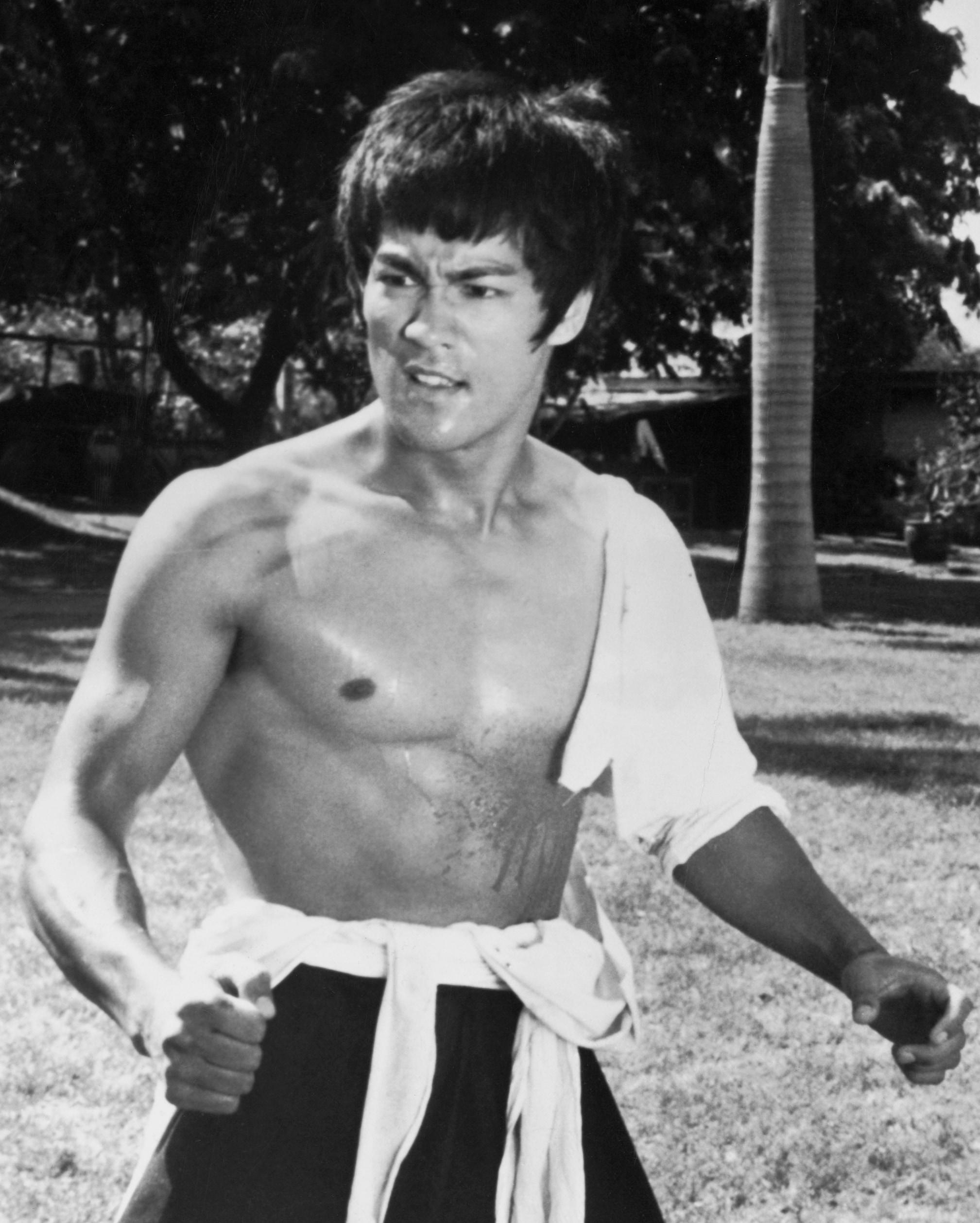
Bruce Lee.

Martial artist · Actor · Filmmaker

Bruce Lee did not become an icon by politely fitting the roles available to him. From rooftop fights in Hong Kong and classes out of his Seattle home to Kato on The Green Hornet and the global shockwave of Enter the Dragon, he kept turning martial skill into a sharper public argument about who could teach, who could lead, and what martial arts should actually be.

OBJECTIVE PERSONALITY CLASSIFICATIONMF-Ti/Ni-SB/P(C)What does this mean?
PERSONALITY SYSTEMObjective Personality
LEAD FUNCTIONTi · Introverted Thinking
SECOND SAVIOR FUNCTIONNi · Introverted Intuition
MBTI EQUIVALENTISTP
01 / BEHIND THE CLASSIFICATION

The personality behind the fame.

How does a recorded OPS classification like MF-Ti/Ni-SB/P(C) break down? Walk through nine coins and watch the proposed type take shape. These are deductions from the archived code, not independent evidence of typing accuracy.

Scroll below to see Bruce Lee take shape.

STARTING POINT512 possible OPS typesEach type combines core functions, an animal order, and sexual modalities.
THE FINISH LINEMF-Ti/Ni-SB/P(C)One recorded classification, decoded from its components.
Bruce Lee’s HUMAN NEEDS 01—03
01
DECIDER OR OBSERVER?

Decider over Observer

Deciders have more balanced Observer poles in the middle: Control (Oi) and Chaos (Oe). Organizing what's known and handling what's new tend to feel more manageable. People are the harder territory. Self (Di) and Tribe (De) sit at the extremes, so judgment, rejection, approval, and conflict can trigger the strongest reactions.

Bruce Lee’s career kept turning into battles with people and gatekeepers: Chinatown martial arts figures challenging his right to teach non-Chinese students, television producers wanting him to fight in a generic American style, and an industry slow to imagine him as a leading man on his own terms. That pattern fits Decider friction, where the pressure point is judgment, status and belonging. The strength is nerve under criticism; he did not wait for unanimous permission. The blind spot is that social conflict can become the main arena, overshadowing practical limits that also need attention.
D
02
SELF OR TRIBE?

Di · Self over De · Tribe

Self (Di) is the stronger deciding pole. They check decisions against their own values or reasons first: what makes sense to me, what feels right to me? The strength is independent conviction; the recurring friction is the Tribe (De)—other people's standards, feedback, and expectations. As the portrait unfolds, notice how Self takes the lead.

Lee’s refusal to stop teaching white and non-Chinese students is a clean public example of Self over Tribe. He used his own standard for what martial arts instruction should be, even when traditionalists pushed back. The same independence appears in how he kept reshaping his art rather than preserving it for approval. The strength is ownership: the work clearly belonged to him. The growth cost is relational. When your inner verdict carries the final vote, other people’s concerns can sound less like useful input and more like interference, even when some of those concerns deserve a hearing.

Di
03
GATHER OR ORGANIZE?

Oi · Organize over Oe · Gather

Organize (Oi) leads with refining, preserving, and structuring what is already known. Its strength is preparation and clear direction; the recurring friction is unexpected change that disrupts the plan. Another layer of the personality portrait comes into focus.

Lee did not merely collect techniques from Wing Chun, boxing, fencing and street fighting; he organized them into a narrower philosophy of practicality, speed and efficiency. That is Organize over Gather: reduce the clutter, find the principle, make the system cohere. It helped him turn scattered experience into Jeet Kune Do instead of an endless scrapbook of influences. The blind spot is that a sharp organizing vision can look like an attack on cherished traditions. The growth cost is tolerating more unfinished options and slower experimentation before deciding what the final method should be.

Oi
FIRST THREE COINSD + Di + Oi

These establish the preferred human needs in the OPS framework.

Bruce Lee’s FUNCTIONS 04—05
04
FEELING OR THINKING?

Thinking · T over Feeling · F

Thinking (T) evaluates decisions through reasons, logic, and what works—not a lack of emotion. Its strength is analytical consistency; Feeling (F) provides balance through values, meaning, and the human consequences of a decision. Combined with Self (Di), this forms the recorded Savior Ti.

At the 1964 Long Beach championships and later in his criticisms of classical styles, Lee kept returning to what actually works. Thinking shows up in that refusal to preserve a technique just because it is respected, beautiful or old. After the Wong Jack-man match, he responded not by defending tradition but by revising training toward efficiency, conditioning and directness. The strength is ruthless usefulness. The void is relational and rhetorical: when you publicly dismantle other people’s systems, they hear more than mechanics. A cleaner method can still be delivered in a way that invites resistance instead of honest reconsideration.

T → Ti
05
SENSING OR INTUITION?

Intuition · N over Sensing · S

Intuition (N) focuses on concepts, patterns, and what information might mean. Sensing (S) balances it through observable facts, physical detail, and direct experience. Combined with Organize (Oi), this gives the recorded Savior Ni.

Lee’s Intuition was bigger than flashy speed. Jeet Kune Do was not presented as another bag of tricks; it was a vision of what martial arts could become when stripped to underlying principles. The same future-oriented lens shaped his films, which pushed fight scenes toward real-world conflict and away from decorative fantasy. Intuition’s strength is seeing the throughline before everyone else does. Its cost is impatience with what still has to be built, taught and tested in the present. A compelling vision can outrun the slower work of getting other people to understand its structure.

N → Ni
THE TWO SAVIOR FUNCTIONSTi / Ni

Opposing functions: Fe and Se. This is a jumper classification.

Bruce Lee’s ANIMAL STACK 06—07
06
PLAY OR SLEEP?

Sleep over Play

Play emphasizes external real-time engagement; Sleep emphasizes internal processing. The recorded stack places Sleep earlier.

The decisive public moments can hide how much Lee first worked things through in private. After the disputed Wong Jack-man fight, he did not simply stage a louder rebuttal; he reexamined his method and changed his training. That tilt toward Sleep over Play shows the advantage of internal refinement before another live exchange. The strength is depth: experience becomes a distilled principle instead of a passing reaction. The blind spot is that outside interaction can arrive after the inner verdict already feels settled. The growth cost is staying more permeable while the process is still unfinished.

S > P
07
CONSUME OR BLAST?

Blast over Consume

Consume gathers information for internal processing; Blast organizes and communicates information. The recorded order is Sleep → Blast → Play → Consume. This comparison follows their positions in that stack.

Lee’s career was unusually public-facing for someone so internally exacting. He opened schools in Seattle, Oakland and Los Angeles, demonstrated at Long Beach, taught celebrities, and used film to announce a whole philosophy of combat. That points to Blast landing earlier than Consume: he was driven to deliver a distilled message, not just keep gathering material forever. The strength is clarity and reach. The blind spot is compression. When you state the lesson decisively, people may miss the nuance or feel steamrolled by the conclusion. The growth cost is slowing down long enough to absorb more before delivering the next verdict.

B > C
Bruce Lee’s ANIMAL ORIENTATION 08—09
08
INFO OR ENERGY DOMINANT?

Energy over Info

Energy dominant means Play and Sleep are both in the top three: there is access to expending energy through engagement and conserving it through internal processing. Consume last leaves the information side uneven—Blast may broadcast more than gets taken in.

Bruce Lee’s recorded stack is Energy-dominant, and his public life makes that easy to picture without reducing him to nonstop motion. He alternated between intense solo refinement—training, writing, reworking principles—and highly active engagement through teaching, demonstrations, filming and choreography. That balance can generate enormous output quickly. The missing piece is Consume last: the void is not effort but intake. Communicating, directing and engaging can outrun the slower work of taking in more outside material. The growth cost is pausing the machine long enough to study, question and absorb, even when momentum is already rewarding the message.

Energy
09
INTROVERSION OR EXTROVERSION?

Extroversion over Introversion

The last animal, Consume, determines this OPS coin: Play or Blast last means Introversion; Consume or Sleep last means Extroversion. This describes animal orientation, not sociability or shyness.

Consume sits last in Lee’s stack, which gives the official OPS result of Extroversion here. That does not mean party-loving or socially easy; much of his process was private and disciplined. It means the pressure of the system moves outward more readily than it slows down to gather. He kept turning insight into instruction, performance and public demonstration—whether on The Green Hornet, at Long Beach, or in Hong Kong cinema. The strength is impact. The blind spot is under-valuing fresh input once a conclusion feels proven. Growth means deliberately studying other material before the next teaching moment closes the case.

E
Sexual Modalities

The four sexual modalities.

OPS uses masculine/feminine sensory and extroverted-deciding distinctions as framework-specific terms, not gender categories. The four modalities are already included in the original 512 types. The recorded modality is MF · Audio.

MM KinestheticMasculine Sensory · Masculine De
MF RECORDED MODALITYAudioMasculine Sensory · Feminine De
FF TesterFeminine Sensory · Feminine De
FM VisualFeminine Sensory · Masculine De
COMPLETE RECORDED OPS TYPE · MODALITY INCLUDEDMF-Ti/Ni-SB/P(C)

Ti leads, Ni supports, and the animal stack is Sleep → Blast → Play → Consume.

THE FINISHED PORTRAIT · ALL NINE COINS REVEALED

Bruce Lee's complete function and animal stack

SleepBlastPlayConsumemTimSefNifFe
MF-Ti/Ni-SB/P(C)DOUBLE ACTIVATED · BLASTExplore the Interactive Coin Builder →
THE BRUCE LEE LENS

The method inside the myth

The public image is almost too clean: the one-inch punch at Long Beach, Kato’s impossible speed, the lean body that made Enter the Dragon feel like a new law of cinema. Behind that impression was a teacher and experimenter who kept revising his method instead of embalming it.

His Ti/Ni savior pairing gave him a rare combination of mechanical precision and overarching vision. He could strip a movement, a training habit or a film scene down to its governing principle and rebuild it for speed and realism. The limit is obvious: clarity this sharp can cut through tradition and through people.

As a Decider and Double Observer, Lee’s deeper friction centers on people, judgment and belonging more than on the chaos of the world itself. He could rework systems, environments and methods faster than he could neutralize the human cost of his certainty. The neglected function opposite lead Ti is Fe: shared values, tact, and making the point land with the tribe.

Sleep → Blast → Play → Consume shows a man who first consolidates, then teaches, then engages, with fresh intake left for last. That last-animal imbalance can make a settled message outrun new information. The balance point is not softening his edge; it is preserving the edge while deliberately studying another school’s method before declaring the lesson finished.

Want to understand the Savior and Demon states behind these nine coins? Explore the complete explanation, visual examples, and typing principles on our Methodology page →

02 / KEEP EXPLORING

Different faces. Familiar patterns.

Explore other celebrities with related recorded OPS classifications. Related functions are not necessarily exact type matches.

Discover Type Twins
YOUR TURN

Curious about your own type?

Discover how your own personality might be classified through Objective Personality.

Get objectively typed
Bruce Lee's Personality Type & OPS Profile | The Personality Atlas