The Personality Atlas
THE CELEBRITY PERSONALITY ARCHIVE / SPORTS

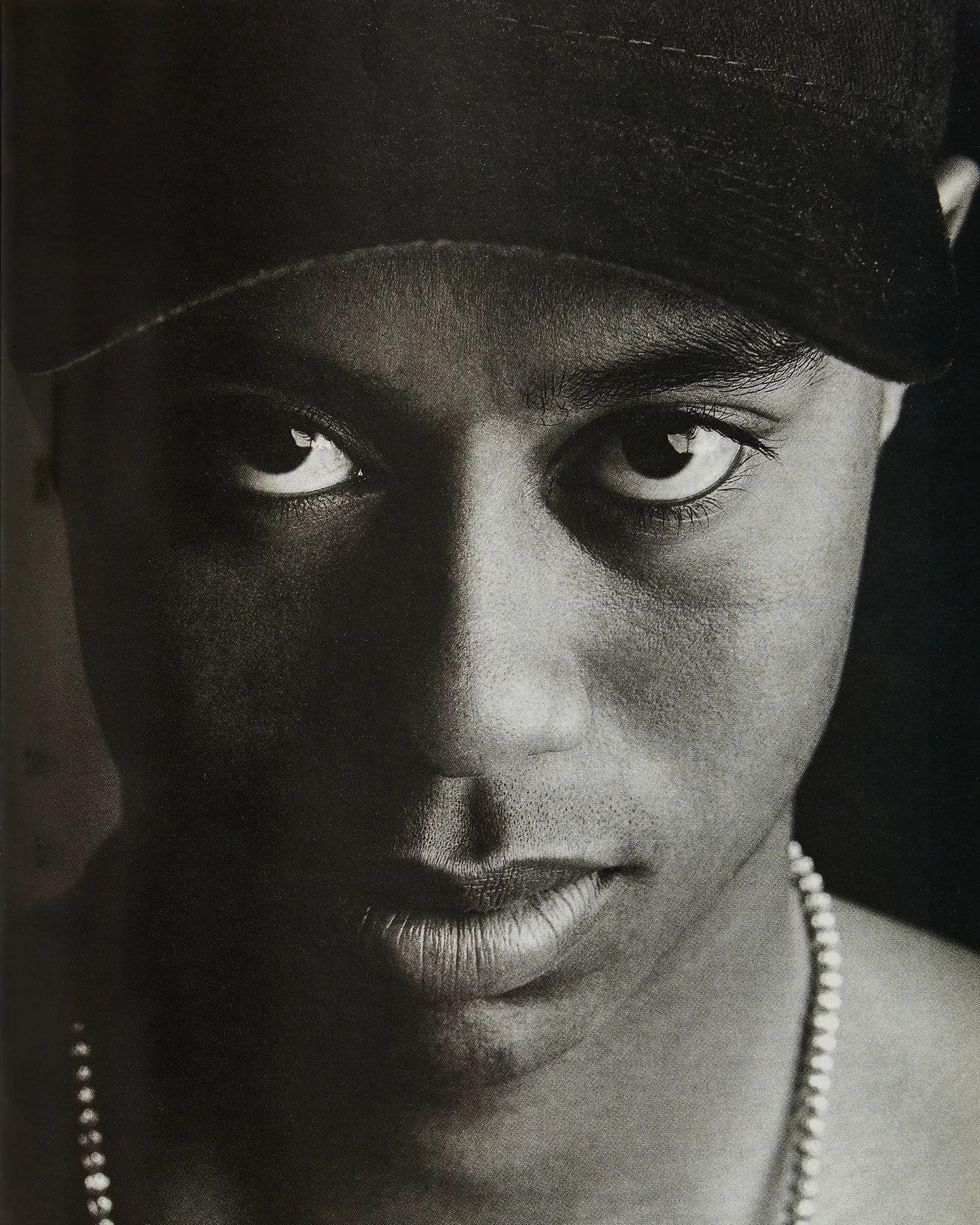
Tiger Woods.

Professional golfer · Record-setting champion

Tiger Woods made dominance look engineered: child prodigy, 1997 Masters shockwave, the Tiger Slam, record weeks at world No. 1, then injuries and comebacks that turned technical discipline into a public survival skill.

OBJECTIVE PERSONALITY CLASSIFICATIONMF-Si/Fi-SC/P(B)What does this mean?
PERSONALITY SYSTEMObjective Personality
LEAD FUNCTIONSi · Introverted Sensing
SECOND SAVIOR FUNCTIONFi · Introverted Feeling
MBTI EQUIVALENTISTJ
01 / BEHIND THE CLASSIFICATION

The personality behind the fame.

How does a recorded OPS classification like MF-Si/Fi-SC/P(B) break down? Walk through nine coins and watch the proposed type take shape. These are deductions from the archived code, not independent evidence of typing accuracy.

Scroll below to see Tiger Woods take shape.

STARTING POINT512 possible OPS typesEach type combines core functions, an animal order, and sexual modalities.
THE FINISH LINEMF-Si/Fi-SC/P(B)One recorded classification, decoded from its components.
Tiger Woods’ HUMAN NEEDS 01—03
01
DECIDER OR OBSERVER?

Observer over Decider

Observers have more balanced Decider poles in the middle: Self (Di) and Tribe (De). Their own perspective and other people's perspectives tend to be easier to navigate. Things are the harder territory. Control (Oi) and Chaos (Oe) sit at the extremes, so disrupted plans, uncertainty, and a changing world can trigger the strongest reactions.

Golf made Tiger Woods famous for beating people, but the deeper public pattern is how often his career turned on hard circumstances he could not negotiate away: a surgically repaired knee before the 2008 U.S. Open, four back surgeries from 2014 to 2017, and a ranking fall outside the top 1,000 before the 2018 comeback. That is classic Observer pressure, where the fight is with body, timing, and changing conditions. The strength is relentless adaptation. The blind spot is believing one more technical answer can fully tame a reality that keeps changing.


O
02
SELF OR TRIBE?

Di · Self over De · Tribe

Self (Di) is the stronger deciding pole. They check decisions against their own values or reasons first: what makes sense to me, what feels right to me? The strength is independent conviction; the recurring friction is the Tribe (De)—other people's standards, feedback, and expectations. As the portrait unfolds, notice how Self takes the lead.

Woods repeatedly chose his own standard even when the outside world already approved. He rebuilt parts of his swing and game after major success, changed coaches, replaced longtime caddie Steve Williams in 2011, and revised his putting technique in 2012 after a painful miss at Pebble Beach. That is Di over De: the internal verdict stays louder than group comfort. The advantage is independence strong enough to keep evolving at world No. 1. The cost is friction. A personally correct decision can still jar teammates, partners, or fans who were not consulted on the timing.

Di
03
GATHER OR ORGANIZE?

Oi · Organize over Oe · Gather

Organize (Oi) leads with refining, preserving, and structuring what is already known. Its strength is preparation and clear direction; the recurring friction is unexpected change that disrupts the plan. Another layer of the personality portrait comes into focus.

From winning the Junior World Championships six times to holding the No. 1 ranking for 264 straight weeks, Woods built his legend through repeatable structure, not random inspiration. Organize over Gather fits the golfer who turns a course into a known map and a season into a controlled process. The strength is consistency at a scale almost nobody else has reached. The blind spot appears when the map breaks: injuries, altered mechanics, or a changed body can punish overreliance on the old system. A great plan still has to survive new conditions.

Oi
FIRST THREE COINSO + Di + Oi

These establish the preferred human needs in the OPS framework.

Tiger Woods’ FUNCTIONS 04—05
04
FEELING OR THINKING?

Feeling · F over Thinking · T

Feeling (F) evaluates decisions through values, meaning, and what matters—not simply through emotion. Its strength is a clear sense of significance; Thinking (T) provides balance through impersonal reasons, consistency, and evidence. Combined with Self (Di), this forms the recorded Savior Fi.

When Woods wrote to a boy who had contemplated suicide, he answered with personal testimony about stuttering, talking to his dog, and taking classes until he improved. That is a useful public glimpse of Fi: speaking from an inner standard of what felt true and worth standing behind. The strength is sincerity that does not need committee language to sound human. The limit is that personal conviction is not the whole interpersonal equation. His 2010 televised apology mattered, but a heartfelt statement could not automatically repair damaged relationships or persuade every audience to read the moment the same way.

F → Fi
05
SENSING OR INTUITION?

Sensing · S over Intuition · N

Sensing (S) focuses on concrete details, observable reality, and lived experience. Intuition (N) balances it by looking for broader patterns, concepts, and implications. Combined with Organize (Oi), this gives the recorded Savior Si.

Woods's career is packed with concrete calibration: a 48 over nine holes at age three, breaking 80 at eight, the record 12-shot Masters win in 1997, and the 15-stroke demolition at the 2000 U.S. Open. Si as Sensing fits that obsession with known details, trusted repetitions, and exact standards under pressure. The strength is making performance reproducible instead of magical. The cost is that sport refuses to stay identical. The more a game, a body, or a competitive field changes, the less yesterday's reference point can guarantee tomorrow's control.

S → Si
THE TWO SAVIOR FUNCTIONSSi / Fi

Opposing functions: Ne and Te. This is a jumper classification.

Tiger Woods’ ANIMAL STACK 06—07
06
PLAY OR SLEEP?

Sleep over Play

Play emphasizes external real-time engagement; Sleep emphasizes internal processing. The recorded stack places Sleep earlier.

Between Play and Sleep, Woods's public story looks earlier Sleep. After the death of his father in 2006, he stepped away, returned looking rusty at the U.S. Open, then quickly re-centered and finished the year with six straight tour wins. Even his self-imposed 2009 hiatus showed a move toward pulling back before re-entering the arena. The strength here is consolidation: step out, reset, then perform with unusual focus. The blind spot is the delay cost. Too much retreat can make re-entry harsher, rustier, or more dependent on a perfect internal reset than real life allows.

S > P
07
CONSUME OR BLAST?

Consume over Blast

Consume gathers information for internal processing; Blast organizes and communicates information. The recorded order is Sleep → Consume → Play → Blast. This comparison follows their positions in that stack.

After that earlier Sleep-over-Play pattern, Woods also shows earlier Consume than Blast. His career is full of reloading through input: laser eye surgery in 1999 and again in 2007, swing overhauls with different coaches, and a 2012 putting revision after a costly miss. He keeps taking in data, technique, and adjustments rather than living off a finished formula. The strength is a champion who keeps learning. The growth cost is communication lag. Gathering another fix can outrun the simpler job of stating one settled message that a team, a caddie, or the public can follow.

C > B
Tiger Woods’ ANIMAL ORIENTATION 08—09
08
INFO OR ENERGY DOMINANT?

Energy over Info

Energy dominant means Play and Sleep are both in the top three: there is access to expending energy through engagement and conserving it through internal processing. Blast last leaves the information side uneven—Consume may gather far more than gets communicated.

Woods's recorded stack makes him Energy-dominant: both private reset and outward action land in the top three. That fits a career built on long stretches of solitary recalibration followed by brutally exposed competition, from the 2008 U.S. Open playoff on a damaged leg to the climb back that produced the 2019 Masters. The balance is real stamina between conserving and expending effort. The missing piece is Blast last. His likely bottleneck is not effort or information, but packaging what he already knows into a clear, steady explanation before the next adjustment or comeback arrives.

Energy
09
INTROVERSION OR EXTROVERSION?

Introversion over Extroversion

The last animal, Blast, determines this OPS coin: Play or Blast last means Introversion; Consume or Sleep last means Extroversion. This describes animal orientation, not sociability or shyness.

Woods is OPS Introverted because Blast is last, not because he lacked fame, endorsements, or team events. Few athletes have been more publicly visible. The coin is about sequence: private processing and information intake arrive more readily than externalizing a fixed conclusion. You can see that in how rare and high-stakes his major public explanatory moments became, from the 2010 apology to the 2021 Golf Digest acknowledgment that his full-time career was over. The strength is depth before declaration. The blind spot is waiting until the situation is enormous before saying plainly where things stand.

I
Sexual Modalities

The four sexual modalities.

OPS uses masculine/feminine sensory and extroverted-deciding distinctions as framework-specific terms, not gender categories. The four modalities are already included in the original 512 types. The recorded modality is MF · Audio.

MM KinestheticMasculine Sensory · Masculine De
MF RECORDED MODALITYAudioMasculine Sensory · Feminine De
FF TesterFeminine Sensory · Feminine De
FM VisualFeminine Sensory · Masculine De
COMPLETE RECORDED OPS TYPE · MODALITY INCLUDEDMF-Si/Fi-SC/P(B)

Si leads, Fi supports, and the animal stack is Sleep → Consume → Play → Blast.

THE FINISHED PORTRAIT · ALL NINE COINS REVEALED

Tiger Woods's complete function and animal stack

SleepConsumePlayBlastmSifTemFifNe
MF-Si/Fi-SC/P(B)DOUBLE ACTIVATED · CONSUMEExplore the Interactive Coin Builder →
THE TIGER WOODS LENS

The precision behind the legend

The public image is obvious: the 1997 Masters won by 12 shots, the Tiger Slam, the 2019 Masters comeback. But the career underneath that myth is less automatic than it looks. Woods became unforgettable through repetition, adjustment, and return whenever the game or his body stopped cooperating on the biggest stages.

Si with Fi gives him a signature strength: trusted repetition governed by a private standard. That pairing helps explain the golfer who could dominate familiar patterns, then still rebuild parts of his technique or revise his putting. The limit is visible too. What feels precisely right to Woods can be hard to translate for everyone around him, especially during another reset.

As an Observer and Double Decider, Woods's pressure sits with circumstances: courses, injuries, timing, and the fact that reality does not care how decorated you are. The imbalance is control over what is known versus tolerance for uncertainty. Neglected Ne, opposite his lead Si, asks for openness when the old map no longer explains the next season or comeback.

Sleep → Consume → Play → Blast shows why Woods can look intensely prepared without living in constant explanation mode. After reset, study, and competitive response, the last lift is broadcasting a simple settled message. Blast last can delay that step. The balance is not becoming less exacting. It is giving coaches, caddies, and the public one clear adjustment early before another comeback begins.

Want to understand the Savior and Demon states behind these nine coins? Explore the complete explanation, visual examples, and typing principles on our Methodology page →

02 / KEEP EXPLORING

Different faces. Familiar patterns.

Explore other celebrities with related recorded OPS classifications. Related functions are not necessarily exact type matches.

Discover Type Twins
YOUR TURN

Curious about your own type?

Discover how your own personality might be classified through Objective Personality.

Get objectively typed
Tiger Woods's Personality Type & OPS Profile | The Personality Atlas