The Personality Atlas
THE CELEBRITY PERSONALITY ARCHIVE / AVIATION & PUBLIC SERVICE

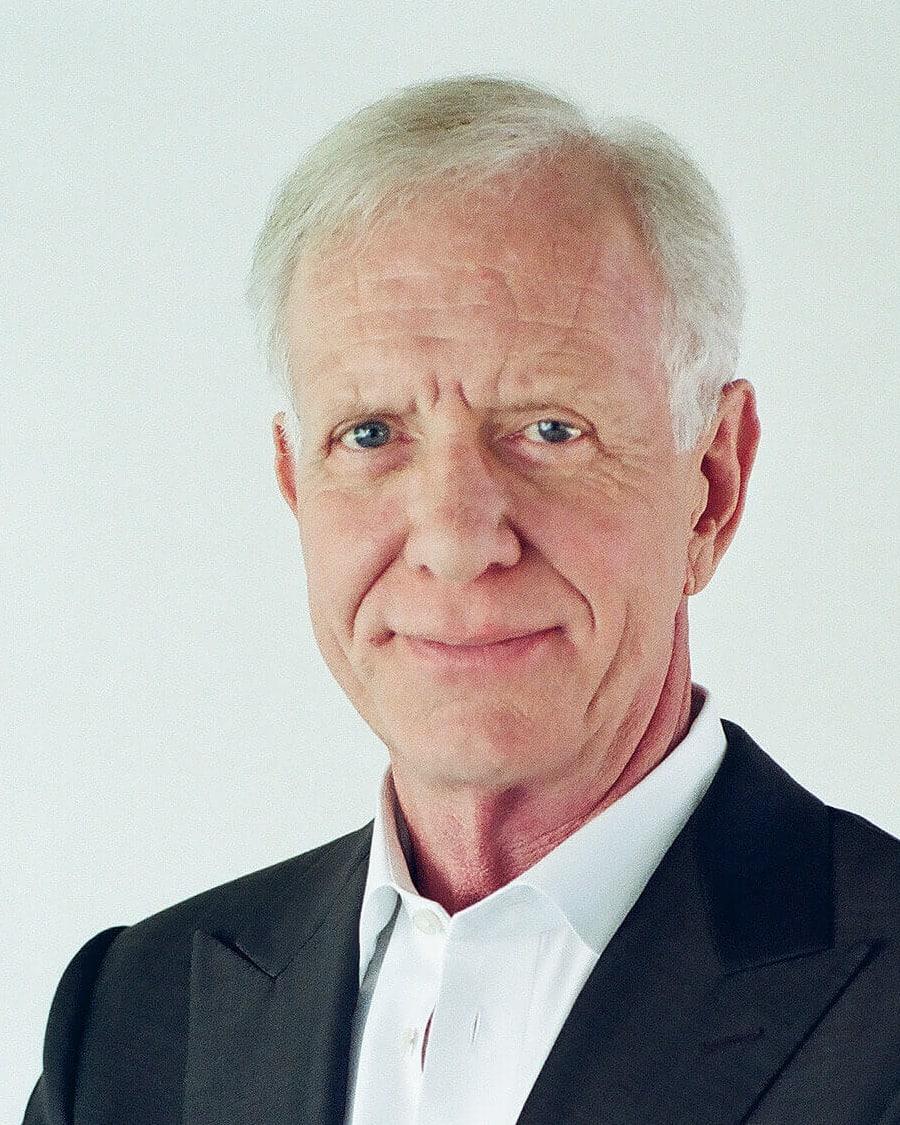
Sully Sullenberger.

Retired airline captain · Aviation safety expert

Sully Sullenberger is remembered as the pilot who put Flight 1549 on the Hudson and walked the cabin twice before leaving last. That image of icy competence fits a career built less on swagger than on decades of training, accident investigation, crew-resource management and stubborn public advocacy for aviation safety after the cameras moved on.

OBJECTIVE PERSONALITY CLASSIFICATIONMF-Si/Fi-SC/B(P)What does this mean?
PERSONALITY SYSTEMObjective Personality
LEAD FUNCTIONSi · Introverted Sensing
SECOND SAVIOR FUNCTIONFi · Introverted Feeling
MBTI EQUIVALENTISTJ
01 / BEHIND THE CLASSIFICATION

The personality behind the fame.

How does a recorded OPS classification like MF-Si/Fi-SC/B(P) break down? Walk through nine coins and watch the proposed type take shape. These are deductions from the archived code, not independent evidence of typing accuracy.

Scroll below to see Sully Sullenberger take shape.

STARTING POINT512 possible OPS typesEach type combines core functions, an animal order, and sexual modalities.
THE FINISH LINEMF-Si/Fi-SC/B(P)One recorded classification, decoded from its components.
Sully Sullenberger’s HUMAN NEEDS 01—03
01
DECIDER OR OBSERVER?

Observer over Decider

Observers have more balanced Decider poles in the middle: Self (Di) and Tribe (De). Their own perspective and other people's perspectives tend to be easier to navigate. Things are the harder territory. Control (Oi) and Chaos (Oe) sit at the extremes, so disrupted plans, uncertainty, and a changing world can trigger the strongest reactions.

When Flight 1549 lost both engines after a bird strike, Sullenberger's central problem wasn't whether passengers admired him. It was the collapsing reality of altitude, distance, thrust and time. That is classic Observer friction: the world has changed fast, and the task is to read it accurately enough to act. His strength is visible in the Hudson landing and in later safety work—staying useful inside chaos. The blind spot is the cost of living by preparation: no amount of competence guarantees the next circumstance will be fair, familiar or fully controllable.

O
02
SELF OR TRIBE?

Di · Self over De · Tribe

Self (Di) is the stronger deciding pole. They check decisions against their own values or reasons first: what makes sense to me, what feels right to me? The strength is independent conviction; the recurring friction is the Tribe (De)—other people's standards, feedback, and expectations. As the portrait unfolds, notice how Self takes the lead.

After becoming a national hero, Sullenberger kept redirecting attention away from applause and toward standards: crew training, experience, safety culture and what he called "highest duty." He later criticized Boeing, the FAA and low pilot-experience expectations even when that put him at odds with powerful institutions. That leans Self over Tribe—an internal bar before a social one. The strength is moral independence under pressure. The growth cost is that a firm personal verdict can sound uncompromising, especially when other people want comfort, diplomacy or an easier public story.

Di
03
GATHER OR ORGANIZE?

Oi · Organize over Oe · Gather

Organize (Oi) leads with refining, preserving, and structuring what is already known. Its strength is preparation and clear direction; the recurring friction is unexpected change that disrupts the plan. Another layer of the personality portrait comes into focus.

Sullenberger's career is saturated with organized systems: Air Force training, accident investigation boards, Crew Resource Management courses, FAA advisory work, and thousands of hours building reliable procedures before an emergency ever arrived. Organize over Gather shows up in that trust in preparation, repetition and known limits. The strength is obvious: when the unexpected hits, he already has a disciplined framework. The blind spot is that reality can still outrun the manual. A rare crisis may demand using structure as a launchpad, not pretending every answer was already sitting in the checklist.

Oi
FIRST THREE COINSO + Di + Oi

These establish the preferred human needs in the OPS framework.

Sully Sullenberger’s FUNCTIONS 04—05
04
FEELING OR THINKING?

Feeling · F over Thinking · T

Feeling (F) evaluates decisions through values, meaning, and what matters—not simply through emotion. Its strength is a clear sense of significance; Thinking (T) provides balance through impersonal reasons, consistency, and evidence. Combined with Self (Di), this forms the recorded Savior Fi.

His public statements are rarely just technical. Sullenberger has argued for leaders with a "moral compass," wrote Highest Duty, and became active in suicide-prevention awareness after his father's death. Feeling here is not sentimentality; it is judgment through values, conscience and what a life should stand for. That gives him a clear ethical center, useful when safety talk could otherwise become dry bureaucracy. The limit is that sincere values do not automatically settle contested policy or persuade every audience. A principled stance still has to meet other people's competing standards.

F → Fi
05
SENSING OR INTUITION?

Sensing · S over Intuition · N

Sensing (S) focuses on concrete details, observable reality, and lived experience. Intuition (N) balances it by looking for broader patterns, concepts, and implications. Combined with Organize (Oi), this gives the recorded Savior Si.

Sullenberger's Sensing is unusually easy to see because his authority came from accumulated specifics: learning to fly at 16, more than 20,000 flight hours, Air Force instruction, accident investigations, and his famous line about making decades of "small, regular deposits" in a bank of experience. Si trusts stored reality—what has been practiced, recorded and proven. The strength is steadiness under pressure. The blind spot is that precedent has edges. A dual engine failure after takeoff over New York is exactly the sort of concrete situation that exposes where even deep experience runs out of ready-made scripts.

S → Si
THE TWO SAVIOR FUNCTIONSSi / Fi

Opposing functions: Ne and Te. This is a jumper classification.

Sully Sullenberger’s ANIMAL STACK 06—07
06
PLAY OR SLEEP?

Sleep over Play

Play emphasizes external real-time engagement; Sleep emphasizes internal processing. The recorded stack places Sleep earlier.

Friends described Sullenberger as "shy and reticent," which fits Sleep coming earlier than Play. The visible public miracle was preceded by an inner reserve that stays composed, narrows focus and trusts quiet processing over constant back-and-forth. That helped him work a terrifying problem in a remarkably calm cockpit and later translate the event into memoir and reflection rather than endless spontaneity. The strength is an internal center that does not panic for company. The cost is that faster, looser interaction can arrive later, after the private conclusions have already started to harden.

S > P
07
CONSUME OR BLAST?

Consume over Blast

Consume gathers information for internal processing; Blast organizes and communicates information. The recorded order is Sleep → Consume → Blast → Play. This comparison follows their positions in that stack.

Consume comes earlier than Blast in Sullenberger's stack, and his post-flight career makes that believable. He did not stop at one heroic story; he kept studying accidents, coauthoring a NASA paper on error-inducing contexts, teaching crews, and pressing for better procedures before delivering blunt public conclusions. The strength is depth: his warnings about pilot experience or the 737 MAX carry the weight of long study. The blind spot is that more evidence can always be gathered. At some point, expertise must stop refining and state the message plainly enough for institutions to act.

C > B
Sully Sullenberger’s ANIMAL ORIENTATION 08—09
08
INFO OR ENERGY DOMINANT?

Info over Energy

Info dominant means Consume and Blast are both in the top three: gathering and communicating information are more balanced. Play last leaves the energy side uneven—Sleep can conserve energy without enough spontaneous outward engagement.

Sullenberger lands on the Info side because both taking in material and transmitting it sit in his top three animals. That balance is visible in the second act of his career: books, congressional testimony, CBS analysis, keynote speaking and an ambassadorial role all turned stored expertise into public instruction. The advantage is not just knowing aviation, but explaining it clearly enough to change procedures and culture. The void sits with the missing fourth animal. Too little spontaneous engagement can make communication feel polished, principled and one-directional when a messier real-time exchange might reveal what others still are not hearing.

Info
09
INTROVERSION OR EXTROVERSION?

Introversion over Extroversion

The last animal, Play, determines this OPS coin: Play or Blast last means Introversion; Consume or Sleep last means Extroversion. This describes animal orientation, not sociability or shyness.

Sullenberger's OPS Introversion does not disappear because he has spoken before Congress, appeared on television or represented the United States internationally. This coin is about animal order, not charisma. With Play last, outward interaction comes after private processing, information gathering and deliberate explanation. That helps explain why his public presence often feels measured rather than socially hungry: precise, calm, slightly formal. The growth edge is not becoming louder. It is tolerating more unscripted give-and-take earlier, before everything has been internally settled, so other people can challenge and sharpen the conclusion while it is still forming.

I
Sexual Modalities

The four sexual modalities.

OPS uses masculine/feminine sensory and extroverted-deciding distinctions as framework-specific terms, not gender categories. The four modalities are already included in the original 512 types. The recorded modality is MF · Audio.

MM KinestheticMasculine Sensory · Masculine De
MF RECORDED MODALITYAudioMasculine Sensory · Feminine De
FF TesterFeminine Sensory · Feminine De
FM VisualFeminine Sensory · Masculine De
COMPLETE RECORDED OPS TYPE · MODALITY INCLUDEDMF-Si/Fi-SC/B(P)

Si leads, Fi supports, and the animal stack is Sleep → Consume → Blast → Play.

THE FINISHED PORTRAIT · ALL NINE COINS REVEALED

Sully Sullenberger's complete function and animal stack

SleepConsumeBlastPlaymSifTemFifNe
MF-Si/Fi-SC/B(P)DOUBLE ACTIVATED · SLEEPExplore the Interactive Coin Builder →
THE SULLY SULLENBERGER LENS

The calm was built long before the river

The Hudson landing became an instant American myth: bird strike, dead engines, icy water, every passenger alive. But the public legend hides the more revealing image from his own account—an eerily quiet cockpit and a pilot friends described as shy and reticent, still working the problem. The poise looked superhuman only because decades of ordinary discipline had already been spent in private.

His Si/Fi pairing is a formidable combination for aviation safety: stored experience plus an inner standard about what responsible conduct should look like. You can see it in the way he framed Flight 1549 as a withdrawal from years of training, then spent retirement arguing for better systems. The limit is just as important. Deep personal conviction and proven precedent can become so trusted that newer possibilities deserve conscious attention.

As an Observer and Double Decider, Sullenberger is built to handle people problems more evenly than circumstance problems, even when his public image centers on leadership. The recurring imbalance is not tribe chaos so much as control chaos: what is happening, what changed, what must be stabilized. That is why the neglected function matters. Opposite his lead Si sits Ne, the less-valued search for alternate patterns and possibilities beyond the known procedure.

Sleep → Consume → Blast → Play shows a man who first consolidates, then studies, then teaches, and only later leans into open-ended interaction. Play last can make real-time exchange feel less natural than prepared explanation, which is very different from being unsociable. The balancing move is concrete: keep the rigor, but build more live sessions—Q&As, collaborative safety reviews, pilot dialogue—before the conclusion fully hardens.

Want to understand the Savior and Demon states behind these nine coins? Explore the complete explanation, visual examples, and typing principles on our Methodology page →

02 / KEEP EXPLORING

Different faces. Familiar patterns.

Explore other celebrities with related recorded OPS classifications. Related functions are not necessarily exact type matches.

Discover Type Twins
YOUR TURN

Curious about your own type?

Discover how your own personality might be classified through Objective Personality.

Get objectively typed
Sully Sullenberger's Personality Type & OPS Profile | The Personality Atlas