The Personality Atlas
THE CELEBRITY PERSONALITY ARCHIVE / COMEDY · FILM · MUSIC

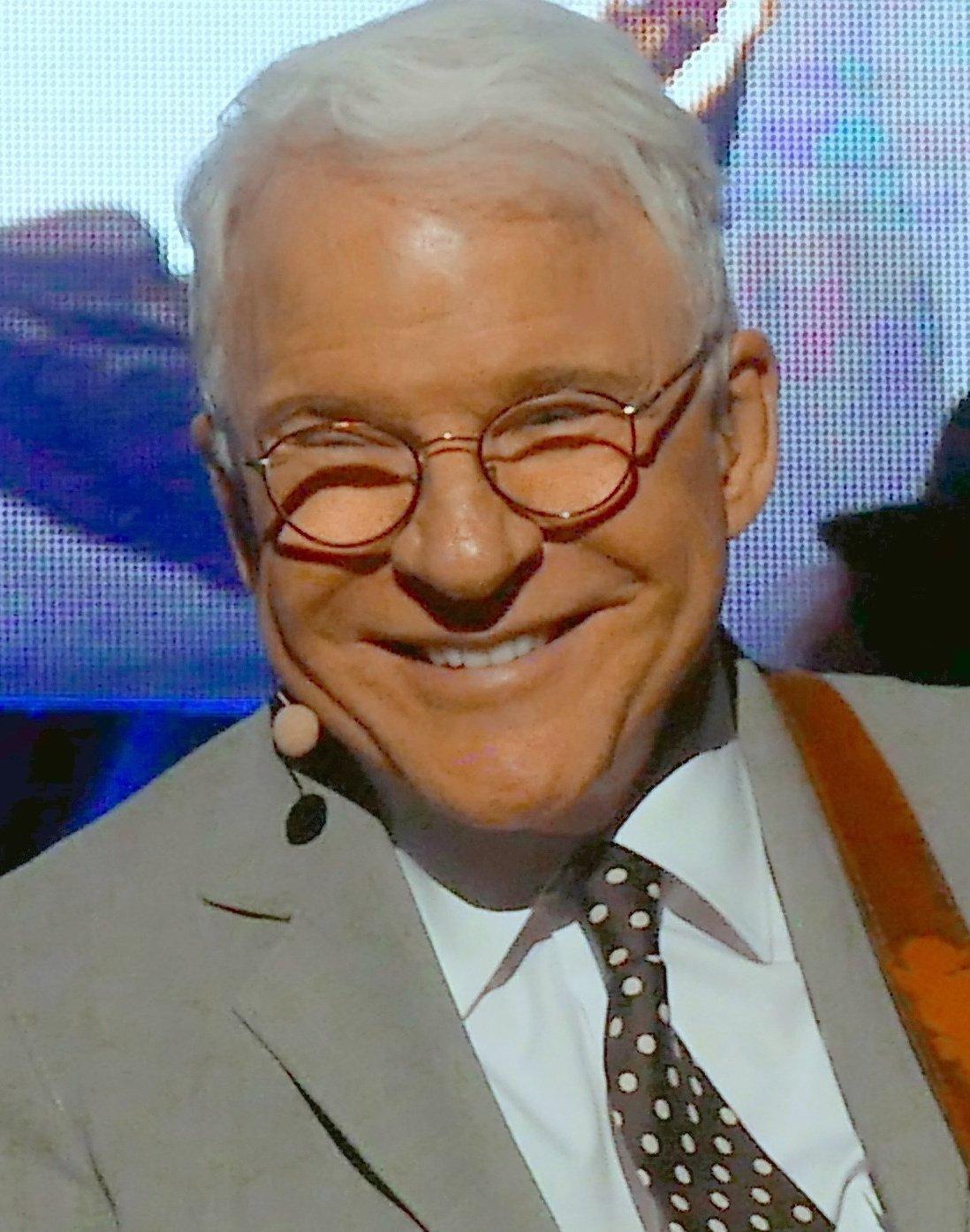
Steve Martin.

Comedian · Actor · Writer · Musician

Steve Martin turned absurdist stand-up into arena-scale spectacle, then refused to stay trapped inside it. From writing for The Smothers Brothers Comedy Hour to The Jerk, Roxanne, Grammy-winning banjo records, Broadway books and Only Murders in the Building, he has spent decades converting oddball ideas into work other people can immediately watch, quote, stage or sing.

OBJECTIVE PERSONALITY CLASSIFICATIONMF-Te/Ne-PC/B(S) #3What does this mean?
PERSONALITY SYSTEMObjective Personality
LEAD FUNCTIONTe · Extroverted Thinking
SECOND SAVIOR FUNCTIONNe · Extroverted Intuition
MBTI EQUIVALENTESTJ
01 / BEHIND THE CLASSIFICATION

The personality behind the fame.

How does a recorded OPS classification like MF-Te/Ne-PC/B(S) #3 break down? Walk through nine coins and watch the proposed type take shape. These are deductions from the archived code, not independent evidence of typing accuracy.

Scroll below to see Steve Martin take shape.

STARTING POINT512 possible OPS typesEach type combines core functions, an animal order, and sexual modalities.
THE FINISH LINEMF-Te/Ne-PC/B(S) #3One recorded classification, decoded from its components.
Steve Martin’s HUMAN NEEDS 01—03
01
DECIDER OR OBSERVER?

Decider over Observer

Deciders have more balanced Observer poles in the middle: Control (Oi) and Chaos (Oe). Organizing what's known and handling what's new tend to feel more manageable. People are the harder territory. Self (Di) and Tribe (De) sit at the extremes, so judgment, rejection, approval, and conflict can trigger the strongest reactions.

Martin reached the level where comedy tours looked more like rock concerts, yet the real tension in his story is not whether the room had enough excitement. It is what a performance means between people: how an act lands, what authority it carries, and when a persona stops feeling honest enough to keep wearing. He could fill stadiums and still decide the conceptual stand-up character had reached its end. That is a Decider problem. The strength is acute audience awareness; the blind spot is letting the meaning of the role become heavier than the circumstances themselves.

D
02
SELF OR TRIBE?

De · Tribe over Di · Self

Tribe (De) is the stronger deciding pole. They check decisions against people, shared standards, and what works for the group: what do we need, what will others think? The strength is coordination and responsiveness; the recurring friction is the Self (Di)—knowing and defending their own position. As the portrait unfolds, notice how Tribe takes the lead.

Martin’s breakthrough act was built for other people to catch immediately: the white suit, the catchphrases, the banjo detours, the exact moment an audience would finally laugh after he denied them a normal punch line. That points to De / Tribe—calibrating a concept so the room can use it together. The advantage is obvious in a career that moved from writing rooms to sold-out tours to hit films. The cost is subtler: public proof can become addictive evidence. Platinum albums and adoring crowds still could not answer whether the persona remained worth continuing.

De
03
GATHER OR ORGANIZE?

Oe · Gather over Oi · Organize

Gather (Oe) leads with new information, experiences, and possibilities. Its strength is curiosity and adaptability; the recurring friction is narrowing the options and settling into what is already known. Another layer of the personality portrait comes into focus.

Very few entertainers move this comfortably from TV writing to stand-up, from absurdist film leads to Broadway books, bluegrass records and a late-career hit series like Only Murders in the Building. Oe / Gather fits that restlessness. A new format is not a threat; it is an opening. That flexibility keeps a career alive long after one lane would have gone stale. The tradeoff is selection. A person who can plausibly become many next versions of himself still has to choose which experiment deserves years, and which clever possibility should be left on the table.

Oe
FIRST THREE COINSD + De + Oe

These establish the preferred human needs in the OPS framework.

Steve Martin’s FUNCTIONS 04—05
04
FEELING OR THINKING?

Thinking · T over Feeling · F

Thinking (T) evaluates decisions through reasons, logic, and what works—not a lack of emotion. Its strength is analytical consistency; Feeling (F) provides balance through values, meaning, and the human consequences of a decision. Combined with Tribe (De), this forms the recorded Savior Te.

Martin has publicly described studying logic and non-sequiturs in philosophy, then twisting punch lines until the audience had to find its own place to laugh. That is a useful window into Te: taking an abstract comedic idea and engineering it into something that works externally, at scale, on cue. The strength is pragmatic invention. The Jerk, Roxanne and Only Murders all show someone who can make a strange premise legible and marketable. The blind spot lives on the Feeling side: a brilliantly workable concept can still leave more personal convictions or softer emotional stakes underexplained.

T → Te
05
SENSING OR INTUITION?

Intuition · N over Sensing · S

Intuition (N) focuses on concepts, patterns, and what information might mean. Sensing (S) balances it through observable facts, physical detail, and direct experience. Combined with Gather (Oe), this gives the recorded Savior Ne.

His stand-up did not depend on one realistic observation delivered more sharply than everyone else. It depended on sideways leaps: kitten juggling, anti-climaxes, philosophy jokes, a pop single about King Tut, and a career-long taste for premises that bend the frame itself. That is Ne in public—seeing another pattern, another angle, another absurd connection before the obvious version has finished. The strength is reinvention. The cost is that reality still demands specifics: scripts, rehearsal, tap-dance practice for Pennies from Heaven, and the stubborn fact that not every clever left turn becomes a lasting win.

N → Ne
THE TWO SAVIOR FUNCTIONSTe / Ne

Opposing functions: Fi and Si. This is a jumper classification.

Steve Martin’s ANIMAL STACK 06—07
06
PLAY OR SLEEP?

Play over Sleep

Play emphasizes external real-time engagement; Sleep emphasizes internal processing. The recorded stack places Play earlier.

Onstage with Martin Short, or trading lines with Short and Selena Gomez in Only Murders in the Building, Martin looks most alive in motion with other people. Play shows up earlier than Sleep here: the real-time riff, the shared bit, the mutual escalation. That gives him a quick, generous comic responsiveness rather than a sealed-off genius act. The cost is what arrives later. Private consolidation can become the expensive step, especially after years of performing, writing and collaborating. The public spark is a strength; the slower inward reset is easier to postpone than to protect.

P > S
07
CONSUME OR BLAST?

Consume over Blast

Consume gathers information for internal processing; Blast organizes and communicates information. The recorded order is Play → Consume → Blast → Sleep. This comparison follows their positions in that stack.

Before Steve Martin could explain a voice, he spent years stuffing it with material: Disneyland magic-shop work, local theater, philosophy classes, TV writing rooms, endless craft learning, and even banjo woven into the act from the beginning. Consume comes earlier than Blast, so input has real weight behind the polished delivery. That depth keeps the work from feeling empty even when it looks effortless. The drag is familiar to any prolific maker: one more reference, one more angle, one more apprenticeship can delay the clean public statement, even after the material is already strong enough to share.

C > B
Steve Martin’s ANIMAL ORIENTATION 08—09
08
INFO OR ENERGY DOMINANT?

Info over Energy

Info dominant means Consume and Blast are both in the top three: gathering and communicating information are more balanced. Sleep last leaves the energy side uneven—Play can keep engagement going without enough private recovery.

Martin’s public life is unusually easy to picture as Info-dominant: he absorbs material from comedy, music, theater and film, then turns around and packages it for mass audiences. Emmy-winning TV writing, platinum comedy albums, Broadway work and Only Murders all show that intake-to-output loop. The balance is powerful because both learning and delivering stay available near the top. The missing counterweight is Sleep. When private consolidation falls to last, the temptation is to keep the machine moving—another project, another tour, another clever frame—without giving the inner system equal time to settle what just happened.

Info
09
INTROVERSION OR EXTROVERSION?

Extroversion over Introversion

The last animal, Sleep, determines this OPS coin: Play or Blast last means Introversion; Consume or Sleep last means Extroversion. This describes animal orientation, not sociability or shyness.

Sleep lands fourth in Martin’s recorded order, which makes this OPS Extroversion: not because he can fill a theater, but because outward engagement and information traffic outrun private processing. That distinction matters. Plenty of performers look outgoing; the real question is what tends to get postponed. In Martin’s career, the pattern fits decades of writing, performing, touring, co-creating and returning to new public forms rather than sitting indefinitely inside one private interpretation. The growth edge is simple and costly: protect genuine offstage reflection before the next idea becomes another beautifully executed public event.

E
Sexual Modalities

The four sexual modalities.

OPS uses masculine/feminine sensory and extroverted-deciding distinctions as framework-specific terms, not gender categories. The four modalities are already included in the original 512 types. The recorded modality is MF · Audio.

MM KinestheticMasculine Sensory · Masculine De
MF RECORDED MODALITYAudioMasculine Sensory · Feminine De
FF TesterFeminine Sensory · Feminine De
FM VisualFeminine Sensory · Masculine De
ADDITIONAL LAYER · SOCIAL TYPE

The four social types.

Social types are an additional layer on top of the original Objective Personality classification, introduced later in OPS research. They describe two proposed social preference coins: Flex vs. Friends and Generalize vs. Specialize. The combination and priority of these preferences produce four social types. Steve Martin's recorded social type is #3.

SOCIAL #1 #1Flex · Generalize
SOCIAL #2 #2Generalize · Friends
SOCIAL #3 RECORDED SOCIAL TYPE#3Specialize · Flex
SOCIAL #4 #4Friends · Specialize
COMPLETE RECORDED OPS TYPE · MODALITY INCLUDED + SOCIAL TYPEMF-Te/Ne-PC/B(S) #3

Te leads, Ne supports, and the animal stack is Play → Consume → Blast → Sleep.

THE FINISHED PORTRAIT · ALL NINE COINS REVEALED

Steve Martin's complete function and animal stack

PlayConsumeBlastSleepfTemSifNemFi
MF-Te/Ne-PC/B(S) #3DOUBLE ACTIVATED · PLAYExplore the Interactive Coin Builder →
THE STEVE MARTIN LENS

The conceptual showman who kept changing the frame

The white suit and arena roar made Martin look like a comedian who had solved show business by force of nerve. But the public record is stranger and more deliberate: a Disneyland magic-shop kid, philosophy student, TV writer, banjo player and craftsman who kept rebuilding the act before it calcified.

Te and Ne give him a rare ability to turn an odd conceptual hunch into something other people can immediately use: a stand-up premise, a screenplay, a Broadway book, a co-created mystery comedy. The limit is that a brilliantly workable idea can outrun the quieter question of what feels personally settled underneath it.

Martin is a Decider and therefore a Double Observer. That pairing matters: his system has more range with information than with people-weight—judgment, recognition, expectation, the question of what his role means to others. The neglected function opposite his lead savior is Fi, so the growth problem is not more clever options but making space for private values that are not just publicly functional.

Play → Consume → Blast → Sleep helps explain the public velocity. He can engage, gather and communicate for years across tours, films and collaborations before private consolidation naturally slows him down. Sleep last makes recovery and inward processing the expensive step. The balance is not less output; it is protecting offstage writing or music time with no audience to satisfy before the next production starts.

Want to understand the Savior and Demon states behind these nine coins? Explore the complete explanation, visual examples, and typing principles on our Methodology page →

02 / KEEP EXPLORING

Different faces. Familiar patterns.

Explore other celebrities with related recorded OPS classifications. Related functions are not necessarily exact type matches.

Discover Type Twins
YOUR TURN

Curious about your own type?

Discover how your own personality might be classified through Objective Personality.

Get objectively typed
Steve Martin's Personality Type & OPS Profile | The Personality Atlas