The Personality Atlas
THE CELEBRITY PERSONALITY ARCHIVE / TELEVISION & BUSINESS

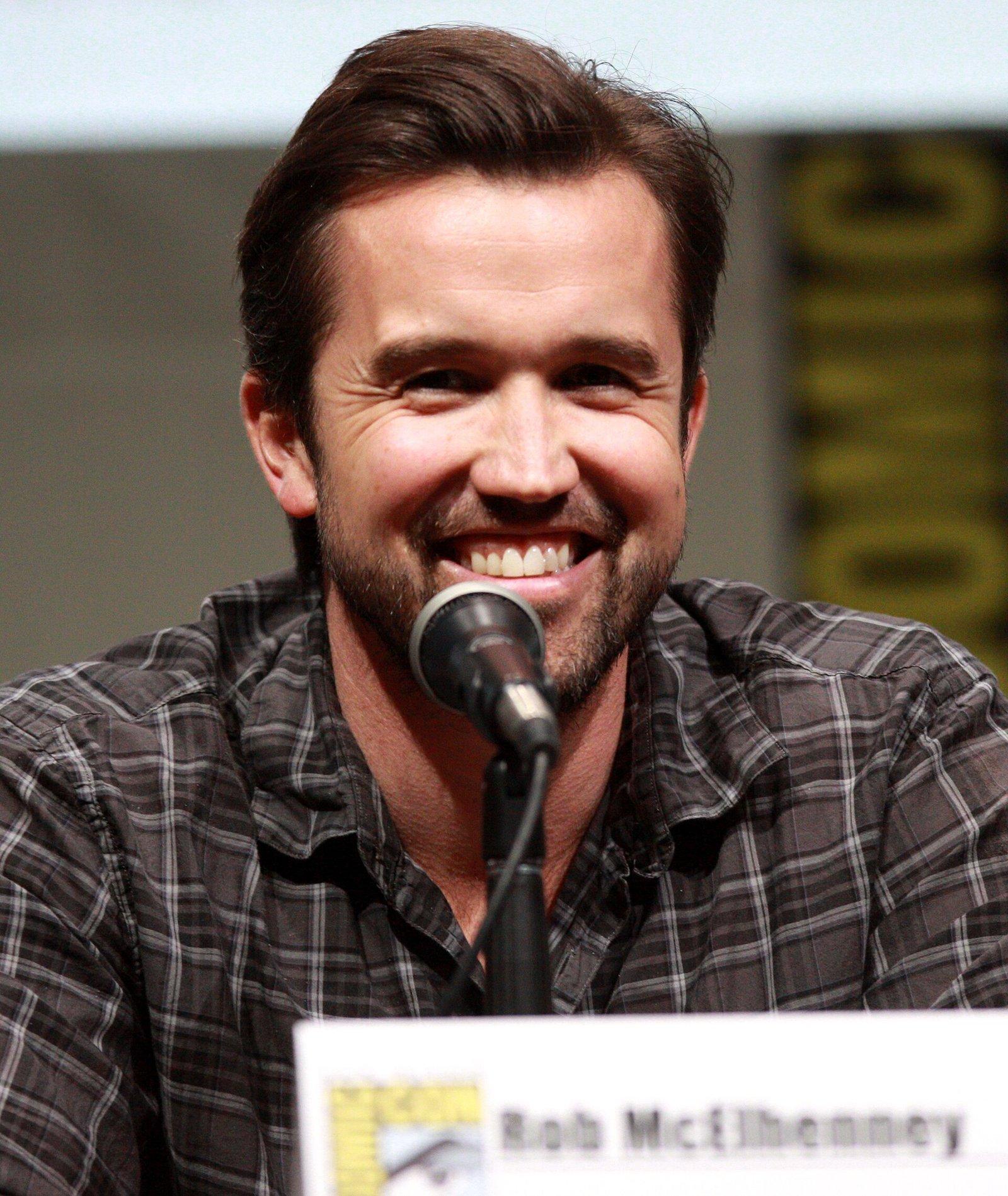
Rob McElhenney.

Actor · Showrunner · Producer · Entrepreneur

Rob McElhenney turned a $200 pilot made with friends into It’s Always Sunny in Philadelphia, then kept scaling the same high-output instinct through Mythic Quest, Welcome to Wrexham, and a string of business ventures. The public image is jocular and improvisational; the through-line is tougher than that—a builder obsessed with getting the team aligned, the project funded, and the next move into motion.

OBJECTIVE PERSONALITY CLASSIFICATIONMF-Te/Ne-PC/B(S) #3What does this mean?
PERSONALITY SYSTEMObjective Personality
LEAD FUNCTIONTe · Extroverted Thinking
SECOND SAVIOR FUNCTIONNe · Extroverted Intuition
MBTI EQUIVALENTESTJ
01 / BEHIND THE CLASSIFICATION

The personality behind the fame.

How does a recorded OPS classification like MF-Te/Ne-PC/B(S) #3 break down? Walk through nine coins and watch the proposed type take shape. These are deductions from the archived code, not independent evidence of typing accuracy.

Scroll below to see Rob McElhenney take shape.

STARTING POINT512 possible OPS typesEach type combines core functions, an animal order, and sexual modalities.
THE FINISH LINEMF-Te/Ne-PC/B(S) #3One recorded classification, decoded from its components.
Rob McElhenney’s HUMAN NEEDS 01—03
01
DECIDER OR OBSERVER?

Decider over Observer

Deciders have more balanced Observer poles in the middle: Control (Oi) and Chaos (Oe). Organizing what's known and handling what's new tend to feel more manageable. People are the harder territory. Self (Di) and Tribe (De) sit at the extremes, so judgment, rejection, approval, and conflict can trigger the strongest reactions.

McElhenney’s biggest public bets keep putting him in the middle of people decisions, not just uncertain circumstances. A 27-year-old waiter can shoot a $200 pilot, but turning that into It’s Always Sunny meant choosing partners, persuading networks, and then continuing to write, produce, and lead with Charlie Day and Glenn Howerton for years. That is classic Decider territory: the pressure sits in roles, trust, and whose judgment carries weight. The upside is unusual willingness to take responsibility in a group. The blind spot is making every bottleneck feel like a people problem that must be pushed through.
D
02
SELF OR TRIBE?

De · Tribe over Di · Self

Tribe (De) is the stronger deciding pole. They check decisions against people, shared standards, and what works for the group: what do we need, what will others think? The strength is coordination and responsiveness; the recurring friction is the Self (Di)—knowing and defending their own position. As the portrait unfolds, notice how Tribe takes the lead.

Wrexham is a clean example of Tribe-first judgment. McElhenney and Ryan Reynolds did not simply buy a club and declare themselves visionaries; they needed backing from the Wrexham Supporters Trust, then had to justify the plan through visible results—promotion to League Two, then League One, then the Championship. This style shines when a project needs shared buy-in and public accountability. It gives people something concrete to rally around. The cost is that external benchmarks can get so loud that the quieter personal standard—what feels worth doing regardless of applause or momentum—gets less room.

De
03
GATHER OR ORGANIZE?

Oe · Gather over Oi · Organize

Gather (Oe) leads with new information, experiences, and possibilities. Its strength is curiosity and adaptability; the recurring friction is narrowing the options and settling into what is already known. Another layer of the personality portrait comes into focus.

His career rarely sits still long enough to become one tidy lane: actor, creator, showrunner, Mythic Quest co-creator, podcast host, football owner, tech co-founder, whiskey partner, F1 investor. Gather-first thrives on exactly that widening field. Another collaboration or industry can become the next opening instead of a distraction from the “real” path. The strength is adaptability; he can keep spotting fresh doors. The growth cost is selectivity. A life built on options still has to decide which possibilities deserve sustained attention, and which are just interesting because they are new.

Oe
FIRST THREE COINSD + De + Oe

These establish the preferred human needs in the OPS framework.

Rob McElhenney’s FUNCTIONS 04—05
04
FEELING OR THINKING?

Thinking · T over Feeling · F

Thinking (T) evaluates decisions through reasons, logic, and what works—not a lack of emotion. Its strength is analytical consistency; Feeling (F) provides balance through values, meaning, and the human consequences of a decision. Combined with Tribe (De), this forms the recorded Savior Te.

Te shows up in how McElhenney turns a loose idea into an operating system. The Sunny pilot was made cheaply, pitched widely, and then attached to the network that offered the most usable creative freedom. He did not stop at starring in the show; he kept writing, producing, and running it. Later ventures around Wrexham, Adim, and Four Walls carry the same signature: build the structure, align the team, ship the thing. The strength is execution. The blind spot is treating what works efficiently as though it automatically settles deeper questions about meaning or personal cost.

T → Te
05
SENSING OR INTUITION?

Intuition · N over Sensing · S

Intuition (N) focuses on concepts, patterns, and what information might mean. Sensing (S) balances it through observable facts, physical detail, and direct experience. Combined with Gather (Oe), this gives the recorded Savior Ne.

Ne helps explain why McElhenney keeps finding expandable premises instead of one-off gigs. A no-budget sitcom about awful friends became the longest-running live-action American comedy. A football-club purchase became Welcome to Wrexham, an entertainment story with sports, community, and business angles at once. Mythic Quest took the world of game development and turned it into another ensemble machine. The strength of Intuition here is seeing what else a concept could become. The cost is that an idea with endless branches can tempt a creator to chase extension after extension instead of letting one version fully settle.

N → Ne
THE TWO SAVIOR FUNCTIONSTe / Ne

Opposing functions: Fi and Si. This is a jumper classification.

Rob McElhenney’s ANIMAL STACK 06—07
06
PLAY OR SLEEP?

Play over Sleep

Play emphasizes external real-time engagement; Sleep emphasizes internal processing. The recorded stack places Play earlier.

Play over Sleep is visible in how much of McElhenney’s career runs through live exchange. The Sunny world grew out of close creative chemistry with Day and Howerton; Welcome to Wrexham works because the project keeps moving through conversations, reactions, and shared momentum with Reynolds, supporters, players, and staff. Play’s strength is catalytic energy: other people give the next move somewhere to land. Sleep, later in the stack, carries the bill for that pace. Private consolidation can become something to do after the meeting, after the shoot, after the launch—meaning it is easier to postpone than the outward momentum.

P > S
07
CONSUME OR BLAST?

Consume over Blast

Consume gathers information for internal processing; Blast organizes and communicates information. The recorded order is Play → Consume → Blast → Sleep. This comparison follows their positions in that stack.

With Play earlier and Sleep later, McElhenney already has a bias toward moving with people in real time. Consume arriving before Blast adds a second pattern: learn, absorb, collect context, then explain. You can see it in The Always Sunny Podcast’s behind-the-scenes format and in the way Wrexham became not just ownership but a running education in the club’s history, supporters, and stakes. That combination makes him engaging and well-informed in public. Its limit is subtle but important: more input and interaction can delay the moment of delivering a clean, settled directive.

C > B
Rob McElhenney’s ANIMAL ORIENTATION 08—09
08
INFO OR ENERGY DOMINANT?

Info over Energy

Info dominant means Consume and Blast are both in the top three: gathering and communicating information are more balanced. Sleep last leaves the energy side uneven—Play can keep engagement going without enough private recovery.

Info dominance fits the scale of McElhenney’s public output. He is not just performing; he is constantly cycling between taking in material and packaging it for other people—writing and producing Sunny, co-creating Mythic Quest, fronting a documentary narrative around Wrexham, launching businesses with clear public stories attached. The advantage is obvious: information keeps moving instead of sitting still. The void sits with the missing fourth animal, Sleep. When input, collaboration, and messaging all stay active, internal recovery can look optional right up until exhaustion, drift, or overextension makes it very visible.

Info
09
INTROVERSION OR EXTROVERSION?

Extroversion over Introversion

The last animal, Sleep, determines this OPS coin: Play or Blast last means Introversion; Consume or Sleep last means Extroversion. This describes animal orientation, not sociability or shyness.

Sleep landing fourth gives McElhenney the OPS Extroversion coin, and that does not simply mean “outgoing.” It means private processing arrives after outward engagement, information intake, and explanation. That sequencing fits a life where the next production, partnership, or expansion keeps showing up before the last one has fully settled. The strength is momentum: projects do not die in endless hesitation. The growth edge is deliberately creating reflection before the next commitment hardens—something as concrete as protecting unscheduled time before another venture—so the machine keeps its drive without forcing every answer to emerge mid-action.

E
Sexual Modalities

The four sexual modalities.

OPS uses masculine/feminine sensory and extroverted-deciding distinctions as framework-specific terms, not gender categories. The four modalities are already included in the original 512 types. The recorded modality is MF · Audio.

MM KinestheticMasculine Sensory · Masculine De
MF RECORDED MODALITYAudioMasculine Sensory · Feminine De
FF TesterFeminine Sensory · Feminine De
FM VisualFeminine Sensory · Masculine De
ADDITIONAL LAYER · SOCIAL TYPE

The four social types.

Social types are an additional layer on top of the original Objective Personality classification, introduced later in OPS research. They describe two proposed social preference coins: Flex vs. Friends and Generalize vs. Specialize. The combination and priority of these preferences produce four social types. Rob McElhenney's recorded social type is #3.

SOCIAL #1 #1Flex · Generalize
SOCIAL #2 #2Generalize · Friends
SOCIAL #3 RECORDED SOCIAL TYPE#3Specialize · Flex
SOCIAL #4 #4Friends · Specialize
COMPLETE RECORDED OPS TYPE · MODALITY INCLUDED + SOCIAL TYPEMF-Te/Ne-PC/B(S) #3

Te leads, Ne supports, and the animal stack is Play → Consume → Blast → Sleep.

THE FINISHED PORTRAIT · ALL NINE COINS REVEALED

Rob McElhenney's complete function and animal stack

PlayConsumeBlastSleepfTemSifNemFi
MF-Te/Ne-PC/B(S) #3DOUBLE ACTIVATED · PLAYExplore the Interactive Coin Builder →
THE ROB MCELHENNEY LENS

The builder behind the joke.

McElhenney can look like a guy who keeps turning side bets into franchises: a $200 pilot becomes It’s Always Sunny, then the same public restlessness helps make Wrexham ownership into serialized television. Behind the easy banter is someone less casual than advertised—constantly moving people, deals, and stories into position.

His Te/Ne pairing is excellent at spotting an opening and then operationalizing it fast. That is the strength behind long-running shows and opportunistic expansions. The limit is built into the same engine: when execution meets possibility so smoothly, it can start to outrun deeper filtering about what really deserves the next yes.

As a Decider and Double Observer, the recurring pressure is first about people, roles, standards, and who is aligned with what. The human-needs imbalance leans away from inner values toward external effectiveness. Neglected Fi, opposite lead Te, is the quieter question of personal meaning that can get drowned out by usefulness, momentum, and team demands.

Play → Consume → Blast → Sleep explains why his public life keeps generating motion, context, and message before private consolidation. Sleep last can make reflection feel like something to earn after the work is done, which is exactly when another project appears. Keep the collaborative drive, but block protected off-camera time before the next expansion and write the private yes first.

Want to understand the Savior and Demon states behind these nine coins? Explore the complete explanation, visual examples, and typing principles on our Methodology page →

02 / KEEP EXPLORING

Different faces. Familiar patterns.

Explore other celebrities with related recorded OPS classifications. Related functions are not necessarily exact type matches.

Discover Type Twins
YOUR TURN

Curious about your own type?

Discover how your own personality might be classified through Objective Personality.

Get objectively typed
Rob McElhenney's Personality Type & OPS Profile | The Personality Atlas