The Personality Atlas
THE CELEBRITY PERSONALITY ARCHIVE / WILDLIFE EDUCATION

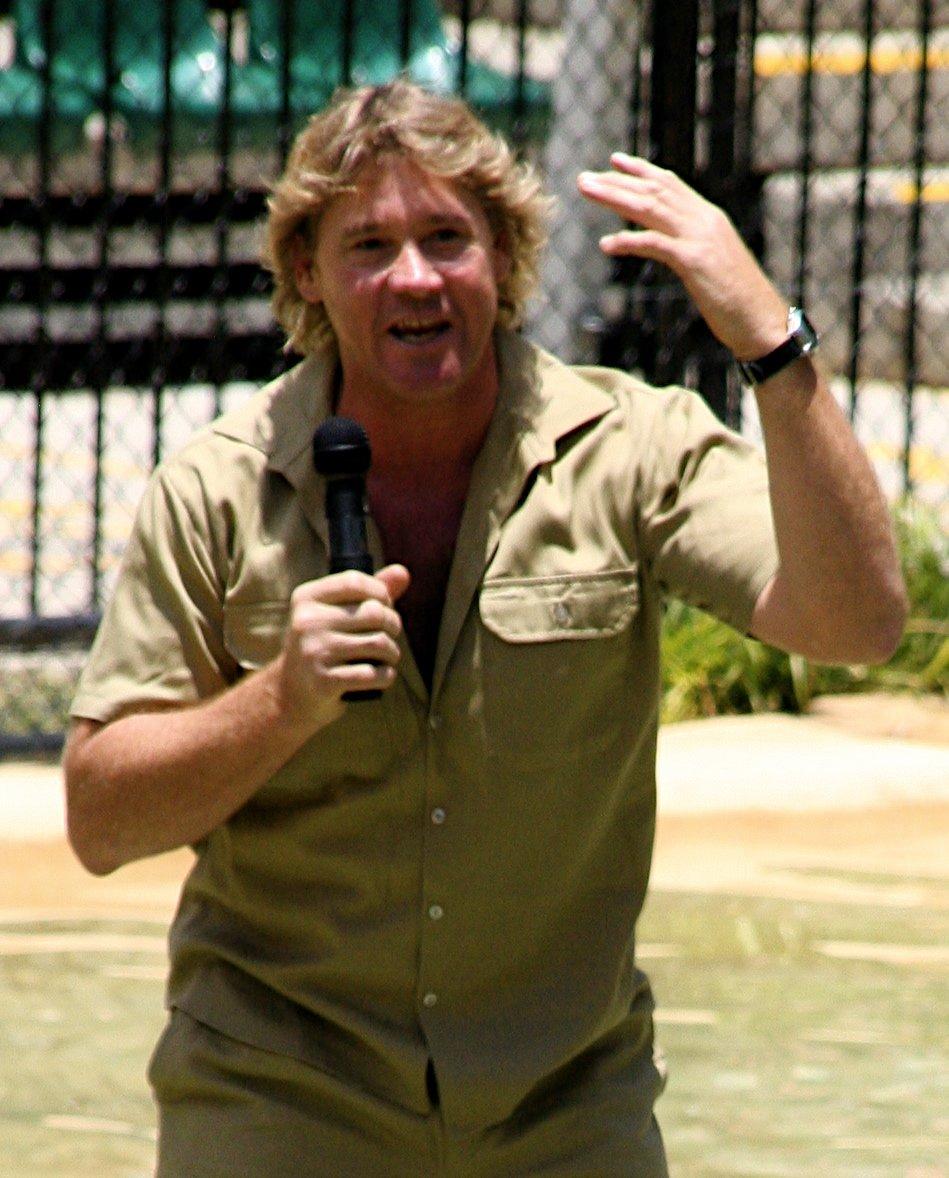
Steve Irwin.

Conservationist · Television Host · Wildlife Educator

Steve Irwin turned zoo chores, reptile handling, and sheer physical nerve into one of television’s most effective conservation machines. The khaki, the shouted “Crikey!,” the dangerous camera distance—none of it was empty showmanship. He used spectacle to get millions of viewers to stop treating wildlife as horror props and start seeing animals worth protecting.

OBJECTIVE PERSONALITY CLASSIFICATIONMF-Se/Te-PB/C(S)What does this mean?
PERSONALITY SYSTEMObjective Personality
LEAD FUNCTIONSe · Extroverted Sensing
SECOND SAVIOR FUNCTIONTe · Extroverted Thinking
MBTI EQUIVALENTESFP
01 / BEHIND THE CLASSIFICATION

The personality behind the fame.

How does a recorded OPS classification like MF-Se/Te-PB/C(S) break down? Walk through nine coins and watch the proposed type take shape. These are deductions from the archived code, not independent evidence of typing accuracy.

Scroll below to see Steve Irwin take shape.

STARTING POINT512 possible OPS typesEach type combines core functions, an animal order, and sexual modalities.
THE FINISH LINEMF-Se/Te-PB/C(S)One recorded classification, decoded from its components.
Steve Irwin’s HUMAN NEEDS 01—03
01
DECIDER OR OBSERVER?

Observer over Decider

Observers have more balanced Decider poles in the middle: Self (Di) and Tribe (De). Their own perspective and other people's perspectives tend to be easier to navigate. Things are the harder territory. Control (Oi) and Chaos (Oe) sit at the extremes, so disrupted plans, uncertainty, and a changing world can trigger the strongest reactions.

Before Steve Irwin was a global catchphrase, he was a kid handling reptiles at his parents’ park and later relocating more than 100 crocodiles for Queensland’s East Coast Crocodile Management program. His pressure point keeps landing on circumstances: what is this animal doing, what is the terrain doing, what must happen next? That Observer focus made him unusually adaptive in chaos. The blind spot is assuming one more risky, changing situation can always be met head-on, when some conditions also demand a slower limit and a narrower plan.
O
02
SELF OR TRIBE?

De · Tribe over Di · Self

Tribe (De) is the stronger deciding pole. They check decisions against people, shared standards, and what works for the group: what do we need, what will others think? The strength is coordination and responsiveness; the recurring friction is the Self (Di)—knowing and defending their own position. As the portrait unfolds, notice how Tribe takes the lead.

Irwin’s conservation pitch was built for the group. The Crocodile Hunter reached more than 130 countries, he fronted quarantine campaigns, and he kept aiming his message at getting ordinary people to care about endangered species. That is Tribe-first pressure: the standard has to work for other people, not just feel right privately. The strength is mobilizing an audience instead of guarding a personal purity test. The cost is that public demonstrations can be read in ways you did not intend, as seen in the 2004 crocodile-feeding controversy and his later apology.

De
03
GATHER OR ORGANIZE?

Oe · Gather over Oi · Organize

Gather (Oe) leads with new information, experiences, and possibilities. Its strength is curiosity and adaptability; the recurring friction is narrowing the options and settling into what is already known. Another layer of the personality portrait comes into focus.

Irwin kept widening the field: crocodiles, snakes, Antarctica, Borneo, the Yangtze, sea lions off Baja, and even plans to expand Australia Zoo beyond Queensland. Gather-first fits that appetite for the next habitat, species, and opening. It made wildlife education feel adventurous rather than museum-static. The tradeoff is that more options do not automatically create a cleaner direction. A life driven by discovery can keep adding fronts—new expeditions, new campaigns, new expansions—while the harder discipline is deciding which path deserves the next decade of effort.

Oe
FIRST THREE COINSO + De + Oe

These establish the preferred human needs in the OPS framework.

Steve Irwin’s FUNCTIONS 04—05
04
FEELING OR THINKING?

Thinking · T over Feeling · F

Thinking (T) evaluates decisions through reasons, logic, and what works—not a lack of emotion. Its strength is analytical consistency; Feeling (F) provides balance through values, meaning, and the human consequences of a decision. Combined with Tribe (De), this forms the recorded Savior Te.

When two divers went missing off Baja California in 2003, Irwin stopped filming, used his vessel in the search, had his divers assist, and called in a rescue plane through satellite communications. That is public, practical Thinking: organize people and tools around the problem in front of you. The strength is obvious usefulness. The limit is that an external, results-first logic can sound complete even when it leaves context hanging, which helps explain why some of his blunt public comments on politics and environmental issues drew criticism.

T → Te
05
SENSING OR INTUITION?

Sensing · S over Intuition · N

Sensing (S) focuses on concrete details, observable reality, and lived experience. Intuition (N) balances it by looking for broader patterns, concepts, and implications. Combined with Gather (Oe), this gives the recorded Savior Se.

Irwin’s public signature was built on what was physically happening right now. He grew up feeding animals, handled crocodiles from childhood, and became famous for reading bodies, distance, terrain, and risk in real time. Sensing let him make wildlife concrete instead of abstract; viewers could see why an animal moved, struck, or backed off. The cost is that immediacy can dominate the frame. A handler may know the exact distance is controlled while missing the broader symbolic meaning that viewers will carry away from the image.

S → Se
THE TWO SAVIOR FUNCTIONSSe / Te

Opposing functions: Ni and Fi. This is a jumper classification.

Steve Irwin’s ANIMAL STACK 06—07
06
PLAY OR SLEEP?

Play over Sleep

Play emphasizes external real-time engagement; Sleep emphasizes internal processing. The recorded stack places Play earlier.

Play shows up in how Irwin worked best with life happening around him: co-hosting with Terri, turning a crocodile-trapping honeymoon into the first Crocodile Hunter episode, and making education feel like a live encounter instead of a lecture. The strength is momentum through interaction. He could energize a crew, an audience, and a dangerous situation all at once. The cost of Sleep being later is that solitary consolidation is easier to postpone. There is always another animal, another shoot, another rescue, and stopping can feel like wasting useful motion.

P > S
07
CONSUME OR BLAST?

Blast over Consume

Consume gathers information for internal processing; Blast organizes and communicates information. The recorded order is Play → Blast → Consume → Sleep. This comparison follows their positions in that stack.

With Blast arriving earlier than Consume, Irwin’s instinct was not to hoard wildlife knowledge but to fire it outward in plain language. Animal Planet built weeklong marathons around him, David Attenborough praised him as a “born communicator,” and his whole conservation strategy was to excite people rather than scold them. That earlier Blast is a strength: information becomes usable because someone actually says the thing. The cost is nuance. When broadcasting outruns slower intake, a bold message can travel farther than its qualifications and sound simpler than the issue really is.

B > C
Steve Irwin’s ANIMAL ORIENTATION 08—09
08
INFO OR ENERGY DOMINANT?

Info over Energy

Info dominant means Consume and Blast are both in the top three: gathering and communicating information are more balanced. Sleep last leaves the energy side uneven—Play can keep engagement going without enough private recovery.

Irwin lands on the Info side: the public work repeatedly cycles through taking in facts about animals and habitats, then turning them into education people can use. The Crocodile Hunter, Croc Files, zoo talks, and conservation campaigns all show that loop. The strength is translation. He did not leave wildlife knowledge trapped inside specialist circles. The missing balance is Sleep last. When outward engagement and information-sharing stay hot, private processing and recovery become expensive. Growth here is not more action, but more deliberate time to integrate what the mission is already demanding.

Info
09
INTROVERSION OR EXTROVERSION?

Extroversion over Introversion

The last animal, Sleep, determines this OPS coin: Play or Blast last means Introversion; Consume or Sleep last means Extroversion. This describes animal orientation, not sociability or shyness.

Sleep sits last, which makes this OPS Extroversion—not because Steve Irwin looked outgoing on television, but because the least natural move is withdrawing long enough to privately sort, narrow, and settle before re-entering action. His career kept moving outward: new series, zoo expansion, campaigns, travel, nonstop public teaching. That brought enormous reach. The cost is that stillness can feel falsely unproductive, as if pausing betrays the mission. The growth edge is learning that stepping back is not abandonment; it is how momentum stops making every next move for you.

E
Sexual Modalities

The four sexual modalities.

OPS uses masculine/feminine sensory and extroverted-deciding distinctions as framework-specific terms, not gender categories. The four modalities are already included in the original 512 types. The recorded modality is MF · Audio.

MM KinestheticMasculine Sensory · Masculine De
MF RECORDED MODALITYAudioMasculine Sensory · Feminine De
FF TesterFeminine Sensory · Feminine De
FM VisualFeminine Sensory · Masculine De
COMPLETE RECORDED OPS TYPE · MODALITY INCLUDEDMF-Se/Te-PB/C(S)

Se leads, Te supports, and the animal stack is Play → Blast → Consume → Sleep.

THE FINISHED PORTRAIT · ALL NINE COINS REVEALED

Steve Irwin's complete function and animal stack

PlayBlastConsumeSleepmSemFifTefNi
MF-Se/Te-PB/C(S)DOUBLE ACTIVATED · PLAYExplore the Interactive Coin Builder →
THE STEVE IRWIN LENS

The lesson inside the spectacle

The public image is easy to remember: khaki, “Crikey!,” and a man inches from a crocodile like danger was a regular coworker. But the honeymoon footage that became The Crocodile Hunter also reveals the person behind the slogan—a working zookeeper who grew up feeding animals and turning family labor into a global conservation platform.

His Se/Te pairing made him devastatingly effective in public. Se locked onto what the animal, enclosure, or terrain was doing right now, while Te turned that immediacy into a usable message, a coordinated rescue, or a clearer conservation pitch. The limit is that practical confidence can outrun nuance. A vivid demonstration teaches fast, but it does not answer every longer-range question about optics or restraint.

As an Observer and Double Decider, Irwin’s pressure centered more on changing conditions than on people drama. That pairing can steady the human side while overworking the information side: more animals, more terrain, more variables to meet head-on. The neglected function is Ni, opposite his lead Se—the slower narrowing process that asks what pattern or priority should govern the next move.

Play → Blast → Consume → Sleep fits a man who engaged first, taught fast, and kept gathering fuel for the mission. Sleep last is the imbalance: private consolidation comes after motion, not before it. The balancing move is simple and concrete—build protected quiet review between expeditions, episodes, and zoo expansion decisions so the momentum stays powerful without becoming the decision-maker.

Want to understand the Savior and Demon states behind these nine coins? Explore the complete explanation, visual examples, and typing principles on our Methodology page →

02 / KEEP EXPLORING

Different faces. Familiar patterns.

Explore other celebrities with related recorded OPS classifications. Related functions are not necessarily exact type matches.

Discover Type Twins
YOUR TURN

Curious about your own type?

Discover how your own personality might be classified through Objective Personality.

Get objectively typed
Steve Irwin's Personality Type & OPS Profile | The Personality Atlas