The Personality Atlas
THE CELEBRITY PERSONALITY ARCHIVE / FILM & TELEVISION

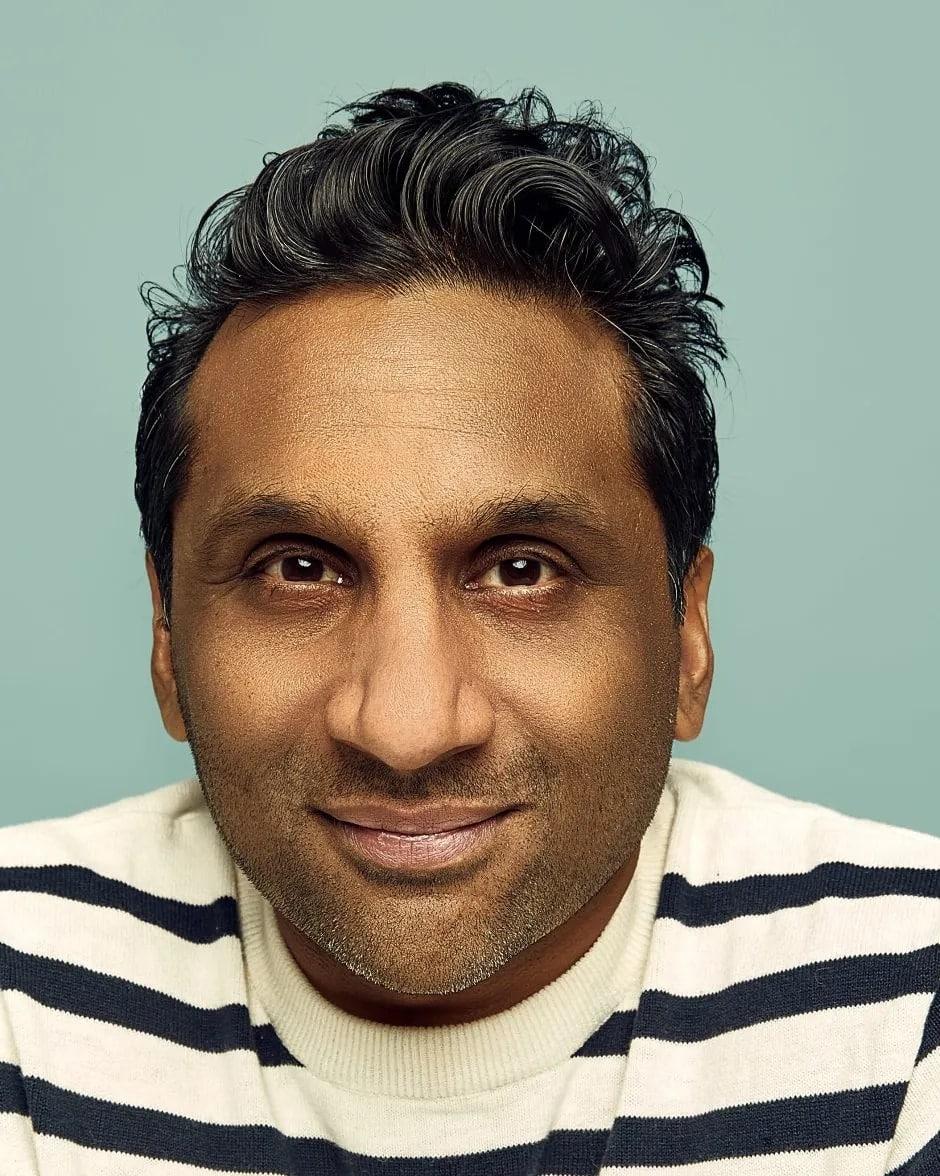
Ravi Patel.

Actor · Filmmaker

Ravi Patel turned a family trip to India, semi-arranged matchmaking and a previously undisclosed relationship into Meet the Patels, a documentary that is funny because it is so exposed. That same public-facing agility carries into his acting work on Animal Control: he keeps making awkwardly human material usable, watchable and shared.

OBJECTIVE PERSONALITY CLASSIFICATIONMF-Se/Te-PB/C(S)What does this mean?
PERSONALITY SYSTEMObjective Personality
LEAD FUNCTIONSe · Extroverted Sensing
SECOND SAVIOR FUNCTIONTe · Extroverted Thinking
MBTI EQUIVALENTESFP
01 / BEHIND THE CLASSIFICATION

The personality behind the fame.

How does a recorded OPS classification like MF-Se/Te-PB/C(S) break down? Walk through nine coins and watch the proposed type take shape. These are deductions from the archived code, not independent evidence of typing accuracy.

Scroll below to see Ravi Patel take shape.

STARTING POINT512 possible OPS typesEach type combines core functions, an animal order, and sexual modalities.
THE FINISH LINEMF-Se/Te-PB/C(S)One recorded classification, decoded from its components.
Ravi Patel’s HUMAN NEEDS 01—03
01
DECIDER OR OBSERVER?

Observer over Decider

Observers have more balanced Decider poles in the middle: Self (Di) and Tribe (De). Their own perspective and other people's perspectives tend to be easier to navigate. Things are the harder territory. Control (Oi) and Chaos (Oe) sit at the extremes, so disrupted plans, uncertainty, and a changing world can trigger the strongest reactions.

Meet the Patels starts with a family trip to India and a problem Ravi Patel could not solve by force of personality alone: marriage, timing, geography and a matchmaking system larger than any one conversation. That is classic Observer pressure. The friction sits in the situation itself—what options exist, what the conditions are, what happens next when reality refuses a neat script. His strength is adaptability under shifting circumstances. The growth cost is that staying flexible can postpone a firmer choice, especially when another new variable keeps arriving and feeling more urgent than the decision.


O
02
SELF OR TRIBE?

De · Tribe over Di · Self

Tribe (De) is the stronger deciding pole. They check decisions against people, shared standards, and what works for the group: what do we need, what will others think? The strength is coordination and responsiveness; the recurring friction is the Self (Di)—knowing and defending their own position. As the portrait unfolds, notice how Tribe takes the lead.

The documentary's semi-arranged matchmaking and cross-generational family conversations put Ravi in constant contact with outside expectations. De leans toward the Tribe standard: what parents, relatives and a wider community are asking for, and how to respond in a way other people can track. That can be a real strength. He is able to make a potentially defensive subject discussable, not just privately felt. The blind spot is over-weighting what will work for everyone else. A life decision can become legible to the group before it becomes fully settled for the person making it.

De
03
GATHER OR ORGANIZE?

Oe · Gather over Oi · Organize

Gather (Oe) leads with new information, experiences, and possibilities. Its strength is curiosity and adaptability; the recurring friction is narrowing the options and settling into what is already known. Another layer of the personality portrait comes into focus.

Meet the Patels did not begin as a rigid master plan; it grew out of footage from a trip, expanded through documentary scenes, and even used animation to keep widening the frame. That is a strong Gather signature. Ravi seems energized by following what fresh material offers rather than protecting one fixed format from the start. The advantage is range: actor, filmmaker, documentary subject, comic storyteller. The cost is selectivity. New angles keep appearing, and each one can feel worth chasing. Growth means deciding which possibilities deepen the project and which merely delay commitment.

Oe
FIRST THREE COINSO + De + Oe

These establish the preferred human needs in the OPS framework.

Ravi Patel’s FUNCTIONS 04—05
04
FEELING OR THINKING?

Thinking · T over Feeling · F

Thinking (T) evaluates decisions through reasons, logic, and what works—not a lack of emotion. Its strength is analytical consistency; Feeling (F) provides balance through values, meaning, and the human consequences of a decision. Combined with Tribe (De), this forms the recorded Savior Te.

Te shows up in Ravi Patel's ability to turn an awkward family subject into a public story with structure. Meet the Patels does not just confess confusion; it organizes conversations, footage and cultural context so an audience can follow the issue outside his own head. That is Thinking in an external, practical register: make the information usable. The strength is clarity for other people. The limit is assuming that a workable explanation equals a finished answer. A story can land cleanly on PBS while the human problem underneath remains less tidy than the presentation.

T → Te
05
SENSING OR INTUITION?

Sensing · S over Intuition · N

Sensing (S) focuses on concrete details, observable reality, and lived experience. Intuition (N) balances it by looking for broader patterns, concepts, and implications. Combined with Gather (Oe), this gives the recorded Savior Se.

Ravi's recorded Observer function is Se, and the best public example is right in the documentary's raw material: actual family travel, actual conversations, actual footage gathered from a real trip to India. Se trusts what is present and concrete enough to capture on camera rather than disappearing into abstraction first. That gives his work immediacy and comic specificity. The tradeoff is that immediate reality can dominate the frame. Concrete moments are vivid, but they do not automatically provide the longer-range through-line about where everything is headed or what pattern the details finally imply.

S → Se
THE TWO SAVIOR FUNCTIONSSe / Te

Opposing functions: Ni and Fi. This is a jumper classification.

Ravi Patel’s ANIMAL STACK 06—07
06
PLAY OR SLEEP?

Play over Sleep

Play emphasizes external real-time engagement; Sleep emphasizes internal processing. The recorded stack places Play earlier.

Play comes first here, and Ravi's career gives it obvious public form: co-directing with his sister Geeta, putting family interactions on camera, and working in ensemble television where response happens in real time. Play's strength is momentum through interaction. It makes him easier to picture testing material aloud, adapting to what other people are doing, and keeping a project lively rather than sealed off. Sleep sits later, which creates the cost. The quieter work of pulling back, consolidating and protecting inner recovery can lose to the next conversation, scene or collaborative demand.

P > S
07
CONSUME OR BLAST?

Blast over Consume

Consume gathers information for internal processing; Blast organizes and communicates information. The recorded order is Play → Blast → Consume → Sleep. This comparison follows their positions in that stack.

After that first push of Play, Blast arrives earlier than Consume. Ravi's public work reflects that order: he is not only taking experiences in, he is packaging them into something other people can follow. Meet the Patels turns family tension and cultural context into a shareable narrative instead of a private archive of footage. That is the strength of earlier Blast—usable communication, quicker synthesis, forward motion. The growth cost is skipping past fuller intake. A message can become presentable before every angle has been thoroughly explored or pressure-tested.

B > C
Ravi Patel’s ANIMAL ORIENTATION 08—09
08
INFO OR ENERGY DOMINANT?

Info over Energy

Info dominant means Consume and Blast are both in the top three: gathering and communicating information are more balanced. Sleep last leaves the energy side uneven—Play can keep engagement going without enough private recovery.

With Blast and Consume both in the top three, Ravi lands on the Info side of the animal coin. His public career makes that easy to see: gather material from a deeply personal situation, then shape it into a film an audience can actually understand. Info dominance can look impressively effective because learning and explaining reinforce each other. The missing balance is Sleep last. A life built around collaboration, acting and public storytelling can keep moving while inner consolidation falls behind. The cost is not ignorance; it is insufficient retreat to digest experience before the next outward ask arrives.

Info
09
INTROVERSION OR EXTROVERSION?

Extroversion over Introversion

The last animal, Sleep, determines this OPS coin: Play or Blast last means Introversion; Consume or Sleep last means Extroversion. This describes animal orientation, not sociability or shyness.

Ravi's last animal is Sleep, which makes this OPS Extroversion by the recorded decoder—not because he must be socially louder than everyone else, but because Play, Blast and Consume all come before private processing. His system is quicker to engage, explain and keep the exchange moving than to withdraw and settle the experience alone. That can make him publicly agile across filmmaking and acting. The blind spot is subtler than 'too outgoing.' It is the temptation to let interaction and progress stand in for reflection, when the next durable insight may require deliberate time away from the motion.

E
Sexual Modalities

The four sexual modalities.

OPS uses masculine/feminine sensory and extroverted-deciding distinctions as framework-specific terms, not gender categories. The four modalities are already included in the original 512 types. The recorded modality is MF · Audio.

MM KinestheticMasculine Sensory · Masculine De
MF RECORDED MODALITYAudioMasculine Sensory · Feminine De
FF TesterFeminine Sensory · Feminine De
FM VisualFeminine Sensory · Masculine De
COMPLETE RECORDED OPS TYPE · MODALITY INCLUDEDMF-Se/Te-PB/C(S)

Se leads, Te supports, and the animal stack is Play → Blast → Consume → Sleep.

THE FINISHED PORTRAIT · ALL NINE COINS REVEALED

Ravi Patel's complete function and animal stack

PlayBlastConsumeSleepmSemFifTefNi
MF-Se/Te-PB/C(S)DOUBLE ACTIVATED · PLAYExplore the Interactive Coin Builder →
THE RAVI PATEL LENS

The easygoing style hides a real pressure problem.

Ravi Patel's public image is unusually easygoing for someone who made a breakout project from a genuinely awkward life crossroads. Meet the Patels works because the family trip, the matchmaking process and the generational debate are all concrete enough to be funny, but never so polished that the tension disappears. The charm is real; so is the logistical pressure underneath it.

His Se/Te pairing gives him a practical storytelling engine. Se keeps the material rooted in what actually happened and what can be shown; Te organizes that material into a clear public frame. That is why the documentary feels lively instead of merely confessional. The limit is that a well-built explanation can outrun deeper consolidation. Making the story legible is not the same as finishing what the story asks of him.

As an Observer and Double Decider, Ravi is not fundamentally stuck on people drama; he is better equipped than many to move among competing viewpoints. The exact pairing matters: Observer means Double Decider, and that steadier people balance can mask how much unresolved chaos is still driving the bus. Neglected Ni, opposite his lead Se, is the quieter demand to narrow the pattern and commit to where all those vivid facts are pointing.

Play → Blast → Consume → Sleep explains the final pressure point. Ravi can engage, articulate and gather before he naturally steps back to process. Sleep last risks living on the momentum of the next scene or conversation. Balance means scheduling real off-camera consolidation—journal the pattern, cut the noise, then return sharper rather than flatter.

Want to understand the Savior and Demon states behind these nine coins? Explore the complete explanation, visual examples, and typing principles on our Methodology page →

02 / KEEP EXPLORING

Different faces. Familiar patterns.

Explore other celebrities with related recorded OPS classifications. Related functions are not necessarily exact type matches.

Discover Type Twins
YOUR TURN

Curious about your own type?

Discover how your own personality might be classified through Objective Personality.

Get objectively typed
Ravi Patel's Personality Type & OPS Profile | The Personality Atlas