The Personality Atlas
THE CELEBRITY PERSONALITY ARCHIVE / TELEVISION

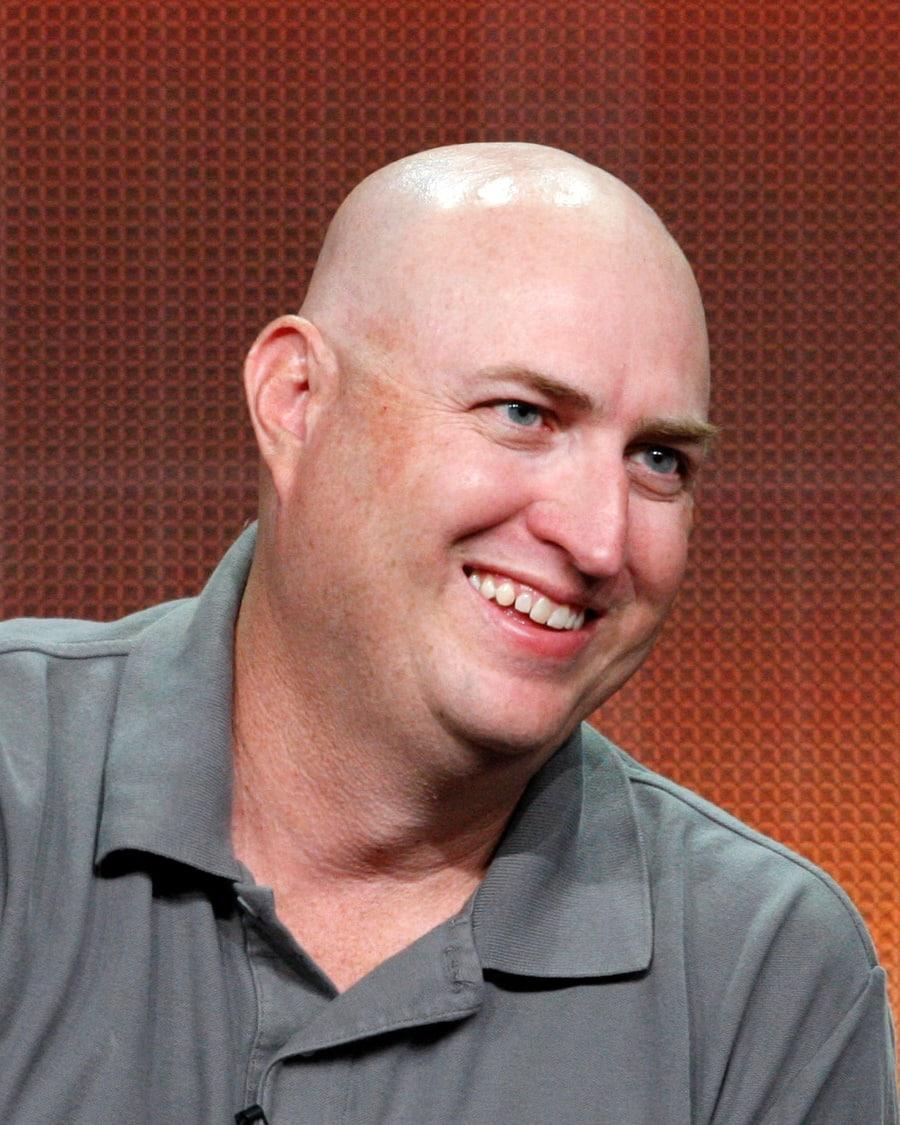
Shawn Ryan.

Television writer · Showrunner · Producer

From The Shield to The Night Agent, Shawn Ryan has made a career out of television pressure cookers—creating, co-creating and executive producing series that have to satisfy networks, collaborators and audiences without losing their edge. The Middlebury student who studied economics and theater, then began writing plays, grew into a showrunner whose public record keeps circling the same challenge: can a fiercely worked-out vision survive a room full of other smart people?

OBJECTIVE PERSONALITY CLASSIFICATIONMF-Ti/Se-CS/P(B) #3What does this mean?
PERSONALITY SYSTEMObjective Personality
LEAD FUNCTIONTi · Introverted Thinking
SECOND SAVIOR FUNCTIONSe · Extroverted Sensing
MBTI EQUIVALENTISTP
01 / BEHIND THE CLASSIFICATION

The personality behind the fame.

How does a recorded OPS classification like MF-Ti/Se-CS/P(B) #3 break down? Walk through nine coins and watch the proposed type take shape. These are deductions from the archived code, not independent evidence of typing accuracy.

Scroll below to see Shawn Ryan take shape.

STARTING POINT512 possible OPS typesEach type combines core functions, an animal order, and sexual modalities.
THE FINISH LINEMF-Ti/Se-CS/P(B) #3One recorded classification, decoded from its components.
Shawn Ryan’s HUMAN NEEDS 01—03
01
DECIDER OR OBSERVER?

Decider over Observer

Deciders have more balanced Observer poles in the middle: Control (Oi) and Chaos (Oe). Organizing what's known and handling what's new tend to feel more manageable. People are the harder territory. Self (Di) and Tribe (De) sit at the extremes, so judgment, rejection, approval, and conflict can trigger the strongest reactions.

Ryan's resume is practically a list of alliances and negotiated visions: co-creating S.W.A.T. with Aaron Rahsaan Thomas, Timeless with Eric Kripke, Last Resort with Karl Gajdusek, writing The Unit with David Mamet, and Terriers with Ted Griffin. That pattern spotlights people-friction more than circumstance-friction. The challenge is not merely finding a timeslot; it is getting strong opinions to line up behind one version of a show. The strength is steadiness under judgment and disagreement. The blind spot is assuming every conflict can be reasoned through personally instead of letting external constraints settle part of the fight.
D
02
SELF OR TRIBE?

Di · Self over De · Tribe

Self (Di) is the stronger deciding pole. They check decisions against their own values or reasons first: what makes sense to me, what feels right to me? The strength is independent conviction; the recurring friction is the Tribe (De)—other people's standards, feedback, and expectations. As the portrait unfolds, notice how Self takes the lead.

Ryan did not stay only a reliable staff writer on Nash Bridges or Angel; he moved toward creating The Shield and later The Night Agent, jobs that demand a point of view sturdy enough to survive notes, budgets and fashion. Self over Tribe is less about ego than authorship. The advantage is unmistakable ownership: the work does not feel crowd-sourced into blandness. The cost is equally real. When your own bar feels clearest, outside buy-in can look like dilution, even when another voice is identifying the part the audience still cannot see.

Di
03
GATHER OR ORGANIZE?

Oe · Gather over Oi · Organize

Gather (Oe) leads with new information, experiences, and possibilities. Its strength is curiosity and adaptability; the recurring friction is narrowing the options and settling into what is already known. Another layer of the personality portrait comes into focus.

Ryan's credits jump from Nash Bridges and Angel to The Shield, The Unit, Terriers, Last Resort, Timeless, S.W.A.T., and The Night Agent. That is not a tiny protected lane. Gather first thrives on fresh premises, new collaborators and another unexplored angle. It gives him range: one career can move through cop drama, military tension, offbeat detective work and high-concept thriller without looking trapped. The tradeoff is selectivity. Options multiply faster than a schedule does, and every intriguing direction cannot get the same years of execution.

Oe
FIRST THREE COINSD + Di + Oe

These establish the preferred human needs in the OPS framework.

Shawn Ryan’s FUNCTIONS 04—05
04
FEELING OR THINKING?

Thinking · T over Feeling · F

Thinking (T) evaluates decisions through reasons, logic, and what works—not a lack of emotion. Its strength is analytical consistency; Feeling (F) provides balance through values, meaning, and the human consequences of a decision. Combined with Self (Di), this forms the recorded Savior Ti.

From The Shield to Timeless and The Night Agent, Ryan's job is not just to generate emotion but to build story engines that keep paying off. Ti brings value through internal precision: motives, stakes and rules have to cohere well enough that a season can keep moving. That strength often separates a gripping premise from a collapsed one. The blind spot is quieter and more irritating. A logically satisfying answer is not automatically a socially satisfying one, and a room may need more than 'this works' before it fully commits.

T → Ti
05
SENSING OR INTUITION?

Sensing · S over Intuition · N

Sensing (S) focuses on concrete details, observable reality, and lived experience. Intuition (N) balances it by looking for broader patterns, concepts, and implications. Combined with Gather (Oe), this gives the recorded Savior Se.

Ryan's public work lives in tactile pressure zones: police units, tactical teams, military conflict, fugitive hunts. Sensing helps turn an abstract thriller idea into things an audience can actually track—an operation, a threat, a move, a consequence. That immediacy is a real advantage; his shows are built to land on the screen, not remain a smart pitch in development. The limit is that present-tense impact can become seductive. A scene can hit hard right now and still need a longer pattern to explain what all that momentum is building toward.

S → Se
THE TWO SAVIOR FUNCTIONSTi / Se

Opposing functions: Fe and Ni.

Shawn Ryan’s ANIMAL STACK 06—07
06
CONSUME OR BLAST?

Consume over Blast

Consume gathers information for internal processing; Blast organizes and communicates information. The recorded order is Consume → Sleep → Play → Blast. This comparison follows their positions in that stack.

Ryan's career reads like someone who keeps gathering before pronouncing: early staff work on Nash Bridges and Angel, then creations and co-creations across multiple later series. Consume over Blast favors intake first. The strength is obvious in television, where every new show needs a fresh store of references, problems and examples. He has material to draw from because he has actually moved through different rooms and formats. The growth cost is timing. More source material can improve the work while still postponing the moment when the creator states, cleanly and publicly, what this version of the show is.

C > B
07
PLAY OR SLEEP?

Sleep over Play

Play emphasizes external real-time engagement; Sleep emphasizes internal processing. The recorded stack places Sleep earlier.

The Creator to Creator conversation with Eric Kripke offers a public hint at the second-animal tilt: showrunning is collaborative, but it also demands a strong internal edit before the next decision hits production. Sleep over Play suggests Ryan is not only collecting material; he is consolidating it into a private read before pushing it outward. That steadiness has value. A showrunner who has already sorted the problem is harder to knock sideways. The cost is that once the inner version feels resolved, spontaneous outside input can arrive as friction rather than fuel.

S > P
Shawn Ryan’s ANIMAL ORIENTATION 08—09
08
INFO OR ENERGY DOMINANT?

Energy over Info

Energy dominant means Play and Sleep are both in the top three: there is access to expending energy through engagement and conserving it through internal processing. Blast last leaves the information side uneven—Consume may gather far more than gets communicated.

Across co-creating S.W.A.T. with Aaron Rahsaan Thomas, Timeless with Eric Kripke, and Last Resort with Karl Gajdusek, Ryan's public career shows the Energy pattern clearly: internal calibration and live collaboration both come online before outward packaging does. That can keep a demanding series moving through drafts, partners and production changes. The missing pressure comes from Blast, not from a lack of material. A creator can have the concept, the partners and the episodes, yet still understate the broader thesis. The growth cost is turning accumulated judgment into a message other people do not have to decode.

Energy
09
INTROVERSION OR EXTROVERSION?

Introversion over Extroversion

The last animal, Blast, determines this OPS coin: Play or Blast last means Introversion; Consume or Sleep last means Extroversion. This describes animal orientation, not sociability or shyness.

Ryan's many collaborators do not cancel the Introversion coin. Blast lands fourth, which in Atlas decoding makes this OPS Introversion: taking in, processing and engaging all arrive before broadcasting a settled conclusion. A television showrunner can still lead rooms, co-create network dramas and sit down publicly with Kripke to discuss showrunning. The question is not whether he can speak. It is whether his clearest gear is declaring the distilled thesis early, or refining it until the work itself carries more of the burden. Growth means stating the governing idea sooner so the whole team is solving the same problem.

I
Sexual Modalities

The four sexual modalities.

OPS uses masculine/feminine sensory and extroverted-deciding distinctions as framework-specific terms, not gender categories. The four modalities are already included in the original 512 types. The recorded modality is MF · Audio.

MM KinestheticMasculine Sensory · Masculine De
MF RECORDED MODALITYAudioMasculine Sensory · Feminine De
FF TesterFeminine Sensory · Feminine De
FM VisualFeminine Sensory · Masculine De
ADDITIONAL LAYER · SOCIAL TYPE

The four social types.

Social types are an additional layer on top of the original Objective Personality classification, introduced later in OPS research. They describe two proposed social preference coins: Flex vs. Friends and Generalize vs. Specialize. The combination and priority of these preferences produce four social types. Shawn Ryan's recorded social type is #3.

SOCIAL #1 #1Flex · Generalize
SOCIAL #2 #2Generalize · Friends
SOCIAL #3 RECORDED SOCIAL TYPE#3Specialize · Flex
SOCIAL #4 #4Friends · Specialize
COMPLETE RECORDED OPS TYPE · MODALITY INCLUDED + SOCIAL TYPEMF-Ti/Se-CS/P(B) #3

Ti leads, Se supports, and the animal stack is Consume → Sleep → Play → Blast.

THE FINISHED PORTRAIT · ALL NINE COINS REVEALED

Shawn Ryan's complete function and animal stack

ConsumeSleepPlayBlastmTimSefNifFe
MF-Ti/Se-CS/P(B) #3DOUBLE ACTIVATED · CONSUMEExplore the Interactive Coin Builder →
THE SHAWN RYAN LENS

The showrunner with the internal cut

Ryan's public image is easy to flatten into 'crime-and-thriller guy,' but the fuller picture is a builder of television systems. The Middlebury student who studied economics and theater, then wrote plays, went on to create The Shield and The Night Agent while repeatedly partnering with peers like Eric Kripke. Behind the hard-edged premises is a maker testing whether a show keeps its shape under pressure.

The Ti/Se pairing helps explain that toughness. Ti wants the mechanism to hold together; Se keeps it tied to visible stakes and consequences an audience can track. That is a showrunning strength. Ryan's worlds do not survive on atmosphere alone. The limit is that a clean internal answer and a hard-hitting scene can still outrun the slower work of making the larger message explicit.

As a Decider and Double Observer, Ryan's central strain is not primarily chaos in the material; it is judgment, buy-in and competing priorities between people. The Double Observer side gives range with information and adaptation, but the imbalance still lands in human needs. Neglected Fe, opposite his lead Ti, can miss when a logically solid direction has not yet become collectively legible.

Consume → Sleep → Play → Blast is a strong sequence for absorbing, refining and then actively working material with other people before broadcasting a final conclusion. Blast last is the pressure point: the vision can be rich and productive while the headline stays implied. The useful correction is opening a season or room with a clearer thesis memo so the collaboration sharpens, rather than softens, his edge.

Want to understand the Savior and Demon states behind these nine coins? Explore the complete explanation, visual examples, and typing principles on our Methodology page →

02 / KEEP EXPLORING

Different faces. Familiar patterns.

Explore other celebrities with related recorded OPS classifications. Related functions are not necessarily exact type matches.

Discover Type Twins
YOUR TURN

Curious about your own type?

Discover how your own personality might be classified through Objective Personality.

Get objectively typed
Shawn Ryan's Personality Type & OPS Profile | The Personality Atlas