The Personality Atlas
THE CELEBRITY PERSONALITY ARCHIVE / FILM & STAGE

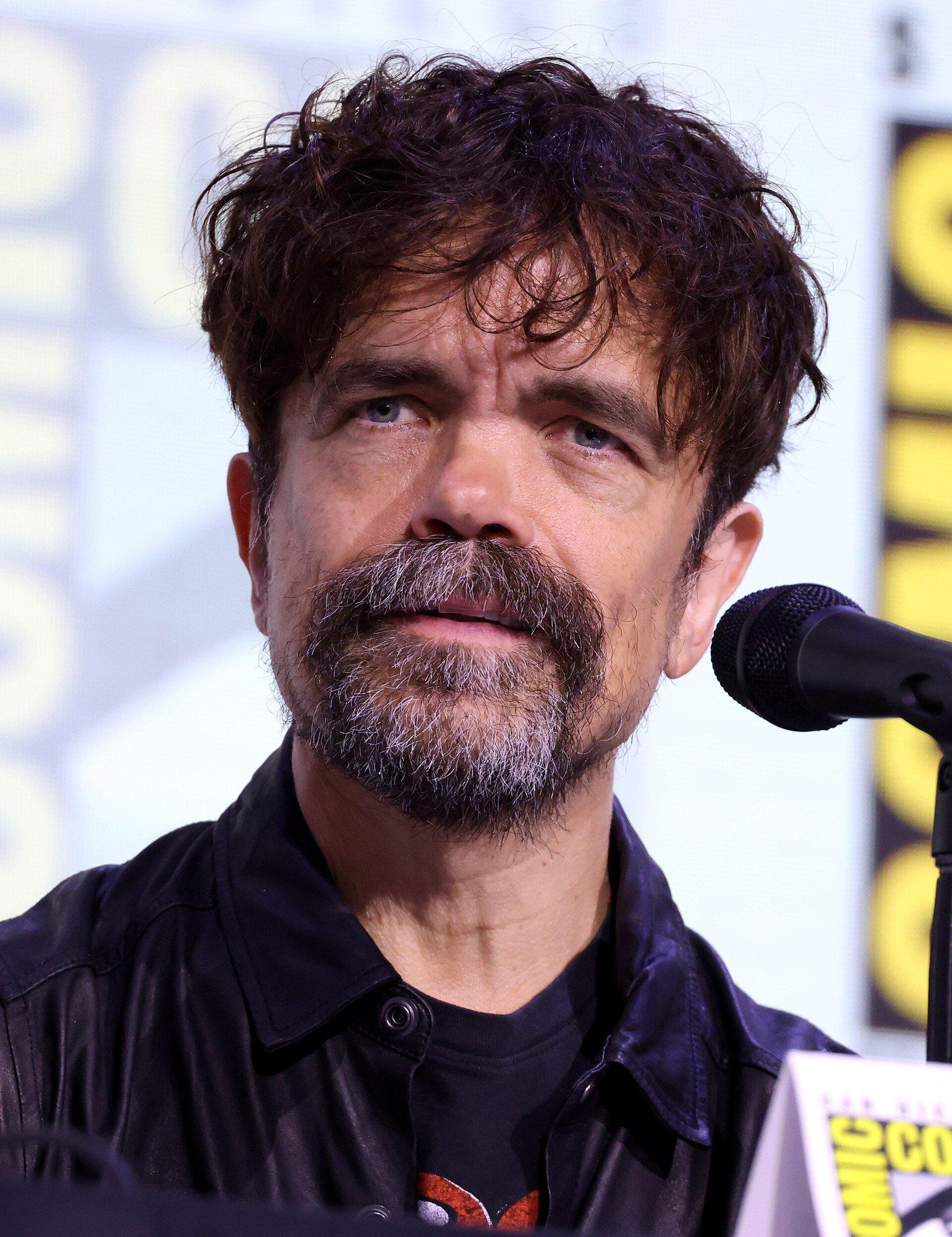
Peter Dinklage.

Actor · Producer · Stage Performer

Peter Dinklage turned a career the industry kept trying to shrink into one of modern screen acting’s most unmistakable presences. From The Station Agent to four Emmys as Tyrion Lannister, he kept refusing the cute, flattened roles and insisting on intelligence, bite and full humanity where Hollywood often offered costume shorthand.

OBJECTIVE PERSONALITY CLASSIFICATIONMF-Ti/Se-CS/P(B) #3What does this mean?
PERSONALITY SYSTEMObjective Personality
LEAD FUNCTIONTi · Introverted Thinking
SECOND SAVIOR FUNCTIONSe · Extroverted Sensing
MBTI EQUIVALENTISTP
01 / BEHIND THE CLASSIFICATION

The personality behind the fame.

How does a recorded OPS classification like MF-Ti/Se-CS/P(B) #3 break down? Walk through nine coins and watch the proposed type take shape. These are deductions from the archived code, not independent evidence of typing accuracy.

Scroll below to see Peter Dinklage take shape.

STARTING POINT512 possible OPS typesEach type combines core functions, an animal order, and sexual modalities.
THE FINISH LINEMF-Ti/Se-CS/P(B) #3One recorded classification, decoded from its components.
Peter Dinklage’s HUMAN NEEDS 01—03
01
DECIDER OR OBSERVER?

Decider over Observer

Deciders have more balanced Observer poles in the middle: Control (Oi) and Chaos (Oe). Organizing what's known and handling what's new tend to feel more manageable. People are the harder territory. Self (Di) and Tribe (De) sit at the extremes, so judgment, rejection, approval, and conflict can trigger the strongest reactions.

Dinklage’s public career keeps returning to one unmistakable pressure point: people deciding what someone like him is allowed to mean. Early on he refused the “elves or leprechauns” parts typically offered to actors with his condition, and later he used a Golden Globe speech to direct attention to Martin Henderson after a dwarf-tossing assault. That is Decider territory—status, dignity, social judgment. The strength is refusing to be flattened by somebody else’s script. The cost is that every role discussion can arrive carrying the extra weight of representation, respect and symbolic meaning.
D
02
SELF OR TRIBE?

Di · Self over De · Tribe

Self (Di) is the stronger deciding pole. They check decisions against their own values or reasons first: what makes sense to me, what feels right to me? The strength is independent conviction; the recurring friction is the Tribe (De)—other people's standards, feedback, and expectations. As the portrait unfolds, notice how Self takes the lead.

Self over Tribe shows up in how stubbornly Dinklage kept his own standard when the industry’s standard was smaller. He said his ideal role was “to play the romantic lead and get the girl,” and he held out instead of building a career on caricatures. That inner bar helped make The Station Agent and Game of Thrones feel like actual characters rather than novelty casting. The growth cost is obvious: a private standard can protect dignity, but it can also mean longer stretches of waiting, less consensus, and fewer easy yeses when the available options do not meet the mark.

Di
03
GATHER OR ORGANIZE?

Oe · Gather over Oi · Organize

Gather (Oe) leads with new information, experiences, and possibilities. Its strength is curiosity and adaptability; the recurring friction is narrowing the options and settling into what is already known. Another layer of the personality portrait comes into focus.

His résumé is almost aggressively unboxed: indie breakthrough in The Station Agent, scene-stealing comedy in Elf, a record four Emmys for Game of Thrones, stage leads like Richard III and Cyrano, blockbuster villains, voice work, and a production company. Gather over Organize fits that roaming range. The strength is mobility—another format, another tone, another opportunity becomes usable material instead of a threat to identity. The blind spot is selectivity. A career with this many viable lanes still has to decide which lane gets the next chunk of time, attention and reputation.

Oe
FIRST THREE COINSD + Di + Oe

These establish the preferred human needs in the OPS framework.

Peter Dinklage’s FUNCTIONS 04—05
04
FEELING OR THINKING?

Thinking · T over Feeling · F

Thinking (T) evaluates decisions through reasons, logic, and what works—not a lack of emotion. Its strength is analytical consistency; Feeling (F) provides balance through values, meaning, and the human consequences of a decision. Combined with Self (Di), this forms the recorded Savior Ti.

Thinking brings Dinklage’s judging style into focus. Preparing to play Bolivar Trask in X-Men: Days of Future Past, he said he did not want to approach the character simply as a villain, because Trask “actually sees what he’s doing as a good thing.” That is Ti’s signature strength: understanding the internal logic of a person or system from the inside out. It helps create performances with structure instead of sentimentality. The limit is that a sharp logical framing can sound bracingly unsentimental when the surrounding conversation is moral, symbolic or hungry for a more overtly diplomatic tone.

T → Ti
05
SENSING OR INTUITION?

Sensing · S over Intuition · N

Sensing (S) focuses on concrete details, observable reality, and lived experience. Intuition (N) balances it by looking for broader patterns, concepts, and implications. Combined with Gather (Oe), this gives the recorded Savior Se.

Sensing shows up in how tangible Dinklage’s work becomes once it hits the screen or stage. Miles Finch’s furious takedown in Elf lands because of timing, posture and physical commitment; Cyrano and Richard III depend on similar command of presence in real space. Even his first voice role came with a practical adjustment—resting his voice before recording. Se is good at making an idea concrete now, not merely interesting in theory. The tradeoff is that immediate execution can win the moment so cleanly that the bigger explanatory message is left for someone else to spell out.

S → Se
THE TWO SAVIOR FUNCTIONSTi / Se

Opposing functions: Fe and Ni.

Peter Dinklage’s ANIMAL STACK 06—07
06
CONSUME OR BLAST?

Consume over Blast

Consume gathers information for internal processing; Blast organizes and communicates information. The recorded order is Consume → Sleep → Play → Blast. This comparison follows their positions in that stack.

Consume over Blast fits the long apprenticeship before the public payoff. Dinklage studied drama at Bennington, worked through amateur and off-Broadway productions, spent years in New York, and even held a data-processing job before returning to acting full time. When Game of Thrones came along, he was cautious about genre until the producers made clear Tyrion would be a real human being, not a fantasy cliché. Consume gives depth, taste and resistance to easy packaging. Its growth cost is delay: more nuance, more context and more preparation can postpone the simpler act of declaring the point and moving.

C > B
07
PLAY OR SLEEP?

Sleep over Play

Play emphasizes external real-time engagement; Sleep emphasizes internal processing. The recorded stack places Sleep earlier.

Sleep over Play helps explain how selective Dinklage can be about public exchange. After using his 2012 Golden Globe speech to highlight Martin Henderson and the violence of dwarf-tossing, he turned down talk-show invitations and later said, “I said what I wanted to say.” That is not indifference to people; it is an earlier preference for forming the inner conclusion before continuing the social loop. The strength is steadiness under attention. The cost is that spontaneous back-and-forth can feel less useful than a position already privately settled, even when dialogue might widen the result.

S > P
Peter Dinklage’s ANIMAL ORIENTATION 08—09
08
INFO OR ENERGY DOMINANT?

Energy over Info

Energy dominant means Play and Sleep are both in the top three: there is access to expending energy through engagement and conserving it through internal processing. Blast last leaves the information side uneven—Consume may gather far more than gets communicated.

Dinklage’s stack lands on Energy, not because he looks hyperactive, but because Sleep and Play both arrive before the last animal. His public life shows that balance clearly: private calibration in choosy role selection, then active collaboration across ensembles, theater, voice work and the Estuary Films partnership. What falls behind is Blast. The likely void is not lack of intelligence or charisma; it is organized transmission. He can absorb material, refine a stance and deliver a killer scene, while still leaving collaborators or audiences to infer the larger thesis he has already worked out for himself.

Energy
09
INTROVERSION OR EXTROVERSION?

Introversion over Extroversion

The last animal, Blast, determines this OPS coin: Play or Blast last means Introversion; Consume or Sleep last means Extroversion. This describes animal orientation, not sociability or shyness.

Blast sits last, which makes this an OPS Introversion result even though Dinklage has spent decades on sets, stages, press tours and Saturday Night Live. The issue is not sociability; it is the relative priority of broadcasting a settled explanation. He can dominate a scene or land a pointed public statement, yet still prefer that the work speak before he turns it into a doctrine. That reserve protected him from becoming a permanent spokesperson caricature. The growth edge is more deliberate plain-speaking—naming the conclusion early enough that others can build with it instead of merely admiring the performance.

I
Sexual Modalities

The four sexual modalities.

OPS uses masculine/feminine sensory and extroverted-deciding distinctions as framework-specific terms, not gender categories. The four modalities are already included in the original 512 types. The recorded modality is MF · Audio.

MM KinestheticMasculine Sensory · Masculine De
MF RECORDED MODALITYAudioMasculine Sensory · Feminine De
FF TesterFeminine Sensory · Feminine De
FM VisualFeminine Sensory · Masculine De
ADDITIONAL LAYER · SOCIAL TYPE

The four social types.

Social types are an additional layer on top of the original Objective Personality classification, introduced later in OPS research. They describe two proposed social preference coins: Flex vs. Friends and Generalize vs. Specialize. The combination and priority of these preferences produce four social types. Peter Dinklage's recorded social type is #3.

SOCIAL #1 #1Flex · Generalize
SOCIAL #2 #2Generalize · Friends
SOCIAL #3 RECORDED SOCIAL TYPE#3Specialize · Flex
SOCIAL #4 #4Friends · Specialize
COMPLETE RECORDED OPS TYPE · MODALITY INCLUDED + SOCIAL TYPEMF-Ti/Se-CS/P(B) #3

Ti leads, Se supports, and the animal stack is Consume → Sleep → Play → Blast.

THE FINISHED PORTRAIT · ALL NINE COINS REVEALED

Peter Dinklage's complete function and animal stack

ConsumeSleepPlayBlastmTimSefNifFe
MF-Ti/Se-CS/P(B) #3DOUBLE ACTIVATED · CONSUMEExplore the Interactive Coin Builder →
THE PETER DINKLAGE LENS

The refusal behind the presence

Onscreen, Dinklage can look like pure command: Tyrion Lannister’s wit, Miles Finch’s fury, Cyrano’s verbal precision. The public impression is sharp and self-possessed. Behind it is a long stretch of refusal—years of scarce work because he would not build a career from the stock “elf” or “leprechaun” parts the industry kept offering.

His Ti/Se pairing gives him a particular strength: he looks for the internal logic of a role, then makes it tangible in timing, posture and voice. That is why Tyrion feels strategic rather than merely quotable, and why even Bolivar Trask was played as a man with his own case. The limit is that precision can do the scene so well that the broader thesis stays implied.

As a Decider and Double Observer, Dinklage’s heavier friction is with people, value and social meaning, not with managing chaos in circumstances. He can move across indie film, prestige television and stage work, but questions of dignity and representation carry more voltage. The neglected function opposite his lead savior is Fe, so growth means adding more shared emotional calibration without dropping the private standard that protects his work.

Consume → Sleep → Play → Blast explains the final imbalance. He takes in, processes and engages before broadcasting a settled message, so Blast last can leave the conclusion hanging in the performance instead of stating it outright. A useful balance move would be using his producing and advocacy platform to frame the point earlier, while keeping the exacting craft and selective standards that make the point worth hearing.

Want to understand the Savior and Demon states behind these nine coins? Explore the complete explanation, visual examples, and typing principles on our Methodology page →

02 / KEEP EXPLORING

Different faces. Familiar patterns.

Explore other celebrities with related recorded OPS classifications. Related functions are not necessarily exact type matches.

Discover Type Twins
YOUR TURN

Curious about your own type?

Discover how your own personality might be classified through Objective Personality.

Get objectively typed
Peter Dinklage's Personality Type & OPS Profile | The Personality Atlas