The Personality Atlas
THE CELEBRITY PERSONALITY ARCHIVE / ANIMATION & COMEDY

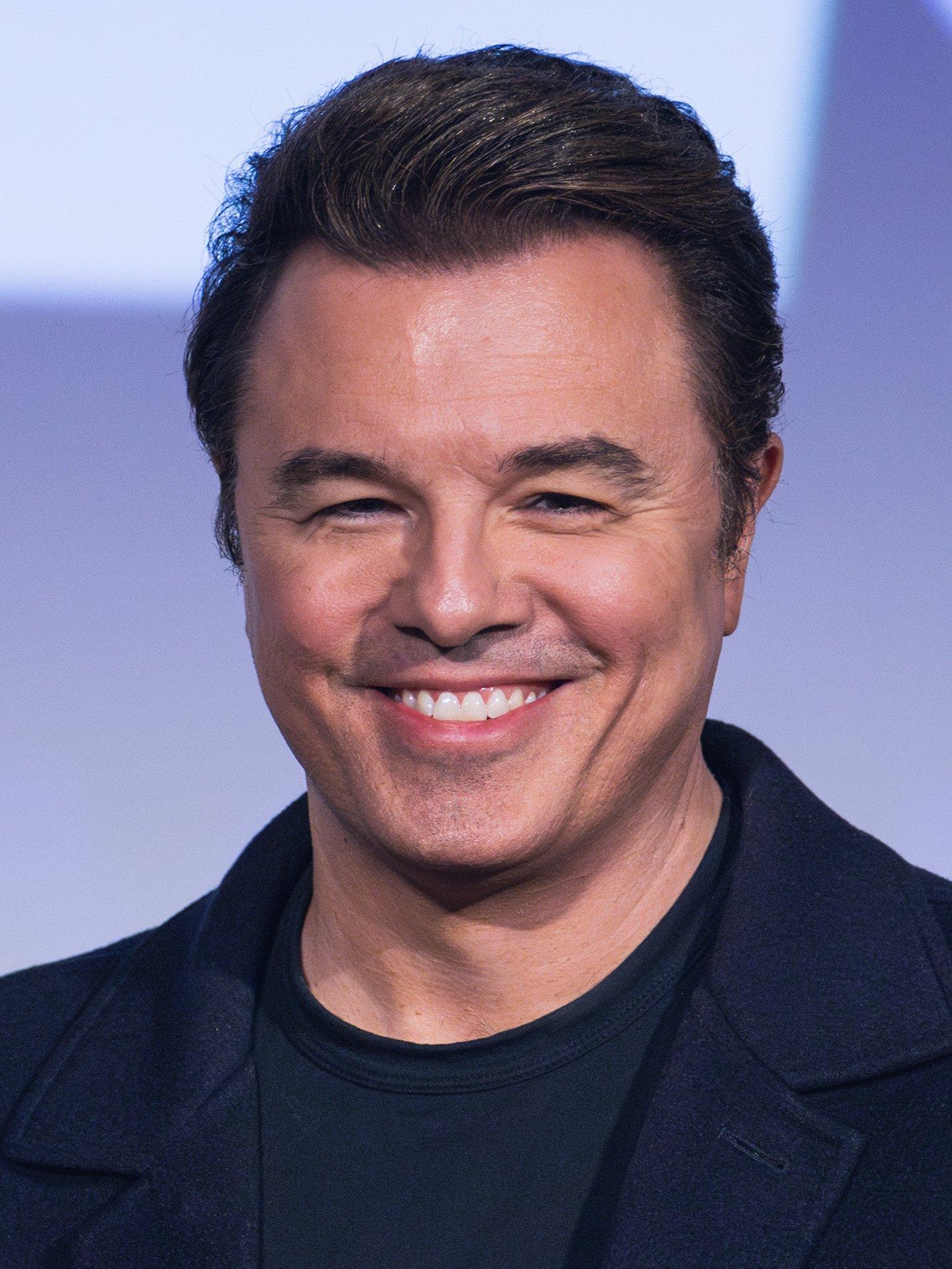
Seth MacFarlane.

Animator · Writer · Performer

Seth MacFarlane turned a RISD thesis film into Family Guy, then kept widening the frame: co-creating American Dad! and The Cleveland Show, writing and starring in Ted, launching The Orville, hosting the Oscars, and singing orchestral standards at Carnegie Hall and the Hollywood Bowl. The public image is loud, irreverent and relentlessly capable. Underneath it is a creator with a very specific internal taste, who keeps building new vehicles for it instead of waiting for culture to hand him a lane.

OBJECTIVE PERSONALITY CLASSIFICATIONMF-Fi/Ne-CS/B(P)What does this mean?
PERSONALITY SYSTEMObjective Personality
LEAD FUNCTIONFi · Introverted Feeling
SECOND SAVIOR FUNCTIONNe · Extroverted Intuition
MBTI EQUIVALENTINFP
01 / BEHIND THE CLASSIFICATION

The personality behind the fame.

How does a recorded OPS classification like MF-Fi/Ne-CS/B(P) break down? Walk through nine coins and watch the proposed type take shape. These are deductions from the archived code, not independent evidence of typing accuracy.

Scroll below to see Seth MacFarlane take shape.

STARTING POINT512 possible OPS typesEach type combines core functions, an animal order, and sexual modalities.
THE FINISH LINEMF-Fi/Ne-CS/B(P)One recorded classification, decoded from its components.
Seth MacFarlane’s HUMAN NEEDS 01—03
01
DECIDER OR OBSERVER?

Decider over Observer

Deciders have more balanced Observer poles in the middle: Control (Oi) and Chaos (Oe). Organizing what's known and handling what's new tend to feel more manageable. People are the harder territory. Self (Di) and Tribe (De) sit at the extremes, so judgment, rejection, approval, and conflict can trigger the strongest reactions.

MacFarlane’s public story keeps circling back to people problems more than circumstance problems. As a child, he drew a communion gag for his local paper and got an angry letter from a priest; later, the Parents Television Council campaigned against Family Guy, and his Oscars hosting drew sharply mixed reactions. That is classic Decider terrain: judgment, offense, approval, status, who gets to say what is acceptable. The strength is unusual tolerance for social heat. The blind spot is that fighting or outpacing reactions can become its own game, with relationships reduced to audiences, critics or targets to answer.


D
02
SELF OR TRIBE?

Di · Self over De · Tribe

Self (Di) is the stronger deciding pole. They check decisions against their own values or reasons first: what makes sense to me, what feels right to me? The strength is independent conviction; the recurring friction is the Tribe (De)—other people's standards, feedback, and expectations. As the portrait unfolds, notice how Self takes the lead.

Before Fox made Family Guy, MacFarlane decided prime-time animation was his lane and pushed toward it from Hanna-Barbera. When Fox gave him a pilot budget, he spent six months in his kitchen drawing like crazy to get the tone across. That is Self over Tribe in a very practical form: an inner standard strong enough to bet career momentum on his own read of what should exist. The advantage is unmistakable authorship. The cost is that a clear private verdict can make outside objections look slower, duller or less relevant than they really are.

Di
03
GATHER OR ORGANIZE?

Oe · Gather over Oi · Organize

Gather (Oe) leads with new information, experiences, and possibilities. Its strength is curiosity and adaptability; the recurring friction is narrowing the options and settling into what is already known. Another layer of the personality portrait comes into focus.

MacFarlane’s career is almost aggressively open-ended: animator, voice actor, filmmaker, standards singer, awards-show host, science-series producer, sci-fi creator. Family Guy came out of The Life of Larry and Larry & Steve; The Orville began as a spec script; a scrapped third-season episode even became a novel. That range fits Gather over Organize: more possibilities, more pivots, more willingness to chase a fresh format. The strength is reinvention without waiting for permission. The blind spot is diffusion. A creator can keep opening new doors faster than he settles which room deserves the next decade.

Oe
FIRST THREE COINSD + Di + Oe

These establish the preferred human needs in the OPS framework.

Seth MacFarlane’s FUNCTIONS 04—05
04
FEELING OR THINKING?

Feeling · F over Thinking · T

Feeling (F) evaluates decisions through values, meaning, and what matters—not simply through emotion. Its strength is a clear sense of significance; Thinking (T) provides balance through impersonal reasons, consistency, and evidence. Combined with Self (Di), this forms the recorded Savior Fi.

His standards albums make the Feeling coin unusually visible. MacFarlane did not just dabble in singing; he released ten studio albums in the Sinatra-and-Hollywood-musical vein and performed at the Hollywood Bowl, Carnegie Hall and the Royal Albert Hall. He has said he loves lush orchestration and the sense of fun missing from much current pop. That reads as Fi: taste with ownership, not just technical versatility. The strength is work shaped by genuine preference instead of market camouflage. The limitation is that personal conviction does not automatically answer broader questions about relevance, restraint or how everyone else receives it.

F → Fi
05
SENSING OR INTUITION?

Intuition · N over Sensing · S

Intuition (N) focuses on concepts, patterns, and what information might mean. Sensing (S) balances it through observable facts, physical detail, and direct experience. Combined with Gather (Oe), this gives the recorded Savior Ne.

MacFarlane’s biggest creations start with conceptual leaps. A college short about Larry became the seed of Family Guy. A talking teddy bear became Ted. A love of Star Trek-scale storytelling became The Orville. That is Intuition doing visible work: spotting what an idea could become before the concrete version exists. The strength is seeing expandable worlds where others see a one-off joke. The Sensing cost is brutal execution. Drawing a pilot, running series, directing films and sustaining a franchise all demand deadlines, budgets and repetitive practical choices that inspiration alone does not solve.

N → Ne
THE TWO SAVIOR FUNCTIONSFi / Ne

Opposing functions: Te and Si.

Seth MacFarlane’s ANIMAL STACK 06—07
06
CONSUME OR BLAST?

Consume over Blast

Consume gathers information for internal processing; Blast organizes and communicates information. The recorded order is Consume → Sleep → Blast → Play. This comparison follows their positions in that stack.

Consume shows up early in the way MacFarlane built his craft. At Hanna-Barbera and in freelance work for Disney and Nelvana, he absorbed writing structure, story progression, character stakes and plot points before becoming television’s youngest executive producer on Family Guy. That intake gave him a deep reservoir to pull from when Fox offered a pilot shot. Consume’s strength is substance: he usually has references, technique and material behind the joke. Its weakness against Blast is familiar to prolific creators: learning and refining can feel so productive that plainly declaring the point arrives later than it should.

C > B
07
PLAY OR SLEEP?

Sleep over Play

Play emphasizes external real-time engagement; Sleep emphasizes internal processing. The recorded stack places Sleep earlier.

Sleep over Play fits how often MacFarlane turns inward to refine a complete private version before wider interaction. He wrote The Orville as a spec script rather than waiting for a room to discover it with him, and when a planned third-season episode was scrapped during the pandemic, he turned it into a novel. That suggests a creator who consolidates ideas internally before sending them back out. The strength is polish with a center. The cost is that real-time exchange can arrive after the vision feels settled, making outside input seem like interference instead of useful friction.

S > P
Seth MacFarlane’s ANIMAL ORIENTATION 08—09
08
INFO OR ENERGY DOMINANT?

Info over Energy

Info dominant means Consume and Blast are both in the top three: gathering and communicating information are more balanced. Play last leaves the energy side uneven—Sleep can conserve energy without enough spontaneous outward engagement.

MacFarlane’s public life is packed with information output: voicing major characters on Family Guy and American Dad!, hosting the Academy Awards, serving as roastmaster, releasing albums, and fronting multiple series as creator or star. That fits Info dominance, where taking in material and delivering it back out stay active near the top. He is not short on content or articulation. The missing balance comes from Play last. The likely cost is not shyness, but less appetite for messy, unscripted back-and-forth when compared with prepared writing, performance or presentation that he can shape first.

Info
09
INTROVERSION OR EXTROVERSION?

Introversion over Extroversion

The last animal, Play, determines this OPS coin: Play or Blast last means Introversion; Consume or Sleep last means Extroversion. This describes animal orientation, not sociability or shyness.

MacFarlane’s stack resolves as Consume → Sleep → Blast → Play, which lands the final coin on Introversion because Play is last. That does not mean unsocial; this is a man who hosts, performs, collaborates and voices whole ensembles. The distinction is where the strain shows. Public performance is easy to confuse with constant openness to live input. In his case, the stronger lane looks like absorbing, privately refining and then delivering. The growth edge is letting more unfinished work hit real people sooner, before the conclusion is already polished enough to resist revision.

I
Sexual Modalities

The four sexual modalities.

OPS uses masculine/feminine sensory and extroverted-deciding distinctions as framework-specific terms, not gender categories. The four modalities are already included in the original 512 types. The recorded modality is MF · Audio.

MM KinestheticMasculine Sensory · Masculine De
MF RECORDED MODALITYAudioMasculine Sensory · Feminine De
FF TesterFeminine Sensory · Feminine De
FM VisualFeminine Sensory · Masculine De
COMPLETE RECORDED OPS TYPE · MODALITY INCLUDEDMF-Fi/Ne-CS/B(P)

Fi leads, Ne supports, and the animal stack is Consume → Sleep → Blast → Play.

THE FINISHED PORTRAIT · ALL NINE COINS REVEALED

Seth MacFarlane's complete function and animal stack

ConsumeSleepBlastPlaymFifNemSifTe
MF-Fi/Ne-CS/B(P)DOUBLE ACTIVATED · SLEEPExplore the Interactive Coin Builder →
THE SETH MACFARLANE LENS

The bandleader inside the provocateur

MacFarlane is easy to flatten into the loudest version of himself: Peter Griffin voices, roast jokes, the Oscars backlash. But the same public record includes a RISD thesis that became Family Guy, years shaping animated scripts, and orchestral standards sung at Carnegie Hall and the Hollywood Bowl. The spectacle is real; so is the exacting craftsman underneath it.

Fi/Ne helps explain that combination. Fi gives him a strong private taste—strong enough to chase old-Hollywood arrangements, adult animation, and a Star Trek-flavored series without waiting for cultural permission. Ne keeps multiplying formats and premises. That pairing’s strength is authored originality. Its limit is that conviction plus possibility can race ahead of outside calibration, leaving other people to react to a vision already fully formed.

As a Decider and Double Observer, MacFarlane’s recurring pressure sits more in people, judgment, and social consequence than in managing chaos or uncertainty. He can generate options, but critics, executives, audiences, and standards still become the hotter battlefield. The neglected function opposite his lead savior is Te, so the growth edge is making the external case clearer: what works, for whom, and why.

Consume → Sleep → Blast → Play fits the pattern. Play last does not cancel charisma or stage presence; it points to a lower appetite for raw, unstructured back-and-forth before the material is shaped. The balancing move is specific: keep the bite, the musicality, and the authorship, but invite a trusted collaborator in earlier, while the draft is still loose enough to improve.

Want to understand the Savior and Demon states behind these nine coins? Explore the complete explanation, visual examples, and typing principles on our Methodology page →

02 / KEEP EXPLORING

Different faces. Familiar patterns.

Explore other celebrities with related recorded OPS classifications. Related functions are not necessarily exact type matches.

Discover Type Twins
YOUR TURN

Curious about your own type?

Discover how your own personality might be classified through Objective Personality.

Get objectively typed
Seth MacFarlane's Personality Type & OPS Profile | The Personality Atlas